

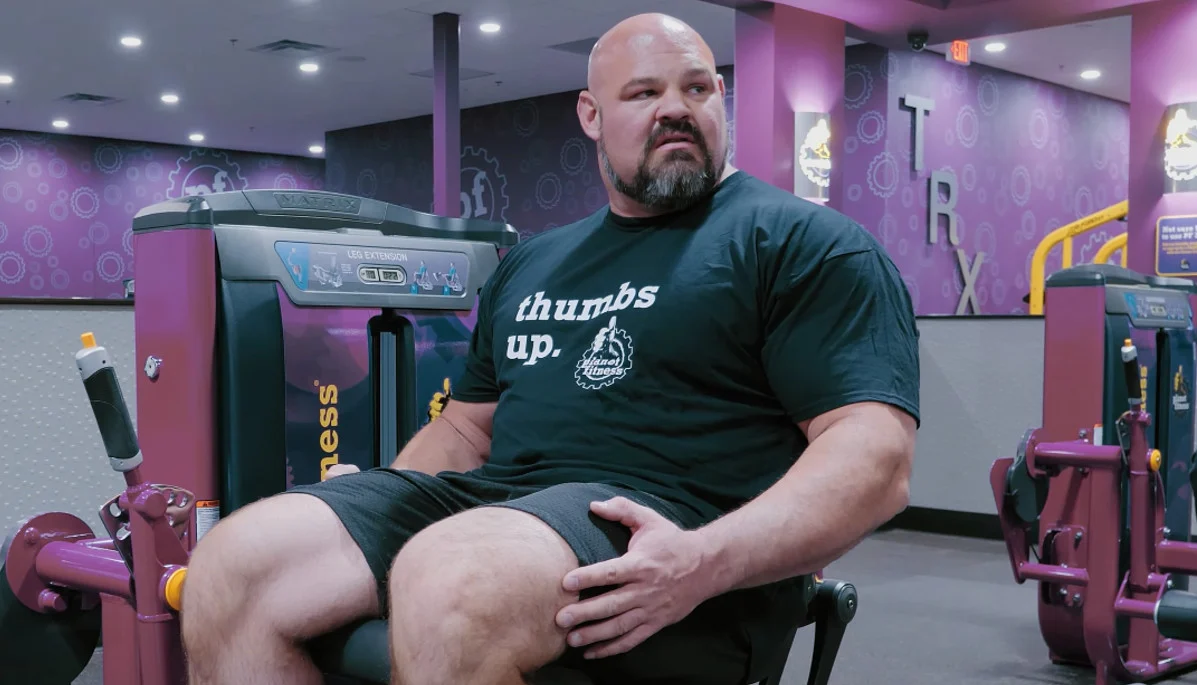
The intersection of elite strength athletics and mainstream commercial fitness recently produced a viral moment as two of the most decorated figures in the history of the World’s Strongest Man (WSM) competition, Brian Shaw and Eddie Hall, conducted a training session at a Planet Fitness location in Colorado. This encounter served as a stark juxtaposition between the requirements of professional strongman training and the "Judgment Free Zone" philosophy championed by the national gym chain. While Planet Fitness is strategically designed to cater to the general population and fitness novices, Shaw and Hall represent the absolute ceiling of human strength and physical stature, creating a logistical and athletic challenge that highlighted the limitations of standardized gym equipment for elite athletes.
The Profiles of the Athletes
To understand the scale of this event, one must consider the professional pedigree of the participants. Brian Shaw, a four-time World’s Strongest Man winner (2011, 2013, 2015, 2016), stands 6 feet 8 inches tall and has historically competed at a bodyweight exceeding 400 pounds. Shaw is widely regarded as one of the most consistent and mathematically minded athletes in the history of the sport, known for his "Shaw Strength" brand and his private, high-specification training facility in Colorado.
Eddie Hall, the 2017 World’s Strongest Man and the first human to officially deadlift 500 kilograms (1,102 pounds), is equally formidable. Standing 6 feet 3 inches tall and possessing a massive, thick-set frame, Hall transitioned away from competitive strongman after his 2017 victory to pursue boxing and media ventures. However, at the time of this training session, Hall was preparing for a return to the competitive arena as the captain of Team UK for the World’s Strongest Nation contest.
The Context of the Venue
Planet Fitness operates over 2,400 locations across the United States and is known for its distinct business model. The franchise deliberately omits certain pieces of equipment common in "hardcore" gyms, such as heavy dumbbells (usually capping at 50 to 75 pounds), squat racks, and deadlift platforms. The facility also famously employs a "Lunk Alarm," a siren intended to discourage loud grunting, the dropping of weights, or any behavior perceived as intimidating to casual gym-goers. For Shaw and Hall, whose training typically involves moving hundreds of pounds of irregular objects like Atlas stones and logs, the environment presented an immediate mechanical mismatch.
Chronology of the Training Session
The session began with the realization that the facility lacked traditional squat racks. In most professional strength facilities, athletes of this caliber would utilize a power rack with a 55-pound specialized squat bar, often loaded with 600 to 800 pounds for repetitions. At Planet Fitness, the duo was forced to utilize the Smith machine, a piece of equipment where the barbell is fixed within a vertical track.
The physical dimensions of the athletes proved to be the first obstacle. The Smith machine’s frame is designed for the average human wingspan; however, Shaw and Hall found themselves struggling to fit their shoulders and backs comfortably under the bar while maintaining proper grip width. Despite these constraints, they proceeded to load the machine with five 45-pound plates on each side, totaling 450 pounds plus the resistance of the machine. Shaw was observed having to stabilize the machine’s external frame to ensure it did not shift under the weight of his repetitions.
Following the Smith machine squats, the pair moved to the seated abdominal crunch machine. This transition highlighted the secondary issue of commercial gym equipment: the weight stacks. Most commercial machines utilize a pin-loaded weight stack designed for the average user. For Hall and Shaw, these stacks often represent a warm-up weight rather than a working load.
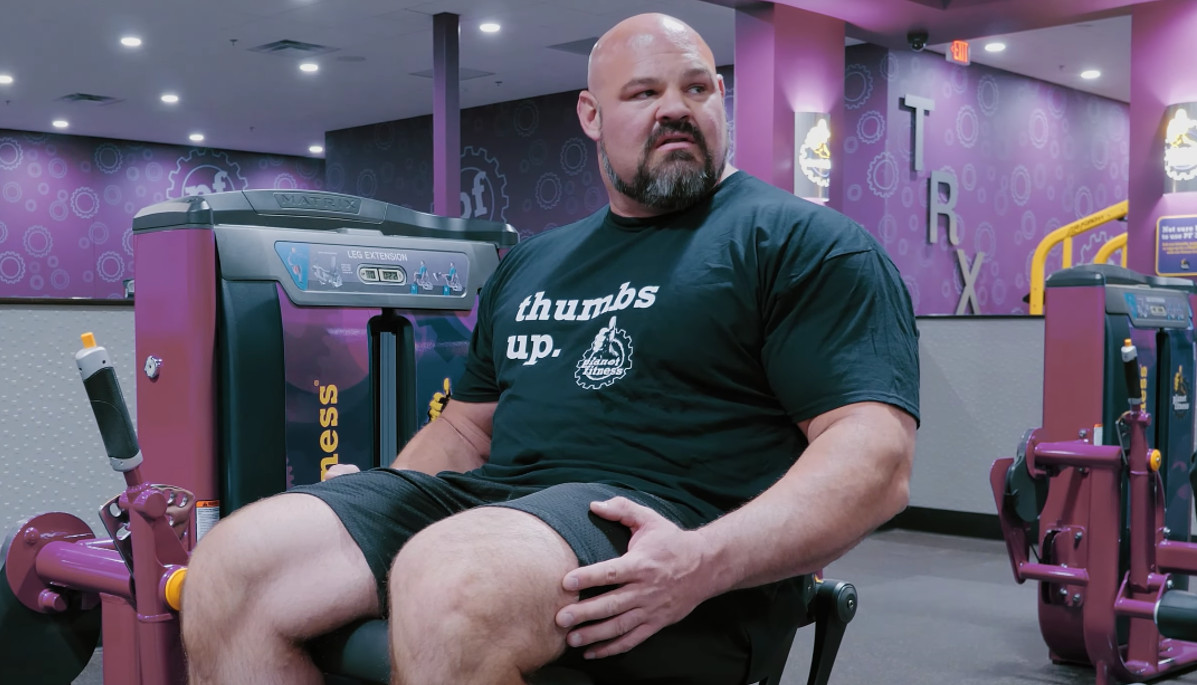
The third exercise was the leg press. In a typical strongman session, these athletes might load a leg press with over 1,000 pounds. At Planet Fitness, they maximized the available space on the machine’s sleeves, loading six 45-pound plates per side and adding an additional plate on top of the sled. While substantial for a commercial setting, the athletes moved the weight with a tempo and ease that suggested it was well below their maximum capacity. The session continued with high-repetition sets on the leg extension, adductor, and abductor machines, focusing on muscle hypertrophy and blood flow rather than the absolute strength usually required for their sport.
The Circuit Training Challenge
The highlight of the visit was a timed competitive challenge held in the gym’s designated circuit training room. This area typically features a series of machines meant to be used in a specific order for a full-body workout. The rules established by Shaw and Hall were simple: perform one repetition at the maximum available weight on the stack for all 20 stations in the room.
This challenge shifted the focus from pure strength to cardiovascular endurance and transition speed. For men of their size, moving rapidly between 20 different machines is a significant aerobic tax. Eddie Hall completed the circuit in 1:15.09. Brian Shaw followed, finishing slightly behind with a time of 1:19. The four-second difference was a testament to Hall’s slightly more compact frame and his recent conditioning work for his return to competition.
Technical Analysis of Equipment Limitations
The training session served as an informal case study on the ergonomics of fitness equipment. Most commercial gym machines are built based on "average" anthropometric data. When individuals like Shaw and Hall—who fall into the 99th percentile for height, bone density, and muscle mass—attempt to use these machines, several issues arise:
- Range of Motion: The lever arms on machines like the leg extension are often too short for Shaw’s 6’8" frame, leading to suboptimal joint alignment.
- Structural Integrity: Commercial machines are often bolted to the floor or rely on their own weight for stability. The lateral force generated by a 400-pound man can cause "frame flex" in lighter equipment.
- Resistance Curves: Because the weight stacks are limited, elite athletes cannot reach the necessary intensity for strength gains without performing excessively high repetitions, which shifts the training stimulus from anaerobic to aerobic.
Competitive Implications for Eddie Hall
While the video contained elements of humor and "fish-out-of-water" tropes, the timing was significant for Eddie Hall. He was in the final stages of preparation for the World’s Strongest Nation contest, held on November 26, 2022, at the M&S Bank Arena in Liverpool. This event was designed as a "Team UK vs. Team USA" format, pitting Hall against a team captained by 2019 World’s Strongest Man, Martins Licis.
Hall’s return to a strongman-style event, even in a captaincy and partial-participation role, was a major narrative in the strength community. His training with Shaw in Colorado allowed him to acclimatize to different environments and maintain his "engine"—the ability to move his massive bodyweight under pressure—which was the primary benefit of the Planet Fitness circuit challenge.
Broader Impact on Gym Culture and Social Media
The video of the session, posted to Brian Shaw’s YouTube channel, garnered significant attention, highlighting a growing trend of "elite athletes in average spaces." This type of content serves several purposes within the fitness industry:
- Humanization of Strength Sports: It demystifies the training of world-class athletes, showing that they can adapt to any environment, even one not optimized for their needs.
- Gym Etiquette Dialogue: The presence of the "Lunk Alarm" in the video sparked discussions among viewers regarding the necessity of such policies. While Shaw and Hall were respectful of the rules, the irony of the world’s strongest men training in a "no-grunting" zone was not lost on the audience.
- Brand Synergy: For Planet Fitness, while the athletes pointed out the limitations of the equipment, the video provided massive exposure to a younger, fitness-oriented demographic that follows Shaw and Hall.
Conclusion
The training session of Brian Shaw and Eddie Hall at Planet Fitness was more than a simple PR stunt; it was a demonstration of the adaptability required in professional sports. Despite the lack of specialized equipment like yokes or heavy-duty power racks, the two champions were able to structure a workout that addressed muscular endurance and conditioning.
The event underscored the reality that for the "Strongest Men on Earth," the world is rarely built to their scale. From the narrow frames of Smith machines to the light weight stacks of the circuit room, Shaw and Hall navigated a world designed for the average person with a mix of humor and athletic focus. As Shaw continued his off-season and Hall moved toward his competitive return in Liverpool, their afternoon in the "Judgment Free Zone" remained a unique footnote in the history of modern strength athletics.
