








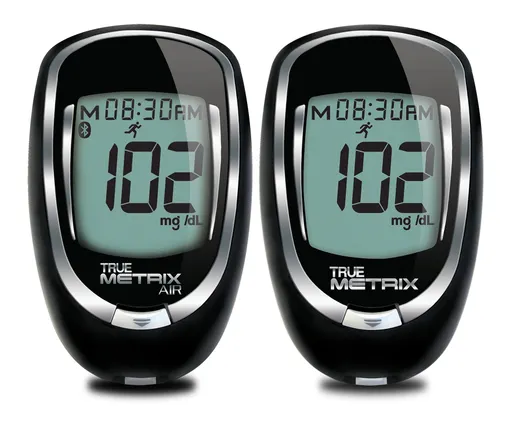
The U.S. Food and Drug Administration (FDA) has issued a high-priority early alert to healthcare providers and patients regarding the use of True Metrix blood glucose meters manufactured by Trividia Health. The alert stems from a critical safety concern involving the interpretation of specific error codes, which has been linked to significant treatment delays. According to the federal agency, confusion surrounding the "E-5" error code on these devices has contributed to a series of adverse health events, including thirteen reported injuries and one fatality since the product line was first introduced to the market over a decade ago.
The crux of the issue lies in how users respond to the E-5 error message when experiencing symptoms of severe hyperglycemia, or high blood sugar. The FDA and Trividia Health have identified a dangerous pattern in which patients, upon seeing an error code rather than a numerical glucose reading, may delay seeking necessary medical intervention. This delay can prove catastrophic for individuals with diabetes, as extreme hyperglycemia can rapidly progress into life-threatening conditions such as diabetic ketoacidosis (DKA) or hyperosmolar hyperglycemic state (HHS).
Understanding the E-5 Error Code and Patient Risk
The True Metrix system is designed to provide rapid blood glucose readings to help patients manage their insulin dosages and dietary intake. However, like all electronic medical devices, these meters are programmed to display error codes when certain technical conditions are not met. The E-5 code typically indicates that the blood sample size was insufficient, the test strip was moved during the countdown, or there was an issue with the strip itself.

The danger arises when a patient’s blood glucose level is dangerously high—potentially exceeding the meter’s measurable range—and the device displays an E-5 code instead of a "HIGH" reading or a specific value. If a patient is feeling the physiological effects of hyperglycemia, such as extreme thirst, frequent urination, blurred vision, or profound fatigue, and the meter fails to provide a clear reading, the patient may mistakenly believe the issue is merely technical.
By attempting to troubleshoot the device or re-test multiple times rather than seeking emergency care, patients lose critical time. The FDA’s early alert emphasizes that symptoms of high blood glucose must take precedence over device readings. If a user feels ill and the meter displays an error, the agency advises immediate consultation with a healthcare professional or emergency services.
Scope of the Correction and Affected Products
Trividia Health has initiated a voluntary correction to update the instructions for use (IFU) and labeling for its entire True Metrix product line. Unlike a traditional recall that requires the return of hardware, this action is a "correction in place," meaning patients can continue to use their current meters provided they understand the updated safety protocols.
The scope of this alert is extensive, covering all True Metrix branded blood glucose meters distributed across the United States, Mexico, the United Kingdom, Australia, and the Caribbean. Because Trividia Health is a major supplier for private-label pharmaceutical brands, the correction also affects co-branded products sold at some of the largest retail pharmacy chains in the world. These include:
- CVS Health (True Metrix and True Metrix Air)
- Walgreens (True Metrix and True Metrix Air)
- Kroger (True Metrix and True Metrix Air)
- Various other regional pharmacies and medical supply distributors using the True Metrix technology.
The FDA notes that the injuries and the single death associated with these devices were reported between August 2014 and January 16, 2024. The long duration of this timeline suggests that while the frequency of these events is relatively low compared to the millions of tests performed daily, the severity of the outcomes necessitated a formal public warning and a change in manufacturer guidance.
Chronology of Regulatory Actions and Product History
The history of the True Metrix line has been marked by both widespread market adoption and occasional regulatory scrutiny. Trividia Health, formerly known as Nipro Diagnostics before its acquisition by China-based Sinocare in 2016, has been a staple in the affordable glucose monitoring market for years.
- August 2014: Trividia Health (then Nipro Diagnostics) officially launches the True Metrix system, marketing it as a high-precision, no-coding-required alternative for diabetes management.
- 2016–2022: The True Metrix brand expands through significant partnerships with major U.S. retailers, becoming one of the most common "store brand" meters available to consumers.
- 2023: Trividia Health initiates a separate voluntary recall for a limited number of True Metrix monitors. This specific action was prompted by reports of defective liquid crystal displays (LCD) that could lead to missing or incomplete numbers on the screen, potentially causing patients to misread their glucose levels.
- January 2024: The FDA compiles data from its Medical Device Reporting (MDR) database, identifying a trend of adverse events linked to the E-5 error code and treatment delays.
- February 2024: Trividia Health issues a formal letter to customers and healthcare providers detailing the updated instructions.
- Current Alert: The FDA elevates the issue to an "Early Alert," a designation used to inform the public about potentially high-risk device issues while the agency continues to evaluate data and monitor the effectiveness of the manufacturer’s corrective actions.
The FDA’s Early Alert Pilot Program
The issuance of an "Early Alert" is part of a broader FDA initiative to improve transparency and speed in the communication of medical device risks. Historically, the FDA would wait until a formal Class I, II, or III recall was fully classified before issuing public notices. However, under the Early Alert pilot program, the agency communicates potential risks to the public as soon as a significant safety trend is identified, even if the manufacturer’s investigation is ongoing.
This proactive approach is particularly vital for chronic disease management tools like glucose meters, which are used multiple times a day by millions of people. By providing information early, the FDA aims to prevent additional injuries while the manufacturer works to update its training materials and software interfaces.
Clinical Implications of Delayed Hyperglycemia Treatment
To understand why the E-5 error code presents such a risk, it is necessary to examine the clinical progression of severe hyperglycemia. When blood glucose levels rise to extreme levels—often above 600 mg/dL—the body enters a state of crisis.
In Type 1 diabetics, this often leads to Diabetic Ketoacidosis (DKA), where the body begins breaking down fat for fuel at a rate that produces toxic ketones. Without insulin and immediate hydration, DKA can lead to cerebral edema, coma, and death. In Type 2 diabetics, extremely high sugar levels can lead to Hyperosmolar Hyperglycemic State (HHS), characterized by severe dehydration and altered mental status.
If a patient experiencing the onset of these conditions relies on a meter that returns an E-5 error, they may spend hours drinking water or resting, thinking they just need to "try the test again later." This delay allows the metabolic acidosis or dehydration to worsen, significantly complicating the medical treatment required once they finally reach a hospital.
Official Responses and Recommendations
Trividia Health has emphasized that the meters themselves remain accurate when used correctly and are not being pulled from the market. In their letter to customers, the company stated that the safety of their users is their highest priority and that the updated instructions are intended to clarify the necessary steps to take when technical errors coincide with physical symptoms.
The company has advised all users to:
- Review the updated "Product Notice" regarding error codes.
- Always keep a back-up testing method (such as a secondary meter or a different brand of test strips) available.
- Never ignore physical symptoms of high or low blood sugar, regardless of what the meter display shows.
Healthcare providers are also being urged to talk to their patients who use True Metrix systems. Doctors and diabetes educators are encouraged to reinforce the "symptoms first" rule of diabetes management: if the patient feels "off," they should treat the symptoms as a medical priority rather than focusing solely on the technological output of the device.
Broader Impact on the Medical Device Industry
The scrutiny of Trividia’s True Metrix system highlights a growing concern in the medical device industry regarding the "human factors" of design. As devices become more automated and complex, the way a human interacts with an error message becomes just as important as the accuracy of the sensor itself.
Industry analysts suggest that this event may prompt the FDA to require more intuitive error messaging for all glucose monitoring systems. Instead of alphanumeric codes like "E-5," future regulations might push for plain-language instructions on the screen, such as "Error: Seek Medical Help if Feeling Ill."
Furthermore, the involvement of major retailers like CVS and Walgreens underscores the complexities of the global supply chain for medical devices. When a "store brand" product faces a safety alert, the reach of the notification must extend beyond the manufacturer’s direct customers to the millions of consumers who purchase these products over the counter.
Conclusion and Future Outlook
While the True Metrix meters remain a functional tool for many, the FDA’s early alert serves as a sobering reminder of the limitations of home diagnostic technology. The reported injuries and death associated with the E-5 error code illustrate the thin margin for error in managing chronic conditions like diabetes.
For now, the FDA will continue to monitor Trividia Health’s rollout of the updated instructions. Patients are not required to return their devices, but they are being asked to be more vigilant than ever. The agency’s move to publicize this "Early Alert" reflects a shift toward a more transparent regulatory environment where the goal is to empower patients with information long before a technical failure results in a tragedy. As the investigation continues, the medical community remains focused on ensuring that technology serves as a reliable aid to—not a replacement for—clinical judgment and symptom awareness.