

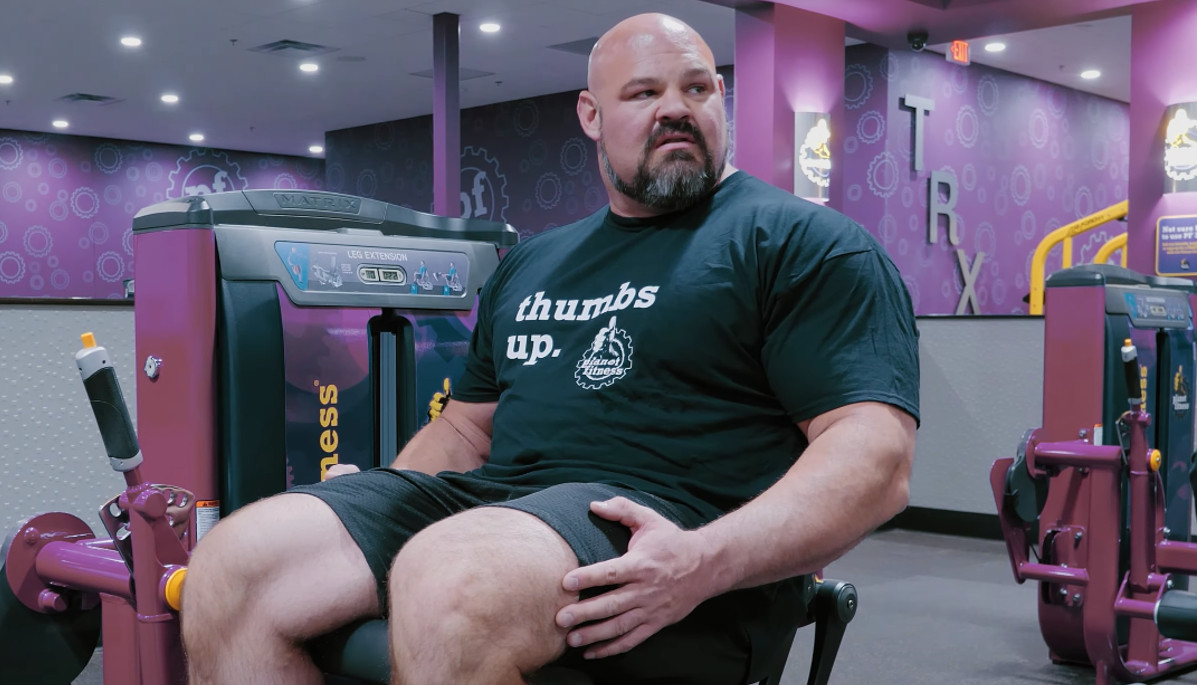
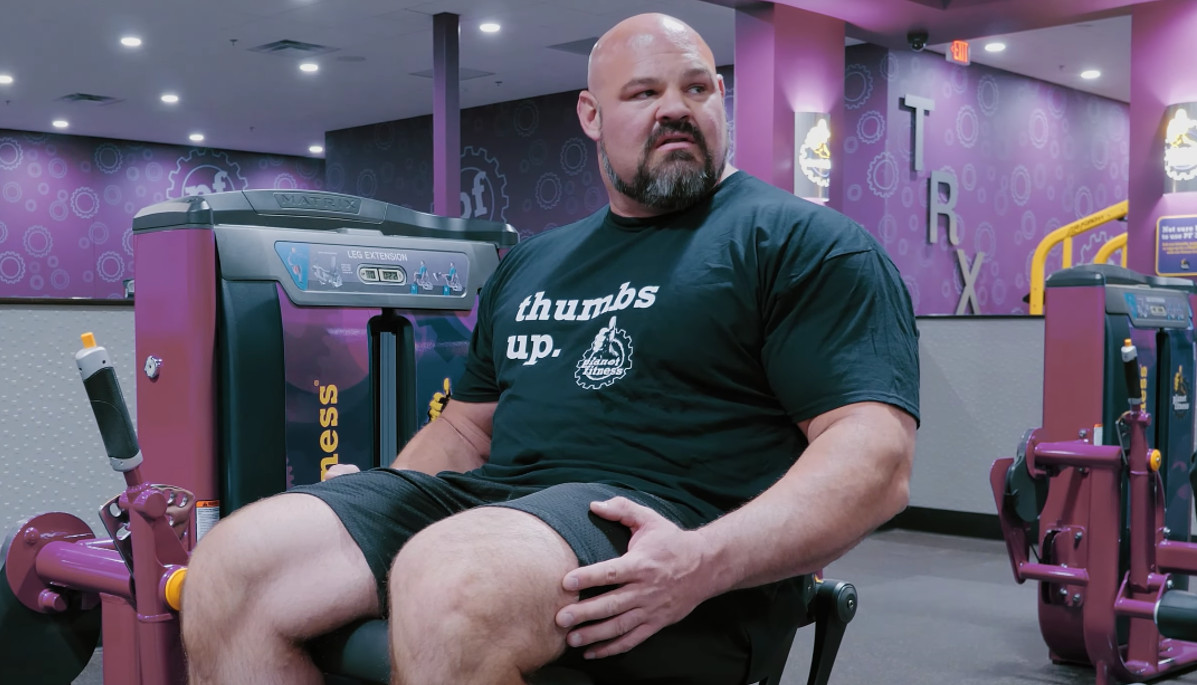
Brian Shaw, a four-time World’s Strongest Man champion, and Eddie Hall, the 2017 champion and the first man to deadlift 500 kilograms, represent the pinnacle of human strength. Standing at 6’8" and 6’3" respectively, and weighing a combined total well exceeding 700 pounds, the duo’s presence in a "Judgment Free Zone"—the trademarked philosophy of Planet Fitness—highlighted the stark contrast between the requirements of professional strongmen and the amenities provided by high-volume, low-cost health clubs.
The Divergence of Training Environments
The training requirements for professional strongmen are notoriously specialized. Unlike standard bodybuilding or general fitness routines, strongman training necessitates access to implements such as Atlas stones, 1,000-pound yokes, log press bars, and farmer’s walk handles. Most commercial gyms, including Planet Fitness, prioritize safety, floor-space efficiency, and accessibility for the average person. This often results in a lack of free-weight squat racks and heavy-duty platforms, which are replaced by Smith machines and selectorized resistance equipment.
Planet Fitness, which operates over 2,400 locations globally, famously markets itself as a non-intimidating environment. This includes the implementation of the "Lunk Alarm," a siren designed to discourage grunting, dropping weights, or any behavior deemed "intimidating" by the management. For Hall and Shaw, whose sport involves extreme physical exertion and massive loads, navigating this environment required a departure from their standard high-intensity protocols.
Chronology of the Training Session
The session began with an attempt at the primary compound movement for the day: the squat. Due to the absence of traditional power racks, the athletes were forced to utilize the Smith machine. This equipment, which features a barbell fixed within steel rails, presents a fixed vertical path that often conflicts with the natural biomechanics of larger athletes.
For Shaw and Hall, the primary obstacle was not the weight itself, but their physical dimensions. The width of their shoulders and the depth of their torsos made positioning under the fixed bar difficult. Despite these constraints, they proceeded to load the machine with five 45-pound plates on each side. Shaw noted the difficulty in maintaining balance, eventually having to stabilize himself by holding the machine’s frame to execute the repetitions.
Following the Smith machine squats, the pair moved to the abdominal crunch machine. This transition illustrated the "outsize" nature of the athletes; the equipment, designed for the median human frame, appeared diminutive under their bulk. They subsequently moved to the leg press, a staple of commercial gyms. While most commercial leg presses have a limited weight capacity compared to the specialized machines found in "hardcore" powerlifting gyms, Hall and Shaw maximized the available space by loading six 45-pound plates per side, with an additional plate placed on top of the sled. Observers noted that the athletes moved the weight with relative ease, suggesting that the mechanical advantage of the machine provided little resistance to men capable of leg-pressing nearly half a ton in a professional setting.
The workout continued with a series of isolation movements, including leg extensions, adductor machines, and abductor machines. These exercises, while often secondary in a strongman’s program, served as a means of maintaining volume in an environment where their usual heavy-load implements were unavailable.
The Competitive Finale: The 20-Station Circuit
The climax of the visit was a head-to-head challenge involving the gym’s designated circuit training room. This area typically consists of a series of machines designed for a full-body workout in a timed format. The challenge devised by the strongmen required each athlete to perform one repetition at the maximum weight setting on all 20 stations in the fastest possible time.
This test of "functional strength" and cardiovascular recovery showcased the deceptive athleticism of these heavyweights. Eddie Hall completed the circuit in 1 minute and 15.09 seconds. Brian Shaw followed closely, finishing in 1 minute and 19 seconds. The narrow four-second margin underscored the competitive nature that has defined their decade-long rivalry and friendship. It also demonstrated that despite their massive size, elite strongmen possess significant aerobic capacity and explosive speed.
Comparative Analysis: Commercial vs. Specialized Facilities
The decision to film at Planet Fitness serves as a form of "fish-out-of-water" content that has become popular in the fitness industry. However, from a technical perspective, it underscores the limitations of the "one-size-fits-all" gym model for extreme outliers.
- Weight Limits: Most commercial machines are capped at 200 to 300 pounds of selectorized weight. For an athlete like Shaw, who has a career-best deadlift of 1,014 pounds (with straps), these limits are reached almost immediately during warm-ups.
- Biomechanics: Fixed-path machines (like the Smith machine) do not account for the increased limb length and joint circumference of giant-stature athletes. This can increase the risk of impingement or joint strain when forced into a standard movement pattern.
- Safety and Liability: The "Lunk Alarm" and similar policies are designed to protect the equipment and the comfort of the average member. However, for a strongman, the "controlled drop" of a heavy weight is often a safety necessity rather than an act of aggression.
Background and Competitive Context
The timing of this training session coincided with significant milestones for both athletes. Brian Shaw was in an "off-season" phase, focusing on maintenance and the management of his various business ventures, including the Shaw Classic, a premier event in the strongman calendar. Shaw’s career is characterized by unprecedented consistency, having qualified for the World’s Strongest Man finals a record 15 times.
Conversely, Eddie Hall was in the midst of a highly publicized return to the strength world. After winning the WSM title in 2017, Hall retired from competitive strongman to pursue other interests, including a high-profile boxing match against fellow strongman Hafþór "Thor" Björnsson in early 2022. Following his foray into combat sports, Hall announced his return to the strongman arena, specifically as the captain of Team UK for the "World’s Strongest Nation" contest.
The World’s Strongest Nation event, held in November 2022 at the M&S Bank Arena in Liverpool, was designed as a team-based format pitting the United Kingdom against the United States. Hall’s leadership of the UK team placed him in direct opposition to Team USA, captained by 2019 World’s Strongest Man Martins Licis. This context adds a layer of significance to the training session in Colorado; it was a rare moment of camaraderie between two legends before the heat of international competition.
Official Responses and Community Impact
While Planet Fitness corporate offices rarely issue statements regarding specific celebrity visits, the presence of Shaw and Hall inevitably drew significant attention from both the staff and local members. In the video documentation, the interaction between the athletes and the gym environment was portrayed as lighthearted, though it subtly critiqued the trend of "sanitizing" fitness spaces.
Industry analysts suggest that content of this nature serves to humanize elite athletes. By placing "giants" in a "normal" environment, it highlights the extraordinary nature of their physical capabilities. Furthermore, it sparks a broader conversation within the strength community regarding the accessibility of proper training facilities for aspiring strength athletes who may only have access to commercial gyms.
Broader Implications for Strength Sports
The crossover between niche strength sports and mainstream culture is a growing trend. Figures like Hall and Shaw have successfully transitioned from being purely competitive athletes to becoming global fitness influencers. This shift is vital for the longevity of strongman as a sport, as it brings in sponsorship revenue and expands the fan base beyond hardcore lifting enthusiasts.
However, the session also highlights a potential friction point. As commercial gyms continue to dominate the market, specialized "black iron" gyms are becoming increasingly rare. This geographical scarcity of appropriate equipment poses a barrier to entry for the next generation of powerlifters and strongmen. The ingenuity shown by Shaw and Hall—using the Smith machine and creating their own circuit challenges—serves as a lesson in adaptability for athletes who find themselves in less-than-ideal training environments.
In conclusion, the visit of Brian Shaw and Eddie Hall to a Planet Fitness was more than a mere social media stunt. It was a demonstration of the physical realities of being an elite strongman in a world designed for the average person. It showcased the athletes’ ability to find utility in limited equipment while maintaining the competitive drive that earned them five World’s Strongest Man titles between them. As the sport of strongman continues to evolve, the ability of its stars to engage with the wider public through such relatable, yet extraordinary, displays of strength remains a key driver of its international growth.