

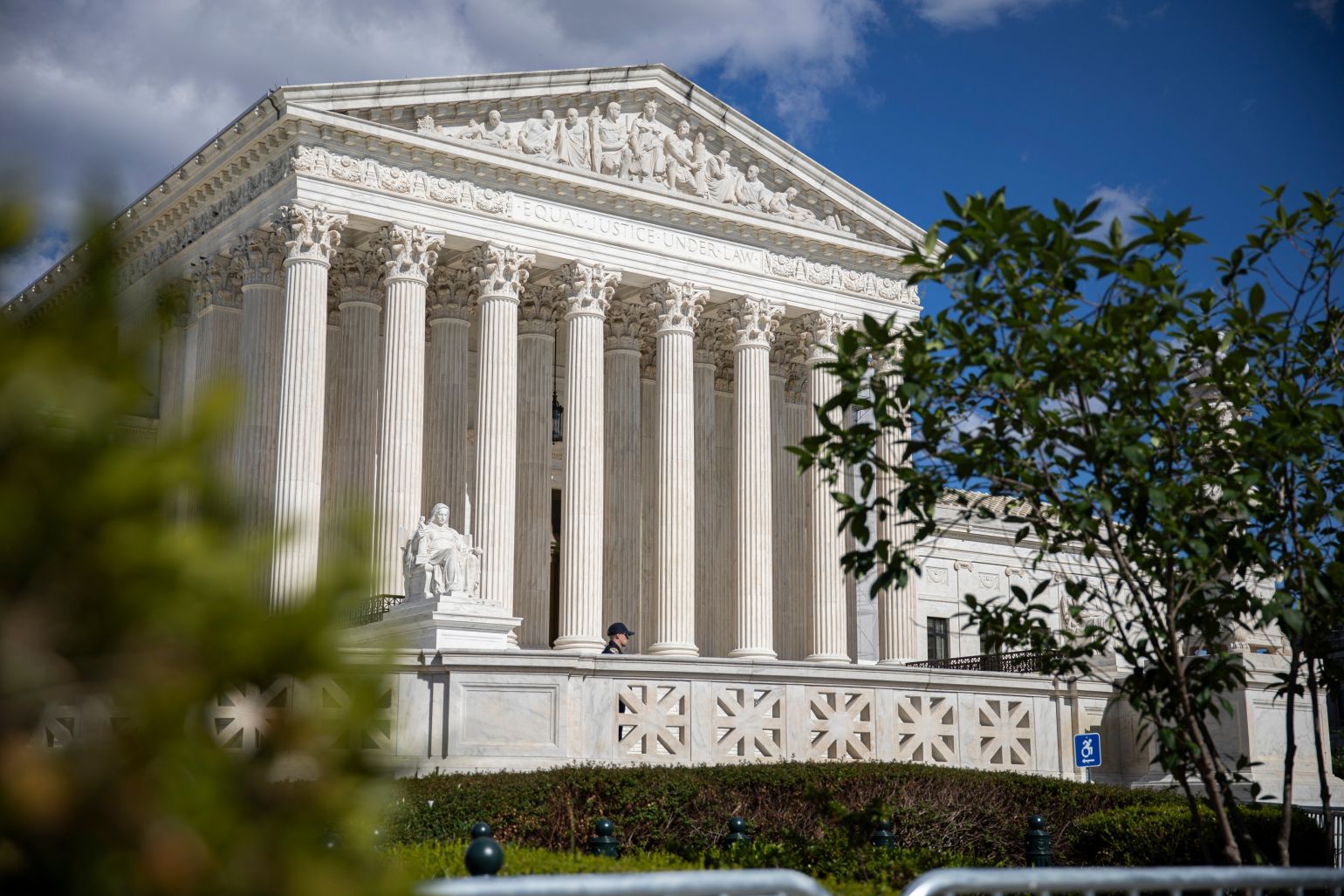
The United States Supreme Court has delivered a landmark ruling, striking down President Donald Trump’s expansive imposition of new tariffs, deeming it an unconstitutional overreach of executive power. In a significant decision that redraws the lines of trade policy authority, the Court held that the President cannot unilaterally enact such sweeping trade measures, asserting that this power rests firmly with Congress. In a swift and decisive reaction, President Trump immediately announced and implemented a new, across-the-board 10% tariff on all imported goods, which took effect today. The implications of this legal battle are far-reaching, impacting international trade relationships, domestic industries, and potentially the hundreds of billions of dollars already collected under the now-invalidated tariff schemes. The President’s approach to addressing this critical juncture in his State of the Union Address tonight remains a subject of intense speculation.
The Supreme Court’s Judicial Rebuke: A Constitutional Reckoning
The Supreme Court’s ruling, officially released on Friday, directly challenges President Trump’s interpretation of the International Emergency Economic Powers Act (IEEPA). The 6-3 decision, reflecting a deeply divided Court, signals a strong judicial consensus against the President’s assertion that IEEPA grants the Executive Branch broad, unilateral authority to impose tariffs. Chief Justice John Roberts, writing for the majority, articulated a clear distinction between the President’s emergency powers and Congress’s constitutionally mandated role in fiscal matters.
"IEEPA contains no reference to tariffs or duties," the ruling stated unequivocally. "The Government points to no statute in which Congress used the word ‘regulate’ to authorize taxation. And until now, no president has read IEEPA to confer such power." This statement underscores the Court’s finding that President Trump’s invocation of IEEPA to justify his tariff policies represented an unprecedented and unconstitutional expansion of executive authority.
The President had previously declared national emergencies to justify these tariffs, citing the flow of illegal drugs from Mexico and Canada, as well as significant trade imbalances with various global partners, particularly China. These declarations were intended to provide the legal basis for his aggressive trade agenda, which aimed to renegotiate trade deals and protect domestic industries. However, the Court found these justifications insufficient to overcome the clear constitutional division of powers.
A Chronology of Escalating Trade Tensions and Legal Challenges
The dispute over the President’s tariff authority has been unfolding over the past year, marked by a series of executive actions and subsequent legal challenges.
- Early 2025: President Trump begins implementing a series of targeted tariffs on goods from key trading partners, citing national security concerns and unfair trade practices. These initial tariffs focused on sectors like steel and aluminum.
- Mid-2025: The scope of tariffs expands significantly, encompassing a wider range of goods and countries. The administration invokes the International Emergency Economic Powers Act (IEEPA) as the primary legal justification for these broader measures.
- Late 2025: Multiple lawsuits are filed by businesses, trade associations, and even some states, challenging the legality and economic impact of the tariffs. These suits primarily argue that the President exceeded his statutory and constitutional authority.
- Early 2026: The case reaches the Supreme Court, which agrees to hear arguments on the core question of executive versus congressional power over trade.
- Friday, February 23, 2026: The Supreme Court releases its landmark 6-3 ruling, striking down President Trump’s broad tariff impositions.
- Today, February 24, 2026: President Trump announces and implements a new, across-the-board 10% tariff on all imported goods, effective immediately.
Unraveling a Labyrinth of Tariffs: The Economic Landscape Before the Ruling
Prior to the Supreme Court’s decision, President Trump’s administration had meticulously constructed a complex and ever-shifting web of tariffs. Over his tenure, the administration had imposed duties ranging from a modest 10% to as high as 50% on goods imported from numerous nations. This intricate system was not static; it was subject to frequent adjustments. Trade deal negotiations, geopolitical disagreements, and subsequent policy shifts led to the addition or removal of specific goods from tariff lists, and the modification of rates for certain countries. This dynamic environment created considerable uncertainty for businesses, disrupting supply chains and impacting consumer prices.
The economic fallout from these tariffs has been a subject of intense debate among economists. Proponents argued that they were necessary to level the playing field for American industries and to incentivize countries to adopt fairer trade practices. Critics, however, pointed to evidence suggesting that the tariffs led to increased costs for American consumers, reduced export competitiveness for U.S. businesses, and retaliatory tariffs from trading partners, harming sectors such as agriculture. For instance, data from the U.S. Chamber of Commerce indicated that by late 2025, the cost of imported goods subject to these tariffs had risen by an average of 15%, impacting over $500 billion in trade volume.
President Trump’s Immediate Response: A New Tariff in Effect
In direct response to the Supreme Court’s ruling, President Trump has signaled his intent to continue asserting executive authority in trade matters, albeit through a different mechanism. The administration has invoked a new, across-the-board tariff of 10% on all incoming goods. This measure is reportedly set to remain in effect for an initial period of 150 days. This swift action demonstrates the President’s commitment to utilizing available executive tools to influence trade policy, even in the face of judicial constraints.
According to reports from Reuters, the administration has indicated an intention to explore raising this temporary tariff to 15%. Analysts, such as those at Deutsche Bank, have suggested that despite this immediate imposition, the overall effective tariff rate in the global economy may indeed fall this year, leading to a landscape with potentially lower tariffs than existed prior to the Supreme Court’s ruling. However, the long-term trajectory remains uncertain, contingent on future executive actions and potential congressional engagement.
The expiration of this temporary tariff at the end of the 150-day period hinges on a potential vote by Congress to extend it. Given the Supreme Court’s clear stance on congressional authority over tariffs, such an extension appears unlikely, suggesting this latest measure may be a temporary placeholder in the ongoing trade policy debate.
The Unanswered Question: The Fate of Collected Tariffs
A significant unresolved issue following the Supreme Court’s decision is the disposition of the hundreds of billions of dollars collected under the now-invalidated tariff schemes. Businesses and individuals who paid these duties are awaiting clarity on whether these funds will be refunded. The legal and logistical complexities of such a process could be substantial, potentially involving extensive claims and administrative procedures. The government’s response to this question will have a direct impact on the financial standing of numerous entities that bore the burden of these tariffs.
Presidential Response and International Relations: Threats and Reassurances
The President has not shied away from expressing his strong opinions regarding the Supreme Court’s decision and its potential impact on international relations. In a post on his Truth Social platform, President Trump issued a stern warning to nations that might attempt to leverage the court’s ruling to circumvent existing trade agreements.
"Any Country that wants to ‘play games’ with the ridiculous supreme court decision, especially those that have ‘Ripped Off’ the U.S.A. for years, and even decades, will be met with a much higher Tariff, and worse, than that which they just recently agreed to," the post read, as reported by The Washington Post. This statement suggests a willingness to impose even more stringent trade measures on countries perceived as acting in bad faith, underscoring the President’s combative approach to international trade negotiations.
This aggressive stance raises concerns about potential diplomatic fallout and further trade disputes. While the Supreme Court has established a legal boundary for executive tariff powers, the President’s rhetoric indicates a determination to maintain leverage in trade negotiations through other means, potentially escalating tensions with trading partners.
Broader Implications: The Future of Trade Policy and Executive Power
The Supreme Court’s ruling represents a significant moment in the ongoing dialogue between the executive and legislative branches of the U.S. government regarding the conduct of foreign trade policy. By firmly asserting that the power to levy tariffs rests with Congress, the Court has reinforced a fundamental tenet of the U.S. constitutional framework.
This decision has several critical implications:
- Congressional Resurgence: It places a renewed emphasis on Congress’s role in shaping trade policy. Future tariff impositions will likely require legislative approval, potentially leading to more deliberative and politically contested trade decisions.
- Executive Restraint: The ruling serves as a clear check on presidential authority in the realm of trade, preventing unilateral actions that could significantly impact the national economy and international relations.
- Economic Stability: While the immediate imposition of a new tariff creates some uncertainty, the long-term clarification of authority could foster greater predictability in trade policy, benefiting businesses and investors.
- International Trade Landscape: The ruling may lead to a recalibration of international trade dynamics. Countries that were subject to President Trump’s tariffs will be closely watching how U.S. trade policy evolves, with potential implications for global supply chains and economic growth.
The coming days and weeks will be crucial in observing how President Trump navigates this new legal landscape, how Congress responds to its reasserted authority, and how the international community reacts to these significant developments in U.S. trade policy. The debate over the balance of power in shaping America’s economic future on the global stage has reached a pivotal juncture.