

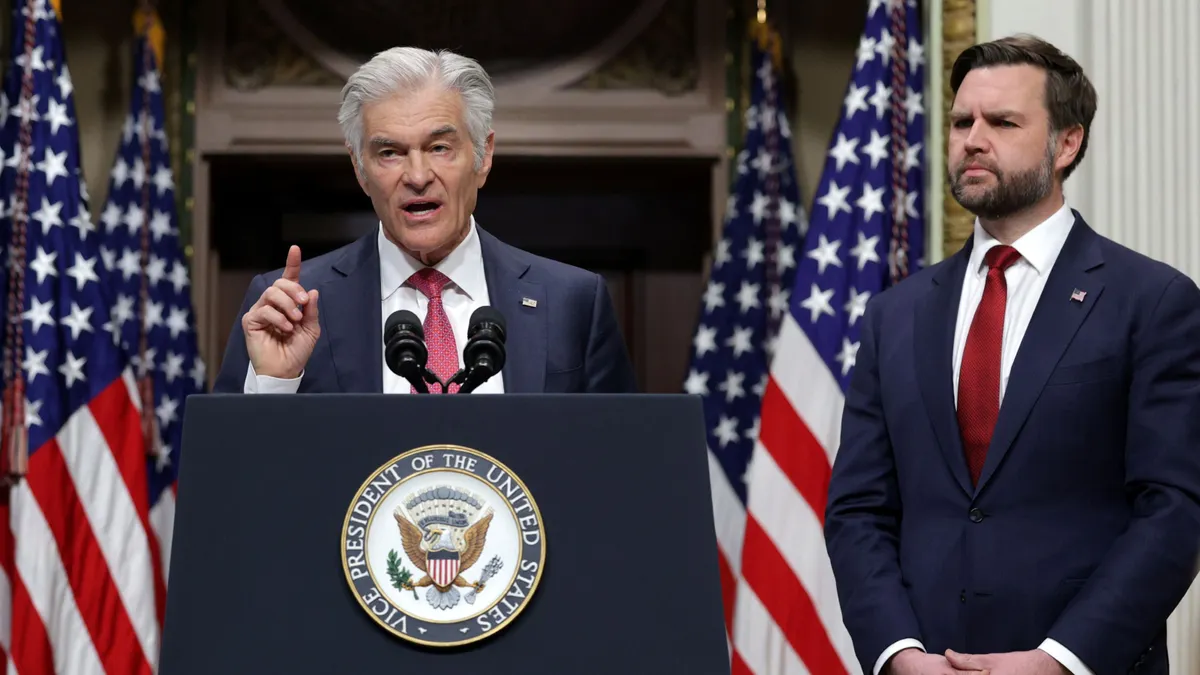
In a significant escalation of its domestic policy agenda, the Trump administration has announced a nationwide six-month moratorium on the enrollment of new suppliers for durable medical equipment, prosthetics, orthotics, and supplies (DMEPOS) into the Medicare program. This move, unveiled during a high-profile press conference at the Eisenhower Executive Office Building, represents a cornerstone of what officials are calling a comprehensive "war on fraud" designed to protect the integrity of federal healthcare spending. The moratorium, which went into effect immediately following the announcement on February 25, 2026, aims to provide federal regulators with the necessary window to overhaul existing oversight mechanisms and implement advanced technological safeguards against systemic exploitation of the Medicare system.
The decision to freeze new enrollments follows years of escalating concerns regarding the vulnerability of the DMEPOS category, which includes essential medical items such as wheelchairs, oxygen tanks, hospital beds, and blood sugar monitors. According to the Centers for Medicare and Medicaid Services (CMS), the suspension applies to all applications for initial enrollment as well as any changes in majority ownership for existing medical supply companies. By halting the influx of new entities into the program, the government intends to conduct a thorough "top-to-bottom" review of current participants and the vetting processes used to admit them into the taxpayer-funded system.
The Strategy of Detect and Deploy
Health and Human Services (HHS) Secretary Robert F. Kennedy Jr. characterized the moratorium as a pivot away from the historical "pay and chase" model of federal oversight. For decades, the federal government has largely operated by paying claims first and then attempting to recover funds later through audits and legal action once fraud was detected. Kennedy argued that this reactive approach has been fundamentally flawed, allowing billions of dollars to disappear into the hands of bad actors before the government could intervene.
"We are replacing the old ‘pay and chase’ model with a real-time ‘detect and deploy’ strategy," Secretary Kennedy stated. This new framework relies heavily on advanced artificial intelligence tools and predictive analytics to identify suspicious billing patterns at the moment they occur. The goal is to stop improper payments before they are ever issued. The six-month freeze is intended to serve as a bridge, allowing the administration to integrate these AI-driven systems into the CMS infrastructure without the distraction of a constantly expanding pool of new, unvetted suppliers.
CMS Administrator Dr. Mehmet Oz, speaking alongside Vice President JD Vance, emphasized that the moratorium is a necessary preventative measure. Dr. Oz noted that while the vast majority of medical equipment suppliers are legitimate businesses providing vital services to seniors, the DMEPOS sector has remained a primary target for sophisticated criminal syndicates due to its high volume of claims and the relative ease of remote billing.
Historical Context and Financial Data
The administration’s crackdown is rooted in a long history of critical reports from the HHS Office of Inspector General (OIG). For over a decade, the OIG has sounded the alarm on the DMEPOS program’s susceptibility to waste and abuse. A landmark 2018 OIG audit revealed that Medicare had overpaid suppliers by approximately $34 million between 2015 and 2017 alone. More strikingly, the report suggested that the government could have saved more than $223 million dating back to 2008 if the billing systems had been properly designed to catch obvious errors, such as billing for equipment provided to patients during inpatient hospital stays when the hospital is already responsible for providing such items.
While subsequent technical fixes were implemented to address some of these loopholes, the problem has persisted. A follow-up audit covering the period from 2020 to 2024 found that despite improvements, the agency still overpaid suppliers by roughly $4.5 million during that window. Furthermore, CMS officials revealed that in the last calendar year alone, they successfully blocked more than $1.5 billion in suspected fraudulent billing. The administration argues that these figures represent only the "tip of the iceberg" and that a total freeze is required to regain control over the program’s financial disbursements.
A Broader Crackdown: The Minnesota Conflict
The Medicare moratorium was not the only major healthcare enforcement action announced this week. In a move that has sparked significant political friction, Vice President JD Vance announced that the federal government is temporarily withholding more than $259 million in Medicaid funds from the state of Minnesota. The administration cited deep-seated concerns regarding potentially fraudulent claims within the state’s program, suggesting that a lack of rigorous oversight at the state level has allowed federal funds to be misused.
This decision has drawn a sharp rebuke from Minnesota Governor Tim Walz. The Governor, a prominent Democrat, characterized the withholding of funds as a "politically motivated" attack on his state’s administration. Walz defended Minnesota’s Medicaid management, arguing that the state has robust compliance measures in place and that the federal government’s intervention is an overreach of executive power. The tension between Washington and St. Paul highlights the broader political implications of the "war on fraud," as federal mandates intersect with state-managed healthcare programs.
Understanding the DMEPOS Sector
To understand the scale of the moratorium, it is necessary to look at the breadth of the DMEPOS category. These supplies are a lifeline for millions of elderly and disabled Americans. The category includes:
- Durable Medical Equipment (DME): Iron lungs, oxygen tents, nebulizers, CPAP machines, catheters, and suction pumps.
- Prosthetic Devices: Artificial limbs and eyes, as well as cardiac pacemakers and corrective lenses after cataract surgery.
- Orthotics: Rigid or semi-rigid devices used to support a weak or deformed body member or restrict movement of a body part.
- Supplies: Consumables like blood glucose test strips and lancets.
The high demand for these items, combined with the complexities of Medicare Part B billing, has historically created opportunities for "phantom" companies to bill for equipment that is never delivered, or for "upcoding," where a supplier bills for a high-end motorized wheelchair while delivering a standard manual model.

Implications for Industry and Patient Access
While the administration frames the moratorium as a victory for the taxpayer, industry advocacy groups and patient rights organizations are closely monitoring the potential for unintended consequences. The primary concern is whether a six-month freeze on new enrollments will create "healthcare deserts," particularly in rural or underserved urban areas where the number of existing suppliers may already be limited.
Industry analysts suggest that the freeze on "changes in majority ownership" could also stifle the market. Many smaller DMEPOS providers are family-owned businesses; the inability to sell or transfer these businesses to new owners for six months could lead to closures, further reducing the availability of equipment for Medicare beneficiaries. However, the administration has signaled that it will monitor access closely and has the authority to grant limited exceptions if a specific geographic area is found to be suffering from a critical shortage of medical supplies.
The Legal and Regulatory Framework
The authority to impose such a moratorium is granted to the Secretary of HHS under the Social Security Act, specifically through provisions strengthened by the Affordable Care Act. These statutes allow the government to suspend the enrollment of new providers and suppliers if the Secretary determines such action is necessary to prevent or combat fraud, waste, or abuse.
During the six-month period, the administration plans to:
- Enhance Site Visits: Increase the frequency and rigor of physical inspections of supplier locations to ensure they are legitimate brick-and-mortar operations rather than "shell" offices.
- Strengthen Bonding Requirements: Re-evaluate the surety bond requirements for suppliers to ensure that the government can recover funds in the event of fraudulent activity.
- Refine AI Algorithms: Use the "quiet period" to train machine-learning models on historical fraud data, allowing the system to flag anomalies in real-time.
- Update Enrollment Criteria: Develop more stringent "high-risk" screening protocols for entities seeking to enter the market once the moratorium is lifted.
Conclusion and Future Outlook
The six-month moratorium on Medicare DMEPOS enrollment is a bold assertion of federal authority in the ongoing effort to reform American healthcare spending. By prioritizing technological integration and preventative oversight, the Trump administration is attempting to fundamentally shift the economics of healthcare fraud, making it significantly harder for illicit actors to profit from the system.
However, the success of this initiative will be measured not only by the billions of dollars saved but also by the administration’s ability to maintain patient access to essential medical technologies. As the "detect and deploy" strategy moves from concept to implementation, the healthcare industry will be watching closely to see if AI and increased regulation can truly eliminate the "longstanding instances of fraud" that have plagued the Medicare program for decades. For now, the medical supply industry remains in a state of suspension, waiting to see what the new landscape of federal healthcare enrollment will look like when the freeze is finally thawed.