

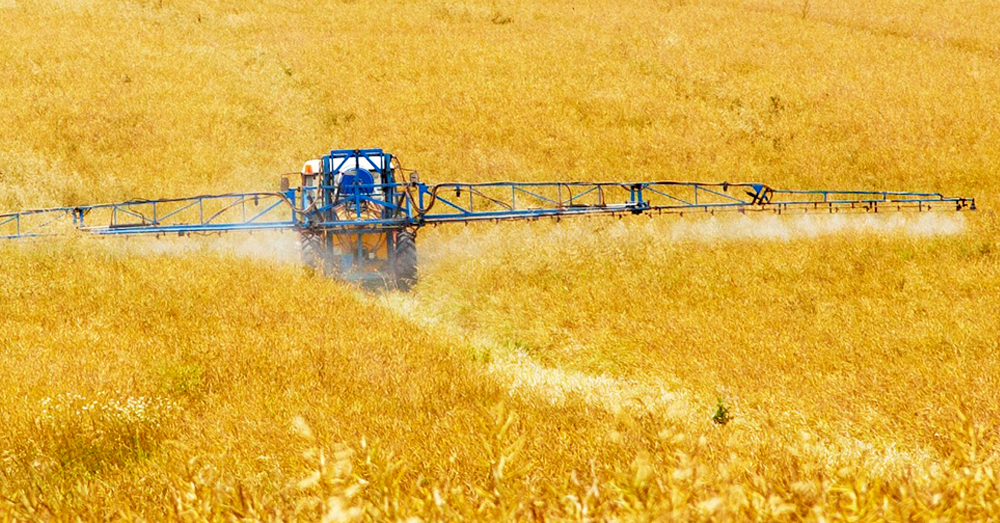
In a move intended to reshape the landscape of American agricultural self-reliance and national security, President Donald Trump issued a sweeping executive order on Wednesday aimed at significantly increasing the domestic production of glyphosate. The administration argued that the herbicide, while subject to intense international debate regarding its health effects, is an indispensable component of the United States’ food supply chain and a critical element in maintaining national sovereignty over essential chemical resources.
The executive order, signed in the Oval Office, directs the Secretary of Agriculture, in coordination with the Secretary of Defense and the Secretary of Commerce, to implement a comprehensive strategy to facilitate and subsidize the expansion of domestic glyphosate manufacturing facilities. The White House press office emphasized that the United States currently relies heavily on foreign imports for its supply of glyphosate-based herbicides, noting that there is currently only one major domestic producer of the chemical. This dependence on foreign markets, particularly those in Asia, is viewed by the administration as a strategic vulnerability that could be exploited during times of geopolitical tension or global supply chain disruption.
The Strategic Rationale: Food Security and Military Applications
The administration’s justification for the executive order rests on two primary pillars: the stability of the American food supply and the strategic importance of phosphorus, a key precursor in the synthesis of glyphosate. Glyphosate is the most widely used herbicide in the United States, applied to millions of acres of corn, soybeans, and cotton. It is the cornerstone of "no-till" farming practices, which are designed to reduce soil erosion and carbon runoff.
According to the White House statement, "The ability of American farmers to feed the nation and the world depends on a reliable, affordable, and domestic supply of the tools they use every day. By ensuring that glyphosate is produced here at home, we are protecting our farmers from foreign price gouging and supply manipulation."
Furthermore, the executive order highlights the dual-use nature of phosphorus. Beyond its role in agricultural chemicals, phosphorus is a critical component in the production of various military technologies, including incendiary munitions, tracers, and smoke-screening agents. The administration argues that by bolstering the infrastructure for phosphorus extraction and processing for agricultural use, the United States will simultaneously strengthen its defense industrial base. The order tasks the Department of Agriculture with exploring ways to streamline the permitting process for phosphorus mining and the construction of new chemical processing plants.
The Scientific and Legal Conflict
The President’s order comes at a time of continued global controversy surrounding the safety of glyphosate. The International Agency for Research on Cancer (IARC), an arm of the World Health Organization (WHO), classified glyphosate as "probably carcinogenic to humans" in 2015. This classification has been the catalyst for tens of thousands of lawsuits against chemical manufacturers, most notably Bayer, which acquired Monsanto, the original developer of the glyphosate-based herbicide Roundup.
In contrast, the U.S. Environmental Protection Agency (EPA) has consistently maintained that glyphosate is safe for use when applied according to label instructions and does not pose a carcinogenic risk to humans. This divergence in scientific opinion has created a complex regulatory and legal environment. The executive order appears to double down on the EPA’s stance, framing the chemical as a safe and necessary tool for modern agriculture.
Critics of the order, including environmental advocacy groups and public health organizations, have expressed concern that the administration is prioritizing industrial interests over public health. They argue that incentivizing the production of a "probable carcinogen" could lead to increased exposure for farmworkers and rural communities, while potentially stifling the development of safer, organic alternatives.
Historical Context and Supply Chain Vulnerabilities
To understand the urgency behind the executive order, one must look at the historical trajectory of glyphosate and the recent volatility in global chemical markets. Developed by Monsanto in the early 1970s, glyphosate revolutionized farming by allowing for broad-spectrum weed control. The introduction of "Roundup Ready" genetically modified crops in the 1990s further cemented its dominance, as it allowed farmers to spray entire fields to kill weeds without harming their crops.
However, the global supply chain for glyphosate has become increasingly concentrated. China is currently the world’s largest producer of glyphosate and its precursors, controlling a significant portion of the global market share. In 2021 and 2022, a combination of pandemic-related shutdowns, energy shortages in China, and logistics bottlenecks caused the price of glyphosate to skyrocket, leaving many American farmers struggling to secure enough herbicide for the planting season.
The White House pointed to these events as a cautionary tale. "We cannot allow the American food supply to be held hostage by the industrial policies of foreign adversaries," the statement read. By fostering a domestic "cradle-to-grave" supply chain—from the mining of phosphate rock to the synthesis of the final herbicide—the administration aims to insulate the U.S. agricultural sector from future global shocks.
Economic Impact and Agricultural Usage Data
The economic stakes involved in glyphosate production are substantial. According to data from the U.S. Geological Survey and the Department of Agriculture, American farmers use approximately 280 million pounds of glyphosate annually. The herbicide is used on roughly 90% of all corn, cotton, and soybean acres in the United States.
Industry analysts suggest that the executive order could lead to the construction of at least two new large-scale manufacturing facilities in the U.S. Southeast or Midwest, regions with proximity to both phosphate deposits and the primary consumer base. Such projects would represent billions of dollars in capital investment and could create thousands of high-skilled jobs in chemical engineering and industrial operations.
However, the transition to increased domestic production will not be instantaneous. Building a new phosphorus processing plant or a glyphosate synthesis facility can take five to seven years, including the time required for environmental impact assessments and regulatory approvals. The executive order seeks to shorten this timeline by directing federal agencies to "identify and remove unnecessary regulatory barriers" that may hinder the expansion of the industry.
Reactions from Stakeholders
The announcement has drawn a wide range of reactions from across the political and economic spectrum.
Agricultural Groups: Organizations such as the American Farm Bureau Federation and the National Corn Growers Association have generally welcomed the move. "Input costs are one of the biggest challenges facing our members today," said a spokesperson for a leading agricultural trade group. "Securing a domestic supply of glyphosate will provide much-needed price stability and ensure that our farmers have the tools they need to remain competitive in a global market."
Chemical Industry: Bayer, currently the only major producer of glyphosate in the U.S. through its plant in Luling, Louisiana, issued a cautious statement. While the company supports the recognition of glyphosate’s importance, it also faces ongoing litigation and may be wary of government-subsidized competition. Industry experts suggest that the order might benefit smaller chemical firms or "white-label" manufacturers who could enter the market under the new federal incentives.
Environmental Advocates: The Center for Food Safety and the Environmental Working Group (EWG) issued swift condemnations. "This executive order is a step backward for public health and environmental protection," said a representative from the EWG. "Instead of propping up a chemical with a checkered safety record, the government should be investing in sustainable agriculture and helping farmers transition away from chemical dependency."
Congressional Response: The reaction on Capitol Hill has largely fallen along party lines. Republican lawmakers praised the President for taking a "common-sense approach" to national security and food independence. Meanwhile, several Democratic members of the House Committee on Agriculture expressed concern about the potential for environmental degradation resulting from increased phosphorus mining and the bypass of traditional regulatory oversight.
Timeline of Key Events Leading to the Order
- 1974: Monsanto brings glyphosate to market under the brand name Roundup.
- 1996: Introduction of glyphosate-tolerant "Roundup Ready" soybeans.
- 2015: The WHO’s International Agency for Research on Cancer (IARC) classifies glyphosate as a "probable carcinogen."
- 2018: Bayer completes its $63 billion acquisition of Monsanto, inheriting massive legal liabilities.
- 2020: The EPA reaffirms its position that glyphosate does not pose a risk to public health.
- 2021-2022: Global supply chain crisis leads to a 300% increase in glyphosate prices in some regions.
- 2024-2025: Increased geopolitical tensions lead to calls for "de-risking" the U.S. chemical supply chain from foreign dependence.
- February 18, 2026: President Trump signs the executive order to support domestic glyphosate and phosphorus production.
Broader Implications for Trade and Industry
The executive order may have significant implications for international trade relations. By subsidizing domestic production, the U.S. could face challenges at the World Trade Organization (WTO) from other glyphosate-exporting nations who may view the move as an unfair trade practice. Additionally, the focus on "onshoring" critical chemicals signals a broader shift in U.S. trade policy toward protectionism and industrial planning, particularly in sectors deemed vital to national security.
The emphasis on phosphorus is also noteworthy. Phosphorus is a finite resource, and the world’s highest-quality reserves are located in only a few countries, including Morocco, China, and the United States. By linking glyphosate production to military-grade phosphorus, the administration is effectively categorizing the entire agricultural chemical supply chain as a matter of national defense. This could lead to increased federal oversight of mining operations and a potential clash with state-level environmental regulations in places like Florida and Idaho, where major phosphate deposits are located.
Fact-Based Analysis of Future Outlook
As the Department of Agriculture begins to implement the President’s directives, several factors will determine the success of this initiative. First is the willingness of private industry to invest in new domestic capacity, even with government incentives. The long-term legal liability associated with glyphosate remains a significant deterrent for many companies.
Second, the administration will need to navigate the complex environmental regulations governing phosphorus mining. Phosphate mining is often associated with significant environmental footprints, including the creation of "phosphogypsum stacks," which can contain low levels of radiation and pose risks to local water supplies. Balancing the goal of increased production with environmental stewardship will be a critical challenge for the federal agencies involved.
Finally, the impact on the global market cannot be ignored. If the United States successfully increases its domestic capacity, it could lead to a global surplus of glyphosate, potentially driving down prices worldwide but also triggering retaliatory measures from other major producers.
In the immediate term, the executive order serves as a clear signal of the administration’s priorities: prioritizing domestic industrial strength, agricultural stability, and national security over the precautionary concerns raised by international health organizations. As the implementation phases begin, the debate over the safety, necessity, and strategic value of glyphosate is likely to intensify, reflecting broader national conversations about the intersection of technology, health, and sovereign independence.