

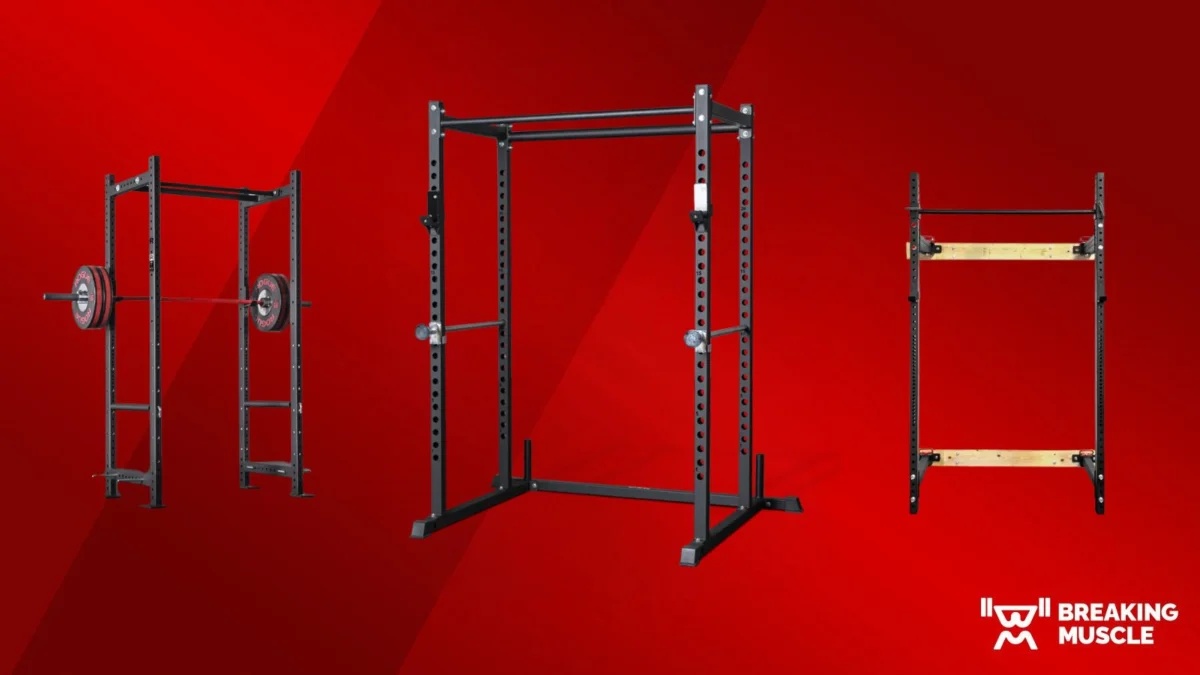
A power rack, also known as a power cage, is a cornerstone of any serious home gym, providing a safe and versatile platform for a wide array of strength training exercises. From fundamental barbell squats and bench presses to more complex compound movements, a well-chosen power rack allows individuals to push their limits without the constant need for a spotter. The advent of advanced design and manufacturing has led to a diverse market of power racks, catering to varying budgets, space constraints, and training goals. This comprehensive guide explores the top power racks for 2025, offering insights from industry experts and detailed analyses to help enthusiasts equip their personal fitness sanctuaries.
The functionality of a power rack extends far beyond basic barbell work. With the addition of accessories such as pull-up bars, dip stations, and resistance band attachments, these units transform into comprehensive full-body training stations. This adaptability makes them an invaluable asset for individuals seeking to maximize their training efficiency within the confines of their home gym. Whether space is at a premium or budget is a primary concern, the market offers solutions to accommodate nearly every scenario, empowering users to elevate their fitness routines.
To provide an authoritative perspective, this guide incorporates insights from Shane Sevcik, a USAW-1 (USA Weightlifting) certified coach, a current USA Weightlifting Foundation board member, a state record holder, and a Masters Pan American and World title holder. Sevcik’s extensive experience in competitive weightlifting and coaching offers a unique lens through which to evaluate the critical features and performance aspects of power racks. His input is crucial for understanding what truly differentiates a superior piece of equipment from a merely adequate one.
Understanding the Power Rack Ecosystem
At its core, a power rack is designed to provide safety during heavy lifting. The defining characteristic is its four upright posts, which form a protective cage around the lifter. Integrated into these uprights are adjustable safety pins, straps, or arms. These crucial components act as a failsafe, catching the barbell if a lifter is unable to complete a repetition, thereby preventing serious injury. This inherent safety feature democratizes heavy lifting, making it accessible to individuals training alone.
The evolution of power rack design has seen manufacturers introduce various configurations and material enhancements. Early models were often simpler, robust structures. Today, innovation focuses on maximizing space efficiency, enhancing stability, and integrating multi-functional capabilities. The materials used, primarily steel, vary in gauge and quality, directly impacting the rack’s weight capacity and longevity.
Expert Insights on Power Rack Selection
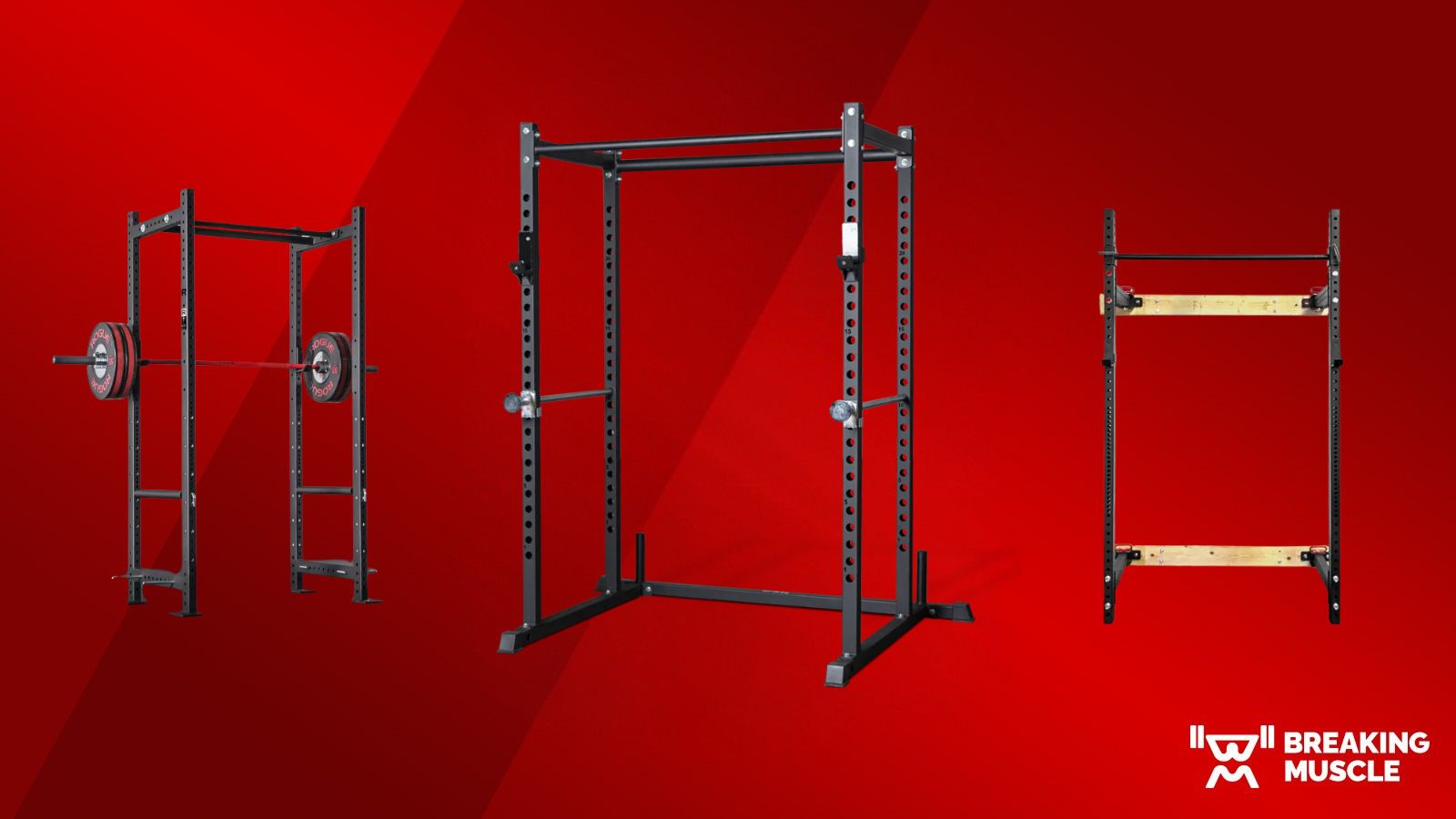
Shane Sevcik emphasizes the importance of robust construction. "I always look for thick, heavy-duty steel, ideally 11-gauge," Sevcik states. "A rack made out of thicker steel creates more leverage on the uprights, especially when you add attachments. It contributes significantly to overall stability and confidence during heavy lifts." This recommendation underscores the direct correlation between material quality and a rack’s performance under stress.
Beyond the structural integrity, Sevcik highlights the significance of the J-cups, the components that cradle the barbell on the uprights. "A big must-have that a lot of people overlook is to make sure your J-cups, or J-hooks, have some coating on them to preserve the knurling on your bar," he advises. "If you’re doing a bench press or deadlift, that’s less of a concern, but if you’re an Olympic weightlifter, that’s where your snatch grip is holding on, and you want that knurling to be as sharp and aggressive as possible." This detail is critical for athletes who rely on precise grip placement for their lifts.
Hole spacing on the uprights is another key consideration Sevcik points out. "I would make sure you have enough hole patterns to make a lot of adjustments," he explains. "Sometimes, they’re too spaced out, for example, in two-inch increments instead of one. I like to have the added adjustability, especially for those heavier weights." Precise adjustability allows lifters to fine-tune the bar height for squats, bench presses, and other exercises, optimizing form and safety.
The inclusion of a pull-up bar is also a feature Sevcik advocates for. "Having the option to do pull-ups is a good idea," he says. "They’re one of the most basic, fundamental movements. Plus, if you dedicate the square footage to put the rack in there, you’ll want to get as much utility as possible because you are sacrificing some real estate." This sentiment reflects the desire for multi-functional equipment that maximizes the value of a home gym investment.
Finally, Sevcik stresses the importance of expandability. "It’s important to have the option to add accessories," he notes. "You might not want a dip bar right now, but down the road, you may decide to incorporate more dips into your training program, and it sure is nice to have your power rack as your one central piece of equipment." This foresight in design allows the rack to evolve with the user’s training needs.
Top Power Racks for 2025: In-Depth Reviews
1. Best Overall Power Rack: REP Fitness PR-1000 Power Rack
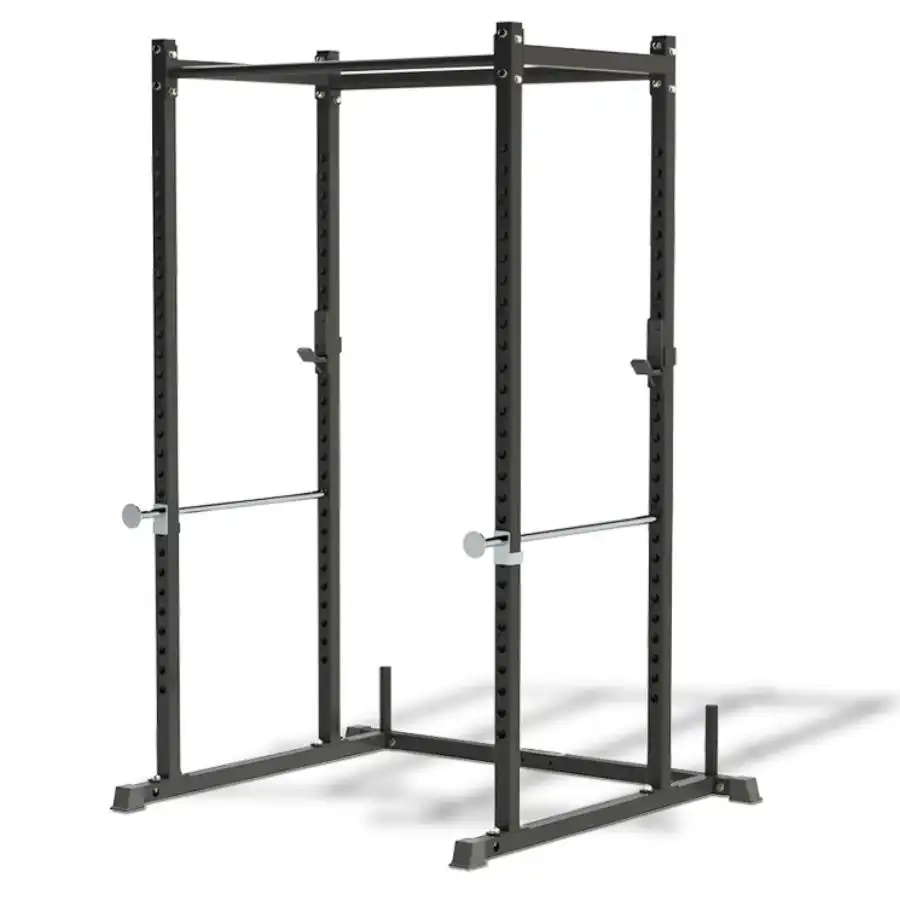
The REP Fitness PR-1000 stands out as a robust and versatile option, suitable for a wide range of users. Constructed from 14-gauge steel with laser-cut holes spaced two inches apart, it offers a solid foundation for various strength training exercises. A notable feature is the inclusion of two pull-up bars: one 1.25 inches thick and another 2 inches thick, allowing for diverse grip training without requiring additional equipment. The strategic placement of these bars on both the front and back posts enhances the rack’s overall stability. Integrated weight storage pegs on the rear base further contribute to its sturdiness.
The PR-1000 is highly customizable, with an array of optional accessories such as safety straps and a dip station, enabling a comprehensive full-body workout. Tester Brandon Lunsford, C.P.T., CF-L1, who used the PR-1000 for nearly two years, described it as an excellent intermediate or beginner rack. He noted some sway when un-racking 350 pounds but found the rack held the weight securely. "The rack held the weight just fine, but there was some swaying after I removed the bar," Lunsford commented. "I’d recommend it to a beginner or someone who doesn’t lift to that capacity because I was happy with it otherwise."
The rack’s design includes chrome-coated safeties that extend beyond the frame, offering an additional point of contact for a barbell. The numbered uprights facilitate quick and precise adjustments of safeties and J-hooks. Lunsford praised the J-hooks for their ease of movement and the one-inch hole spacing, which he found adequate for accurate bar positioning. He also attested to the efficacy of the safeties, stating, "I can attest to the functionality of the safeties; they worked great for me when I failed a heavy bench over 250 pounds."
2. Best Folding Power Rack: Titan Fitness T-3 Series Folding Power Rack
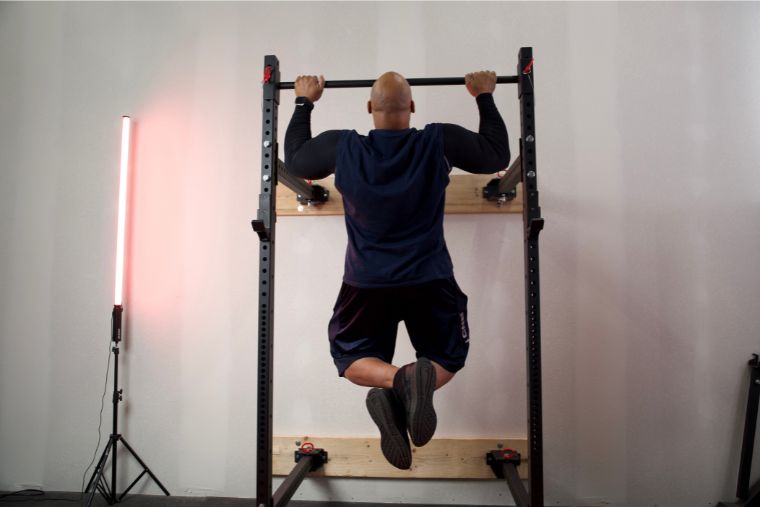
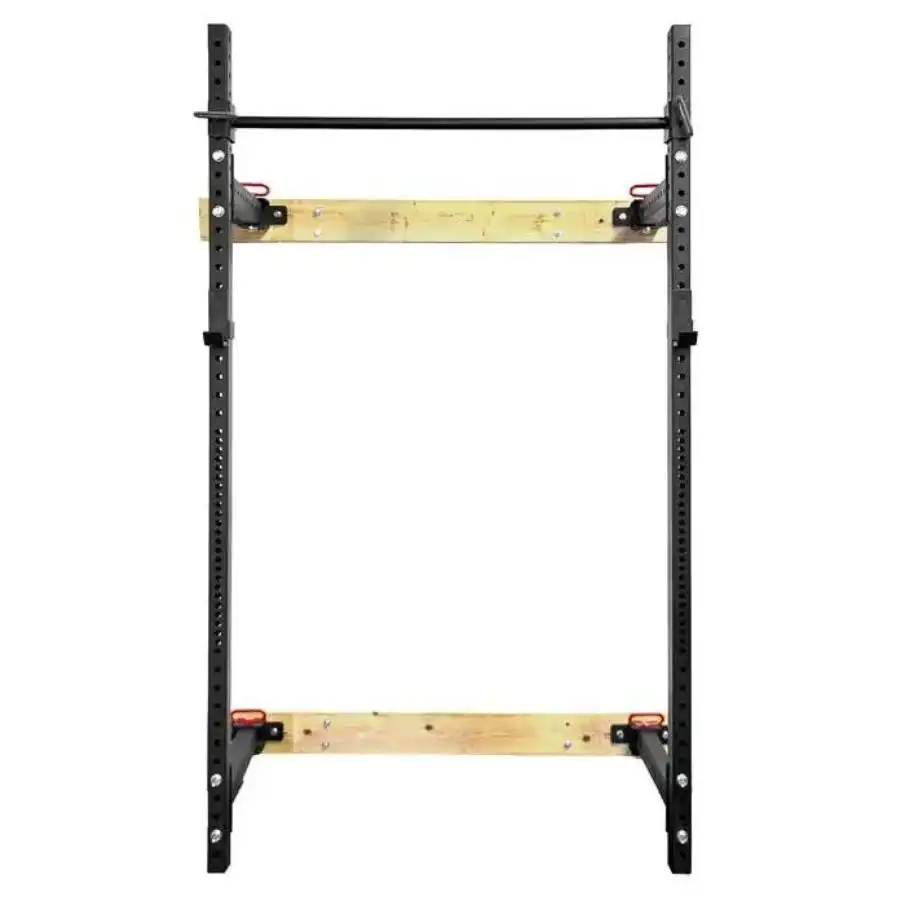
For those with limited space, the Titan Fitness T-3 Series Folding Power Rack offers an ingenious solution. This wall-mounted rack folds to a mere five inches from the wall when not in use. Its stability is ensured by bolt-down uprights and side bracings, supporting an impressive weight capacity of up to 1,100 pounds. The floor attachment adds further rigidity, particularly beneficial for dynamic pull-up movements like kipping or toes-to-bar. It features two pull-up bars: a 2-inch thick rear bar and a standard 1.25-inch thick front bar.
Constructed from 11-gauge steel with 2×3 inch tubing, the T-3 Series is a robust unit. While newer racks often feature 3×3 inch tubing, potentially limiting compatibility with some attachments, the T-3 offers exceptional value. Lunsford remarked, "A rack is an essential piece of fitness equipment. What sets them apart is the build, value, and accessories. A full power rack of this style with a weight capacity of 1,100 pounds for around $400 is an excellent bang for the buck."
Titan Fitness employs advanced manufacturing processes, including laser-cut holes and robotic welding, which contribute to enhanced precision and craftsmanship. The two-inch hole spacing is supplemented by Westside hole spacing in the bench and clean pull zones, allowing for finer adjustments. A significant advantage is free shipping on all Titan products, coupled with a one-year warranty against manufacturing defects. However, safety arms are sold separately, ranging from $90 to $190. Additionally, while the rack is rated for 1,100 pounds, the included J-cups are rated to 1,000 pounds, necessitating an upgrade for those lifting at the rack’s maximum capacity. Titan offers a wide array of accessories, including various safety options, stabilizer feet, and extension kits, along with customization in color and depth.
3. Best Short Power Rack: REP Fitness PR-1050 Short Power Rack
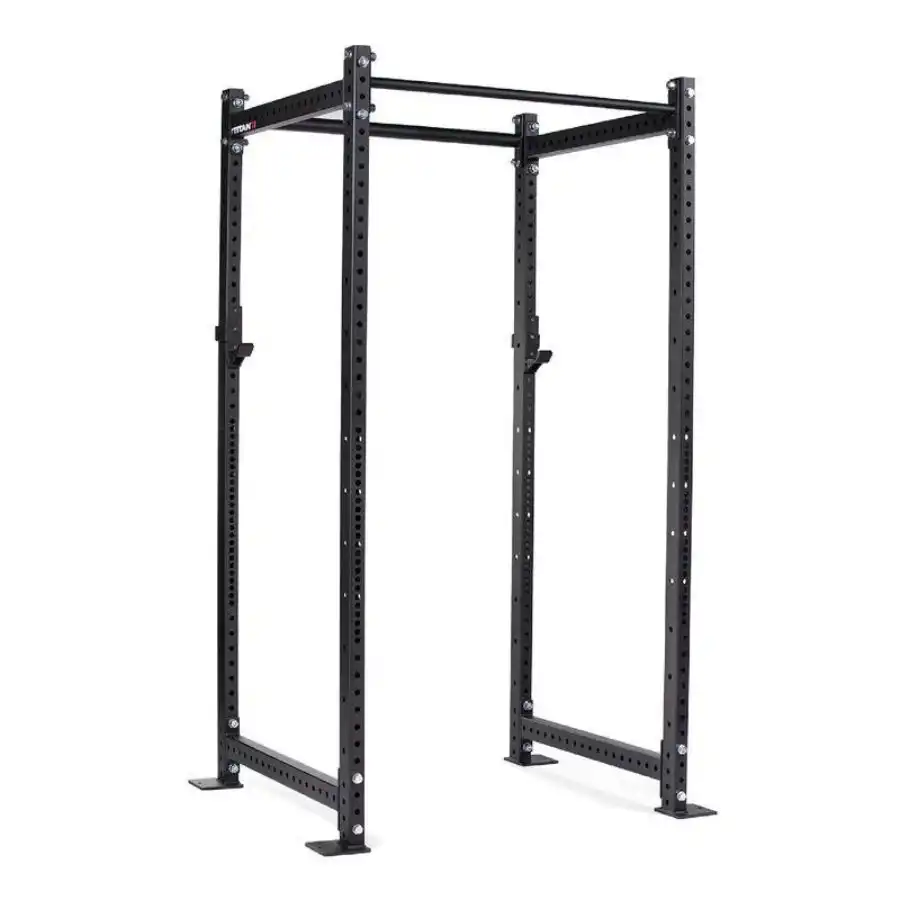
Ideal for home gyms with low ceilings, such as garages or basements, the REP PR-1050 Short Power Rack measures just 72 inches (six feet) in height. Its compact footprint of 58 by 48 inches belies its sturdy construction and a respectable weight capacity of up to 700 pounds. Despite its reduced height, the PR-1050 does not compromise on essential features. It includes dual pull-up bars rated for 400 pounds, numbered upright holes with two-inch spacing, rear base weight horns, chrome-coated safeties, and plastic-lined J-cups. The rack is also compatible with a variety of add-on attachments, including cannonball grips for grip strength and landmine attachments for exercises like presses and rows.
4. Best Space-Saving Power Rack: Fringe Sport Retractable Power Rack
The Fringe Sport Retractable Power Rack is engineered for maximum space efficiency. This rack can be retracted and folded inward or outward, reducing its profile to just five inches from the wall when stored. Its compact base supports up to 800 pounds. The uprights are constructed from 2×3 inch, 11-gauge steel and feature Westside hole spacing in the bench zone. The 1.25-inch diameter pull-up bar can be adjusted to multiple heights. At 91 inches tall, it might not be suitable for very low ceiling environments.
The unit comes equipped with J-hooks coated with ultra-high molecular weight polyethylene (UHMW), a material known for its strength and abrasion resistance, protecting the barbell’s knurling. Fringe Sport provides an installation video to assist users, and the rack includes four mounting brackets and six detent pins for secure positioning.
5. Best Power Rack with Lat Pulldown: Sunny Health & Fitness Power Zone Strength Rack Power Cage Squat Rack
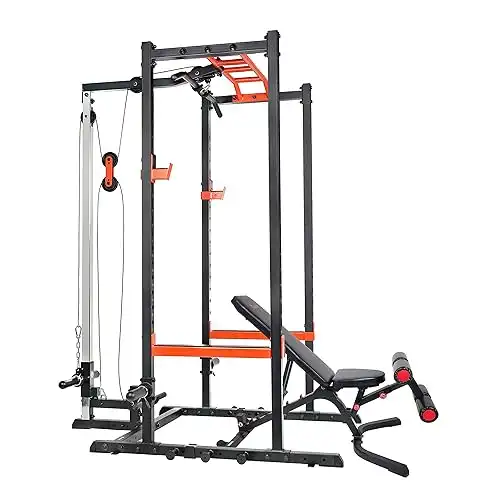
The Sunny Health & Fitness Power Zone Strength Rack is a compelling option for those seeking integrated lat pulldown functionality. It features a pulley system attachment capable of handling up to 352 pounds of weight plates, enabling exercises such as upright rows and curls. When not in use, the lat pulldown attachment can be easily stored using built-in safety hook latches.
This power rack is designed for a comprehensive workout. Its adjustable, angled pull-up bar offers four grip positions, including wide and narrow grips. The J-hooks provide 18 vertical height settings, and the spotter bars with safety latches enhance safety during heavier squats. Six resistance band pins are included for additional training versatility.
6. Best Power Rack for Garage Gym: Rogue Fitness R-3 Power Rack
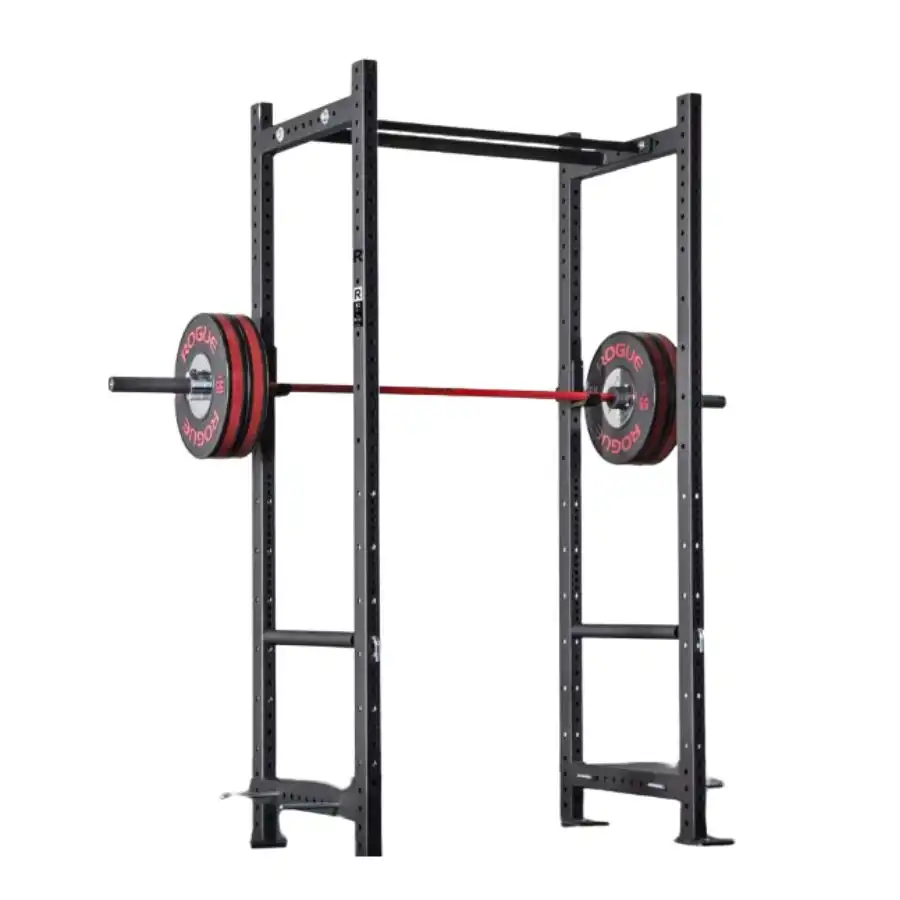
The Rogue Fitness R-3 Power Rack is the most compact model in Rogue’s R-Series, making it an excellent choice for home garage gyms. Available in two height options (90.4 inches or 84.4 inches), it accommodates garages with lower ceilings. Constructed from heavy-duty 11-gauge steel, it features Westside hole spacing with a one-inch pattern through the bench area and two-inch spacing above and below. The R-3 is compatible with a wide range of Rogue Infinity Series attachments, including the Matador dip station and bar hangers for weight storage.
The rack includes a 43-inch pull-up bar, Infinity J-cups, pin/pipe safeties, and four band pegs. Users can further customize their setup by adding barbells, benches, or plates directly from Rogue Fitness. Its versatility supports various disciplines, including low rows, pull-ups, chin-ups, squats, bench presses, powerlifting, CrossFit, and Olympic lifting.
7. Best Squat Rack: Fitness Reality Squat Rack Power Cage
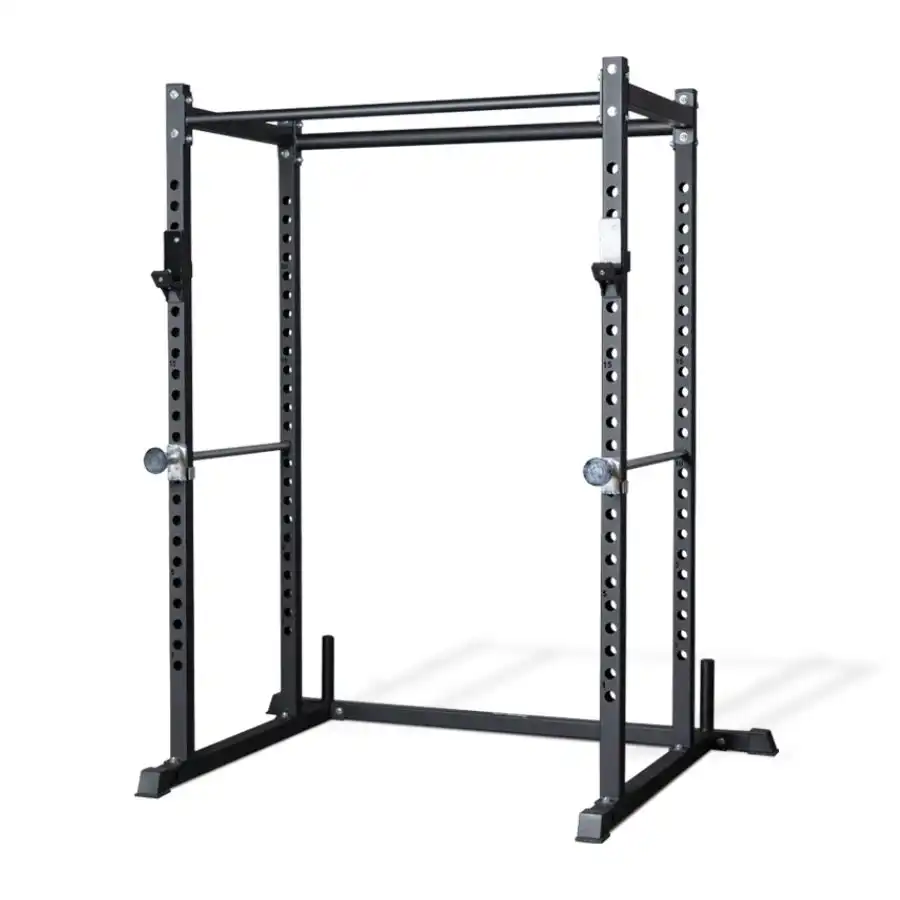
The Fitness Reality Squat Rack Power Cage offers an impressive 800-pound weight capacity, making it suitable for a broad spectrum of users, from beginners to elite powerlifters. Unlike some lighter squat stands, this model features solid steel safety arms, not hollow tubes, and includes two rear stability bars for enhanced support. With 19 adjustable height levels, it accommodates a variety of exercises beyond squats, such as pull-ups, chin-ups, bench presses, and overhead presses. At $299, it represents the most budget-friendly option on this list.
The cage features a multi-grip pull-up bar and two 23-inch safety bars with chrome locks. While it does not come standard with J-hooks, dip bars, or plate storage, its one-inch hole pattern allows for compatibility with most standard-sized attachments.
The Importance of Power Racks in Modern Fitness
Research consistently links strength training to significant long-term health benefits, including a reduced risk of chronic diseases. A power rack, by enabling safe and unassisted heavy lifting, facilitates consistent strength progression. The convenience of having such a piece of equipment readily available in a home gym removes many barriers to regular training, allowing individuals to adhere to recommended muscle-strengthening guidelines, typically suggested at 30 to 60 minutes per week.
The integration of optional attachments further enhances the utility of power racks. These accessories allow users to target different muscle groups and movement patterns, fostering a more balanced and comprehensive fitness regimen. The ability to customize a power rack to one’s specific needs and goals transforms it from a single piece of equipment into a personalized training hub.
Safe and Effective Power Rack Usage
Proper technique and safety protocols are paramount when using a power rack. Shane Sevcik strongly advises on the correct setup of safety arms: "One of my biggest pet peeves is when I see people who don’t know how to set the safety arms the right way and have the pins set way too low," he states. "The purpose of those safety arms is to give you a safe way to bail out of a lift. Otherwise, you’re just using a power rack as a big immobile squat stand."
Sevcik provides a clear method for setting safety bars for squats: "To set them up for squats, put the unloaded bar on your back and squat down to the deepest position you can get yourself into," he instructs. "The safety bars should be about an inch and a half or one notch lower than your bottom position, so if you ever fail on a squat, all you do is sit your butt down to the very bottom." This precise adjustment ensures a safe "bail-out" scenario without unnecessary strain.
It is important to note that while many power racks include safety features, some budget models may require these to be purchased separately. For individuals new to using power racks, seeking guidance from a fitness professional is highly recommended to ensure proper form and safety across various exercises.
Key Considerations When Purchasing a Power Rack
Size and Footprint: Thoroughly measure your available space, including ceiling height, before making a purchase. Folding racks offer a viable solution for space-constrained environments. Consider your own height and planned usage, especially for pull-up bars and attachment clearances. Ensuring sufficient space around the rack is crucial for safe exercise execution and bailouts.
Style and Construction: Power racks vary in design, materials, and finishes. Key aspects include the gauge of steel (lower is thicker and stronger), the type of welds (robotically welded for precision), and the overall structural design for stability.
Weight Capacity: Power racks typically range from 700 to over 1,100 pounds in weight capacity. Beginners and intermediate lifters may find racks in the lower to mid-range sufficient, while advanced athletes will benefit from higher capacities and robust construction. Always adhere to the manufacturer’s specified weight limits for the rack and its individual components.
Cost: Pricing for power racks varies significantly based on features, material quality, and brand reputation, ranging from approximately $299 to over $965. Many manufacturers offer free shipping, which can be a considerable cost-saving factor. Prioritize features that align with your training goals and budget.
Essential Features
- Material: As highlighted by Sevcik, 11-gauge steel is a benchmark for durability and stability.
- J-Cups/J-Hooks: Coated J-cups are vital for protecting barbell knurling, particularly for Olympic weightlifters.
- Hole Spacing: Finer hole spacing (e.g., 1-inch increments) offers greater adjustability for precise bar placement.
- Pull-Up Bar: An integrated pull-up bar enhances the rack’s versatility, allowing for fundamental bodyweight exercises.
- Attachments: The availability of add-on accessories like dip bars, landmine attachments, and weight storage allows the rack to adapt to evolving training needs.
Methodology for Selection
The selection of the power racks featured in this guide was based on a rigorous evaluation process. Criteria included:
- User Reviews: Aggregated feedback from a wide range of users to gauge real-world performance and satisfaction.
- Expert Opinions: Input from certified coaches and competitive athletes regarding essential features and safety considerations.
- Material Quality: Assessment of steel gauge, weld quality, and overall construction durability.
- Weight Capacity: Evaluation of the rack’s load-bearing capabilities and the limits of its components.
- Feature Set: Examination of included accessories and compatibility with add-on options.
- Value for Money: Balancing cost against the quality of construction, features, and overall performance.
- Innovation and Design: Consideration of space-saving features, ergonomic design, and ease of assembly.
This comprehensive approach ensures that the recommended power racks represent a diverse range of options, catering to different budgets, space limitations, and training objectives, while maintaining a focus on safety, durability, and performance.
Conclusion
Investing in a power rack is a significant step towards achieving consistent and effective strength training at home. The variety of options available in 2025 ensures that individuals can find a model that perfectly suits their needs, whether they prioritize maximum versatility, compact storage, or budget-friendliness. By carefully considering the factors discussed, including expert recommendations on construction, adjustability, and safety features, enthusiasts can equip themselves with a tool that will support their fitness journey for years to come. The power rack remains a cornerstone of the modern home gym, offering a safe, efficient, and adaptable platform for building strength and improving overall health.
Frequently Asked Questions
What is the difference between a squat rack and a power rack?
A power rack, or power cage, typically features four to six uprights forming a protective cage, offering greater versatility and safety for a wider range of exercises, including those performed inside the cage. A squat rack, or squat stand, usually consists of two uprights and is generally more portable but offers less containment and fewer opportunities for accessory integration.
How should you bolt down your power rack?
If your power rack is designed to be bolted down, always follow the manufacturer’s specific installation instructions. This typically involves using appropriate hardware to secure the rack’s base to the floor, ensuring stability and preventing movement during heavy lifts.
How far from the wall should a power rack be?
For freestanding racks, maintaining adequate distance from walls and other obstacles is crucial for safe movement and exercise execution. Generally, a few feet of clearance is recommended, but always consult the manufacturer’s guidelines for precise spacing recommendations.
What gauge steel should a power rack be?
The gauge of steel is a critical indicator of a power rack’s strength and durability. Lower gauge numbers signify thicker, stronger steel. While 11-gauge and 12-gauge steel are considered premium and offer exceptional sturdiness, 13-gauge or 14-gauge steel can be perfectly adequate for many home gym setups, offering a good balance of strength and cost-effectiveness.
