

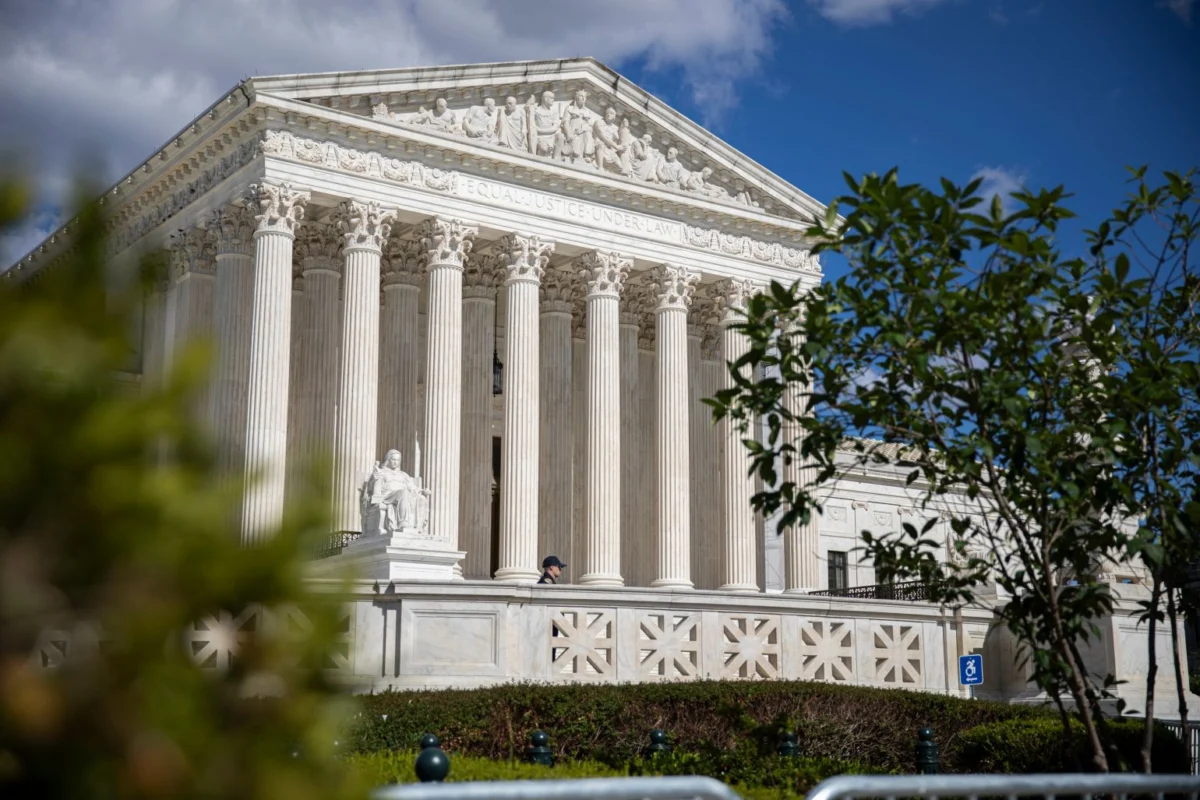
The Council for Responsible Nutrition (CRN) is intensifying its legal battle to challenge a New York state law that prohibits the sale of certain dietary supplements to individuals under the age of 18, by filing a brief to keep alive its effort to have the U.S. Supreme Court review the free speech implications of the legislation. The law, which specifically targets weight-loss and muscle-building supplements, has been met with significant opposition from the supplement industry, which argues it infringes upon constitutionally protected commercial speech and is based on unsubstantiated claims.
At the heart of this legal dispute is the New York measure’s assertion that these supplements can exacerbate eating disorders. This notion was largely popularized by the Strategic Training Initiative for the Prevention of Eating Disorders (STRIPED) at Harvard University, led by S. Bryn Austin. While STRIPED’s research has been influential, its conclusions are not universally accepted within the scientific and regulatory communities. The CRN contends that the law’s premise is flawed and that restricting the marketing and sale of these products to minors is an overreach, particularly when the underlying research is contested.
Although the New York law is officially on the books, its enforcement has been notably lax. This limited enforcement is attributed, in part, to a lack of dedicated funding for its implementation and, crucially, to the ongoing legal challenges mounted by the CRN. This dynamic has created a situation where the law exists in principle but has had minimal practical impact, further fueling the CRN’s determination to have its constitutionality thoroughly reviewed by the nation’s highest court.
CRN Argues Suppression of Speech Based on Speculation, Not Evidence
The CRN’s legal journey began in March when it formally submitted its petition for a writ of certiorari to the U.S. Supreme Court. This legal maneuver is essentially a formal request for the court to consider and review a lower court’s decision. The industry trade group argues that the New York law represents an unconstitutional restriction on commercial speech, one that is predicated on speculative concerns rather than concrete, evidence-based harm.
In a recent filing, the CRN reiterated these arguments in response to a brief submitted by the state of New York. The CRN’s core contention is that the appellate court erred by accepting the New York Legislature’s interpretation of product marketing as a direct proxy for harm, without demanding sufficient proof that restricting truthful marketing claims would demonstrably reduce the alleged harms the state identified. This stance highlights a fundamental disagreement over the burden of proof required to justify such legislative restrictions on commercial speech.
“The appellate court improperly accepted the [New York] Legislature’s use of product marketing as a proxy for harm without requiring proof that restricting truthful marketing claims would directly reduce the harms the State identified,” the CRN argued in its brief. This statement underscores the trade association’s belief that the state has not met the threshold of evidence necessary to justify the curtailment of commercial speech, a right protected under the First Amendment.
Questioning the Scientific Foundation of the Law
A significant pillar of the CRN’s challenge rests on questioning the validity and scope of the research underpinning the New York law. The industry group, along with other stakeholders, has raised serious doubts about the scientific rigor of studies emanating from S. Bryn Austin’s STRIPED group and other researchers associated with her.
In a notable development that supports the CRN’s position, Susan Hewlings, Ph.D., principal at the consulting firm Substantiation Sciences, published a comprehensive evaluation in 2023. Her paper, which appeared in the journal Nutrients, critically examined the strength of the evidence linking weight-loss and muscle-building supplements to eating disorders. Dr. Hewlings’ conclusion was stark: “The evidence to date does not support a causative role for dietary supplements in eating disorders.”
Dr. Hewlings further elaborated that while an association might exist between the use of certain supplements and eating disorders, particularly among some older individuals with these conditions, this connection appears to be more of a symptom of underlying behaviors rather than a direct cause. She suggested that such associations could potentially be valuable as screening tools for healthcare professionals rather than as definitive proof of causality.
Her research points towards a more nuanced understanding of eating disorders, emphasizing that these are complex conditions with multifactorial origins. Dr. Hewlings advocated for a shift in focus away from product bans, which she views as a superficial response, and towards implementing established, evidence-based strategies to combat the rising tide of eating disorders.
“There are established prevention and treatment programs for the disorder, which trained healthcare professionals can utilize,” Dr. Hewlings wrote in her analysis. “Attention to the complex genetic, environmental, psychological and cultural factors already identified may be useful to specific treatment approaches. Public health policy and resources should be focused on scientifically established approaches to reduce the prevalence of eating disorders.” This perspective aligns with the CRN’s call for policy decisions to be guided by robust scientific consensus rather than by what they perceive as alarmist interpretations of correlational data.
Timeline of the Legal Challenge
The legal proceedings leading to the CRN’s petition for Supreme Court review have unfolded over a period of time, reflecting the deliberate pace of such significant legal challenges:
- Enactment of the New York Law: The specific New York legislation banning the sale of weight-loss and muscle-building supplements to minors was enacted, creating the legal basis for the controversy. The exact date of enactment is crucial for establishing the legal timeline.
- CRN’s Initial Legal Action: Following the enactment of the law, the CRN, representing a significant portion of the dietary supplement industry, initiated legal proceedings to challenge its constitutionality. This likely involved filing lawsuits in lower federal or state courts.
- Lower Court Rulings: The case progressed through various levels of the judicial system, with lower courts issuing rulings that the CRN found unsatisfactory, thus prompting further appeals. The specifics of these rulings would determine the grounds for the subsequent appeal to higher courts.
- Appellate Court Decision: The CRN’s challenge eventually reached an appellate court, where a decision was made that the CRN believes warrants review by the U.S. Supreme Court. The nature of this appellate decision, whether it upheld or overturned the law, significantly shaped the CRN’s next steps.
- Petition for Writ of Certiorari (March 2026): The CRN formally petitioned the U.S. Supreme Court in March 2026, requesting the court to hear their case. This marked a critical juncture, as the Supreme Court has broad discretion in deciding which cases it will review.
- State’s Opposition Brief: In response to the CRN’s petition, the state of New York filed its own brief, arguing why the Supreme Court should not hear the case, or why the lower court’s decision should be upheld.
- CRN’s Reply Brief (July 1, 2026): The CRN’s latest filing, a reply brief submitted on July 1, 2026, directly addresses the arguments presented by New York. This brief aims to persuade the Supreme Court justices that the case presents significant legal questions worthy of their attention.
Broader Implications for Commercial Speech and Regulation
The outcome of this legal battle could have far-reaching implications for how commercial speech is regulated, particularly concerning products marketed towards young people. If the Supreme Court declines to hear the case, or rules in favor of New York, it could set a precedent for states to enact similar restrictions on product sales based on contested scientific assertions. This could embolden other jurisdictions to implement laws that limit the marketing and availability of a wide range of products, potentially stifling innovation and consumer choice.
Conversely, if the Supreme Court agrees to hear the case and rules in favor of the CRN, it would reinforce the importance of robust scientific evidence and due process in the regulation of commercial speech. Such a ruling could establish a higher bar for states seeking to restrict product sales based on perceived harms, requiring them to demonstrate a clear and present danger supported by widely accepted scientific consensus. This would be a significant victory for industries that rely on commercial speech to inform consumers about their products.
The debate also touches upon the evolving role of regulatory bodies and the judiciary in navigating complex scientific issues. As scientific understanding advances, and as new products and marketing strategies emerge, the lines between legitimate consumer protection and overreaching regulation become increasingly blurred. The CRN’s pursuit of Supreme Court review underscores the industry’s commitment to defending what it views as its fundamental rights while simultaneously engaging in the broader conversation about responsible product marketing and consumer well-being.
The case highlights a recurring tension in regulatory policy: how to protect vulnerable populations, such as minors, without unduly infringing upon the rights of businesses and adult consumers. The CRN’s stance is that the New York law oversteps this boundary by acting on assumptions rather than established facts, thereby curtailing speech that is not demonstrably harmful. The legal process, now potentially reaching the Supreme Court, will ultimately determine whether these arguments will prevail and shape the future of supplement regulation and commercial speech in the United States.
Analysis of the Legal and Scientific Disagreement
The core of the CRN’s argument hinges on the legal standard for restricting commercial speech. Under U.S. law, such restrictions are permissible if they serve a substantial government interest and are narrowly tailored to achieve that interest. The CRN contends that New York has failed to meet this standard because its law is based on a questionable causal link between supplements and eating disorders, a link that many experts, including Dr. Hewlings, dispute. The industry group argues that the state is attempting to regulate based on a potential association or correlation, rather than on proven causation, and that restricting truthful marketing claims is not a narrowly tailored solution to a complex public health issue like eating disorders.
The role of S. Bryn Austin and STRIPED is central to this debate. While their research has raised awareness about potential risks associated with certain supplement use among adolescents, the CRN and its allies argue that this research has not achieved broad scientific consensus. They point to the lack of large-scale, peer-reviewed studies that definitively establish a causal relationship between the use of weight-loss and muscle-building supplements and the onset or exacerbation of eating disorders. The CRN’s emphasis on Dr. Hewlings’ peer-reviewed paper serves as a direct counterpoint to the research cited by proponents of the New York law.
This legal and scientific disagreement has broader implications for public health policy. If states can enact bans and restrictions based on research that is not universally accepted, it could lead to a patchwork of regulations that are difficult for businesses to navigate and potentially ineffective in achieving their stated goals. The CRN’s position is that public health policy should be guided by the best available scientific evidence and that regulatory interventions should be proportionate to the proven risks. They argue that resources and policy efforts would be better directed towards evidence-based prevention and treatment programs for eating disorders, as suggested by Dr. Hewlings, rather than on restricting access to dietary supplements.
The industry’s argument also touches on the First Amendment’s protection of commercial speech. Businesses have a right to advertise their products, provided the advertising is truthful and not misleading. The CRN believes that the New York law punishes truthful speech based on a speculative link to harm, thereby chilling legitimate commercial activity. The Supreme Court’s decision on whether to hear the case will signal its interest in addressing these fundamental questions about the balance between consumer protection and the freedom of commercial expression.
The CRN’s persistent legal challenge underscores the significant financial and reputational stakes involved for the dietary supplement industry. A ruling against the industry could lead to increased regulatory scrutiny and potentially similar legislative efforts in other states. Conversely, a victory could provide a strong legal precedent for defending commercial speech rights against what they perceive as unsubstantiated regulatory overreach. The ongoing legal maneuverings highlight the dynamic interplay between industry advocacy, scientific debate, and the evolving landscape of legal and regulatory frameworks governing health-related products.
