

Following a pivotal March 2026 meeting convened to "explore the scope of dietary supplement ingredients," the Food and Drug Administration (FDA) has opened a public comment period, attracting a significant response with 952 submissions. This initiative represents a critical juncture for the dietary supplement industry, potentially reshaping the definition of a "dietary supplement" for the first time in nearly three decades, since the landmark Dietary Supplement Health and Education Act of 1994 (DSHEA).
The overwhelming majority of these public comments articulate a unified industry desire to broaden the existing legal definition of dietary supplements. This push for expansion is largely concentrated on the interpretation of Section 201(ff)(1)(E) of the Food, Drug, and Cosmetic Act, often referred to as the "innovation clause" or "catch-all" provision. This specific clause, established by DSHEA, has been the bedrock for defining dietary supplements and has consistently drawn attention due to its expansive language, intended to accommodate future ingredient discoveries and technological advancements.
Decades in the Making: The Evolution of the Dietary Supplement Definition
The Dietary Supplement Health and Education Act of 1994 (DSHEA) was a watershed moment for the burgeoning dietary supplement industry. Prior to DSHEA, the regulatory landscape for supplements was considerably less defined, leading to a patchwork of oversight and consumer confusion. DSHEA sought to establish a clear framework, defining dietary ingredients and setting standards for safety and labeling. However, the interpretation and application of certain provisions within DSHEA have been a source of ongoing discussion and, at times, contention between the industry and regulatory bodies.
Central to the current debate is Section 201(ff)(1)(E), which defines a dietary ingredient as a "dietary substance for use by man to supplement the diet by increasing the total dietary intake." The ambiguity and deliberately broad nature of this clause have allowed for the inclusion of a wide array of products. However, over the years, the FDA’s interpretation has often leaned towards requiring a history of use in conventional foods as a prerequisite for an ingredient to be considered a "dietary substance." This has been a recurring point of friction, as many in the industry believe this interpretation unduly restricts the scope of what can be legally marketed as a dietary supplement, particularly in light of scientific advancements and novel ingredient development.
The FDA’s March 2026 meeting was specifically called to address this evolving landscape. The agency acknowledged the rapid pace of innovation in ingredient synthesis, manufacturing processes, and the emergence of new classes of compounds that may not fit neatly into traditional food categories. The public comment period that followed this meeting was an opportunity for stakeholders to formally present their perspectives and recommendations to the FDA as it considers potential revisions or clarifications to its regulatory approach.

Industry’s United Front: Broadening the Definition Beyond Conventional Foods
Leading industry trade associations have largely presented a unified front in their comments, advocating for an interpretation of "dietary substance" that is less tethered to the conventional food supply. The Council for Responsible Nutrition (CRN) asserted in its submission that "the statutory text is unambiguous and deliberately broad. It contains no requirement that a dietary substance be present in, or previously marketed in, the conventional food supply." CRN’s stance is that the FDA’s attempts to limit the definition to ingredients with a history of use in conventional foods have created an unnecessary hurdle not envisioned by the original legislation.
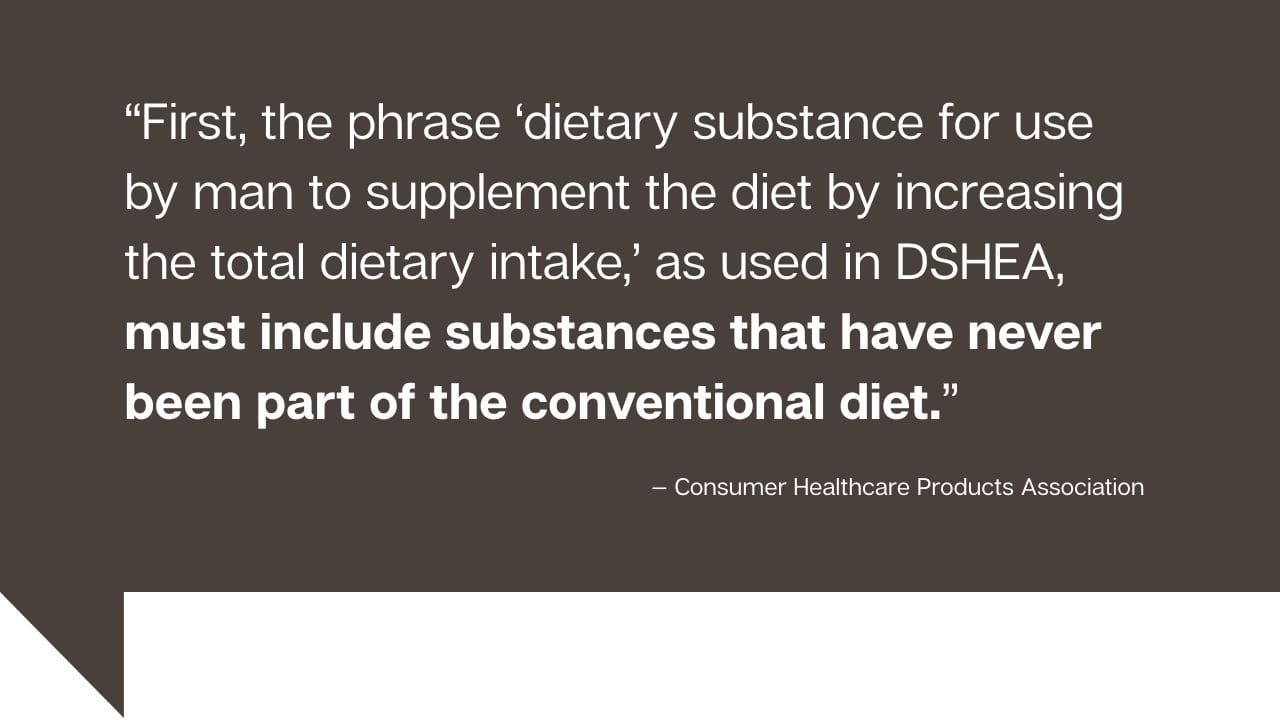
Similarly, the Consumer Healthcare Products Association (CHPA) clearly articulated this position, stating, "First, the phrase ‘dietary substance for use by man to supplement the diet by increasing the total dietary intake,’ as used in DSHEA, must include substances that have never been part of the conventional diet. Congress did not impose a ‘traditional food’ prerequisite." CHPA’s comments emphasize that the intent of DSHEA was to foster innovation and allow for the inclusion of ingredients that serve a dietary purpose, regardless of their prior presence in common foodstuffs.
The Natural Products Association (NPA) echoed these sentiments, urging the FDA to interpret "dietary substance" broadly to encompass ingredients that might be incidental to food or naturally produced within the human body. NPA specifically challenged the FDA’s conclusion in its 2016 draft New Dietary Ingredient (NDI) guidance, which suggested that a "dietary substance" must already exist in the diet. NPA argues that Section 201(ff)(1)(E) does not explicitly impose such a limitation, and that adhering to this interpretation stifles innovation.
These industry groups are collectively pushing for an understanding of "dietary substance" that acknowledges the scientific advancements in creating novel compounds through methods such as fermentation, cell culture, and sophisticated chemical synthesis. They argue that the "innovation clause" was designed precisely to accommodate such developments, enabling consumers to benefit from a wider range of scientifically supported dietary supplements.
The Stakes: Innovation, Consumer Access, and Regulatory Clarity
The core of the debate lies in what constitutes a "dietary supplement" and, by extension, what ingredients are eligible for inclusion. Historically, ingredients like CoQ10, glucosamine, and primrose oil were considered novel and pushed regulators towards a broader interpretation of "dietary substance" beyond strict dietary inclusion. Today, the landscape is populated by emerging categories such as peptides, proteins, enzymes, and microbials, which are precisely the types of ingredients the FDA highlighted for further scrutiny in its public meeting.
The implications of this definitional debate extend far beyond mere nomenclature. At stake are the continued growth and innovation within the supplement industry, consumer access to a diverse range of health-supporting products, and the clarity of the regulatory framework. Emerging technologies in synthesis, cell culture, precision fermentation, and recombinant genetics are continually pushing the boundaries of what is possible. The FDA’s challenge, as expressed in its request for industry input, is to determine at what point these manufacturing innovations fundamentally alter an ingredient’s identity, thereby potentially triggering additional regulatory oversight.
This redefinition debate is particularly significant in light of recent industry challenges and disputes with the FDA over specific ingredients. The classification of compounds like CBD, NMN, and NAC has seen intense scrutiny, often involving the "drug preclusion clause" which prevents substances approved as drugs from being marketed as dietary supplements. The current discussion around the fundamental definition of a dietary substance presents a broader opportunity to reshape the entire regulatory paradigm, impacting a much wider array of ingredients and product categories.
Divergent Views: A Call for Restraint and Practical Approaches
While the dominant narrative from industry trade associations is one of expansion, not all stakeholders are aligned on this trajectory. The American Herbal Products Association (AHPA) presented a more conservative perspective, stating, "AHPA believes that dietary substances should be limited to substances that have some relationship to the historical human diet or that are historically present in the human body (e.g., as a part of the human microbiome, as a metabolite of digested food, etc.)." AHPA does acknowledge that modern production methods analogous to traditional food preparation could be considered, but the fundamental principle of a connection to food remains a cornerstone of their position.
The United Natural Products Alliance (UNPA), with insights from its founder Loren Israelsen, who has firsthand knowledge of DSHEA’s original intent, offers a pragmatic approach. UNPA suggests that legislative efforts to expand the Section 201(ff)(1) definition may be unlikely in the current political climate. Instead, they propose that the FDA consider administrative action to enumerate an expanded list of dietary substances that fall within the existing scope of DSHEA. This would involve the agency updating its existing lists of recognized dietary ingredients, rather than attempting to rewrite the foundational definition through legislation.
The United States Pharmacopeia (USP) also submitted comments, focusing less on redefining the supplement category and more on advocating for enhanced scrutiny of novel ingredients that lack a history of human dietary use. Their submission suggests a cautious approach to any expansion, emphasizing the importance of robust safety evaluations.
From the consumer advocacy side, the Center for Science in the Public Interest (CSPI), a long-standing critic of the supplement industry’s regulatory oversight, urged restraint. CSPI expressed concerns that allowing novel chemicals not found in the diet could lead to an "enormous list of new supplement ingredients," potentially making the market "even more dangerous and fraught with fraud."
Key Stakeholders and Their Positions
The depth of engagement in this public comment period underscores the significant stakes involved. Beyond the major trade associations, a variety of specific companies and organizations have voiced their perspectives:
- Ingredient Suppliers: Companies like Nammex and M2 Ingredients, prominent in the mushroom ingredient sector, have sought to protect product integrity and ensure fair regulatory treatment for fungal ingredients, which are often categorized broadly with botanicals. Novonesis, a biosolutions provider specializing in enzymes and probiotics, argued that a history of safe consumption should be the primary consideration, not whether a substance has been isolated from or marketed in a conventional food.
- Major Supplement Brands: Pharmavite, the company behind well-known brands such as Nature Made, MegaFood, and Bonafide, directly challenged the FDA’s current interpretation. They stated that the agency’s previous guidance, which limits "dietary substance" exclusively to "foods and food components that humans eat as part of their usual diet," unduly narrows the scope of dietary ingredients. Pharmavite advocates for a "science-based, safety-focused approach, rather than one tied to historical consumption or manufacturing novelty."
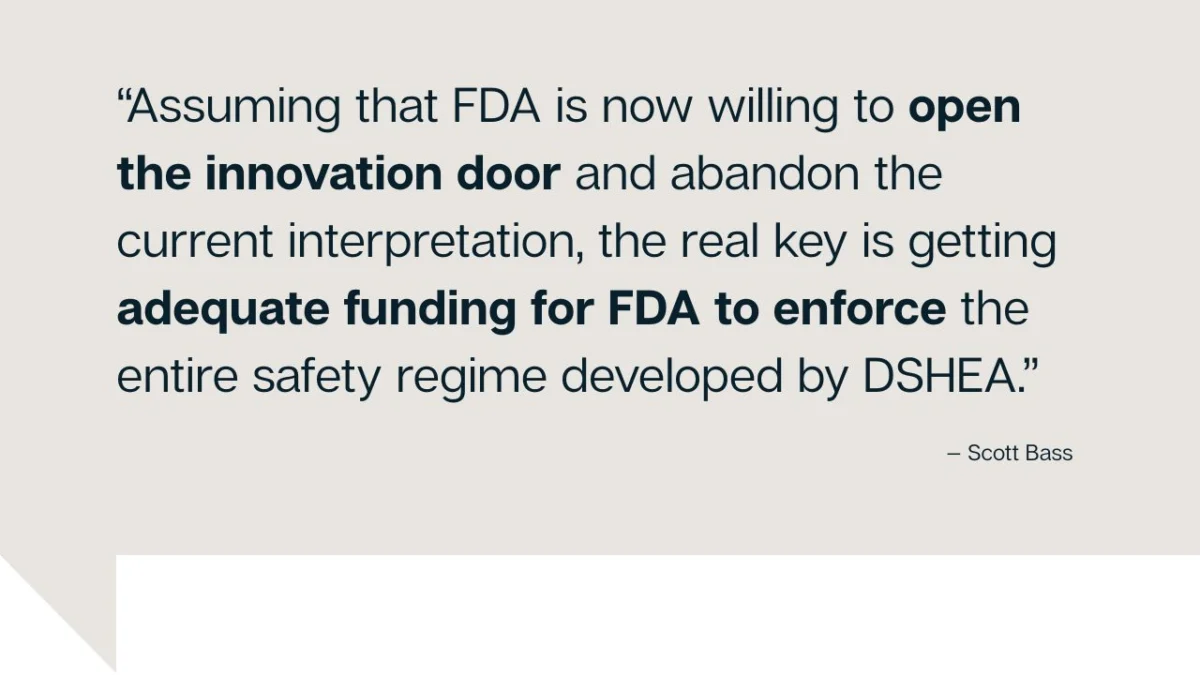
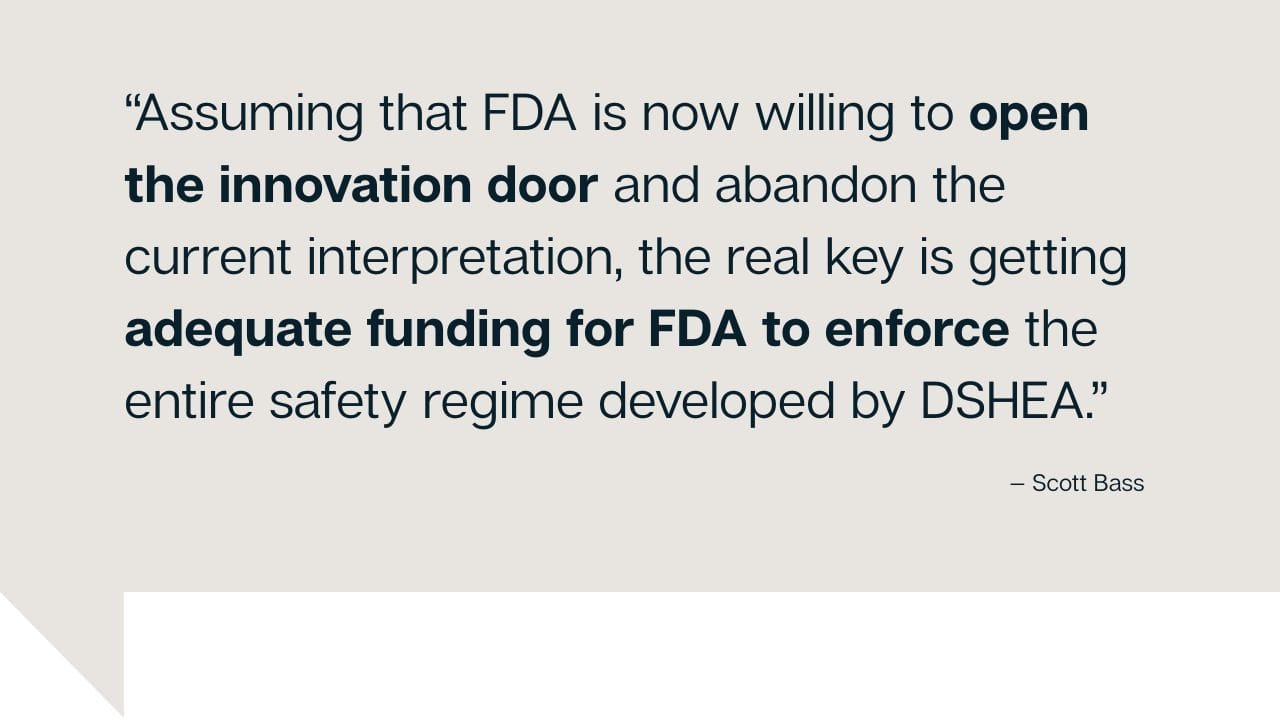
- Legal Experts: Prominent legal minds in the industry, including Todd Harrison of Venable and Scott Bass, a principal drafter of DSHEA, also submitted comments. Bass emphasized that "Dietary substance’ means innovation," and highlighted the need for adequate funding for the FDA to enforce the safety regime established by DSHEA if the agency is willing to "open the innovation door."
- Specialty Ingredient Groups: Pocket trade associations representing specific ingredient categories have also weighed in. The International Probiotics Association (IPA) and the Global Organization for EPA and DHA Omega-3s (GOED) are among those that could benefit from a broader definition for their respective ingredients.
The overarching theme from many industry participants is a desire to decouple the definition of a "dietary ingredient" from its historical presence in conventional foods. They argue that advancements in science and manufacturing have created a new generation of beneficial compounds that should be accessible to consumers as dietary supplements, provided they meet rigorous safety standards.
Looking Ahead: The FDA’s Path Forward
The FDA now faces the complex task of analyzing the 952 public comments and determining the appropriate path forward. The agency has several options, including issuing new guidance documents, proposing regulatory changes, or initiating legislative proposals to Congress. The outcome of this deliberation will have profound implications for the future of the dietary supplement industry, influencing product development, market access, and consumer choice for years to come.
While industry interests are naturally focused on expanding the market, the historical link between supplements and food remains a significant factor. The richness and diversity of the supplement industry have, in many ways, been built upon its origins in food and nutrition. The challenge for the FDA and the industry will be to find a balance that embraces scientific innovation and consumer benefit without compromising safety or eroding the fundamental principles that have guided the category since its inception. The coming months will reveal how the FDA navigates this critical juncture and shapes the future definition of a dietary supplement.
