

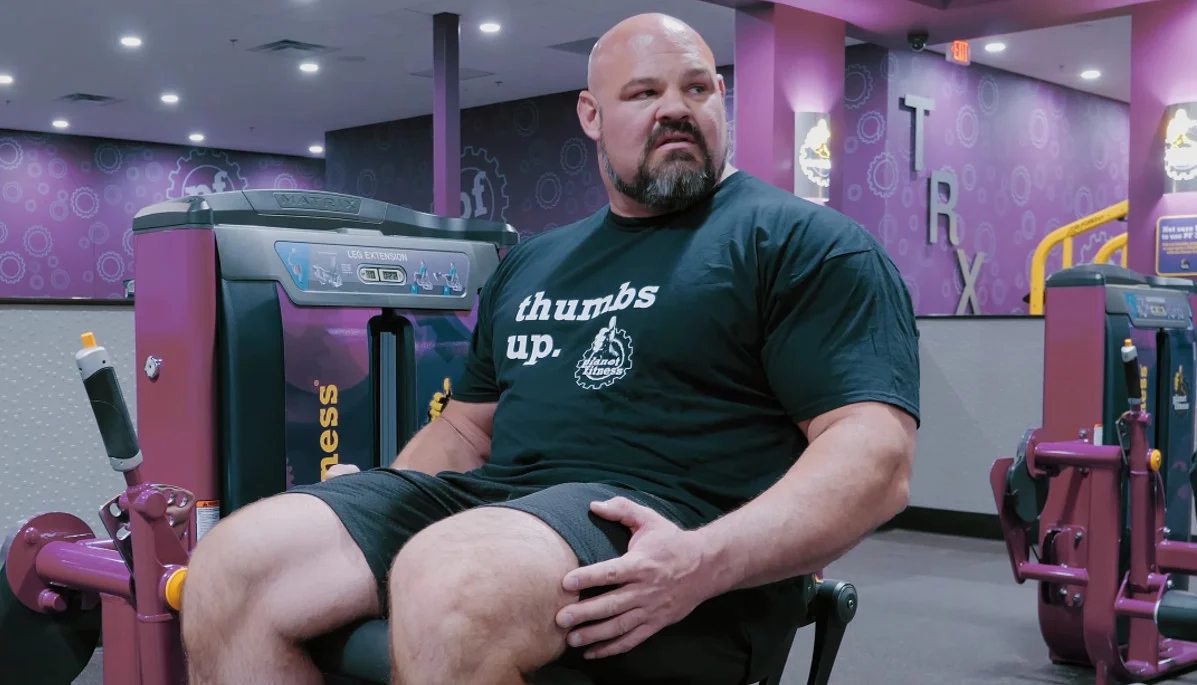
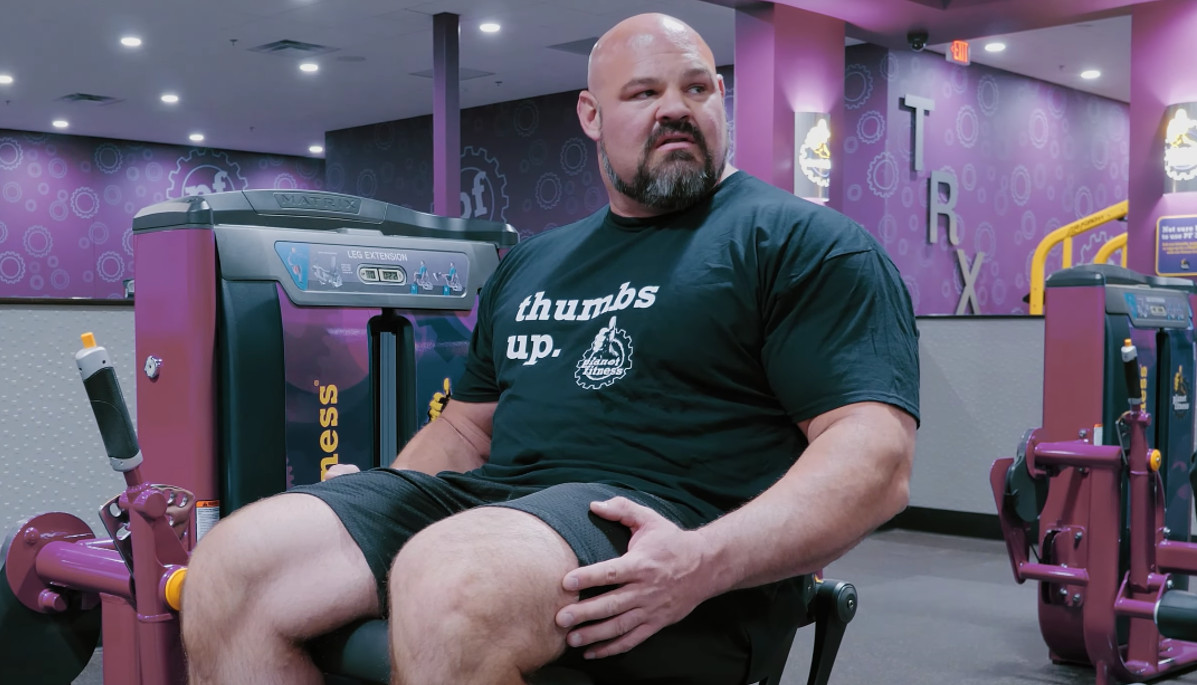
The intersection of elite strength athletics and mainstream commercial fitness reached a point of significant contrast when Brian Shaw and Eddie Hall, two of the most decorated figures in the history of the World’s Strongest Man (WSM) competition, conducted a training session at a Planet Fitness location in Colorado. This event, documented and shared via Shaw’s digital platforms, serves as a case study in the logistical and physical challenges faced by elite athletes when operating outside of specialized training environments. Shaw, a four-time WSM champion, and Hall, the 2017 WSM winner, utilized the facility to perform a leg-focused routine, highlighting the stark differences between the equipment requirements of professional strongmen and the amenities provided by high-volume, general-population health clubs.
The Profiles of the Athletes
To understand the scale of this undertaking, one must consider the physical dimensions and professional backgrounds of the participants. Brian Shaw stands at 6 feet 8 inches and has historically competed at a body weight exceeding 400 pounds. His career is defined by four WSM titles (2011, 2013, 2015, and 2016) and three Arnold Strongman Classic victories. Eddie Hall, standing approximately 6 feet 3 inches and weighing significantly over 350 pounds during his competitive peak, is best known for being the first human to deadlift 500 kilograms (1,102 pounds) in a sanctioned event.
These athletes typically train in private facilities or specialized "iron paradise" style gyms equipped with Atlas stones, heavy-duty log presses, yoke walks, and specialized deadlift platforms. Planet Fitness, by contrast, operates under a business model focused on the "general population," often catering to casual gym-goers and those new to fitness. The franchise is well-known for its "Judgement Free Zone" philosophy and the "Lunk Alarm," a siren intended to discourage loud grunting or the dropping of heavy weights—behaviors that are often incidental to high-level strength training.
Chronology of the Training Session
The training session began with an attempt to perform squats. Because Planet Fitness locations traditionally do not feature standard Olympic squat racks or power cages—opting instead for Smith machines to prioritize user safety and reduce liability—Shaw and Hall were forced to adapt. The Smith machine, which utilizes a fixed vertical track for the barbell, presented immediate spatial challenges. Due to the extreme shoulder width of both men, particularly Shaw, positioning themselves under the bar required significant maneuvering.
Despite the mechanical limitations, the duo proceeded to load the machine with five 45-pound plates on each side. Reports from the session indicate that Shaw had to stabilize the machine by holding onto the outer frame to maintain balance during his repetitions. This segment of the workout underscored the engineering limits of commercial-grade equipment when subjected to the force outputs of world-class strength athletes.
Following the squats, the athletes moved to the abdominal crunch machine. This transition highlighted the ergonomic difficulties faced by individuals of their size; most commercial machines are designed to accommodate the 5th to 95th percentile of the human population. For men of Shaw and Hall’s stature, the pivot points and seat adjustments often prove insufficient.
The workout continued with the leg press, a staple of hypertrophy training. The athletes loaded the sled with six 45-pound plates per side, supplemented by an additional plate placed atop the sled. While this represents a significant load for a standard gym member, for Shaw and Hall, it served as a moderate resistance level. They completed their sets with relative ease before moving through a circuit of isolation movements, including leg extensions, adductor machines, and abductor machines.
The 20-Station Circuit Challenge
The session concluded with a structured competitive element designed to test cardiovascular capacity and muscular endurance. The athletes utilized the Planet Fitness "30-Minute Express Circuit," a designated area containing 20 different exercise stations. The challenge required each man to perform one repetition at the maximum weight setting for every machine in the circuit.
The results of this timed event were as follows:
- Eddie Hall: 1 minute, 15.09 seconds.
- Brian Shaw: 1 minute, 19.00 seconds.
This portion of the workout demonstrated the "engine" required for strongman competition. While the sport is often associated with static strength, the ability to move between stations rapidly and exert force instantaneously is a critical component of many WSM events, such as the loading race or the medley.
Context and Competitive Implications
At the time of this training session, the two athletes were at different stages of their respective careers. Brian Shaw was in an "off-season" phase, focusing on the management of his various business ventures, including the Shaw Classic, which has become a premier event in the strength world.
Eddie Hall, conversely, was preparing for a return to the competitive arena. After a five-year hiatus from professional strongman—a period during which he focused on a high-profile boxing match against rival Hafthor Björnsson—Hall was training to captain Team UK in the "World’s Strongest Nation" contest. This event, held in November 2022 at the Echo Arena in Liverpool, England, featured a team-based format. Hall’s counterpart for Team USA was Martins Licis, the 2019 World’s Strongest Man winner. Hall’s preparation necessitated a return to heavy resistance training and a re-acclimation to the high-intensity volume seen in the Planet Fitness session.
Technical Analysis of Commercial Equipment Limits
The presence of Hall and Shaw in a commercial gym environment provides a rare look at the structural tolerances of standard fitness equipment. Most commercial leg press machines are rated for a maximum capacity that rarely exceeds 1,000 pounds. While the athletes did not exceed these limits in terms of plate count, the velocity and force of their repetitions create dynamic loads that approach the safety margins of the equipment.
Furthermore, the "Smith Machine" squat remains a point of contention in the strength community. For general fitness, it provides a guided path that can assist with stability. However, for elite athletes, the fixed plane of motion can be counter-intuitive to natural biomechanics, especially for individuals with the unique leverages of a 6-foot-8-inch frame like Shaw’s. The fact that these athletes were able to complete a productive session despite these hurdles speaks to the adaptability required in professional sports.
Social and Cultural Impact on the Fitness Community
The documentation of this workout has resonated within the fitness community for several reasons. First, it humanizes elite athletes by placing them in a relatable, everyday environment. Second, it serves as a subtle commentary on the "hardcore" vs. "commercial" gym culture.
Planet Fitness has historically faced criticism from the powerlifting and bodybuilding communities for its restrictive policies on "intense" training. By navigating the session without triggering the "Lunk Alarm" or violating gym etiquette, Shaw and Hall demonstrated that elite strength can coexist within a commercial space, provided there is a level of mutual respect between the athlete and the facility’s rules.
Observers have noted that the presence of such high-profile figures likely provided an unexpected spectacle for the regular members present during the filming. The logistical feat of two men totaling nearly 800 pounds moving through a circuit designed for rapid turnover is a testament to their professionalism and the curiosity that surrounds the sport of strongman.
Conclusion and Future Outlook
The training session at Planet Fitness by Brian Shaw and Eddie Hall is more than a novelty; it is a demonstration of the versatility required of modern strength icons. As the sport of strongman continues to grow in popularity, driven by digital content and high-production events like the Shaw Classic and World’s Strongest Nation, the visibility of its top stars in mainstream settings is likely to increase.
While a commercial gym may never replace the specialized "dungeon" gyms necessary for preparing to pull planes or lift stones, this event proved that the fundamentals of resistance training—progressive overload and intensity—can be applied in almost any setting. For Eddie Hall, the session was a stepping stone in his journey back to the competition floor in Liverpool. For Brian Shaw, it was another chapter in a career dedicated to bringing the world of strength to a wider audience.
The event remains a significant moment in recent fitness media, illustrating that while the tools may differ, the dedication of a world champion remains constant regardless of the color of the weights or the branding on the walls. Hall’s subsequent performance as captain of Team UK and Shaw’s continued influence on the sport ensure that their "takeover" of a Colorado Planet Fitness will be remembered as a unique intersection of two very different worlds of physical culture.
