


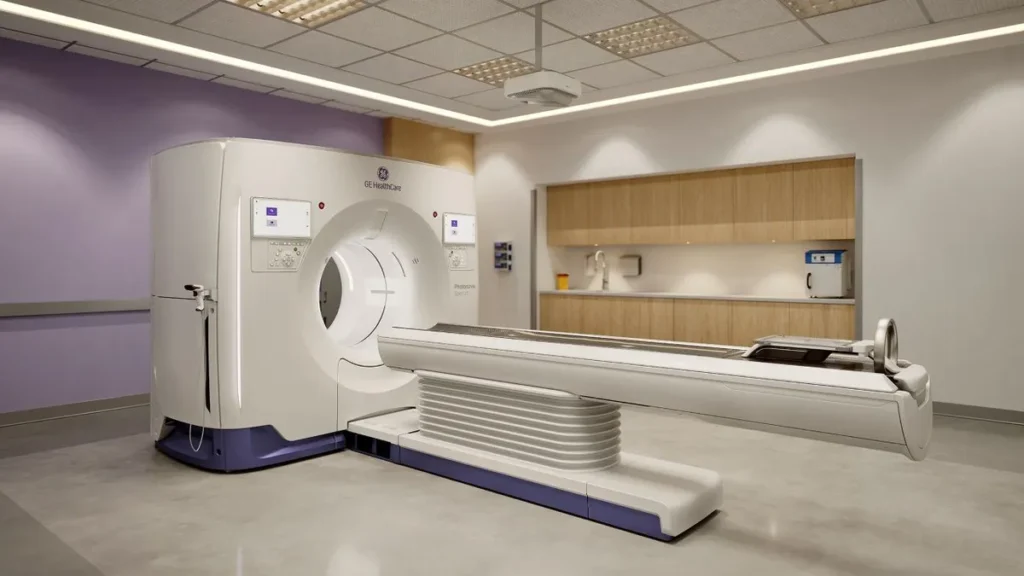
The global medical imaging landscape is currently witnessing a transformative shift as GE HealthCare secures CE mark certification for its Photonova Spectra, a move that signals an intensifying rivalry with Siemens Healthineers in the high-stakes photon-counting computed tomography (CT) market. This regulatory milestone allows GE HealthCare to commercialize its flagship photon-counting system across the European Union, the United Kingdom, and Switzerland, while also streamlining the path to market in several Asia-Pacific territories including Singapore and Australia. By achieving this certification, the Chicago-based medtech giant is positioning itself to capture a significant share of the next-generation diagnostic imaging sector, which promises to redefine the standards of clinical accuracy and patient safety.
The Technological Leap: Photon-Counting vs. Traditional CT
To understand the significance of the Photonova Spectra, it is essential to distinguish between traditional energy-integrating detectors (EID) and the newer photon-counting detectors (PCD). For over four decades, conventional CT scanners have relied on a two-step process to create images: first, X-rays hit a scintillator, which converts the radiation into visible light; second, that light is captured by a photodiode and converted into an electrical signal. This intermediate step inherently involves a loss of data and a reduction in spatial resolution due to light "crosstalk" between detector pixels.
In contrast, GE HealthCare’s photon-counting technology utilizes semiconductor materials—specifically silicon in GE’s proprietary design—to convert X-ray photons directly into electrical signals. This "counting" of individual photons and the simultaneous measurement of their energy levels allows for a much higher signal-to-noise ratio. The result is an image with unprecedented clarity, enabling physicians to see minute anatomical structures that were previously obscured. Furthermore, because PCDs can differentiate between various energy levels of X-rays, they facilitate "spectral" imaging in every scan, allowing for better material characterization, such as distinguishing between iodine, calcium, and uric acid crystals.

A Strategic Chronology: From Swedish Innovation to Global Rollout
The journey toward the Photonova Spectra began in earnest in late 2020 when GE HealthCare (then a division of General Electric) announced the acquisition of Prismatic Sensors AB, a Swedish startup specializing in silicon-based photon-counting detectors. While competitors like Siemens Healthineers had opted for cadmium telluride (CdTe) or cadmium zinc telluride (CZT) as their sensor material, GE HealthCare bet heavily on silicon.
Analysts at Citi Research noted earlier this year that silicon offers several industrial advantages, including a more mature manufacturing supply chain and greater stability under high-flux X-ray conditions. However, the path to commercialization required years of rigorous research and development to overcome the challenges of stacking silicon sensors to achieve the necessary depth for clinical CT applications.
The timeline of GE HealthCare’s progress has accelerated rapidly over the past twelve months:
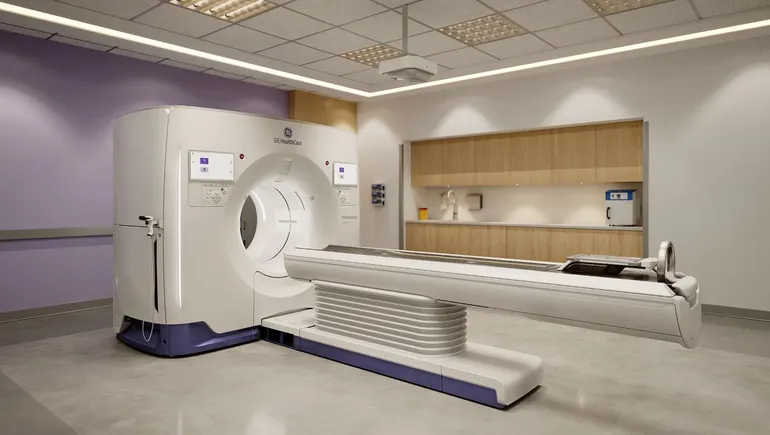
- March 2024: The U.S. Food and Drug Administration (FDA) granted 510(k) clearance for the Photonova Spectra, marking GE’s official entry into the PCD-CT market.
- July 2024: During the company’s second-quarter earnings call, CEO Peter Arduini highlighted strong initial interest from U.S. healthcare providers, noting that while the device was a "minimal contributor" to the Q2 order book, it was poised to become a "significant growth driver" by the end of the year.
- September 2024: The attainment of the CE mark opens the doors to the lucrative European market, where healthcare systems are increasingly prioritizing value-based care and precision diagnostics.
Competitive Dynamics: The Battle for Market Leadership
GE HealthCare is entering a market that has, until now, been largely defined by Siemens Healthineers. Siemens launched the world’s first commercially available photon-counting CT, the Naeotom Alpha, in late 2021. Since then, the German firm has leveraged its first-mover advantage to dominate the space. Bernd Montag, CEO of Siemens Healthineers, recently reported that photon-counting systems now account for approximately 30% of the company’s total CT equipment order volumes. This high adoption rate underscores a robust demand among Tier-1 academic medical centers and specialized clinics for superior imaging capabilities.
However, industry observers suggest that GE HealthCare’s entry could disrupt this near-monopoly. The Photonova Spectra is designed with ease of installation in mind, potentially lowering the barrier to entry for hospitals that are hesitant to undergo the extensive facility renovations often required for high-end imaging installations. By offering a system that fits more easily into existing footprints while delivering comparable—or in some clinical scenarios, superior—resolution, GE HealthCare aims to appeal to a broader segment of the market beyond just the most elite research institutions.
Clinical Collaborations and Real-World Validation
To bolster the clinical evidence for the Photonova Spectra, GE HealthCare has expanded its strategic partnerships with leading European medical institutions. Key among these are UZ Brussel in Belgium and Rigshospitalet in Denmark. These academic medical centers are currently conducting extensive evaluations of the technology across a variety of therapeutic areas, most notably cardiology and oncology.
In cardiology, photon-counting CT is viewed as a potential game-changer for imaging patients with heavy coronary calcification or stents. Traditional CT often suffers from "blooming artifacts" where calcium or metal appears larger than it is, making it difficult to assess the underlying blood vessel. The high spatial resolution of the Photonova Spectra allows for a much clearer view of the lumen, potentially reducing the need for invasive diagnostic procedures.
In oncology, the spectral capabilities of the system allow for more precise characterization of tumors and a better assessment of treatment response. By measuring how different tissues interact with X-rays at various energy levels, radiologists can more accurately detect early-stage lesions and monitor the efficacy of chemotherapy or immunotherapy with greater sensitivity.
Financial and Market Implications
For GE HealthCare, the successful rollout of the Photonova Spectra is a critical component of its post-spin-off growth strategy. Since becoming an independent entity in early 2023, the company has focused on "precision care"—an approach that integrates imaging, digital solutions, and molecular medicine. The Photonova Spectra serves as the hardware cornerstone of this strategy.
Market data suggests that the global CT market is expected to grow at a compound annual growth rate (CAGR) of 5.5% through 2030, but the sub-segment for premium and ultra-premium systems, which includes photon-counting technology, is expected to grow at a much faster clip. Hospitals are increasingly looking to future-proof their imaging departments, and PCD-CT is widely regarded as the "end-state" of CT detector technology.

The financial impact of the CE mark approval is expected to be reflected in GE HealthCare’s 2025 revenue cycles. As European health systems operate on different procurement schedules than those in the U.S., the availability of a CE-marked alternative to Siemens’ offering provides European procurement officers with the leverage and choice they have been seeking. Furthermore, the ability to utilize Photonova in countries like Australia and Singapore—hospitals in which often look to CE certification as a benchmark for quality—broadens GE’s total addressable market by billions of dollars.
Broader Impact on Patient Care and Safety
Beyond the corporate rivalry and financial metrics, the proliferation of photon-counting technology represents a significant win for patient safety. One of the primary advantages of the Photonova Spectra is its ability to produce high-quality images at significantly lower radiation doses compared to traditional CT scanners. Because the detectors are more efficient at capturing and utilizing every X-ray photon, clinicians can achieve diagnostic-quality images with less exposure, a factor that is particularly vital in pediatric imaging and for patients requiring longitudinal follow-up scans.
Additionally, the reduction in the need for contrast media is a burgeoning area of research. Preliminary studies suggest that the high sensitivity of photon-counting detectors may allow for the use of lower volumes of iodinated contrast agents, benefiting patients with impaired kidney function who are at risk for contrast-induced nephropathy.
Future Outlook: A New Era in Diagnostic Imaging
As GE HealthCare begins its commercial activities in Europe and beyond, the medical imaging industry is entering a new era. The "duopoly" of high-end photon-counting CT between Siemens and GE is likely to drive further innovation, as both companies race to refine their software algorithms, integrate artificial intelligence for image reconstruction, and expand clinical applications.
While Siemens Healthineers currently holds the lead in terms of installed base, GE HealthCare’s Photonova Spectra, backed by its unique silicon-sensor architecture and global service network, presents a formidable challenge. For the healthcare industry, this competition is a catalyst for progress, ensuring that the next generation of CT technology becomes more accessible, more efficient, and more capable of saving lives through earlier and more accurate diagnosis. The coming years will determine if GE HealthCare can translate its technological "bet" on silicon into market leadership, but for now, the CE mark approval stands as a definitive signal that the photon-counting revolution has gone global.