








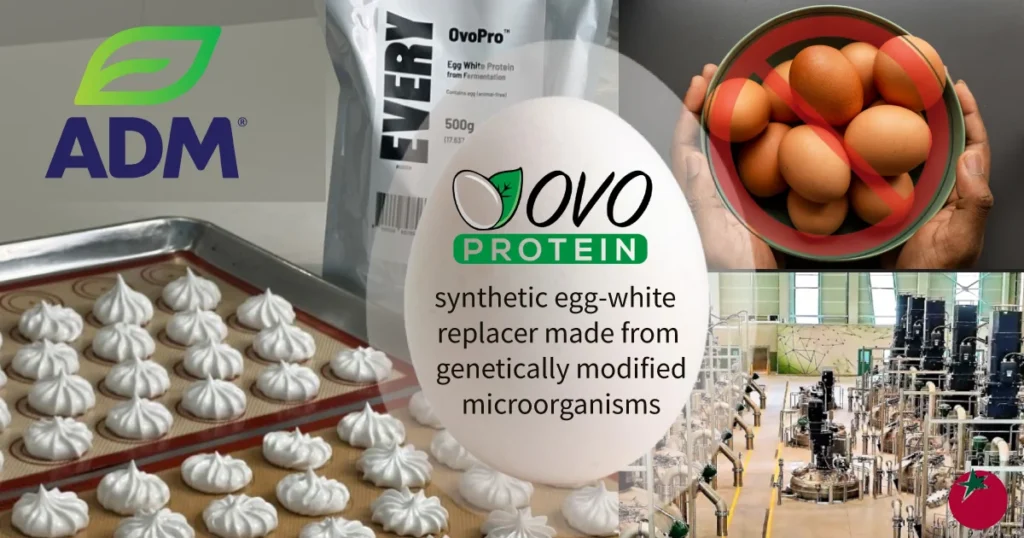
The State of Iowa has officially committed $2.23 million in subsidies to global agribusiness giant Archer Daniels Midland (ADM) to facilitate the large-scale production of synthetic egg white protein. This financial incentive marks a significant pivot in the state’s agricultural strategy, moving resources toward "precision fermentation" technology and away from traditional or regenerative poultry farming. The project, a partnership between ADM and the California-based food technology firm The Every Company, aims to scale the production of OvoPro, a synthetic ovalbumin protein designed to replace conventional egg whites in the global food supply chain.
As the top egg-producing state in the United States, Iowa’s decision to fund synthetic alternatives has sparked a complex debate regarding the future of food security, the ethics of biotechnology, and the transparency of the American regulatory system. While proponents argue that synthetic proteins offer a stable, disease-resistant alternative to traditional poultry products, critics suggest that the rapid integration of these "animal-free" ingredients into the market bypasses rigorous safety testing and confuses consumers through ambiguous labeling.
The Evolution of Precision Fermentation in the Food Sector
Precision fermentation is a technological process that utilizes genetically modified microorganisms—such as yeast or fungi—to act as biological factories. These microbes are "programmed" with specific DNA sequences to produce proteins that are molecularly similar to those found in animal products. In the case of OvoPro, the microorganisms are fed a substrate of genetically modified corn dextrose, a byproduct of Iowa’s massive corn industry, to produce a synthetic version of the protein found in egg whites.

The Every Company, formerly known as Clara Foods, has spent nearly a decade developing this technology. By partnering with ADM, which possesses the industrial infrastructure and fermentation capacity at its Clinton, Iowa, facility, the company can produce synthetic egg protein at a volume previously unattainable. This transition represents a broader trend within the "alternative protein" industry, which seeks to decouple food production from traditional animal husbandry.
Strategic Objectives and the Role of Bird Flu
The push for synthetic egg proteins is largely driven by the volatility of the traditional egg market. In recent years, Highly Pathogenic Avian Influenza (HPAI), commonly known as bird flu, has devastated poultry flocks across North America and Europe. According to data from the U.S. Department of Agriculture (USDA), tens of millions of birds have been culled since 2022 to control the spread of the virus, leading to unprecedented spikes in egg prices and supply chain disruptions.
From a corporate and state perspective, OvoPro offers several logistical advantages that traditional eggs cannot match:
- Supply Stability: Unlike poultry farms, fermentation tanks are not susceptible to avian viruses, ensuring a consistent supply regardless of biological outbreaks.
- Shelf Life and Storage: The synthetic protein is designed to remain stable for up to 24 months and does not require a cold chain (refrigerated transport), significantly reducing logistics costs.
- Purity and Consistency: The manufacturing process allows for a standardized level of purity and protein fortification, typically ranging from 10 to 20 grams per serving, without the seasonal variations inherent in natural biological systems.
Market Integration: From Amazon to Major Foodservice Lines
OvoPro is not a future concept; it is already entering the mainstream market. The Every Company has secured distribution through major retail platforms, including Walmart, Target, and Amazon. Furthermore, Rich Products Corporation—one of the world’s largest privately held food companies, with annual revenues exceeding $5 billion—has announced plans to integrate OvoPro into its extensive line of bakery, snack, and foodservice products across the United States.
Industry analysts note that the integration of synthetic egg protein is often "silent." Because the ingredient is molecularly similar to egg white, it can be substituted in formulations for cookies, cakes, and protein bars without significantly altering the texture or taste. However, the Every Company’s customers often keep these supply relationships confidential, leading to concerns that consumers may be unknowingly consuming synthetic proteins while believing they are eating traditional or plant-based ingredients.
Regulatory Oversight and the "GRAS" Loophole
One of the most contentious aspects of the rise of synthetic biology in food is the regulatory pathway used to bring these products to market. In the United States, the Food and Drug Administration (FDA) allows companies to utilize a process known as "Generally Recognized as Safe" (GRAS). Under this system, a company can conduct its own safety assessments and conclude that a new food additive is safe for consumption without an independent, mandatory review by the FDA.
In the case of OvoPro, the FDA issued a "No Questions" letter in response to The Every Company’s GRAS notice. This does not constitute an official FDA approval or an independent safety validation; rather, it signifies that the FDA has no further questions regarding the company’s self-determined safety profile. The Every Company maintains that the genetically modified yeast used in the fermentation process is completely filtered out of the final product and that the resulting protein is "substantially equivalent" to natural egg whites.

However, scientific critics point to recent independent analyses of similar precision-fermentation products. A study published in the journal Nature examined a synthetic whey protein produced through similar methods and identified 93 uncharacterized fungal metabolites and 236 fungal proteins that were not present in natural dairy. This has raised questions about whether "substantial equivalence" is an adequate standard for products derived from novel bio-manufacturing processes.
Historical Context: The 1989 Showa Denko Incident
The debate over the safety of genetically engineered food additives often references the 1989 Showa Denko scandal. In that instance, the Japanese company Showa Denko K.K. used genetically engineered bacteria to produce L-tryptophan, a common dietary supplement. A change in the manufacturing process and the use of GE microbes resulted in a contaminated batch that caused an outbreak of Eosinophilia-Myalgia Syndrome (EMS).
The incident resulted in at least 37 deaths and left over 1,500 people with permanent disabilities. While the industry maintains that modern purification techniques are vastly superior to those of the 1980s, advocacy groups argue that the Showa Denko case serves as a permanent warning about the unpredictable nature of metabolic pathways in genetically modified organisms. They argue that without long-term human feeding trials, the safety of consuming synthetic proteins like OvoPro remains unproven.
Labeling Discrepancies and Consumer Transparency
Transparency in labeling has become a primary battleground for synthetic protein manufacturers. Currently, there is no standardized federal requirement for how precision-fermentation products must be labeled. This has led to a variety of terms appearing on ingredient lists, many of which may be unfamiliar to the average consumer.
Common terms used to describe synthetic egg whites include:
- Fermentation-derived egg white protein
- Non-animal egg white protein
- Microflora-based egg white protein
- Animal-free egg white protein
A notable example of labeling confusion can be found in products by "Healthier Comforts," which markets an animal-free egg white protein powder. While the front of the packaging may claim the product is "Free from GMOs," the fine print on the back often clarifies that it is "manufactured by precision fermentation using a genetically modified microorganism under containment." This distinction—that the final product contains no GE material even though GE microbes were used to create it—is a technicality that many consumer advocates find misleading.
Economic Implications for Iowa’s Agricultural Identity
Iowa’s $2.23 million subsidy to ADM highlights a potential rift in the state’s agricultural identity. For decades, Iowa has been synonymous with traditional animal husbandry and crop production. Some agricultural experts argue that these subsidies would be better spent helping farmers transition to regenerative organic pasture systems, which focus on soil health and animal welfare.
Regenerative farming advocates claim that outdoor, pasture-raised poultry systems are more resilient to disease in the long term because they avoid the high-density conditions of factory farms where viruses thrive. However, the industrial scale of synthetic protein production offers a "techno-fix" that aligns more closely with the existing infrastructure of large-scale corn and soy processing.
Conclusion: The Path Forward for Synthetic Biology
As Iowa’s investment accelerates the commercialization of synthetic egg proteins, the global food industry stands at a crossroads. The promise of a stable, animal-free, and pathogen-resistant protein supply is weighed against concerns over long-term health impacts, regulatory transparency, and the displacement of traditional farming communities.
The rise of OvoPro and precision fermentation suggests that the definition of "food" is undergoing a fundamental shift. Whether these products will be embraced as a sustainable solution to climate change and pandemic risks, or rejected as an over-engineered intrusion into the human diet, will likely depend on the industry’s willingness to adopt more transparent labeling and submit to more rigorous, independent safety testing. For now, consumers are advised to scrutinize ingredient labels closely as the boundaries between the laboratory and the farm continue to blur.