

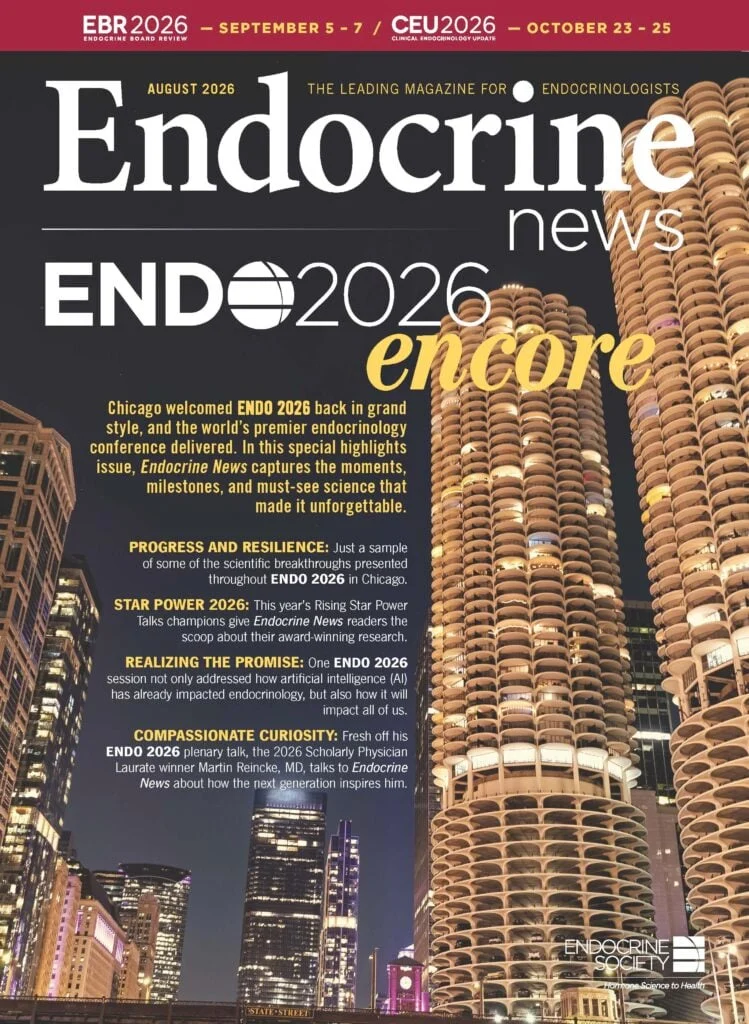
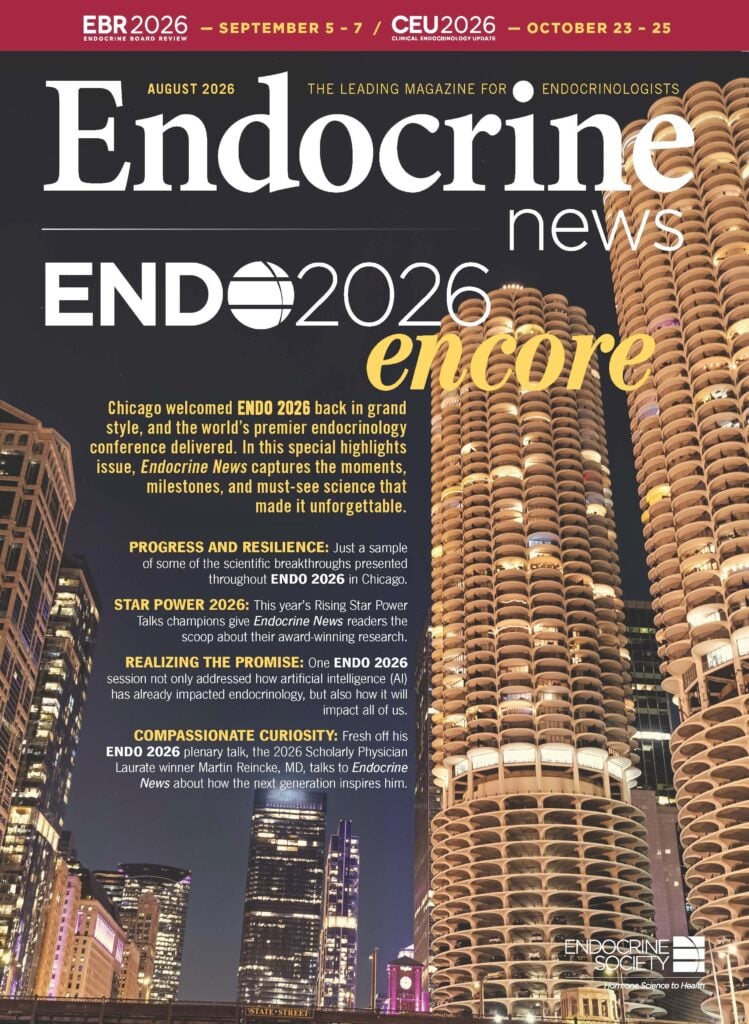
The Endocrine Society officially concluded its annual meeting, ENDO 2026, this past June, drawing thousands of clinicians, researchers, and industry professionals to the McCormick Place convention center in Chicago, Illinois. As one of the world’s most significant gatherings for the endocrine community, the conference served as a pivotal platform for unveiling cutting-edge research in metabolic health, hormonal disorders, and technological integration in clinical practice. The event’s program focused heavily on the intersection of modern technology and traditional patient care, with specific emphasis on the rapid evolution of artificial intelligence (AI), the burgeoning field of obesity pharmacotherapy, and the development of the next generation of physician-scientists. Throughout the multi-day event, attendees engaged in over 2,000 abstract presentations and several hundred sessions, marking a return to robust, in-person scientific exchange that defines the future of the field.
A Chronological Overview of Scientific Advancement in Chicago
The proceedings of ENDO 2026 followed a structured trajectory, beginning with foundational plenary sessions that addressed global health challenges and concluding with focused discussions on the practical application of emerging technologies. The timeline of the event was designed to move from broad physiological discoveries to specific clinical implementations. Early sessions set the stage by examining the global rise of endocrine-related diseases, particularly the twin epidemics of obesity and type 2 diabetes. By the mid-point of the conference, the focus shifted toward the tools used to combat these issues, including the "Rising Stars Power Talks," which highlighted the innovative work of early-career researchers. The final days of the conference were characterized by high-level synthesis, where leaders in the field, such as the Endocrine Society’s 2026 Laureate Award winners, reflected on the long-term implications of current research for the healthcare systems of the future.
Realizing the Promise of Artificial Intelligence in Clinical Practice
One of the most heavily attended and discussed sessions of the conference was "Artificial Intelligence in Endocrinology: Practical Uses, Lessons Learned, and What Comes Next." Led by experts such as Dr. Naykky M. Singh Ospina, a professor in the Division of Endocrinology, Diabetes, and Metabolism at the University of Florida, the session addressed the practical reality of AI beyond the speculative hype that has dominated the tech sector for several years. Dr. Ospina noted that the endocrine community is currently in a phase of critical reflection, moving from the conceptual "disruption" of medical practice to the actual implementation of algorithmic tools in daily clinical workflows.
Data presented during the session suggested that AI’s primary value in the immediate term lies in its ability to process vast quantities of patient data to identify patterns that may elude human observation. For instance, AI-driven diagnostic tools for thyroid nodule classification and continuous glucose monitoring (CGM) interpretation are already showing significant improvements in accuracy and efficiency. However, the session also highlighted the barriers to widespread adoption, including the need for standardized data sets, ethical considerations regarding algorithmic bias, and the integration of these tools into existing electronic health record (EHR) systems. The consensus among the speakers was that while AI is not a replacement for clinical judgment, it is becoming an indispensable assistant that can reduce the administrative burden on physicians, thereby allowing more time for direct patient interaction.
The Evolution of Obesity Treatment: GLP-1s and Beyond
The discussion of obesity treatments represented another cornerstone of ENDO 2026. A post-plenary session featuring Dr. Barbara Kahn and Dr. Daniel Drucker saw a standing-room-only audience, reflecting the intense interest in the latest generation of glucagon-like peptide-1 (GLP-1) receptor agonists. Dr. Drucker, a pioneer in the study of gut hormones, and Dr. Kahn, an expert in insulin resistance and adipose tissue biology, provided a deep dive into the future of metabolic medicine. The conversation centered on the remarkable efficacy of new medications like semaglutide and tirzepatide, which have redefined weight loss expectations in clinical settings.
According to data discussed during the session, these medications have shown the ability to achieve weight reductions of 15% to 20% or more in clinical trials, levels previously only attainable through bariatric surgery. Despite these successes, the experts cautioned that medication is only one part of a complex solution. Dr. Kahn emphasized that while pharmacological interventions are highly effective, they are often chronic treatments. In contrast, some patients continue to prefer bariatric surgery as a "one and done" solution. Furthermore, the speakers noted that long-term success in managing the obesity epidemic requires environmental and policy changes to address the root causes of metabolic dysfunction. The session underscored the need for continued research into the long-term safety profiles of these drugs and the development of strategies to improve access and affordability for diverse patient populations.
Fostering the Next Generation: The Rising Stars Power Talks
The "Rising Stars Power Talks" remained a highlight of the conference, providing a high-stakes platform for early-career and in-training members of the Endocrine Society. In a "quick-fire" format, presenters were given exactly three minutes to summarize their research findings before a panel of industry and academic judges. This format is designed to test not only the scientific rigor of the research but also the presenter’s ability to communicate complex data concisely and persuasively.
The 2026 winners represented a broad spectrum of endocrine research. Brittany Weisbrot, an internal medicine resident at Loyola University Medical Center, took the top prize in the Clinical Science category. Her research focused on the intersection of patient care and metabolic disease, specifically targeting improvements in the diagnosis and treatment of hypoglycemia and obesity. Other winners included Dillon Boulton, PhD, from the University of Colorado, who won in the Translational Science category; Lila Dabill, a PhD student at Washington University, who was recognized for her work in Basic Science; and Konstantinos Stefanakis, MD, PhD (candidate) from Harvard Medical School, who received the Audience Choice award. These young researchers are viewed as the future of the field, bridging the gap between bench-side discovery and bedside application. The diversity of their research—spanning from pathology to cardiology—reflects the increasingly interdisciplinary nature of modern endocrinology.
Laureate Recognition and the Mastery of Glandular Research
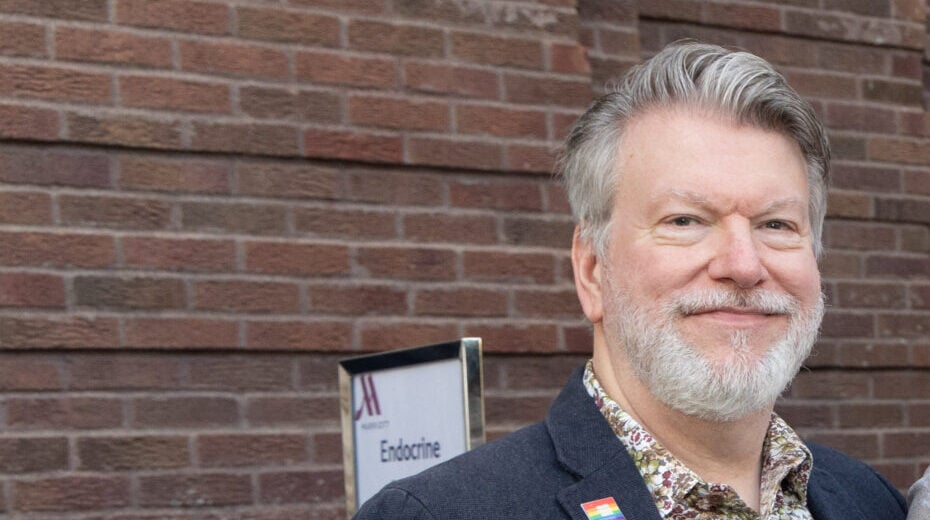
The conference also served as an opportunity to honor lifetime achievements within the community. Dr. Martin Reincke was named the recipient of the Endocrine Society’s 2026 Outstanding Scholarly Physician Laureate Award. In a featured Q&A following his plenary session, Dr. Reincke discussed his career-long fascination with the pituitary and adrenal glands. His work has been instrumental in advancing the understanding of primary aldosteronism and Cushing’s syndrome, conditions that are often underdiagnosed but have significant impacts on cardiovascular health.
Dr. Reincke’s reflections provided a bridge between the history of the field and its future. He noted that the new generation of endocrinologists possesses a unique "fearlessness" in their approach to science. According to Dr. Reincke, younger researchers move effortlessly between genomics, advanced imaging, and AI in ways that were previously unimaginable. However, he also issued a reminder that despite the influx of data and technology, the core of endocrinology remains the individual patient. He urged the community to ensure that every dataset is treated as a representation of a person seeking better health outcomes.
Broader Impact and Global Implications
The findings presented at ENDO 2026 have significant implications for global health policy and clinical guidelines. The focus on AI and advanced pharmacotherapy suggests a shift toward more personalized, precision-based endocrine care. As these technologies and treatments become more integrated into standard practice, healthcare systems will need to adapt to the costs and infrastructure requirements they entail.
Furthermore, the research showcased in Chicago highlights the growing importance of addressing endocrine disruptors and environmental factors in metabolic health. The resilience of the endocrine community, as noted in several sessions, lies in its ability to adapt to these changing landscapes while maintaining a commitment to rigorous scientific inquiry. The data emerging from ENDO 2026 will likely inform the next several years of clinical trials and healthcare legislation, particularly concerning the regulation of AI in medicine and the coverage of obesity medications by insurance providers.
Looking Forward: From Chicago to Toronto
As the Endocrine Society staff and members bid farewell to Chicago, the focus has already begun to shift toward the next annual meeting. ENDO 2027 is scheduled to take place from June 5 to 7 in Toronto, Ontario, Canada. This transition marks the first time in several years that the meeting will be held outside the United States, reflecting the Endocrine Society’s commitment to its international membership and the global nature of endocrine research.
The themes established in Chicago—AI integration, the metabolic revolution, and the support of early-career scientists—are expected to evolve and expand in the coming year. Researchers are encouraged to submit their latest findings as the society prepares to continue its mission of advancing hormone research and clinical care on a global stage. The success of ENDO 2026 has set a high benchmark for the upcoming Toronto gathering, ensuring that the momentum generated in the Windy City will continue to drive the field forward.
