

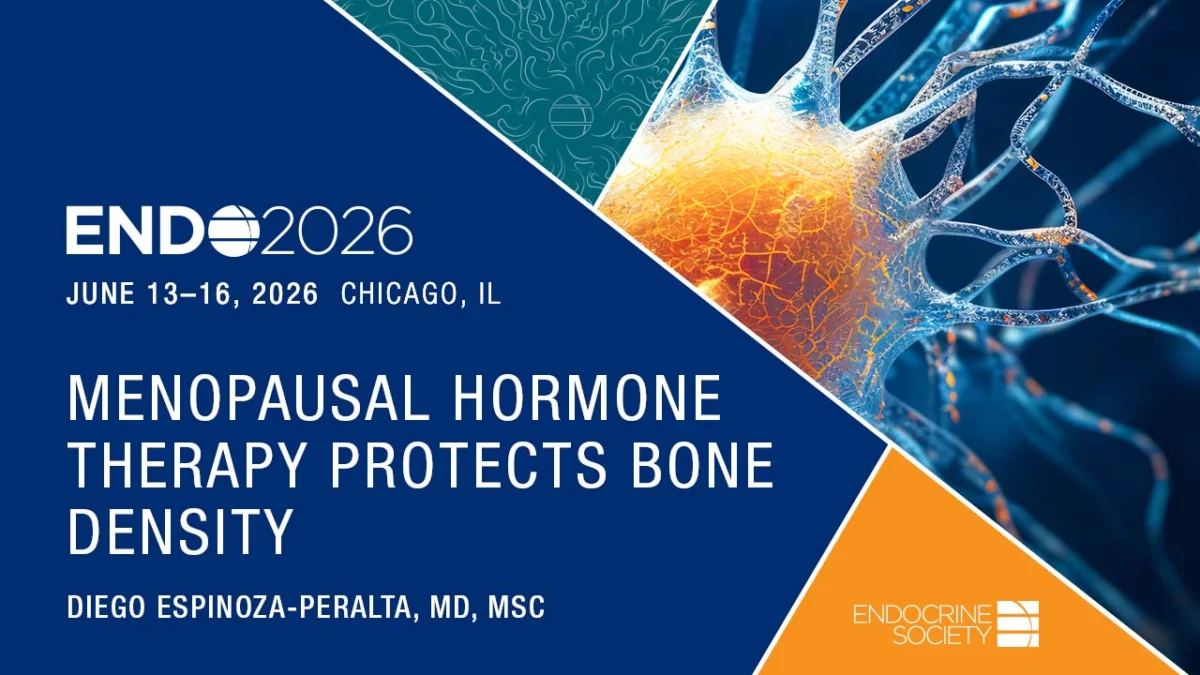
New clinical evidence presented at the ENDO 2026 annual meeting suggests a paradigm shift in the management of postmenopausal health, revealing that women who utilize menopausal hormone therapy (MHT) face a substantially lower risk of developing low bone mineral density (BMD) compared to those who do not. The study, led by Diego Espinoza-Peralta, MD, MSc, Vice President of the Mexican Society of Nutrition and Endocrinology (SMNE), indicates that MHT provides a protective effect against osteopenia and osteoporosis that is independent of other health factors, including age, lifestyle choices, and vitamin D levels.
The research findings, unveiled during one of the premier global forums for endocrine research and clinical care, highlight a 69% reduction in the risk of low bone mineral density in the spine and hips for women using MHT. This data arrives at a critical juncture in women’s health, as clinicians and patients alike continue to navigate the complex legacy of previous hormonal therapy studies. By demonstrating a clear correlation between hormone use and bone preservation, the study advocates for a more nuanced, individualized approach to menopause management.
The Core Findings: A 69% Risk Reduction
The primary takeaway from the research presented by Dr. Espinoza-Peralta is the dramatic difference in bone health outcomes between MHT users and non-users. According to the retrospective cohort study, which utilized data from 387 postmenopausal women, those who integrated hormone therapy into their healthcare regimen were significantly less likely to suffer from the progressive thinning of bone tissue.
Specifically, the study found that MHT users had approximately 69% less risk of developing low bone mineral density in the most critical areas of the skeletal system: the lumbar spine and the hip. These areas are of particular concern to medical professionals because fractures in the hip and spine are leading causes of morbidity and mortality among the elderly. Low bone mineral density, categorized as either osteopenia (mild thinning) or osteoporosis (severe thinning and increased fragility), often remains a "silent" condition until a fracture occurs.
Dr. Espinoza-Peralta emphasized that this protective effect was not merely a byproduct of other healthy behaviors. "In simple terms: menopausal hormone therapy appears to independently protect bones, not just by coincidence," he stated. The statistical analysis remained robust even after researchers adjusted for variables such as smoking status, vitamin D supplementation, time elapsed since the onset of menopause, and existing comorbidities.
Study Methodology and Patient Demographics
The research was conducted as a retrospective cohort study, analyzing medical records and diagnostic data from women who underwent Dual-energy X-ray Absorptiometry (DXA) scans between 2021 and 2025. The DXA scan is currently the gold standard for measuring bone mineral density and diagnosing the risk level for fractures.
The study population consisted of 387 postmenopausal women. Within this group, 33% were identified as active users of menopausal hormone therapy, while the remaining 67% were classified as non-users. This distribution allowed for a comparative analysis of how the presence or absence of exogenous hormones influenced bone health over a four-year period.
The research was spearheaded by Investigación Médica Sonora (INMEDS) in collaboration with the Mexican Society of Nutrition and Endocrinology. By focusing on a period as recent as 2025, the study reflects modern formulations and dosages of MHT, which often differ from the higher-dose treatments used in earlier decades.
Historical Context: Shifting Away from the "Avoidance" Narrative
To understand the significance of the ENDO 2026 presentation, one must look back at the history of hormone therapy over the last quarter-century. For much of the late 20th century, MHT was widely prescribed to manage vasomotor symptoms like hot flashes and to prevent chronic diseases. However, this changed abruptly in 2002 with the publication of initial findings from the Women’s Health Initiative (WHI).
The WHI study suggested that certain types of hormone therapy could increase the risk of breast cancer, heart disease, and stroke. Consequently, the medical community moved toward a "lowest dose for the shortest duration" philosophy, and many women avoided MHT entirely due to safety concerns and the inclusion of "black box" warning labels on medications.
Dr. Espinoza-Peralta’s research seeks to revisit this narrative. "For years, many women have avoided menopausal hormone therapy because of safety concerns and warning labels," he noted. "This study revisits that narrative and shows that menopausal hormone therapy may have an important added benefit: protecting bone health. That shifts the conversation from ‘avoid if possible’ to ‘reconsider in the right patient.’"
The Pathophysiology of Bone Loss During Menopause
The link between menopause and bone health is rooted in the biological role of estrogen. Estrogen plays a vital role in the bone remodeling process, which is the continuous cycle where the body breaks down old bone tissue (resorption) and creates new bone tissue (formation).
During the reproductive years, estrogen helps maintain a balance between osteoclasts (cells that break down bone) and osteoblasts (cells that build bone). As estrogen levels plummet during menopause, the activity of osteoclasts increases significantly while osteoblast activity fails to keep pace. This leads to a net loss of bone mass.
Research indicates that women can lose up to 20% of their bone density in the first five to seven years following the onset of menopause. This rapid decline is what elevates the risk of osteoporosis. By replacing the lost estrogen through MHT, the bone remodeling cycle can be stabilized, effectively slowing or halting the progression of bone thinning.
Broader Implications for Long-Term Health and Independence
The implications of bone density preservation extend far beyond skeletal integrity. Osteoporosis is a major driver of disability in aging populations. Fractures resulting from low bone density often lead to a loss of independence, chronic pain, and a decline in overall quality of life.
In his address at ENDO 2026, Dr. Espinoza-Peralta pointed out that preventing bone loss is a preventive measure for "fractures, disability, and loss of independence." For many women, a hip fracture in their 70s or 80s can be a life-altering event from which they never fully recover. By utilizing MHT early in the postmenopausal transition, women may be able to maintain their mobility and autonomy much longer into their senior years.
The study suggests that clinicians should weigh the benefits of MHT more carefully, particularly for women in the "early postmenopause" phase—typically defined as the first ten years after the final menstrual period. This period is often referred to as the "window of opportunity" where the benefits of hormone therapy for cardiovascular and bone health are thought to be at their peak while risks remain at their lowest.
Expert Reactions and the Evolving Clinical Landscape
While the full proceedings of ENDO 2026 are still being analyzed by the global medical community, early reactions from endocrinologists suggest a welcoming of data that supports personalized care. The consensus among many specialists is that the "one-size-fits-all" approach of avoiding hormones is no longer supported by modern evidence.
Related parties in the field of geriatric medicine and orthopedics have expressed interest in the findings, noting that the economic burden of treating osteoporotic fractures is staggering. In many developed nations, the cost of acute care and long-term rehabilitation for fractures exceeds the cost of many other chronic conditions. A 69% reduction in risk through a relatively low-cost intervention like MHT could have significant positive effects on healthcare systems.
Clinicians are now expected to engage in "shared decision-making" with patients, discussing the specific benefits of MHT for bone health alongside the management of menopausal symptoms like night sweats, mood changes, and sleep disturbances.
Conclusion and Future Directions
The research presented by Dr. Diego Espinoza-Peralta at ENDO 2026 provides a compelling argument for the protective role of menopausal hormone therapy in skeletal health. By demonstrating a nearly 70% reduction in the risk of low bone mineral density, the study offers a powerful incentive for women and their doctors to re-evaluate the role of hormones in healthy aging.
As the medical community moves forward, the focus will likely turn toward refining which patients stand to benefit the most. Future research is expected to delve deeper into the different types of MHT—such as transdermal patches versus oral tablets—and how different progestogen combinations might influence bone density outcomes.
For now, the message from ENDO 2026 is clear: menopausal hormone therapy is more than just a treatment for hot flashes; it is a critical tool for the preservation of bone health and the promotion of long-term vitality in postmenopausal women. "Clinicians may begin to weigh its benefits more carefully," Espinoza-Peralta concluded, "potentially improving long-term health and quality of life."
