

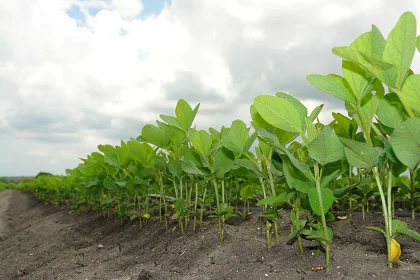
The United States agricultural sector is poised to reach a historic milestone as projections from the U.S. Department of Agriculture (USDA) indicate that American farmers will produce a record-breaking 4.52 billion bushels of soybeans in 2026. This monumental harvest reflects a steady upward trajectory in domestic production, driven by technological advancements, favorable trade conditions, and the deepening integration of soy-based derivatives into the global food supply chain. To put this figure into perspective, a standard bushel of soybeans weighs approximately 60 pounds; a harvest of this magnitude equates to roughly 271 billion pounds of soybeans. This represents an astonishing 800 pounds of soy for every citizen in the United States, a statistic that underscores the crop’s dominance in the modern agricultural landscape.
Despite these staggering numbers, the average American consumer rarely views themselves as a primary consumer of soybeans. Unlike corn, which is visible as a vegetable on the dinner plate, or wheat, which is the clear primary ingredient in bread, soy occupies a unique position in the American diet: it is ubiquitous yet largely invisible. Most consumers do not consume whole soybeans in significant quantities, yet the legume has become the foundational scaffolding of the industrial food system. From the oil used to fry fast food to the emulsifiers that keep chocolate smooth and the proteins that fortify processed snacks, soy is the silent engine of modern nutrition.
The Invisible Ingredient: Soy in the Modern Pantry
The "hiding in plain sight" nature of soy is a result of its versatile chemical properties. When soybeans are processed, or "crushed," they are separated into two primary components: soybean oil and soybean meal. While the meal is predominantly used as high-protein feed for poultry, swine, and cattle—indirectly entering the human diet through meat and dairy—the oil and isolated proteins find their way into a vast array of consumer goods.
Soybean oil is currently the most widely consumed vegetable oil in the United States. It is a staple in salad dressings, margarines, and mayonnaises, and it serves as the primary frying medium for the restaurant industry. Beyond the oil, soy derivatives like soy lecithin act as essential emulsifiers, preventing the separation of fats and water in products ranging from commercial bread to infant formula. Meanwhile, soy protein isolates and concentrates are utilized by food scientists to enhance the texture and protein content of energy bars, canned soups, and breakfast cereals.
Environmental historians, such as Edward Melillo of Amherst College, point to this phenomenon as a "peculiar transformation." A century ago, soybeans were virtually unknown to the American palate, used primarily as a "green manure" to fix nitrogen in the soil or as forage for livestock. The transition from a marginal soil-builder to a cornerstone of the national diet occurred with such industrial efficiency that it largely bypassed public consciousness.
A Chronology of the Soy Ascent
The rise of the soybean in the United States was not an accidental occurrence but the result of geopolitical necessity, industrial innovation, and strategic agricultural policy.
The Early 20th Century: Exploration and Experimentation
In the early 1900s, soybeans were largely a curiosity imported from East Asia. Figures like George Washington Carver researched the bean’s potential, but it remained a niche crop. It wasn’t until the 1920s that pioneering processors like A.E. Staley began to see the potential for soy as an industrial oilseed. The establishment of the first processing plants in the Midwest marked the beginning of the "Soybean Belt."
World War II: The Domestic Catalyst
The true turning point for soy came during World War II. Before the war, the United States relied heavily on imported fats and oils, particularly coconut and palm oils from the Pacific. When Japanese expansion severed these trade routes, the U.S. government incentivized farmers to rapidly expand soybean acreage to ensure a domestic supply of fats for both food and industrial use (including glycerin for explosives). By the end of the war, soy had proven its utility, and the infrastructure for large-scale crushing was firmly in place.
The 1970s: The Era of "Fence-to-Fence" Farming
The 1970s saw a radical shift in U.S. agricultural policy under Agriculture Secretary Earl Butz, who famously urged farmers to plant "fencerow to fencerow." This era coincided with the "Soybean Shock" of 1973, when a global shortage of protein led to a temporary U.S. export ban on soybeans. This event highlighted the world’s growing dependence on U.S. soy, leading to massive investments in breeding and infrastructure.
The 1990s to Present: The Biotech Revolution
The introduction of genetically modified (GM) soybeans in the mid-1990s, specifically those engineered for herbicide tolerance, allowed for more efficient weed management and higher yields. Today, over 90% of the soybeans grown in the U.S. are biotech varieties. This technological leap, combined with the expansion of the biofuels market and the rising demand for meat in developing nations, has pushed production to the record levels projected for 2026.
Supporting Data: The Economics of 4.52 Billion Bushels
The USDA’s 2026 projection of 4.52 billion bushels is supported by several key metrics that indicate a robust outlook for the crop. Currently, soybeans and corn compete for the title of the most-planted crop in the U.S., with each occupying roughly 85 to 90 million acres of farmland annually.
According to USDA Economic Research Service data, the yield per acre has seen a consistent increase, rising from an average of 25 bushels per acre in the 1960s to over 50 bushels per acre in recent years. The 2026 projection assumes continued improvements in seed genetics and precision farming techniques.
Economically, soybeans are one of the United States’ most valuable exports. In a typical year, nearly half of the U.S. soybean crop is exported, with China remaining the largest single buyer. The value of these exports often exceeds $25 billion annually, making soy a critical component of the U.S. trade balance. Furthermore, the growth of the Renewable Diesel industry has created a new, massive domestic market for soybean oil, providing a price floor that encourages farmers to maintain or expand their soybean acreage.
Official Responses and Industry Perspectives
The projection of a record harvest has drawn reactions from various sectors of the agricultural and scientific communities.
The American Soybean Association (ASA) has characterized the growth as a testament to the resilience and innovation of the American farmer. In recent statements, industry leaders have emphasized that the expansion of soybean production is vital for global food security, particularly as the world’s population continues to grow and demand for protein-rich diets increases in emerging economies.
On the regulatory front, the USDA has noted that the 2026 projections are contingent on several factors, including weather patterns and international trade stability. "The anticipated record harvest reflects our farmers’ ability to adapt to market signals and leverage technology," a USDA spokesperson noted in a recent market outlook briefing. "However, it also underscores the need for robust infrastructure and diversified markets to handle such significant volumes."
Environmental and health researchers offer a more nuanced perspective. While acknowledging the efficiency of the soy production system, some historians and nutritionists point to the ecological and dietary implications of such a monoculture-heavy system. Edward Melillo’s research highlights how the "invisibility" of soy can lead to a lack of public discourse regarding how our food is grown and what it contains.
Broader Impact and Implications
The implications of a 4.52-billion-bushel harvest extend far beyond the farm gate, affecting public health, the environment, and global geopolitics.
Dietary Shift and Public Health
The ubiquity of soybean oil has significantly altered the fatty acid profile of the American diet. Over the last century, the consumption of linoleic acid—an omega-6 fatty acid abundant in soybean oil—has increased dramatically. While soy is a plant-based protein, its heavy processing into oils and isolates means that most Americans are consuming it in a highly refined form. Health experts continue to study the long-term effects of this shift, debating the balance of omega-6 to omega-3 fatty acids in processed-food-heavy diets.
Environmental Footprint
The scale of soybean production requires vast amounts of land, water, and chemical inputs. While modern "no-till" farming and precision agriculture have reduced the environmental impact per bushel, the sheer volume of production remains a significant factor in nitrogen runoff and habitat loss. However, proponents argue that soybeans, as nitrogen-fixing legumes, require less synthetic fertilizer than corn, making them a relatively efficient choice for large-scale caloric production.
The Biofuel Frontier
Perhaps the most significant shift in the soy landscape is the transition from "food to fuel." The 2026 record harvest will likely be heavily utilized by the burgeoning Sustainable Aviation Fuel (SAF) and renewable diesel sectors. As the transportation industry seeks to lower its carbon footprint, soy-based fuels are being positioned as a bridge technology. This creates a "food versus fuel" tension that policymakers will need to navigate as production reaches new heights.
Conclusion
The projection of a 4.52-billion-bushel soybean harvest in 2026 is more than just a statistical milestone; it is a reflection of a century-long industrial evolution. From its humble beginnings as a nitrogen-fixing forage crop to its current status as an 800-pound-per-person staple, the soybean has quietly reshaped the American landscape and the American diet. As the U.S. prepares for this record-breaking yield, the challenge for consumers, farmers, and policymakers alike will be to recognize the "hidden" role of this versatile bean and to manage its massive influence on the global food and energy systems.
