

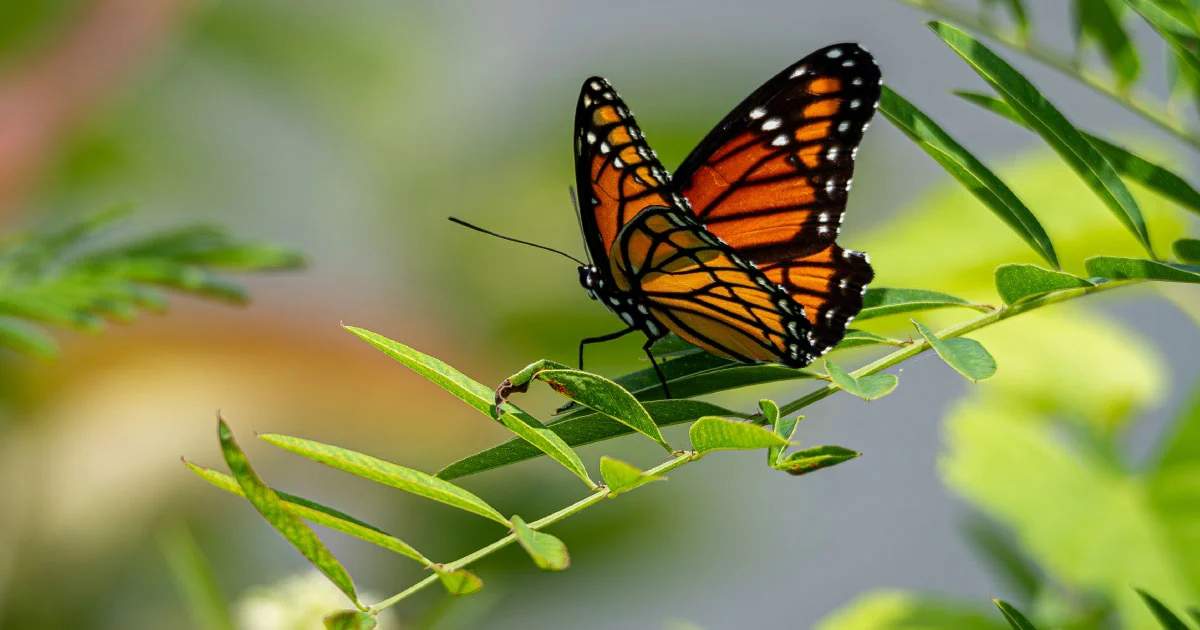
In the winter of 2013, the biological world faced a staggering realization as the census for the eastern monarch butterfly reached its lowest point since record-keeping began in the early 1990s. For decades, the orange-and-black wings of the monarch had served as a quintessential symbol of North American biodiversity, yet by the conclusion of that year’s migration, scientists reported that the population had plummeted to a mere 0.67 hectares of occupied forest in central Mexico. This figure represented a precipitous drop from the 1996 peak of nearly 21 hectares, signaling a potential extinction event for one of the planet’s most celebrated migratory phenomena. The crisis was not limited to monarchs; honeybees and other native pollinators were experiencing similar declines, threatening the stability of the American agricultural sector and the health of natural ecosystems.
The severity of this decline prompted a swift and unprecedented federal response. Recognizing that the loss of pollinators posed a direct threat to food security and environmental resilience, the Obama administration issued a presidential memorandum in 2014, establishing the Pollinator Health Task Force. This interagency body, co-chaired by the Secretary of Agriculture and the Administrator of the Environmental Protection Agency, was tasked with developing a national strategy to reverse pollinator losses. It was within this climate of ecological urgency that Orley “Chip” Taylor, the founding director of Monarch Watch and a professor at the University of Kansas, proposed a radical reimagining of the American landscape. During a high-level meeting in Washington, D.C., with highway managers and federal officials, Taylor introduced the concept of the "Monarch Highway"—a strategic initiative to convert the vast, underutilized grasslands along Interstate 35 into a primary habitat corridor for migrating butterflies.
The Ecological Significance of the I-35 Corridor
Interstate 35 (I-35) is more than just a 1,500-mile stretch of asphalt connecting Laredo, Texas, to Duluth, Minnesota. It serves as the geographic spine of the United States, bisecting the Great Plains and passing through the heart of the eastern monarch butterfly’s central migration flyway. Every year, millions of monarchs embark on a multi-generational journey that spans from the northern United States and southern Canada to the high-elevation oyamel fir forests of central Mexico.
The migration is a complex biological feat. The butterflies that overwinter in Mexico head north in the spring, laying eggs on milkweed plants in the southern United States. Their offspring continue the journey northward, and over the course of three to four generations, the population expands across the northern reaches of the continent. The final "super-generation" produced in late summer then flies the entire distance back to Mexico to begin the cycle anew.
Because monarchs are specialists, their survival depends entirely on the presence of milkweed (Asclepias), the only plant upon which their larvae can feed. Historically, the Great Plains provided a sea of milkweed and nectar-producing wildflowers. However, the expansion of industrial agriculture, the widespread use of herbicides, and urban sprawl have decimated these natural habitats. Taylor’s proposal focused on the fact that while the surrounding farmland was increasingly inhospitable to pollinators, the "rights-of-way" along interstate highways represented millions of acres of protected, contiguous land that could be managed specifically for conservation.
A Chronology of Policy and Action
The transition from a scientific proposal to a multi-state infrastructure project required a coordinated effort between federal agencies and state departments of transportation (DOTs). Following Taylor’s 2014 presentation, the Pollinator Health Task Force released the "National Strategy to Promote the Health of Honey Bees and Other Pollinators" in May 2015. This strategy set ambitious goals, including the restoration of 7 million acres of pollinator habitat over five years and the recovery of the eastern monarch population to 225 million butterflies by 2020.
In 2016, a landmark agreement was reached among the transportation departments of the six states along the I-35 corridor: Minnesota, Iowa, Missouri, Kansas, Oklahoma, and Texas. This memorandum of understanding (MOU) formalized the "Monarch Highway" initiative. The participating states agreed to collaborate on vegetation management practices that would enhance pollinator habitat, such as adjusting mowing schedules to allow milkweed to grow during peak migration periods and planting native seed mixes that provide nectar throughout the spring and fall.
The timeline of the initiative reflects a shift in how infrastructure is viewed—no longer just as a means of moving vehicles, but as a critical tool for ecological connectivity. By 2017, the Federal Highway Administration (FHWA) began providing technical assistance and best-practice guides to states, encouraging the use of integrated vegetation management (IVM) to reduce maintenance costs while simultaneously fostering biodiversity.
Supporting Data: The Magnitude of the Decline and the Scale of Opportunity
The data underpinning the Monarch Highway initiative highlights both the severity of the problem and the potential for recovery. Between 1990 and 2015, an estimated 970 million monarch butterflies vanished from the North American landscape. This decline was largely attributed to the loss of an estimated 165 million acres of breeding habitat, much of it due to the adoption of herbicide-tolerant crops which allowed farmers to eliminate milkweed from corn and soybean fields.
The potential of highway rights-of-way to mitigate this loss is substantial. In the United States, there are approximately 17 million acres of roadside land managed by DOTs. If even a fraction of this land is converted to pollinator-friendly habitat, it creates a massive, connected network that far exceeds the size of many national parks.
Furthermore, the economic data regarding pollinators underscores the necessity of these efforts. Pollinators contribute an estimated $24 billion to the U.S. economy annually. In states like Iowa and Kansas, where agriculture is the dominant industry, the decline of bees and butterflies is not merely an environmental concern but a threat to the yields of crops ranging from sunflowers to clover and various fruit trees.
Implementation and Management Strategies
The success of the Monarch Highway depends on precise land management. Simply leaving roadsides unmanaged is not a viable solution, as invasive species and woody brush can quickly take over, creating safety hazards for motorists and poor habitat for butterflies. Instead, the initiative employs several key strategies:
- Selective Mowing: Traditionally, highway departments mowed the entire right-of-way frequently to maintain a manicured appearance. Under the new protocol, mowing is limited to a "safety strip" immediately adjacent to the shoulder. The areas further back are mowed only once or twice a year, specifically at times that do not interfere with the monarch’s breeding or migration cycles.
- Native Seed Integration: When new road projects are completed or existing roadsides are refurbished, DOTs are increasingly using seed mixes that include native milkweed species and a variety of nectar plants that bloom at different times of the year.
- Invasive Species Control: By using targeted herbicide applications rather than broadcast spraying, managers can eliminate invasive weeds while preserving the native plants that pollinators require.
- Public Awareness: Signage along I-35 informs the public about the purpose of the taller, "wilder" grass, explaining that these areas are active conservation zones. This helps manage public expectations regarding the aesthetic of the highway.
Official Responses and Stakeholder Perspectives
The Monarch Highway has garnered support from a diverse array of stakeholders, ranging from federal scientists to state engineers. At the time of the initiative’s launch, federal officials emphasized that the project represented a "common-sense" approach to conservation. By utilizing land already owned by the public, the government could achieve significant environmental gains without the need for large-scale land acquisitions.
State DOT officials have also noted the fiscal benefits. Reduced mowing schedules translate directly to lower fuel costs, less equipment wear and tear, and fewer labor hours. "It’s a win-win," noted one regional manager during a 2018 summit. "We are saving money on maintenance while providing a vital service to the environment."
Conservation organizations, including Monarch Watch and the Xerces Society for Invertebrate Conservation, have praised the initiative but remain cautious. They point out that while the Monarch Highway is a significant step forward, it must be part of a broader effort that includes private landowners and the agricultural sector. Orley Taylor has frequently remarked that while the highway provides a "ribbon of life," the total acreage required to stabilize the monarch population remains vast, and every acre of habitat—whether on a farm, in a backyard, or along a highway—is essential.
Broader Impact and Future Implications
The implications of the Monarch Highway extend far beyond the protection of a single insect species. The initiative serves as a blueprint for "linear conservation," a concept that is increasingly being applied to power line corridors, railway lines, and pipeline rights-of-way. These linear landscapes are uniquely suited to migratory species, providing the "stepping stones" necessary for long-distance travel in a fragmented world.
Moreover, the Monarch Highway has fostered a new era of interstate cooperation. The six-state alliance along I-35 has shared data and resources, leading to more effective management practices that transcend state lines. This regional approach is critical for migratory species that do not recognize political boundaries.
However, challenges remain. Climate change is altering the timing of migrations and the flowering periods of nectar plants, potentially creating a "mismatch" between the butterflies and their food sources. Additionally, the eastern monarch population continues to fluctuate; while numbers have rebounded slightly from the 2013 lows, they remain well below the 6-hectare threshold that scientists believe is necessary to ensure long-term resilience against extreme weather events.
The transformation of I-35 into the Monarch Highway is a testament to the power of innovative thinking in the face of ecological crisis. By turning a symbol of human transit into a sanctuary for nature, the initiative offers a path forward where infrastructure and ecology are no longer at odds. As the monarchs continue their perilous journey across the heart of the continent, the "strips of milkweed and native plant habitat" envisioned by Chip Taylor stand as a vital lifeline, ensuring that one of nature’s most spectacular displays does not vanish from the American sky.
