


Pheochromocytomas and paragangliomas (PPGLs) are rare tumors arising from chromaffin cells of the adrenal medulla or extra-adrenal sympathetic and parasympathetic paraganglia. While approximately 75% of these tumors remain localized at the time of diagnosis, the medical community maintains a cautious stance, treating all PPGLs as having metastatic potential. This caution stems from a fundamental diagnostic limitation: clinicians currently lack reliable biochemical or histological markers to accurately predict which localized tumors will eventually spread. Although the TNM (Tumor, Node, Metastasis) staging system provides some guidance based on primary tumor size and anatomical location, it is increasingly viewed as an incomplete tool for managing the complex, multi-variable nature of metastatic PPGL.
The Challenge of Heterogeneity and Therapeutic Selection
The management of metastatic PPGL is complicated by the extreme variability in how the disease manifests and progresses. Some patients experience indolent, slow-growing tumors that can be managed for years with minimal intervention, while others face aggressive, rapidly progressing malignancies that require immediate and intensive systemic therapy.
Historically, the standard of care for aggressive metastatic disease has been cytotoxic chemotherapy, specifically the CVD regimen consisting of cyclophosphamide, vincristine, and dacarbazine. While CVD can be effective in reducing tumor burden and controlling symptoms related to catecholamine excess, it is associated with significant systemic toxicity, including bone marrow suppression and peripheral neuropathy. In recent years, the therapeutic landscape has expanded to include radioligand therapies, tyrosine-kinase inhibitors (TKIs), and highly targeted systemic agents. However, the proliferation of these options has created a secondary challenge: determining the optimal sequence and selection of treatments for a specific patient.
Dr. Jimenez’s team addresses this "paradox of choice" by integrating the tumor’s molecular genotype with the patient’s clinical phenotype. Their algorithm does not merely list available drugs but provides a decision-making hierarchy based on the underlying drivers of the disease.
A Four-Tiered Molecular Framework
The cornerstone of the MD Anderson algorithm is the classification of patients into four distinct groups based on their molecular profile. This approach reflects the growing understanding that PPGLs are among the most hereditary of all human cancers, with nearly 40% of cases linked to germline mutations.
- Pseudohypoxic Cluster (Cluster 1): These tumors often involve mutations in the VHL, SDHx, or FH genes. They are characterized by the activation of hypoxia-inducible factors (HIFs) despite normal oxygen levels, leading to increased angiogenesis and aggressive behavior.
- Kinase Signaling Cluster (Cluster 2): Driven by mutations in RET, NF1, MAX, or HRAS, these tumors utilize signaling pathways common in many other cancers.
- Wnt Signaling Cluster: A smaller subset of tumors involving MAML3 fusions or CSDE1 mutations.
- Unknown/Other: Patients without identifiable driver mutations, who are managed based on clinical progression rates.
Once a patient is categorized molecularly, the algorithm further subclassifies them by the rate of disease progression. This dual-axis approach—genotype and tempo—allows clinicians to choose between aggressive debulking (such as chemotherapy) for rapid spread and more targeted, less toxic options for slower-moving disease.
Chronology of a Complex Case: From Diagnosis to Targeted Therapy
To demonstrate the practical application of this framework, Dr. Jimenez highlighted the case of a 67-year-old male whose treatment journey spanned several years and multiple therapeutic modalities.
In 2020, the patient presented with classic symptoms of catecholamine excess: hypertension, palpitations, severe headaches, and abdominal pain. Diagnostic imaging and genetic testing revealed a large, unresectable primary tumor and a diagnosis of paraganglioma syndrome type 4. Because the tumor was highly vascular and situated in a precarious location, the immediate goal was tumor shrinkage to facilitate future surgery. Following the algorithm’s logic for aggressive, high-burden disease, the team initiated CVD chemotherapy. The treatment was successful, allowing for a subsequent resection that rendered the patient disease-free for two years.
However, the disease returned in 2022. Upon recurrence, the tumor’s behavior had shifted; while the disease was now deemed incurable, it was progressing at a much slower rate than it had in 2020. This change in the disease "tempo" required a shift in strategy. Rather than returning to toxic chemotherapy, the team opted for radiopharmaceutical therapy with Lutetium-177-DOTATATE (Lutathera). This therapy targets somatostatin receptors on the tumor cells, delivering localized radiation. While the administration required intensive care monitoring due to the risk of a catecholamine crisis during infusion, it offered a more targeted approach than systemic cytotoxic drugs.
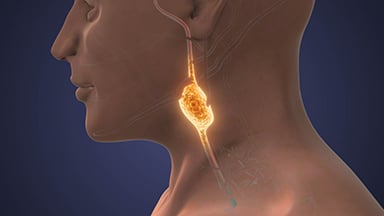
The final phase of the patient’s journey involved the introduction of belzutifan, a selective small-molecule inhibitor of HIF2α. Approved by the FDA in 2025 for specific PPGL applications, belzutifan provided the patient with a convenient, oral treatment option that resulted in sustained symptomatic improvement and disease stabilization. This case underscores a vital tenet of the MD Anderson algorithm: treatment is not static. As the tumor evolves and new therapies become available, the management plan must be reassessed through repeat functional imaging and clinical evaluation.
The Rise of Belzutifan and HIF2α Inhibition
The inclusion of belzutifan in the treatment algorithm marks a significant milestone in neuroendocrine oncology. The development of this drug is the culmination of 25 years of research into the VHL-HIF oxygen-sensing pathway—a discovery that was awarded the Nobel Prize in Physiology or Medicine in 2019.
For patients with pseudohypoxic PPGLs (Cluster 1), belzutifan offers a way to "turn off" the primary driver of tumor growth. By inhibiting HIF2α, the drug prevents the transcription of genes responsible for tumor proliferation and blood vessel formation. While Dr. Jimenez cautions that belzutifan is not a cure and may not work for every patient, its approval provides a critical first-line option for those with VHL-related tumors, potentially sparing them the side effects of broader systemic therapies.
Global Implications and the Democratization of Care
A significant portion of Dr. Jimenez’s work focuses on the "democratization" of these medical advances. As a member of the European Society for Medical Oncology (ESMO) guideline panel, Jimenez is acutely aware of the disparities in global healthcare resources.
The MD Anderson algorithm is designed to be adaptable. In high-resource settings, molecular subtyping and advanced radioligands are the standard. However, in many parts of the world, access to genetic sequencing or expensive oral inhibitors like belzutifan is non-existent. The algorithm acknowledges this by maintaining chemotherapy as a viable and necessary option.
"The algorithm is designed with everybody around the world in mind," Jimenez noted. "Base the decision on the rate of progression, think about the molecular origin, and look for the best option that’s actually obtainable in that setting." This pragmatic approach ensures that clinicians in lower-resource environments can still provide sophisticated care by focusing on the "tempo" of the disease, even if they cannot access the "genotype."
Future Directions: The Challenge of Orphan Disease Research
The primary obstacle to further refining these treatments is the "orphan" status of PPGL. Because the disease affects a small number of people, conducting large-scale, Phase 3 randomized controlled trials—the gold standard of medical evidence—is exceptionally difficult. Such trials require international cooperation, significant funding, and years of patient recruitment.
In the absence of such data, the MD Anderson algorithm serves as a "living document" that synthesizes available evidence and expert consensus. Dr. Jimenez emphasized that while the data in the field often has limitations, the move toward precision medicine in PPGL is irreversible. The focus must remain on molecular pathways and tumor origin, similar to the progress made in more common cancers like lung or breast cancer.
Conclusion: A New Standard for Precision Endocrinology
The framework presented in "Approach to the patient with metastatic pheochromocytoma and paraganglioma: advances in systemic therapy" provides more than just a list of medications; it provides a philosophy of care. By prioritizing the biological drivers of the tumor and the clinical needs of the patient, the algorithm moves the field away from a "one-size-fits-all" model toward a more nuanced, personalized strategy.
As the medical community looks toward the future, the integration of new diagnostic tools and therapies like belzutifan into structured algorithms will be essential for improving survival rates and quality of life for patients with these rare and complex tumors. Dr. Jimenez’s contribution serves as a call to action for global collaboration, reminding the field that while the disease is rare, the pursuit of better answers must be universal.
