

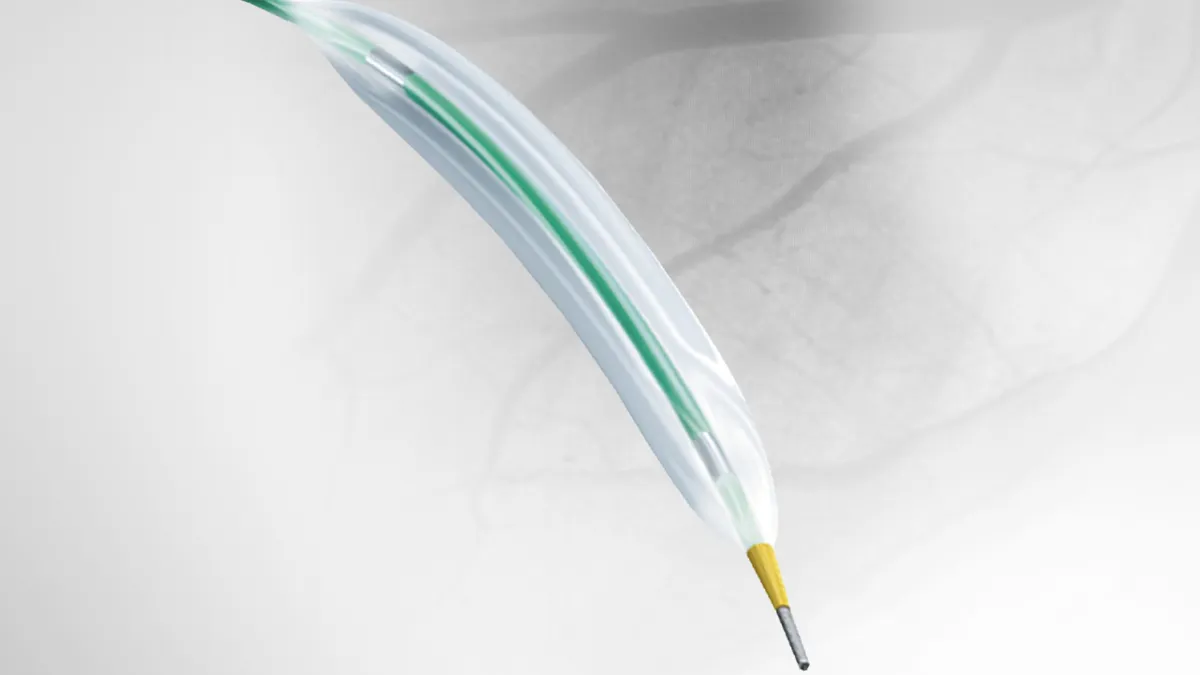
The U.S. Food and Drug Administration (FDA) has officially granted Premarket Approval (PMA) to Cordis for its Selution SLR sirolimus-eluting balloon catheter, marking a significant shift in the interventional cardiology landscape. This regulatory milestone provides American physicians with a specialized tool to treat coronary in-stent restenosis (ISR), a persistent challenge in cardiovascular medicine where a previously treated vessel becomes blocked again. The Selution SLR becomes the first sirolimus-coated balloon to receive FDA approval for this specific indication, offering a non-stent alternative to the traditional practice of layering multiple metal scaffolds within the coronary arteries.
The Clinical Challenge of In-Stent Restenosis
In-stent restenosis remains one of the most complex hurdles in the treatment of coronary artery disease. While the advent of drug-eluting stents (DES) drastically reduced the rates of vessel re-narrowing compared to bare-metal stents, the condition has not been eliminated. ISR occurs when the body’s healing response to the implantation of a stent becomes overactive, leading to neointimal hyperplasia—the rapid growth of cells that eventually obstructs blood flow through the stent.
For years, the standard clinical response to ISR was the placement of a second, or even third, drug-eluting stent inside the original one. While effective in the short term, this "stent-in-stent" approach creates a cumulative layer of metal and polymer within the artery wall. Clinical data suggests that this layering increases the long-term risk of stent thrombosis and major adverse cardiac events (MACE). U.S. clinical guidelines have historically recognized repeat stenting as the most effective method for preventing recurrent ISR, but there has been a growing consensus among cardiologists that a "leave nothing behind" strategy would be preferable if clinical efficacy could be maintained.
The approval of the Selution SLR addresses this need by delivering a therapeutic drug directly to the vessel wall without the requirement of a permanent metallic implant. This is particularly relevant for patients who have already undergone multiple procedures and for whom further stenting may be anatomically or clinically inadvisable.
Breakthrough Technology: The Sirolimus Advantage
The Selution SLR (Sustained Limus Release) technology distinguishes itself through its unique drug-delivery mechanism. Unlike earlier drug-coated balloons (DCBs) that primarily utilized paclitaxel, the Selution SLR uses sirolimus. Paclitaxel is a cytotoxic drug that prevents cell division by poisoning the cellular machinery, whereas sirolimus is cytostatic, meaning it inhibits the cell cycle without killing the cells. This distinction is often cited by clinicians as a reason for the better safety profile associated with "limus" family drugs in vascular applications.
The core of the Selution SLR technology lies in its MicroReservoirs. These are proprietary spheres made of biodegradable polymer mixed with sirolimus. These MicroReservoirs are designed to provide a controlled and sustained release of the drug over a period of up to 90 days. This duration is critical because the inflammatory response and cellular proliferation that cause restenosis typically peak weeks after the intervention. By ensuring the drug remains present and active during this entire window, the device aims to mimic the therapeutic efficacy of a drug-eluting stent without the permanent hardware.
Furthermore, the Selution SLR utilizes a specialized "CAT" (Cell Adherent Technology) coating. This ensures that the MicroReservoirs are transferred efficiently from the balloon surface to the vessel wall during inflation, minimizing drug loss into the bloodstream and ensuring high bioavailability at the target lesion site.
Clinical Evidence: The SELUTION4ISR Trial
The FDA’s decision was heavily influenced by the results of the SELUTION4ISR clinical trial, a randomized controlled study designed to demonstrate the safety and efficacy of the device in a real-world U.S. patient population. The trial compared the Selution SLR against a standard-of-care (SOC) control group, which largely consisted of repeat drug-eluting stenting (approximately 80% of the control arm) or plain old balloon angioplasty (POBA).
The primary endpoint of the study was target lesion failure (TLF) at 12 months. The data showed that TLF occurred in 15.2% of patients treated with the Selution SLR, compared to 13.5% in the standard-of-care group. While the numerical rate was slightly higher for the Cordis device, the trial successfully met its primary non-inferiority endpoint, proving that the drug-coated balloon is a viable alternative to repeat stenting.
However, the trial also provided nuanced data regarding specific patient subgroups. In a secondary endpoint analysis focusing on patients with "single-layer ISR"—those whose arteries were blocked by only one previous stent—the failure rates for Selution SLR were 14.2% compared to 6.5% for the standard of care. This discrepancy highlights the complexity of treating ISR and suggests that while the DCB is a powerful tool, physician discretion remains paramount in selecting the right patient for the right device.
Despite the subgroup findings, the overall safety profile was robust, with no significant differences in stent thrombosis or cardiac death between the two groups. This gave the FDA the confidence to approve the device for broad use in coronary ISR, providing an essential alternative for patients who are poor candidates for additional metal layers.
Chronology of Cordis and the MedAlliance Acquisition
The path to this FDA approval has been marked by significant corporate restructuring and strategic acquisitions. Cordis, a name synonymous with the early days of interventional cardiology, was the first company to receive FDA approval for a sirolimus-eluting coronary stent (the CYPHER stent) in 2003. At the time, Cordis was a subsidiary of Johnson & Johnson.
In 2015, Johnson & Johnson sold Cordis to Cardinal Health for approximately $2 billion. Under Cardinal Health, Cordis struggled to maintain its market-leading position as competitors like Boston Scientific and Medtronic advanced their stent technologies. In 2021, Cardinal Health divested Cordis to the private equity firm Hellman & Friedman in a deal valued at approximately $1 billion.
Under private equity ownership, Cordis pivoted its strategy toward high-growth, innovative vascular technologies. A pivotal moment in this strategy occurred in late 2022 and early 2023, when Cordis announced the acquisition of MedAlliance, a Swiss-based developer of the Selution SLR. The deal was structured with an initial payment of $235 million and potential milestone payments that could bring the total value to $1.135 billion.
This acquisition allowed Cordis to leapfrog back into the spotlight of coronary innovation. MedAlliance had already secured a CE Mark for the Selution SLR in Europe, where it was already competing with other "limus" coated balloons such as Concept Medical’s Magic Touch and B. Braun’s SeQuent SCB. The focus then shifted to the rigorous U.S. regulatory pathway, culminating in the current FDA approval.
Competitive Landscape and Market Impact
The U.S. market for drug-coated balloons in the coronary space is currently undergoing a rapid expansion. Until recently, American cardiologists had very limited options for DCBs compared to their European counterparts. The landscape changed earlier in 2024 when Boston Scientific received FDA approval for its Agent drug-coated balloon.
The Agent balloon utilizes paclitaxel, which has a long history in peripheral vascular interventions but has faced scrutiny in the past regarding long-term mortality concerns (though these concerns have largely been mitigated by more recent data). Boston Scientific reported that the Agent balloon was a primary driver of growth for its cardiovascular franchise in the first half of 2024, signaling a high level of pent-up demand among U.S. physicians for non-stent options.

With the entry of Cordis’s Selution SLR, the market now has a direct choice between two different drug platforms: paclitaxel (Boston Scientific) and sirolimus (Cordis). In the medical community, the "limus" family is often preferred for coronary applications due to its wider therapeutic window and cytostatic properties. Cordis is expected to leverage this preference in its marketing and clinical outreach.
The economic implications are also substantial. ISR accounts for approximately 10% of all coronary interventions. As the population ages and the number of stented patients grows, the incidence of ISR is expected to rise. Analysts suggest that the drug-coated balloon market could become a multi-billion dollar segment as indications expand from ISR into small-vessel disease and bifurcations.
Broader Implications and Future Outlook
The approval of Selution SLR is not just a win for Cordis; it is a signal of a broader trend in interventional cardiology toward "leaving nothing behind." While stents are life-saving devices, the medical community is increasingly aware of the long-term biological costs of permanent implants. The ability to deliver potent anti-restenotic drugs via a balloon catheter opens the door for future applications.
Beyond coronary ISR, Cordis is actively investigating the use of Selution SLR in other vascular beds. The device has already shown promise in treating peripheral artery disease (PAD), particularly in the superficial femoral artery and below-the-knee (BTK) lesions, where stenting is often problematic due to the mechanical stresses placed on the vessels.
Furthermore, the success of the Selution SLR may prompt other manufacturers to accelerate their U.S. clinical programs. Companies like Concept Medical and Medtronic are closely watching the market reception of the Agent and Selution SLR to determine their own regulatory strategies for the American market.
From a physician’s perspective, the immediate availability of Selution SLR provides a critical "bailout" option. In cases where a patient has a "full metal jacket" (an artery almost entirely lined with stents), the appearance of new blockages previously left doctors with few options other than high-risk bypass surgery. Now, these patients can be treated with a drug-coated balloon that restores blood flow and delivers medication to prevent future growth without adding more metal.
In conclusion, the FDA approval of the Selution SLR represents a full-circle moment for Cordis. By returning to the drug that made it a leader two decades ago—sirolimus—and delivering it through a cutting-edge, stent-free platform, the company has re-established itself as a major player in the fight against cardiovascular disease. As clinical adoption grows, the data gathered from U.S. hospitals will further refine how and when these devices are used, ultimately leading to more personalized and less invasive care for heart patients nationwide.
