

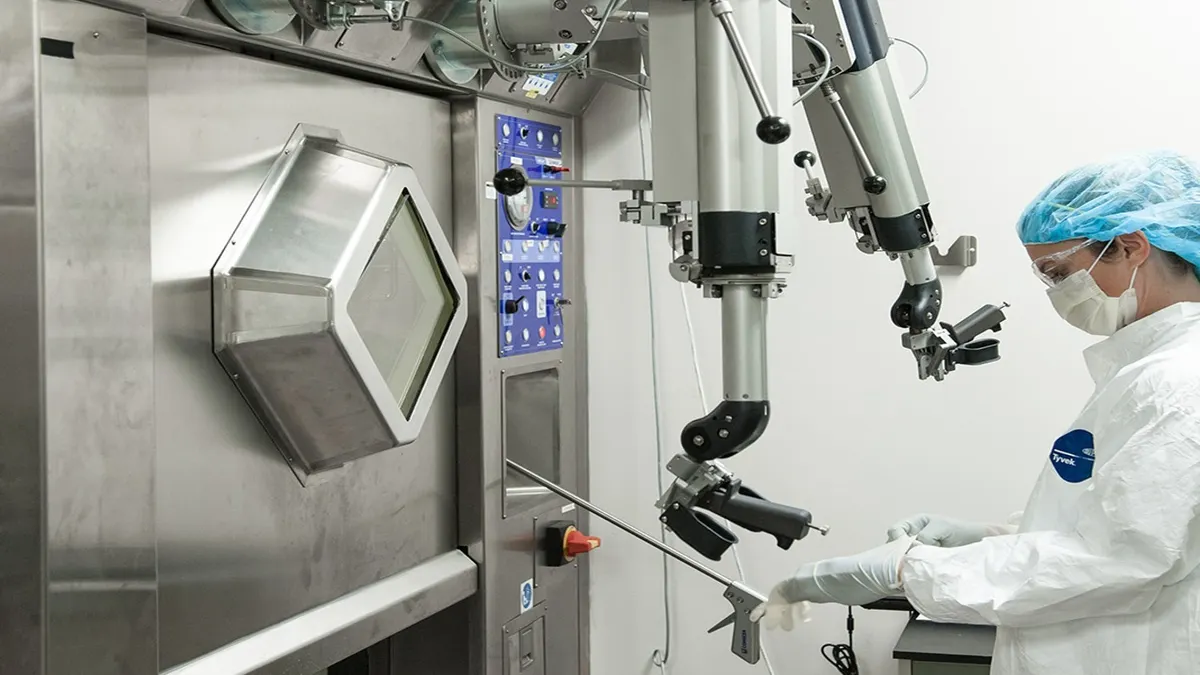
GE HealthCare has reached a definitive agreement to acquire Sofie Biosciences, a leading developer and manufacturer of radiopharmaceuticals, in a move designed to significantly expand the company’s presence in the rapidly evolving molecular imaging market. The acquisition, which is expected to close in the first half of 2027, positions GE HealthCare’s Pharmaceutical Diagnostics (PDx) segment as a vertically integrated powerhouse capable of managing the entire lifecycle of radiopharmaceutical agents, from early-stage research and development to large-scale commercial manufacturing and logistical distribution. Under the terms of the agreement, Sofie Biosciences will become a part of the PDx business, though it will continue to operate as an independent manufacturing partner for its existing client base, ensuring that the broader radiopharmaceutical ecosystem remains supported while GE HealthCare secures its internal supply chain.
The Strategic Importance of Radiopharmaceutical Infrastructure
Radiopharmaceuticals represent a specialized class of drugs containing radioactive isotopes used for both diagnostic imaging and, increasingly, therapeutic purposes. The most common application is in Positron Emission Tomography (PET) scans, which allow clinicians to visualize metabolic activity and molecular processes within the body. Unlike traditional pharmaceuticals, radiopharmaceuticals are characterized by their "half-life"—the time it takes for half of the radioactive atoms to decay. For many common imaging agents, such as those utilizing Fluorine-18 (F18), the half-life is approximately 110 minutes. This creates a high-stakes logistical environment where drugs must be manufactured in specialized cyclotrons and delivered to hospitals or imaging centers within a matter of hours.
By acquiring Sofie Biosciences, GE HealthCare is directly addressing the primary bottleneck in the radiopharmaceutical industry: geographic distribution. Sofie Biosciences operates a network of 15 contract manufacturing organization (CMO) sites across the United States. This infrastructure is vital for the decentralized production required to meet the time-sensitive needs of PET imaging facilities. The acquisition allows GE HealthCare to internalize a significant portion of its manufacturing costs while gaining the agility to scale the production of its existing portfolio and its burgeoning pipeline of next-generation tracers.
Portfolio Synergy and the Integration of FAPI-74
One of the most significant assets included in the acquisition is the full U.S. rights to FAPI-74, a pipeline radiotracer that targets the fibroblast activation protein (FAP). FAP is overexpressed in the stroma of many different types of epithelial cancers, making FAPI-74 a "pan-cancer" imaging agent with the potential to revolutionize how oncologists stage disease and monitor treatment response across various malignancies. GE HealthCare previously held the rights to FAPI-74 outside the United States, and this deal consolidates global control over the product, streamlining its path toward regulatory approval and commercialization in the world’s largest healthcare market.
Furthermore, Sofie Biosciences already serves as a critical manufacturing partner for GE HealthCare’s recently launched Flyrcado (flurpiridaz F18) injection. Flyrcado is a PET myocardial perfusion imaging (MPI) agent designed for the detection of coronary artery disease. Unlike traditional SPECT imaging agents, which have been the standard of care for decades, F18-based PET agents like Flyrcado offer higher resolution, lower radiation exposure for patients, and more accurate results in obese patients or women with dense breast tissue. By owning the manufacturing sites where Flyrcado is produced, GE HealthCare can ensure a more stable supply chain and better manage the anticipated surge in demand as cardiology departments transition from SPECT to PET technology.
Chronology and Financial Expectations
The timeline for the acquisition reflects the complex regulatory and operational nature of the radiopharmaceutical industry. While the deal has been signed, the closing date is projected for the first half of 2027. This window allows both companies to navigate the necessary antitrust reviews and begin the long-term process of integrating Sofie’s 15 manufacturing sites into GE HealthCare’s global quality management systems.
From a financial perspective, GE HealthCare leadership has expressed high confidence in the deal’s value proposition. Kevin O’Neill, CEO of GE HealthCare’s PDx business, noted that Sofie Biosciences is expected to grow at low double-digit rates. The acquisition is projected to be accretive to GE HealthCare’s revenue growth and adjusted earnings per share (EPS) within the first full year of ownership. This financial outlook is bolstered by the dual-revenue stream inherent in Sofie’s business model: it will produce GE HealthCare’s proprietary agents while continuing to generate revenue as a CMO for other radiopharmaceutical companies.
Addressing Industry Bottlenecks and Market Analysis
The radiopharmaceutical sector is currently experiencing what many analysts call a "renaissance." Recent years have seen a flurry of high-profile acquisitions, including Eli Lilly’s $1.4 billion purchase of POINT Biopharma and Bristol Myers Squibb’s $4.1 billion acquisition of RayzeBio. These deals are largely driven by the rise of "theranostics"—a field where the same molecular targeting agent is used for both imaging (diagnosis) and delivering a radioactive payload to kill cancer cells (therapy).
However, the rapid growth of the theranostic market has outpaced the available manufacturing capacity. Many clinical trials for new radioligand therapies have faced delays due to the scarcity of isotope production and specialized manufacturing slots. BTIG analyst Ryan Zimmerman highlighted that GE HealthCare’s acquisition of Sofie Biosciences is a strategic move to "reduce bottlenecks in the radiopharmaceutical adoption cycle." By controlling 15 key nodes in the U.S. manufacturing network, GE HealthCare mitigates the risk of third-party capacity constraints, ensuring that its diagnostic tracers are available to support the growing number of patients undergoing radiopharmaceutical therapy.
Broader Implications for Precision Medicine
The acquisition of Sofie Biosciences is a clear indicator of GE HealthCare’s broader strategy since its spin-off from General Electric in early 2023. The company has moved aggressively to position itself as a leader in precision medicine, where data-driven diagnostics and targeted therapies converge to provide personalized patient care.
The integration of Sofie’s capabilities allows GE HealthCare to offer a "closed-loop" solution for healthcare providers. GE HealthCare already manufactures the PET/CT scanners used to perform the imaging; with this acquisition, they also own the drugs injected into the patient and the facilities that produce those drugs. This vertical integration is expected to lower total costs for healthcare systems and improve patient access to advanced diagnostics, particularly in underserved regions where the lack of nearby radiopharmaceutical production has historically limited the availability of PET scans.

Official Responses and Industry Outlook
The leadership of both organizations has emphasized the cultural and strategic fit between the two companies. For Sofie Biosciences, joining GE HealthCare provides the capital and global reach necessary to expand its footprint and accelerate the development of its own internal pipeline. For GE HealthCare, the deal secures a vital piece of the "molecular imaging puzzle."
"As part of GE HealthCare, Sofie Biosciences enables us to participate across the radiopharmaceutical value stream, meeting customer demand through a mix of GE HealthCare owned and partner facilities," said Kevin O’Neill. This hybrid approach—maintaining Sofie’s independence as a CMO while leveraging its assets for GE’s proprietary products—is seen as a pragmatic way to maintain industry-wide stability while gaining a competitive edge.
Industry observers suggest that this deal may trigger further consolidation in the radiopharmaceutical space. As the demand for PET imaging grows—driven by an aging population, the rise of new Alzheimer’s treatments that require PET scans for patient selection, and the expansion of radioligand therapies in oncology—the value of localized, high-quality manufacturing sites will only increase.
Conclusion
The acquisition of Sofie Biosciences marks a pivotal moment for GE HealthCare as it seeks to dominate the high-growth radiopharmaceutical market. By securing 15 manufacturing sites, gaining full rights to the promising FAPI-74 tracer, and ensuring the production stability of Flyrcado, GE HealthCare is building an infrastructure that is resilient to the logistical challenges of radioactive decay. As the medical community moves toward more targeted and personalized approaches to treating cancer and cardiovascular disease, the ability to manufacture and distribute sophisticated molecular tracers at scale will be the defining factor of success. This strategic investment not only promises to drive financial growth for GE HealthCare but also aims to improve the diagnostic landscape for millions of patients who rely on the precision of PET imaging for life-saving medical decisions.
