

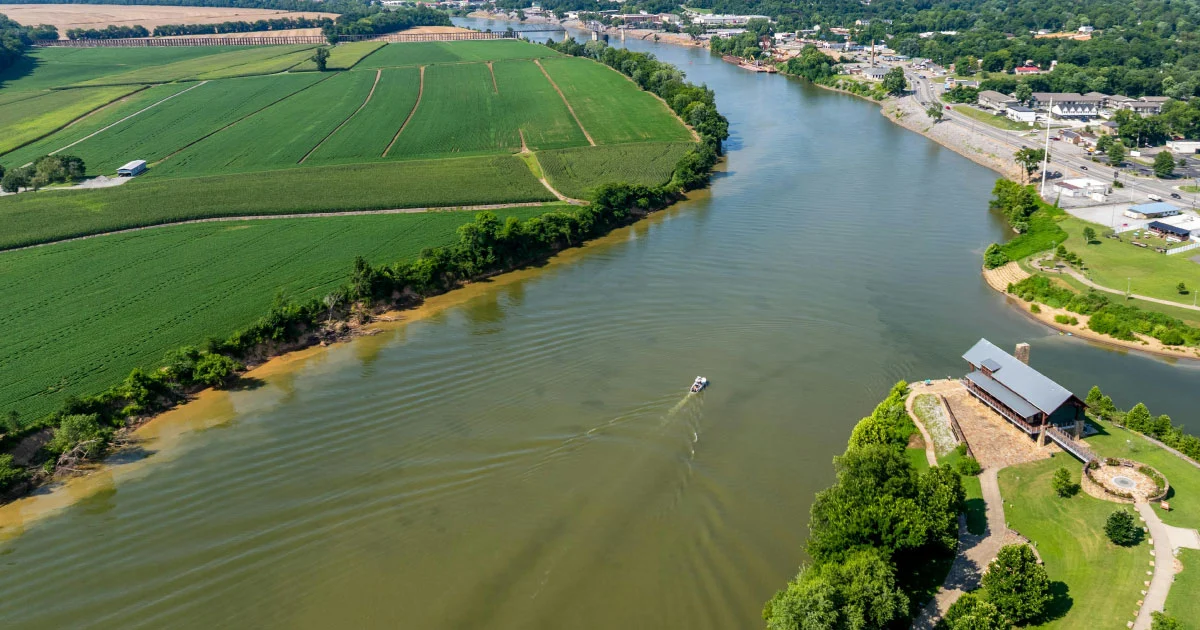
A comprehensive analysis of federal environmental records has revealed that atrazine, a potent hormone-disrupting herbicide, is currently contaminating approximately 25% of all continental United States rivers. This finding, which encompasses roughly 860,000 miles of waterways, suggests a level of environmental saturation that may pose significant risks to both aquatic wildlife and human populations. The review, conducted by the Center for Biological Diversity (CBD), indicates that these contaminated waters serve as the source for more than 20% of surface drinking water intakes nationwide and impact over 675,000 private and commercial wells.
The report marks the first time that the Environmental Protection Agency’s (EPA) internal records on atrazine have been fully synthesized and mapped to illustrate the sheer scale of the herbicide’s presence in the American landscape. Despite being effectively banned in more than 60 countries, including the European Union, atrazine remains the second most widely used pesticide in the United States. Current estimates suggest that approximately 70 million pounds of the chemical are applied annually to American croplands, primarily in the production of corn, sorghum, and sugarcane.
The Scope of Environmental and Biological Impact
Atrazine is categorized as an endocrine disruptor, meaning it interferes with the hormonal systems of living organisms. The biological consequences of exposure are well-documented in scientific literature, particularly concerning amphibians. Research led by biologists at the University of California, Berkeley, famously demonstrated that atrazine exposure could "chemically castrate" male frogs. In some instances, the herbicide triggered a complete sex reversal, turning genetic males into functional females capable of laying eggs.
The persistence of atrazine in the environment is a primary factor in its widespread detection. Unlike some chemicals that break down quickly upon exposure to sunlight or soil microbes, atrazine is relatively stable and highly mobile. When applied to fields, it frequently washes into nearby streams and leaches into groundwater through rainfall and irrigation runoff. This mobility ensures that the chemical travels far from its point of origin, infiltrating regional watersheds and eventually entering the public water supply.
For human populations, the concerns center on developmental and reproductive health. Because atrazine mimics or interferes with natural hormones, exposure during critical windows of development—such as pregnancy or early childhood—is of particular concern to toxicologists. Some studies have linked atrazine exposure to decreased semen quality in men, increased risk of certain cancers, and birth complications such as low birth weight and abdominal wall defects.
Historical Context and Regulatory Chronology
The regulatory history of atrazine in the United States is a decades-long narrative of scientific discovery punctuated by legal and political tension. Understanding the current crisis requires a look back at the timeline of the chemical’s approval and the subsequent efforts to restrict its use.
- 1958: Atrazine is first registered for use in the United States. It quickly becomes a staple of industrial agriculture due to its effectiveness in controlling broadleaf and grassy weeds.
- 2003: The European Union bans the use of atrazine, citing its persistent presence in groundwater and the inability to ensure that concentrations remain below safe limits.
- 2004-2012: Numerous studies, including high-profile research from UC Berkeley, highlight the chemical’s impact on endocrine systems. The EPA begins a series of reviews but ultimately maintains the chemical’s registration.
- 2016: The EPA releases a draft ecological risk assessment concluding that atrazine poses significant risks to fish, amphibians, and aquatic plants at levels frequently found in the environment.
- 2020: Under the Federal Insecticide, Fungicide, and Rodenticide Act (FIFRA), the EPA issues a re-registration decision for atrazine. While it implements some new protections, it allows for continued widespread use, sparking a wave of litigation from environmental groups.
- 2022-2024: Legal challenges continue as advocacy groups argue the EPA ignored its own scientists’ warnings. The latest CBD report is released, providing a spatial analysis of the contamination.
Supporting Data and Geographic Distribution
The data analyzed in the new review suggests that the contamination is not evenly distributed but is heavily concentrated in the "Corn Belt" of the Midwest. States such as Illinois, Iowa, Indiana, Nebraska, and Kansas show the highest concentrations of atrazine in surface water. However, the reach of the chemical extends far beyond these agricultural hubs.
According to the EPA’s monitoring data, concentrations of atrazine in some watersheds frequently exceed the "level of concern" for aquatic life. The EPA currently sets the maximum contaminant level (MCL) for atrazine in drinking water at 3 parts per billion (ppb). While most municipal water systems strive to stay below this limit, environmental advocates argue that the 3 ppb threshold is outdated and does not account for the cumulative effects of endocrine disruption or the vulnerability of developing fetuses.
Furthermore, the report highlights a significant "monitoring gap." While large municipal systems are required to test for atrazine under the Safe Drinking Water Act, private wells—which serve millions of Americans in rural areas—are largely unregulated. This means that families living near treated fields may be consuming water with atrazine levels far exceeding federal recommendations without their knowledge.
Stakeholder Perspectives and Official Reactions
The release of the CBD report has reignited a fierce debate between environmental advocates, the agricultural industry, and regulatory bodies.
Environmental Advocacy Groups:
The Center for Biological Diversity and other organizations are calling for an immediate phase-out of atrazine. Nathan Donley, a lead researcher at the CBD, stated that the ubiquity of the chemical in US waterways represents a "regulatory failure." These groups argue that the economic benefits of atrazine do not outweigh the long-term public health costs and the degradation of biodiversity.
The Agricultural Industry:
Manufacturers of atrazine, such as Syngenta, and trade groups like CropLife America, defend the herbicide as a vital tool for modern farming. They contend that atrazine is one of the most thoroughly studied chemicals in history and that, when used according to label instructions, it poses no unreasonable risk to human health or the environment. Industry representatives often point out that atrazine is essential for "no-till" farming, a practice that reduces soil erosion and carbon emissions by eliminating the need to plow fields for weed control.
The Environmental Protection Agency:
The EPA maintains that its current regulations are based on the best available science. In response to recent inquiries, the agency typically emphasizes its ongoing commitment to periodic reviews and its efforts to implement mitigation measures, such as requiring spray buffers near waterways and reducing application rates in certain sensitive areas. However, internal documents revealed in the CBD report suggest a divide between the agency’s political leadership and its career scientists regarding the acceptable level of environmental risk.
Analysis of Economic and Public Health Implications
The implications of widespread atrazine contamination are twofold: they involve a substantial economic burden and a potentially systemic public health challenge.
From an economic standpoint, the cost of removing atrazine from drinking water is significant. Many municipal water treatment plants must utilize granular activated carbon (GAC) filtration to effectively strip the herbicide from the water supply. The installation and maintenance of these systems can cost taxpayers millions of dollars. For smaller, rural communities with limited budgets, the financial strain of meeting safety standards can lead to increased water utility rates or, in some cases, non-compliance.
In terms of public health, the "precautionary principle" followed by the European Union stands in stark contrast to the US regulatory approach. By allowing atrazine to remain on the market while its long-term effects are still being debated, the US is essentially conducting a massive, uncontrolled experiment on its population. If the links between atrazine and chronic health conditions are further solidified, the long-term medical costs associated with treating reproductive disorders and developmental delays could far exceed the agricultural profits generated by the chemical’s use.
Future Outlook and Potential Policy Shifts
The findings of the CBD report are likely to serve as a catalyst for further legal action. There are currently multiple active lawsuits aimed at forcing the EPA to reconsider its 2020 re-registration of atrazine. These legal challenges argue that the agency violated the Endangered Species Act by failing to properly account for how atrazine affects protected species and their habitats.
Moreover, there is growing pressure on Congress to reform FIFRA, the primary law governing pesticides in the US. Critics argue that the law gives too much weight to the economic interests of pesticide manufacturers and not enough to the protection of public resources like clean water.
As the United States grapples with the realities of chemical persistence and environmental health, the case of atrazine serves as a landmark example of the tensions between industrial efficiency and ecological preservation. With 860,000 miles of rivers at stake, the resolution of this issue will likely define the trajectory of American environmental policy for decades to come. The data suggests that without a fundamental shift in how the nation manages its agricultural chemicals, the presence of atrazine in the American water supply will remain a pervasive and permanent fixture of the landscape.
