

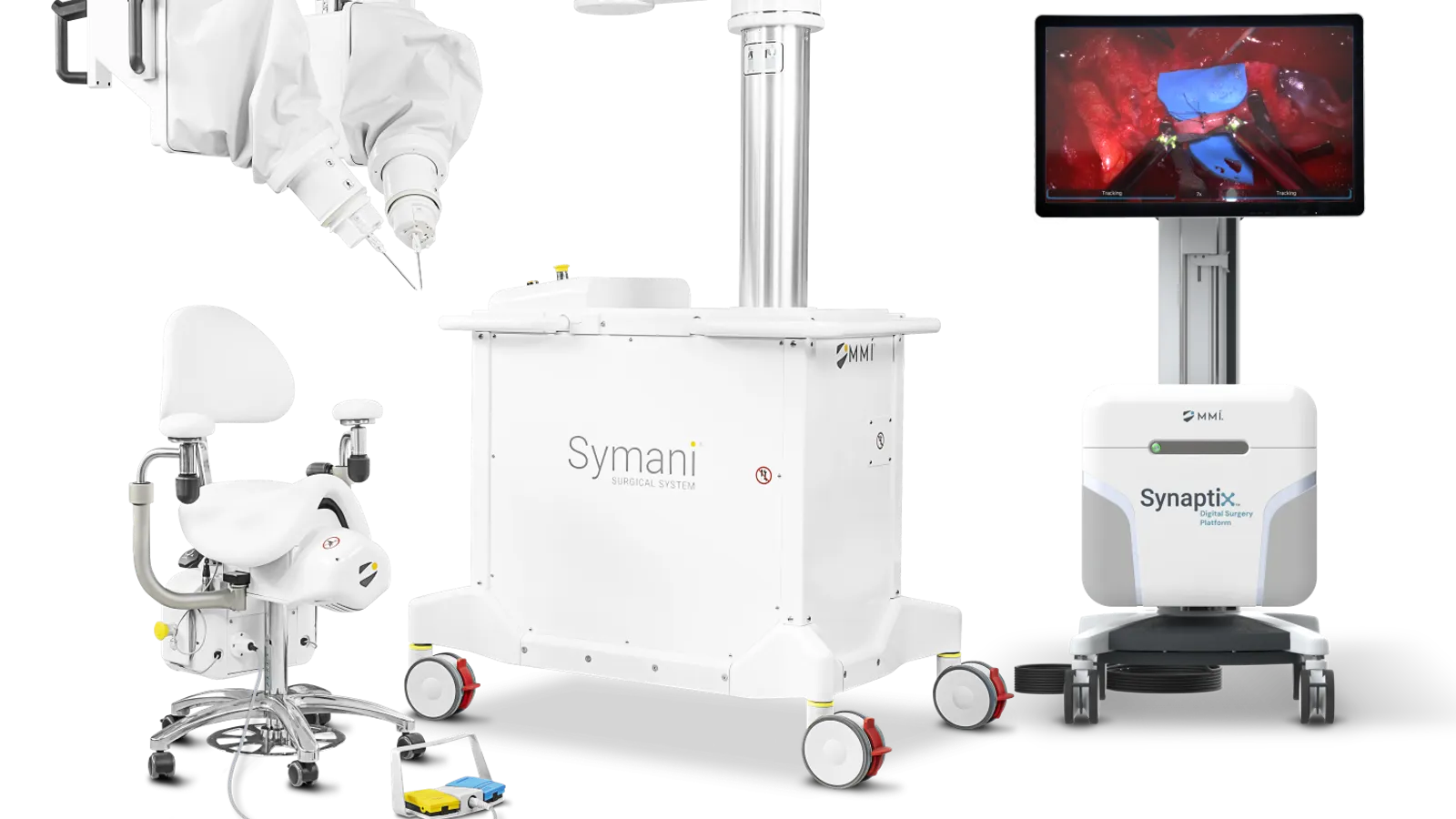
Medical Microinstruments (MMI), a pioneer in the field of robotic microsurgery, has announced the successful completion of a new financing round intended to accelerate the commercialization of its Symani Surgical System and propel high-stakes clinical research into neurodegenerative conditions. Led by existing investor BioStar Capital, the funding round saw participation from S3 Ventures, Angelini Ventures, and an undisclosed strategic corporate partner, signaling strong institutional confidence in MMI’s ability to redefine the boundaries of precision medicine. The capital infusion is earmarked for two primary objectives: expanding the global footprint of the Symani system, particularly within the United States market, and funding the REMIND clinical trial, a groundbreaking study investigating the role of robotic microsurgery in treating Alzheimer’s disease.
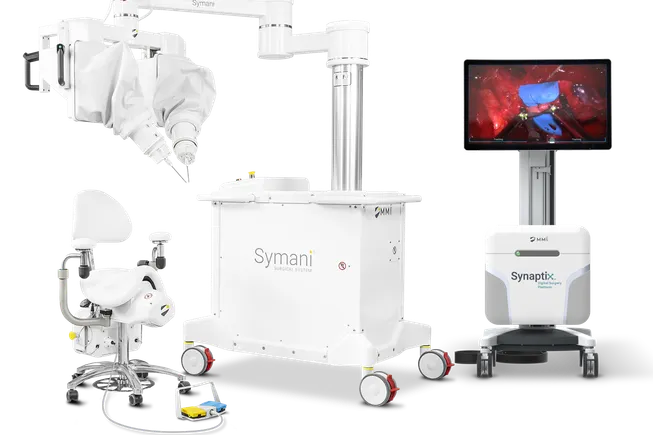
The Symani Surgical System represents a significant technological leap in the management of complex, small-scale anatomical structures. By providing surgeons with highly articulated, wristed micro-instruments and advanced motion-scaling capabilities, the platform aims to overcome the physical limitations of the human hand in procedures involving tiny blood vessels, nerves, and lymphatic ducts. As MMI transitions from a specialized startup to a global commercial entity, this latest round of funding provides the necessary runway to scale manufacturing, bolster sales teams, and integrate digital surgery enhancements into its core offering.
Technical Evolution and Regulatory Milestones
The trajectory of MMI has been defined by a series of rapid regulatory successes and technical refinements. The Symani system first gained international attention when it received the CE mark in Europe, allowing for its initial clinical application in reconstructive surgery and lymphedema management. However, the most significant turning point for the company’s commercial strategy occurred in 2024, when the U.S. Food and Drug Administration (FDA) granted the system a de novo classification. This classification recognized Symani as a first-of-its-kind technology for robotic microsurgery in the American market.
Building on this momentum, the FDA cleared the system for soft tissue dissection in 2025, further broadening the clinical utility of the platform. The Symani system utilizes proprietary NanoWrist instruments, which are the smallest wristed surgical tools in the world. These instruments are designed to replicate the natural movements of the human wrist but at a fraction of the scale, allowing for seven degrees of freedom. This level of dexterity is critical when performing anastomoses—the surgical connection of two structures—on vessels that may be less than one millimeter in diameter.
To date, the company reports that more than 3,500 procedures have been performed globally using the Symani system. With an installed base of approximately 50 systems in leading medical institutions, MMI is now focused on moving beyond early adoption. CEO Mark Toland has emphasized that the current phase of the company’s growth is about "translating adoption into scale," ensuring that robotic microsurgery becomes a standard of care in high-volume surgical centers worldwide.
The REMIND Trial: A New Frontier in Alzheimer’s Research
Perhaps the most ambitious aspect of MMI’s current strategy is its foray into the treatment of neurodegenerative diseases. While surgical robots are traditionally associated with oncology or orthopedics, MMI is leveraging the Symani system’s precision to explore a novel hypothesis regarding Alzheimer’s disease. The REMIND trial (Robotic-assisted Microsurgical Lymphatic-venous Anastomosis for Neurodegenerative Diseases) is investigating whether restoring drainage pathways in the deep cervical lymph nodes can slow or halt the progression of Alzheimer’s.
The scientific basis for the trial rests on the "glymphatic system" theory, which suggests that the brain clears metabolic waste, including amyloid-beta and tau proteins, through a specialized drainage network. In patients with Alzheimer’s, this drainage is often impaired, leading to a toxic buildup of proteins that contribute to cognitive decline. The REMIND study explores the safety and feasibility of using the Symani robot to perform delicate microsurgical procedures in the neck, creating new pathways for lymphatic fluid to exit the brain and enter the venous system.
Earlier this year, the FDA granted MMI permission to expand the REMIND study to 15 patients. This expansion is a critical step in building the clinical evidence required to prove that surgical intervention could play a role in managing a disease that has historically been treated exclusively through pharmacology. If successful, the trial could open an entirely new market for MMI, positioning the Symani system as a vital tool in the neurology suite as well as the reconstructive operating room.
Investment Context and Market Dynamics
The participation of BioStar Capital and S3 Ventures highlights a growing interest among venture capitalists in specialized surgical robotics. While the broader robotic surgery market is dominated by giants like Intuitive Surgical, there is a recognized gap in the "microsurgical" niche. Traditional platforms are often too large or lack the extreme delicate-touch sensitivity required for micro-vascular work. MMI has successfully carved out a space by focusing on the "micro" rather than the "macro."
The inclusion of Angelini Ventures and an undisclosed strategic corporate investor suggests that the industry is closely watching MMI’s progress. Strategic investors in the medical device space often include large multinational corporations looking for acquisition targets or long-term partnerships. The funding will support the development of "energy instruments"—tools that use heat or electricity to cut tissue and seal vessels—which are essential for modern surgical workflows. Furthermore, MMI plans to enhance its Synaptix digital surgery platform, which provides surgeons with data-driven insights and potentially AI-assisted guidance during procedures.
Chronology of MMI’s Strategic Development
To understand the significance of this financing, it is helpful to look at the timeline of MMI’s evolution:

- 2015-2019: MMI is founded in Pisa, Italy, focusing on the miniaturization of robotic components. The team develops the first prototypes of the NanoWrist technology.
- 2020: The Symani Surgical System receives CE Mark certification in Europe, leading to the first human cases in reconstructive microsurgery.
- 2022-2023: MMI relocates its headquarters to Florida, USA, to better align with the American regulatory environment and access the world’s largest medical device market. The company completes a $75 million Series B funding round.
- 2024: The FDA grants de novo classification for the Symani system, officially opening the U.S. market. Clinical data from European centers begins to show reduced complications and faster recovery times for patients undergoing robotic microsurgery.
- 2025: MMI receives additional FDA clearance for soft tissue dissection. The REMIND trial for Alzheimer’s is initiated and subsequently expanded, marking the system’s first major foray into neuro-lymphatic surgery.
Broader Implications for Healthcare and Patient Outcomes
The scaling of MMI’s technology has implications that extend beyond corporate growth. Microsurgery is notoriously difficult to master, often requiring years of specialized training. The physical toll on surgeons is also high; many suffer from neck and back strain due to hours spent hunched over a microscope. By allowing surgeons to operate from a seated console with ergonomic controls, the Symani system could extend the careers of highly skilled clinicians.
Furthermore, the "motion scaling" feature of the robot—which can turn a one-centimeter hand movement into a one-millimeter instrument movement—effectively eliminates physiological tremors. This allows for a level of precision that is humanly impossible to achieve consistently. In the context of cancer reconstruction, such as breast reconstruction following a mastectomy, this precision can lead to higher success rates for "free flap" transfers, where tissue and its blood supply are moved from one part of the body to another.
The expansion into Alzheimer’s research represents a high-risk, high-reward strategy that could fundamentally change how the medical community views neurodegeneration. If the REMIND trial yields positive results, it would validate the concept of "interventional lymphedema management" for the brain, potentially offering hope to millions of patients for whom drug therapies have been insufficient.
Future Outlook: Digital Surgery and Global Expansion
Looking ahead, MMI’s focus on digital surgery capabilities will be a key differentiator. As the Symani system collects data from thousands of procedures, MMI can use this information to develop machine-learning algorithms that assist surgeons in real-time. This could include identifying optimal suture placement or providing warnings when instruments approach critical structures.
The undisclosed strategic investor’s involvement suggests that MMI may soon explore deeper integrations with imaging technologies or hospital data networks. As hospitals increasingly look for "integrated solutions" rather than standalone hardware, MMI’s ability to connect the Symani system to the broader digital health ecosystem will be vital for its long-term viability.
In conclusion, the latest financing for Medical Microinstruments is more than just a capital raise; it is a catalyst for a paradigm shift in surgical intervention. By combining the immediate commercial goal of scaling robotic microsurgery with the visionary goal of treating Alzheimer’s disease, MMI is positioning itself at the intersection of mechanical engineering and biological discovery. As the company rolls out more systems across the U.S. and Europe, the medical community will be watching closely to see if this technology can truly deliver on its promise of making the impossible possible in the operating room.
