

The dietary supplement and natural foods industries are bracing for a potentially tumultuous future as an increasing number of state-level regulations begin to reshape how products are marketed and sold. Observers warn that without a unified industry response, companies could soon face a complex and costly landscape of disparate labeling requirements and marketing rules across the nation. The latest development in this escalating trend is California Governor Gavin Newsom’s signing of Assembly Bill 2030 (AB 2030), a law that imposes significant age restrictions on the sale of certain dietary supplements.
AB 2030, which took effect following its signing on October 2, 2026, strictly prohibits the sale of dietary supplements marketed for weight loss or muscle-building, as well as over-the-counter diet pills, to individuals under the age of 18. The law carves out a single exception for minors with a valid prescription. To enforce these new provisions, the legislation mandates age-verification procedures for both in-person retail transactions and remote sales, including online purchases. Violators face substantial civil penalties, with the potential for fines of up to $500 per infraction.
This legislative action marks a significant escalation, particularly as Governor Newsom had previously vetoed an earlier iteration of the bill. His initial reservations were reportedly tied to concerns about the administrative and enforcement challenges of the proposed law, rather than a disagreement with the underlying principle that certain dietary supplements might pose risks to young people, especially those susceptible to developing eating disorders. This focus on potential health risks, particularly concerning body image and disordered eating, appears to be a driving force behind the legislation.
The Growing Influence of Eating Disorder Prevention Advocacy
The impetus behind AB 2030 and similar legislation can be largely attributed to the advocacy efforts of research groups like STRIPED (Strategic Training Initiative for the Prevention of Eating Disorders), an academic consortium based at Harvard University. Led by Dr. Bryn Austin, STRIPED has been instrumental in highlighting the perceived dangers of weight-loss and muscle-building supplements, particularly for adolescents and young adults.
In communications with SupplySide Supplement Journal in 2022, Dr. Austin emphasized the scientific evidence linking these products to severe health consequences. "The scientific research on the dangers of using weight-loss supplements is as incontrovertible as it is chilling," Dr. Austin stated. "These products have been found again and again to contain a toxic brew of undisclosed ingredients linked to heart palpitations, cardiac arrest, stroke, and even liver damage so extensive as to require organ transplant or resulting in death." These assertions, grounded in academic research, have gained traction among policymakers and public health advocates.

A National Trend: New York Leads the Way, Courts Get Involved
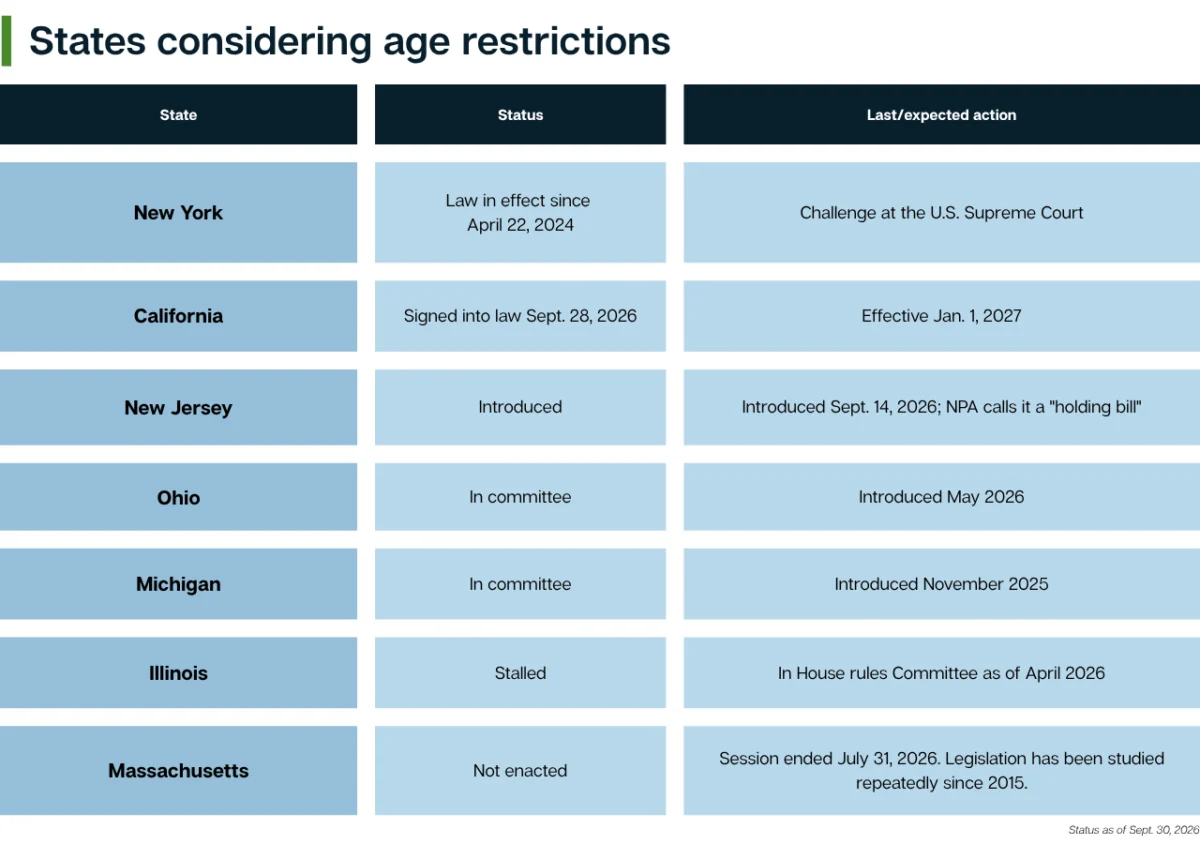
California’s new law follows closely on the heels of similar legislation enacted in New York State. The New York law, which also restricts the sale of certain supplements to minors, has faced significant legal challenges from the Council for Responsible Nutrition (CRN). The CRN’s challenge, now before the U.S. Supreme Court, centers on First Amendment grounds. The organization argues that the New York law unfairly targets products based on their marketing language and the mere presence of certain ingredients, rather than on concrete scientific evidence demonstrating the specific harm caused by individual products.
The CRN, along with other industry stakeholders, has consistently contested the scientific basis for linking weight-loss or muscle-building supplements to an increased risk of developing eating disorders. Steve Mister, president and CEO of the CRN, expressed his disappointment with the outcome in California. "This is a deeply disappointing outcome for consumers and responsible businesses, and a missed opportunity for California to pursue a more thoughtful approach," Mister commented. "Protecting young people from eating disorders is an important objective that we share. But that objective deserves policies grounded in evidence – not broad restrictions that cast suspicion on lawful products without establishing that those restrictions will address the problem."
Industry Concerns Over Regulatory Fragmentation
The proliferation of state-specific regulations is a major concern for industry leaders, who fear a fragmented and increasingly unworkable regulatory environment. Daniel Fabricant, president and CEO of the Natural Products Association (NPA), views California’s AB 2030 as a clear warning sign for the entire dietary supplement sector. "California’s enactment of AB 2030 should be a warning sign for the dietary supplement industry nationwide," Fabricant stated. "When individual states begin creating their own restrictions for products that are already subject to a comprehensive federal regulatory framework, the result is an increasingly unworkable patchwork of conflicting requirements for manufacturers, retailers, and consumers."
Beyond New York and California, similar age-restriction bills are under consideration or have been introduced in at least five other states, indicating a broader legislative movement. This trend suggests that the challenges facing the industry are not isolated incidents but rather part of a growing pattern of state-level legislative intervention.
Beyond Supplements: The Rise of Broader Food Regulation
The concerns of industry stakeholders extend beyond just dietary supplements. Loren Israelsen, president of the United Natural Products Alliance (UNPA), cautions that the age-restriction bills are merely one facet of a larger trend where diverse political factions are converging to enact change through state legislation. He points to another significant development in California: the recent signing of a bill establishing a "non-UPF" (Ultra-Processed Foods) label for food products sold in the state.
This move towards regulating ultra-processed foods, linked to concerns about obesity and overall health, aligns with agendas often associated with public health advocacy. Israelsen finds the passage of such a law in a traditionally progressive state like California to be indicative of a shifting political landscape. He notes that "blue" states have historically been more receptive to increased regulation, citing the precedent set by the cannabis legalization movement, which also gained early traction in these states.
Israelsen suggests that the success of these initiatives, from cannabis to age restrictions on supplements and now UPF labeling, is creating a roadmap for other activists and policymakers. He describes the situation as a "perfect storm scenario," where various concerns coalesce to drive legislative action. "When repetitive voices like STRIPED consistently point to this message that our kids are being exposed to unregulated supplements, it creates a ferment that then creates a political motivation to take action at the state level," Israelsen explained.
He further posits that political figures, such as Robert F. Kennedy Jr. during his presidential campaign, may have inadvertently fueled this trend by highlighting consumer desires for healthier food options and protection from potentially harmful ingredients. According to Israelsen, the realization that federal regulatory processes move slowly may have encouraged proponents to seek action at the state level. "He then went to the place that I think you should never go. He went to the states and gave them the green light to say, ‘If you support the Trump administration, you should pass these laws yourself.’ Now you have states competing to see who can be the fastest to pass this legislation."
This observation is supported by data from lobbying firms like Multistate, which reports that as of late 2025, 15 states have either enacted or are actively considering legislation related to ultra-processed foods. This indicates a broad and growing interest in regulating various aspects of the food and supplement supply chain at the state level.
A Call for Industry Unity and Federal Oversight
Graham Rigby, president and CEO of the American Herbal Products Association (AHPA), echoes the sentiment that these legislative trends transcend traditional political divides. "When consumers are pursuing their health and wellness goals, they are not thinking about political parties," Rigby stated. "We have seen these kinds of bills in both red and blue states."
Rigby emphasizes the critical need for the industry to coalesce around a unified message and strategy to counteract these evolving regulatory challenges. He argues that the current federal regulatory framework, established by Congress and primarily overseen by the Food and Drug Administration (FDA), was not designed for a scenario where individual states implement their own, often conflicting, rules. "What we need to do as an industry is to consolidate around sensible reform where it makes sense. Congress gave the authority to regulate dietary supplements to FDA. It was not envisioned that there would be 50 different sets of rules," he asserted.
Rigby predicts that California’s recent legislative action will likely inspire other states to consider similar measures in the coming years. He concluded, "California passing this bill will certainly inspire other states to think about similar things next year. This will require focused attention from industry next year and for years to come." The industry’s ability to present a cohesive front and advocate for a consistent, evidence-based regulatory approach at the federal level will be crucial in navigating this increasingly complex and fragmented legislative landscape. The potential economic and operational impacts of such fragmentation are significant, threatening to stifle innovation and increase the cost of doing business for companies large and small. The coming years will undoubtedly demand strategic engagement from all stakeholders to ensure a balanced and effective regulatory environment.
