

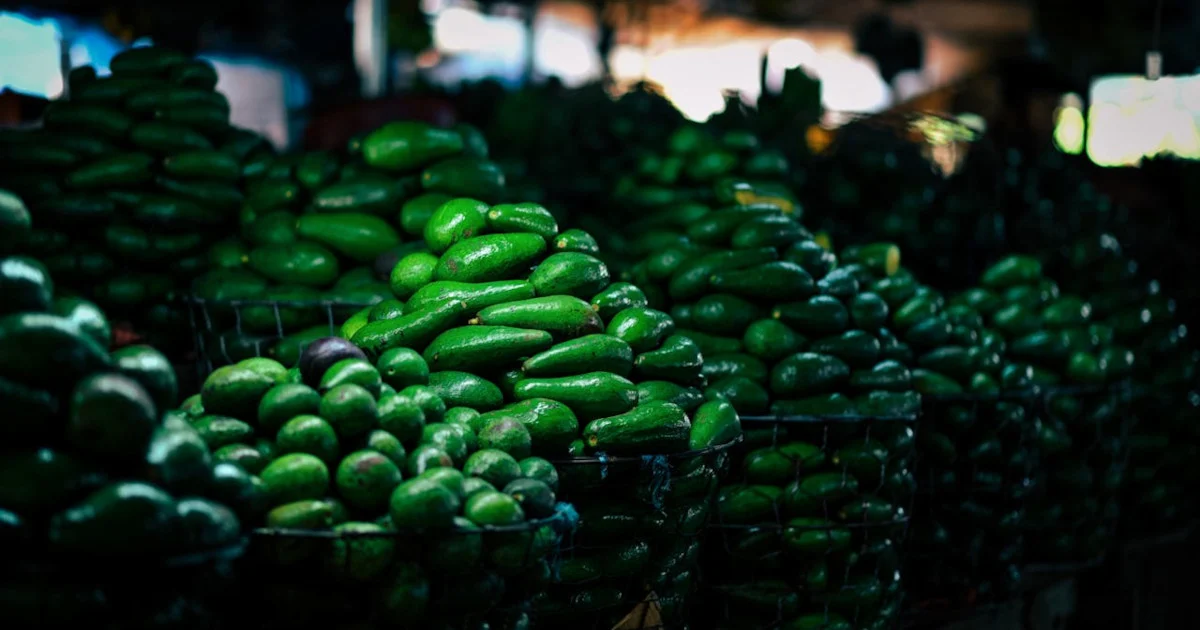
The meteoric rise of the avocado from a niche tropical fruit to a global dietary staple has fundamentally altered the agricultural landscape of North America, bringing both unprecedented economic prosperity and severe ecological degradation to its primary points of origin. According to the Hass Avocado Board (HAB), United States avocado consumption has doubled in the last decade, reflecting a cultural shift toward "superfoods" and healthy fats. Shipments across the country surged from 565,000 metric tons (MT) in 2010—equivalent to more than 1.2 billion pounds—to nearly 990,000 MT by 2015, surpassing 2.2 billion pounds. While this growth represents a triumph for international trade and the agricultural industry, the rapid increase in demand has placed an unsustainable strain on local environments in many exporting areas, most notably in the Mexican state of Michoacán.
As the world’s leading producer of the Hass variety, Michoacán has become the epicenter of a "green gold" rush. However, the environmental cost of this boom is becoming increasingly difficult to ignore. The conversion of native pine and oak forests into commercial avocado orchards has led to massive deforestation, the depletion of vital aquifers, and an increase in catastrophic forest fires. The scale of the transformation is so vast that it now threatens the very biodiversity and climate stability that made the region suitable for agriculture in the first place.
Historical Evolution of the Avocado Trade
To understand the current environmental crisis, one must look at the chronology of the avocado’s market expansion. For much of the 20th century, the United States maintained a ban on Mexican avocados, citing concerns over the introduction of pests like the seed weevil. This ban, which had been in place since 1914, was gradually lifted starting in 1997 following the implementation of the North American Free Trade Agreement (NAFTA) and the establishment of rigorous sanitary inspections.
By the early 2000s, Michoacán was the only Mexican state certified to export avocados to the U.S. market. This exclusivity created an economic vacuum that pulled thousands of hectares of land into the avocado supply chain. The 2010s saw the final explosion of demand, fueled by marketing campaigns that positioned the avocado as an essential component of the American diet, particularly during high-profile events such as the Super Bowl. As the HAB Yearly Volume Data indicates, the five-year period between 2010 and 2015 saw a near-doubling of shipment volumes, a pace of growth that outstripped the ability of regulatory bodies to manage land-use changes effectively.
The Ecological Mechanics of Deforestation
The environmental impact of this growth is rooted in the specific botanical and geographical requirements of the avocado tree. Unlike the native coniferous forests of Michoacán, which are adapted to the high-altitude temperate climate, avocado orchards require significant sunlight and massive amounts of water. To make room for these orchards, farmers often engage in "clandestine" deforestation. This process involves thinning out the undergrowth of a forest and planting young avocado trees beneath the canopy of old-growth pines. Once the avocado trees are established, the larger pines are girdled or cut down, effectively replacing a diverse forest ecosystem with a monoculture plantation.
The loss of forest cover has a cascading effect on the region’s hydrology. Native forests act as natural sponges; their root systems and the layer of organic matter on the forest floor help the soil retain rainwater and recharge underground aquifers. Avocado trees, conversely, have high evapotranspiration rates and shallow root systems that do not provide the same soil-stabilizing benefits. Research indicates that the reduction in forest cover and soil water-storing capacity has left high-exporting regions increasingly prone to erosion and desertification.
Quantifying the Damage: Forest Fires and Land Loss
The physical manifestation of this ecological imbalance is most visible in the rising frequency of forest fires. Ricardo Luna García, the Environment and Natural Resources Secretary for Michoacán, has noted that in the current administration, approximately 40 percent of forest fires were the direct result of intentional deforestation practices. These fires are often set deliberately to clear land for avocado orchards and other high-value crops, or to widen grazing areas for urban livestock. By burning the forest, landholders can bypass certain legal restrictions on land-use changes, though the long-term damage to the soil and air quality is profound.
Data on forest cover loss paints a grim picture of the state’s landscape. Estimates suggest that 30 percent of the forest cover across the entire state of Michoacán has been lost to agricultural expansion. In specific high-production zones, the numbers are even more alarming. In regions such as the Purépecha Plain, la Cañada de los Once Pueblos, and the lakeside areas of Pátzcuaro, forest loss is estimated to be as high as 60 percent. These areas are critical not only for local agriculture but also as habitats for numerous species, including the Monarch butterfly, which migrates to the high-altitude oyamel fir forests of Michoacán every winter.
The Hydrological Crisis and Local Reactions
The water demand of the avocado industry is perhaps its most contentious issue. An avocado orchard requires almost twice as much water as a fairly dense forest. It is estimated that approximately 9.5 billion liters (about 2.5 billion gallons) of water are used daily to sustain avocado production across Mexico. In many communities in Michoacán, this has led to the drying up of local wells and the diversion of mountain streams away from subsistence farms and toward commercial groves.
Local indigenous communities and environmental activists have begun to voice their opposition to the uncontrolled expansion of "green gold." In some municipalities, residents have formed self-defense groups to protect their forests from illegal loggers and to prevent the drilling of unauthorized deep-water wells. These local reactions highlight a growing divide between the wealthy plantation owners, many of whom reside outside the growing regions, and the local populations who bear the environmental costs of production.
Official Responses and Regulatory Challenges
The Mexican government and industry groups have attempted to address these concerns, though critics argue the measures are insufficient given the scale of the problem. The Association of Avocado Exporting Producers and Packers of Mexico (APEAM) has launched various sustainability initiatives, including reforestation programs that claim to plant millions of trees annually. However, environmentalists point out that planting new trees does not immediately replace the complex ecosystems lost when old-growth forests are razed.
From a regulatory standpoint, the Michoacán Ministry of Environment has increased its surveillance of land-use changes, using satellite imagery to identify illegal orchards. Secretary Ricardo Luna García has advocated for stricter enforcement of environmental laws and the implementation of a "sustainable avocado" certification. Such a program would theoretically allow consumers to identify fruit that was grown without contributing to deforestation. However, the sheer profitability of the crop—often referred to as "oro verde"—makes enforcement difficult, as the economic incentives for illegal clearing often outweigh the potential fines.
Broader Socio-Economic and Global Implications
The crisis in Michoacán serves as a case study for the global "superfood" phenomenon, where the dietary preferences of the Global North dictate the environmental health of the Global South. The economic reliance on a single export crop has also made the region vulnerable to organized crime. The high profit margins of the avocado trade have attracted the attention of cartels, who extort farmers and, in some cases, seize land to run their own orchards, further complicating environmental conservation efforts.
If the current rate of deforestation and water depletion continues, the long-term viability of the avocado industry in Michoacán is at risk. The degradation of the soil and the exhaustion of aquifers will eventually lead to a decline in yields, potentially forcing the industry to migrate to new, untouched forest regions, repeating the cycle of destruction.
For the global consumer, the data from the Hass Avocado Board serves as a reminder of the hidden costs of a globalized food system. While the doubling of consumption may be seen as a success for public health and trade, it has come at the expense of one of the most biodiverse regions in North America. The challenge moving forward lies in reconciling the global demand for this nutrient-dense fruit with the urgent need to preserve the forests and water resources of Michoacán. Without a fundamental shift toward truly sustainable farming practices and more rigorous international oversight, the "green gold" that has brought so much wealth to Mexico may ultimately leave its land barren.
