

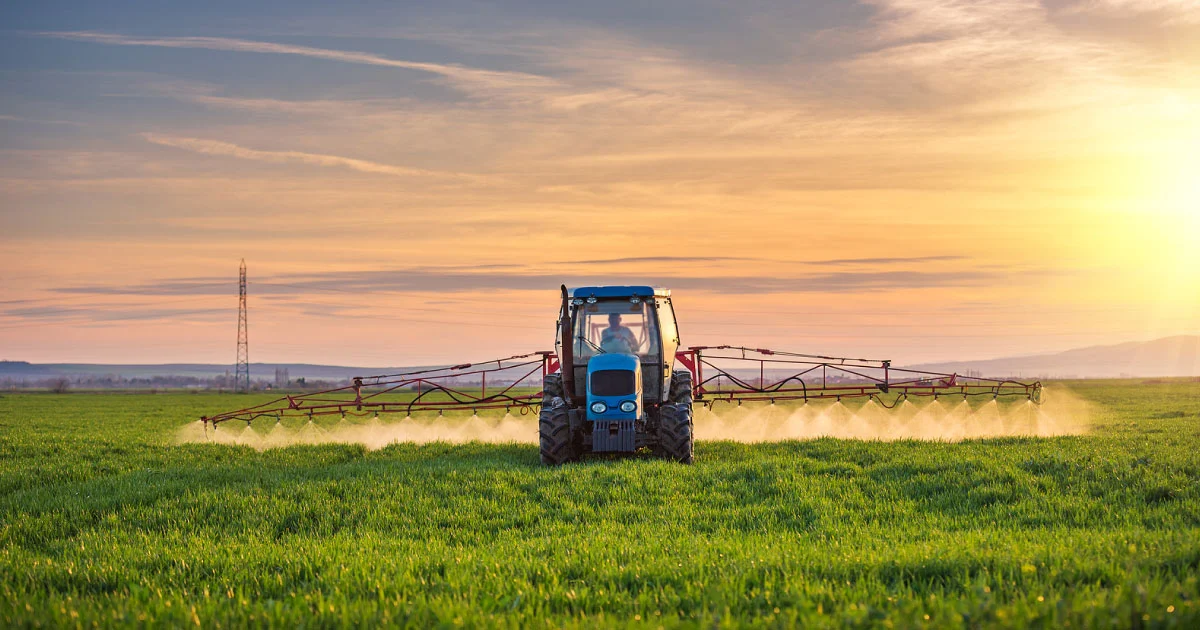
The United States Congress is currently deliberating the 2026 Farm Bill, a massive piece of omnibus legislation that governs the nation’s agricultural and food policy. Within the current draft, specifically under Section 10201, are provisions that critics and environmental scientists argue would fundamentally alter the regulatory landscape for pesticides and genetically modified organisms (GMOs). The proposed changes aim to significantly restrict the Environmental Protection Agency’s (EPA) authority to oversee various agricultural chemicals and biological inputs, potentially gutting the Federal Insecticide, Fungicide, and Rodenticide Act (FIFRA). This law has served as the primary framework for pesticide regulation in the United States since 1947, ensuring that such substances do not pose unreasonable risks to human health or the environment.
Under the proposed language, the EPA Administrator would be granted unprecedented power to waive regulations or reviews for any pesticide at their discretion. Furthermore, the bill seeks to exempt two major categories of agricultural technology from FIFRA oversight: "plant biostimulants" and "plant-incorporated protectants" (PIPs). While these terms sound benign, they encompass a wide range of advanced biotechnologies, including crops engineered to produce their own insecticides, gene-silencing sprays, and genetically modified microbes designed to kill pests.
The Evolution of Plant-Incorporated Protectants: From Bt to RNAi
The term "plant-incorporated protectants" refers to substances that plants produce from genetic material added to the plant. The most recognizable of these are "Bt crops," which were pioneered by Monsanto. These crops are genetically engineered to contain DNA from the soil bacterium Bacillus thuringiensis (Bt). This DNA instructs every cell in the plant to produce a systemic version of the Bt insecticide. Unlike traditional pesticides that are sprayed onto the surface of a crop and can be washed off, the insecticide in PIPs is an integral part of the plant’s biology.
While natural Bt sprays have been used in organic farming for decades, the version expressed in GMO crops is significantly different. In organic applications, the bacterium is applied externally and biodegrades relatively quickly under sunlight. In contrast, GMO Bt is engineered to be more stable and is present in concentrations thousands of times higher than what is found in nature.
The second generation of PIPs involves even more complex technology: RNA interference (RNAi). RNAi-based crops, such as Bayer-Monsanto’s SmartStax corn, use "gene-silencing" mechanisms to kill pests. When an insect, such as the Western corn rootworm, feeds on the plant, it ingests double-stranded RNA (dsRNA) designed to target and "silence" a specific gene—in this case, the Snf7 gene. Without the proteins produced by this gene, the insect’s cellular transport systems fail, leading to its death.
Regulatory Exemptions and the Redefinition of Biostimulants
The 2026 Farm Bill also addresses "plant biostimulants," a category that has historically included substances like seaweed extracts or fulvic acids intended to improve nutrient uptake or abiotic stress tolerance. However, the proposed legislation expands this definition to include genetically modified pest-killing microbes and gene-silencing RNAi sprays.
Industry analysts note that agribusinesses have already begun leveraging these classifications to bypass more rigorous EPA reviews. For instance, BASF successfully registered its Poncho/VOTiVO seed treatment as a "biostimulant," despite it containing a neonicotinoid pesticide (toxic to pollinators) and a genetically engineered version of Bacillus thuringiensis. By formalizing these exemptions in the Farm Bill, the industry would effectively move these products into a regulatory "blind spot," where the EPA would no longer have the mandate to assess their long-term ecological or toxicological impacts.
Scientific Concerns: Human Health and Off-Target Effects
The push for deregulation comes amid mounting scientific evidence regarding the potential risks of these technologies. One of the primary concerns involves the persistence of Bt toxins in the human body. A study published in the journal Reproductive Toxicology found the Cry1Ab Bt toxin in the blood of 93% of pregnant women and 80% of their fetuses. This contradicts earlier industry assertions that the toxins would be broken down in the human digestive tract.
The risks associated with RNAi technology are even more complex. Because RNAi is designed to silence genes, there is a significant risk of "off-target effects." This occurs when the RNA sequence intended for a specific pest matches a similar sequence in a non-target organism—including humans. Scientists have noted that the Pathogen-Associated Molecular Pattern (PAMP) pathway in the human immune system can recognize double-stranded RNA as a foreign invader, potentially triggering severe inflammatory responses or autoimmune reactions.
The EPA’s previous safety assessments for products like SmartStax corn assumed that the human gastrointestinal tract would act as a barrier to RNA absorption. However, medical research suggests that this barrier is often compromised in infants or adults with gastrointestinal conditions (commonly referred to as "leaky gut"), which could allow these gene-silencing molecules to enter the bloodstream and interact with human gene expression.
Environmental Risks and the "Microbial Doomsday" Scenario
The deregulation of genetically engineered (GE) soil microbes, categorized under the bill as biostimulants, presents what some ecologists describe as a catastrophic risk profile. Unlike chemical pesticides, which eventually break down, GE microbes are living organisms capable of reproducing and spreading uncontrollably once released into the environment.
The potential for disaster was highlighted by the work of Dr. Elaine Ingham at Oregon State University in the 1990s. Her research into a GE version of the soil bacterium Klebsiella planticola—designed to turn crop waste into ethanol—revealed that the microbe would have also killed the mycorrhizal fungi essential for plant nutrient uptake. Had it been commercialized and released, it could have potentially wiped out terrestrial plant life by rendering the soil sterile.
Current industry leaders, such as Ginkgo Bioworks and Bayer, are currently developing thousands of new microbial strains. In a 2021 SEC filing, Ginkgo Bioworks acknowledged the risks, stating, "The release of genetically modified organisms or materials, whether inadvertent or purposeful, into uncontrolled environments could have unintended consequences." The filing detailed possibilities ranging from ecological disruption to the accidental creation of biological hazards.
Chronology of Pesticide Legislation and Innovation
To understand the magnitude of the 2026 Farm Bill’s proposed changes, it is necessary to examine the timeline of agricultural regulation in the United States:
- 1947: Congress passes the Federal Insecticide, Fungicide, and Rodenticide Act (FIFRA), originally focused on labeling and efficacy.
- 1970: The Environmental Protection Agency is established and takes over the administration of FIFRA.
- 1972: The Federal Environmental Pesticide Control Act (FEPCA) amends FIFRA, shifting the focus to health and environmental safety.
- 1996: The Food Quality Protection Act (FQPA) is passed, mandating stricter safety standards for pesticide residues on food, especially for children.
- 1990s-2000s: The first generation of Bt and Roundup Ready crops are commercialized.
- 2017: The EPA registers the first RNAi-based corn trait for use in the U.S.
- 2023: SmartStax Pro corn, utilizing RNAi, is planted on millions of acres across the U.S.
- 2024-2025: Drafting of the 2026 Farm Bill begins, featuring Section 10201 and its deregulatory provisions.
Stakeholder Reactions and Political Analysis
The proposed deregulation has sparked a sharp divide between agribusiness advocates and environmental watchdogs. Proponents of the bill, including major industry lobbying groups, argue that the current EPA review process is too slow and hinders American innovation. They contend that biostimulants and PIPs are essential tools for increasing crop yields and combating climate change-induced pest pressures.
Conversely, organizations such as GRAIN and Friends of the Earth have labeled the new wave of bioinputs as a "toxic trap." They argue that instead of moving away from chemical dependency, these technologies embed pesticides deeper into the food system and the environment. "We are essentially turning our food crops into pesticide factories and our soil into a laboratory for unproven genetic experiments," a spokesperson for GRAIN stated in a recent report.
Public health advocates also point out that the 2026 Farm Bill would strip states and local governments of the right to enact stricter pesticide regulations than the federal government, a move known as "preemption." This would prevent cities or counties from banning specific chemicals even if local data shows a direct link to health issues in their communities.
Broader Impact and Long-term Implications
If Section 10201 remains in the final version of the 2026 Farm Bill, the long-term implications for the American food supply and global ecology could be profound. The erosion of the "Precautionary Principle"—the idea that new technologies should be proven safe before they are widely introduced—marks a significant shift in U.S. policy.
The widespread use of gene-silencing RNAi sprays and GE microbes could lead to unforeseen mutations in the soil microbiome, affecting carbon sequestration and nutrient cycling. Furthermore, the lack of mandatory federal review for these substances means that if health or environmental crises arise, the regulatory infrastructure to trace and mitigate the damage will have been dismantled.
As the bill moves through the legislative process, the debate over Section 10201 serves as a focal point for the broader tension between corporate-led technological advancement and the protection of public health and ecological stability. The outcome will likely determine the trajectory of American agriculture for the next decade and beyond.
