









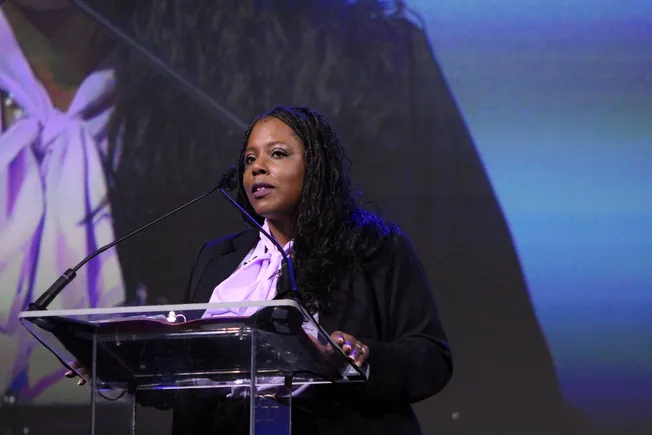
Dr. Michelle Tarver, Director of the Food and Drug Administration’s (FDA) Center for Devices and Radiological Health (CDRH), addressed a plenary session at AdvaMed’s The MedTech Conference in Boston on Wednesday, detailing an ambitious roadmap to restore the agency’s regulatory capacity following a period of unprecedented staffing volatility. Speaking to an audience of industry leaders, clinicians, and policy experts on October 21, 2026, Dr. Tarver revealed that the CDRH is currently navigating a significant recovery phase after losing nearly a quarter of its workforce over the past eighteen months. The director’s remarks highlighted the specific vulnerabilities within the agency’s clinical review and digital health divisions, while simultaneously signaling a "herculean" effort to rebuild the expertise necessary to oversee an increasingly complex medical device market.
The staffing crisis at the CDRH is the byproduct of a turbulent period for the broader FDA. According to Dr. Tarver, the device center experienced an attrition rate of approximately 22% over the last year-plus. The impact of these departures was not distributed evenly across the agency; the most specialized units bore the brunt of the exodus. Dr. Tarver noted that clinical reviewer positions saw vacancy rates as high as 30%, while experts in artificial intelligence (AI) and digital health—two of the fastest-growing sectors in medical technology—also departed in significant numbers. This depletion of institutional knowledge has occurred at a time when the agency is tasked with regulating more than 250,000 unique medical devices, ranging from simple surgical tools to complex, autonomous diagnostic algorithms.
A Chronology of Workforce Destabilization
The roots of the current staffing deficit trace back to early 2025, following a series of aggressive administrative actions by the Department of Health and Human Services (HHS). At the outset of the Trump administration, HHS announced plans to reduce the FDA’s total workforce by approximately 3,500 employees, representing nearly one-fifth of the agency’s entire staff. The implementation of these reductions-in-force (RIF) was described by many internal sources as disorganized and disruptive.

In early 2025, reports emerged of long-term FDA employees arriving at work only to find their security badges deactivated without prior notice. Others received official correspondence from HHS containing clerical errors or incorrect dismissal information. While some of the dismissed staff were eventually reinstated after legal challenges and internal reviews, the psychological impact on the remaining workforce was profound. Those who stayed found themselves contending with ballooning workloads and the pressure of maintaining rigorous safety standards with fewer resources. This environment catalyzed the 22% attrition rate cited by Dr. Tarver, as many experts sought opportunities in the private sector or academia, citing burnout and administrative uncertainty.
By mid-2026, the cracks in the regulatory infrastructure became visible to the industry. Medtech companies began reporting longer wait times for pre-market approvals (PMA) and 510(k) clearances. The loss of specialized AI reviewers was particularly felt, as the backlog for software-as-a-medical-device (SaMD) submissions began to grow, threatening to stifle innovation in the burgeoning field of digital therapeutics.
The 2026 Hiring Surge and MDUFA Commitments
In response to the crisis, the FDA has pivoted toward an aggressive recruitment strategy. Over the summer of 2026, the FDA’s acting chief of staff confirmed that the agency had received authorization to hire 2,200 new personnel across all centers. For the CDRH, this recruitment drive is not merely about replacing lost bodies; it is about fulfilling legal obligations under the Medical Device User Fee Amendments (MDUFA).
MDUFA is a critical financial framework in which medical device companies pay fees to the FDA to fund the review process in exchange for the agency meeting specific performance goals and timelines. Under the fiscal year 2026 MDUFA commitments, the CDRH was set a target of hiring 63 new employees to bolster its review capacity. Dr. Tarver announced on Wednesday that the center has already exceeded this goal, successfully onboarding more than 65 new staff members.
"We have actually exceeded our hiring for fiscal year ‘26 under the MDUFA commitment," Tarver told the conference attendees. "This is a herculean effort considering all the changes that have happened, as well as a testament to people recognizing how much that mission resonates with them."
Despite exceeding the initial target, Dr. Tarver emphasized that the recruitment phase is far from over. The agency is now focusing on attracting high-level talent in clinical research and emerging technologies. The goal is to create a sustainable pipeline of experts who can keep pace with the rapid evolution of medtech innovation.

Critical Vacancies in AI and Digital Health
The emphasis on AI and digital health experts in the current hiring push reflects a broader shift in the medical device landscape. In 2026, the integration of generative AI and machine learning into diagnostic imaging, wearable monitors, and robotic surgery has become the industry standard. However, regulating these technologies requires a specific subset of skills that bridge the gap between computer science and clinical medicine.
When the CDRH lost a significant portion of its digital health specialists during the 2025 cuts, it created a bottleneck for companies developing cutting-edge technologies. Industry analysts suggest that without a robust team of internal AI experts, the FDA risks either delaying the entry of life-saving technologies into the market or, conversely, approving devices without a sufficiently rigorous understanding of their algorithmic risks.
To combat this, the CDRH is reportedly exploring flexible work arrangements and competitive compensation packages to compete with Silicon Valley for top-tier data scientists. The center is also looking to leverage "Intergovernmental Personnel Act" (IPA) assignments, which allow experts from academia and non-profits to serve temporary tours of duty at the FDA, providing a surge of expertise while permanent positions are filled.
Industry and Stakeholder Reactions
The reaction from the medtech industry at the Boston conference was a mixture of relief and cautious optimism. For years, the relationship between the FDA and device manufacturers has been predicated on predictability. The sudden staffing cuts of 2025 shattered that predictability, leading to concerns that the U.S. might lose its status as the premier destination for first-in-world medical device launches.
Representatives from AdvaMed and other trade organizations have expressed support for Dr. Tarver’s transparency regarding the attrition rates. However, industry insiders remain concerned about the "onboarding lag"—the time it takes for a new reviewer to become fully proficient in the FDA’s complex regulatory framework. Even with 65 new hires, it may take 12 to 18 months before the CDRH returns to its peak operational efficiency.

Patient advocacy groups have also weighed in, stressing that while hiring speed is important, the quality of review must remain the priority. The loss of 30% of clinical reviewers—the individuals responsible for evaluating the safety and efficacy data from human trials—is particularly concerning for groups representing patients with high-risk conditions who rely on PMA-class devices like heart valves and neurological implants.
Analysis of Broader Implications
The situation at the CDRH serves as a case study in the fragility of specialized regulatory bodies. The medical device industry is a vital component of the U.S. economy and a cornerstone of public health. When a regulatory agency’s workforce is depleted by nearly a quarter, the ripple effects extend far beyond the walls of the FDA’s White Oak headquarters.
- Market Access and Global Competition: If the FDA cannot maintain efficient review timelines, manufacturers may prioritize the European Union or Asian markets for initial product launches. This "regulatory flight" could result in American patients waiting longer for innovative treatments.
- Safety Oversight: Beyond new approvals, the CDRH is responsible for post-market surveillance. A shortage of staff could potentially lead to delays in identifying and responding to device recalls or adverse event trends, posing a risk to patient safety.
- Technological Sovereignty: As AI becomes central to healthcare, the U.S. government’s ability to provide a "gold standard" for regulation is a matter of national interest. Maintaining a cadre of world-class AI experts within the FDA is essential for ensuring that these technologies are developed ethically and safely.
Future Outlook
Looking ahead to the remainder of 2026 and into 2027, the CDRH’s primary challenge will be retention. Having successfully initiated a hiring surge, the center must now ensure that the organizational culture and workload are manageable enough to prevent a repeat of the 2025-2026 attrition cycle.
Dr. Tarver’s closing remarks at the conference underscored a sense of duty and a commitment to the agency’s core mission. "We are not done," she stated. "We’ve got to hire more because we recognize that our center regulates 250,000-plus devices."
The success of this recruitment drive will likely be measured by the agency’s performance metrics in the coming year. If the CDRH can stabilize its workforce and integrate its new AI and clinical experts effectively, it may emerge from this period of transition as a more modern and resilient regulator. For now, the medtech world remains watchful, hoping that the "herculean" efforts described by Dr. Tarver will translate into a more stable and predictable regulatory environment for the years to follow.