









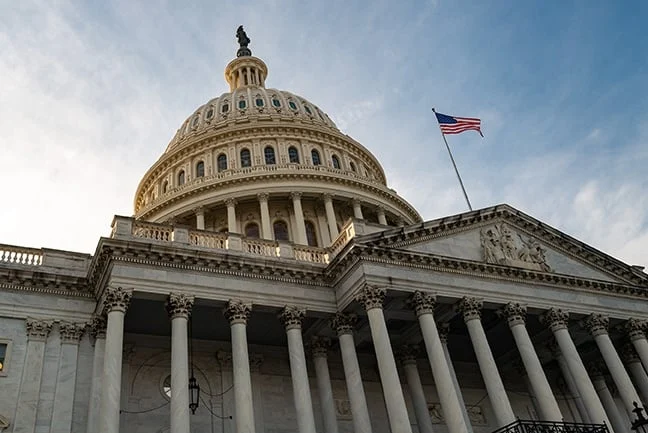
As the United States transitions from the intensity of the midterm election cycle back to the legislative business of the capital, members of Congress are preparing to return to Washington on November 9 for a pivotal "lame duck" session. This period, occurring between the elections and the seating of the new Congress in January, is traditionally a time of high-stakes negotiations and the resolution of unfinished business. For the scientific and medical communities, the upcoming session is of critical importance, as lawmakers face a dual challenge: addressing a controversial proposed rule from the Office of Management and Budget (OMB) that threatens to overhaul the federal grant system and securing a long-term funding agreement to prevent a government shutdown.
The primary focus for many advocacy groups, led prominently by the Endocrine Society, is a proposed administrative rule by the OMB that critics argue would fundamentally alter the landscape of scientific research. The rule targets three specific pillars of the American research enterprise: the grant approval process, the dissemination of research findings, and the framework for international collaboration. While the OMB has framed these changes as necessary for administrative efficiency and oversight, stakeholders in the scientific community warn that the regulations could introduce burdensome bureaucratic hurdles, stifle the sharing of vital data, and complicate the ability of U.S. researchers to work with global partners on pressing health issues.
Chronology of the OMB Rule and Legislative Intervention
The tension surrounding the OMB’s proposed rule has been building throughout the latter half of the year. Originally, the executive branch intended to begin the implementation phase of these new regulations on October 1, coinciding with the start of the new fiscal year. However, the prospect of such a significant shift in federal policy without extensive stakeholder input prompted immediate pushback from both sides of the aisle in the Senate.

Leading this resistance was Senator Susan Collins (R-ME), who spearheaded a bipartisan effort to demand a delay in the implementation. Senator Collins, known for her role in moderate, bipartisan coalitions, argued that the scientific community required more time to assess the potential impacts of the rule and that the administration should provide more clarity on its long-term objectives. This effort was successful, resulting in a temporary reprieve that pushed the implementation deadline back to December 11. This date now serves as a critical "cliff" for both the OMB rule and federal spending, setting the stage for a dramatic December showdown.
The Advocacy Response: The Endocrine Society’s Strategic Campaign
When lawmakers gavel back into session on November 9, they will be met with a coordinated lobbying effort from the Endocrine Society and its allies. The Society, which represents thousands of physicians and scientists dedicated to hormone research and clinical care, has been vocal in its opposition to the OMB proposal. The organization’s leadership has categorized the rule as a potential threat to the pace of medical innovation, particularly in fields like diabetes, obesity, and thyroid cancer research.
The Endocrine Society has launched an expansive online advocacy campaign, urging its members and the broader scientific community to contact their representatives. The goal of this campaign is twofold: first, to pressure the White House and the OMB to withdraw the proposed rule entirely; and second, to ensure that if the executive branch does not act, Congress will. The Society’s strategy involves working directly with Congressional offices to draft bipartisan "rider" language. This language would be inserted into upcoming funding legislation, effectively blocking the OMB from using federal funds to implement or enforce the new rules.
Advocacy leaders emphasize that the volume of constituent contact will be a deciding factor. By mobilizing researchers across the country, the Society aims to demonstrate that the concerns regarding grant approval and international collaboration are not merely technical grievances but are issues that affect the integrity of the U.S. scientific infrastructure.
Federal Funding and the Threat of a Government Shutdown
Compounding the urgency of the OMB rule is the broader issue of the federal budget. Congress failed to pass all twelve required appropriations bills before the October 1 start of the fiscal year, a common occurrence in recent legislative history. To avoid a government shutdown during the election season, lawmakers passed a "Continuing Resolution" (CR), a short-term measure that maintains current funding levels.
This CR is set to expire on December 11, the same day the delay on the OMB rule ends. This creates a high-pressure environment where Congress must either pass a massive "omnibus" spending package—a single bill combining all funding areas—or pass another short-term extension. The latter would push the budget battle into the new year, potentially leaving federal agencies in a state of fiscal uncertainty for months.
The Endocrine Society and other scientific organizations are advocating for the passage of a full-year funding bill rather than another CR. Their primary objective is to secure a robust budget for the National Institutes of Health (NIH). Specifically, the Society is calling for a funding level of at least $53 billion for the NIH.
Supporting Data: The Impact of NIH Funding on Public Health
The request for $53 billion represents a significant investment in the nation’s health security. To understand the scale of this request, it is necessary to look at the historical trajectory of NIH funding. In recent years, the NIH budget has seen steady increases, rising from approximately $30 billion a decade ago to nearly $48 billion in the most recent fiscal cycles. An increase to $53 billion would represent a growth of roughly 10%, which advocates argue is necessary to keep pace with biomedical inflation and the rising costs of advanced technologies like genomic sequencing and artificial intelligence in drug discovery.
Data from the NIH suggests that federal investment in research yields high returns. According to the United for Medical Research (UMR) reports, every dollar of NIH funding generates more than $2 in local economic activity. Furthermore, NIH-funded research has been credited with a 15% decline in cancer death rates over the last decade and the development of life-saving treatments for rare endocrine disorders. A shortfall in funding, or the stagnation caused by a long-term CR, could lead to a reduction in the number of new grants awarded, potentially sidelining a generation of early-career scientists.
Analysis of the OMB Rule’s Implications for International Collaboration
The "international collaboration" aspect of the OMB’s proposed rule is perhaps the most sensitive point of contention. In an era where global health threats—such as pandemics and climate-related diseases—require cross-border cooperation, any regulation that complicates the ability of U.S. labs to work with foreign institutions is viewed with skepticism by the scientific community.
The proposed rule reportedly includes stricter vetting processes for foreign sub-grantees and more rigorous reporting requirements for "dissemination" (the publication and sharing of data). While the OMB maintains these measures are designed to protect intellectual property and national security, researchers argue they could inadvertently create a "chilling effect." If U.S. scientists find the administrative burden of international partnerships too high, they may opt out of global consortia, potentially ceding leadership in critical scientific fields to other nations.
The Political Stakes of the Lame Duck Session
The political landscape of the lame duck session adds a layer of complexity to these policy debates. Depending on the outcome of the midterm elections, the outgoing or incoming leadership may have different incentives. If the party in power retains control, they may seek to pass a comprehensive omnibus bill that includes the $53 billion NIH target and the OMB rule block. If control of the House or Senate shifts, the incoming majority might prefer a short-term CR that allows them to write the final budget in January according to their own priorities.
However, the bipartisan nature of the effort led by Senator Collins suggests that scientific research remains one of the few areas where consensus is possible. Both parties have historically supported the NIH, recognizing it as a driver of both health outcomes and economic growth. The challenge in the coming weeks will be ensuring that these priorities do not get lost in the broader partisan friction over the national debt and discretionary spending caps.
Broader Impact on the Scientific Community
The outcome of the December 11 deadline will have long-lasting effects on the research community. For university departments and independent research institutes, the uncertainty of the OMB rule makes long-term planning difficult. Grant applications typically take months to prepare, and if the rules governing those applications are in flux, it creates a "regulatory fog" that can delay important projects.
The Endocrine Society’s push for "bipartisan language" in the funding bill is a strategic attempt to provide the community with the stability it needs. By codifying the rejection of the OMB rule into law, Congress would provide a clear signal to the executive branch that fundamental changes to the research ecosystem must be handled with transparency and in consultation with the experts who are actually doing the work.
As November 9 approaches, the eyes of the scientific world will be on the Capitol. The ability of Congress to navigate the OMB controversy and the federal budget will determine whether the U.S. continues to lead the world in medical innovation or if it will be hamstrung by administrative hurdles and fiscal gridlock. The Endocrine Society’s call to action serves as a reminder that in the halls of power, the voices of specialized scientific communities are essential to shaping the policies that govern the future of medicine.