

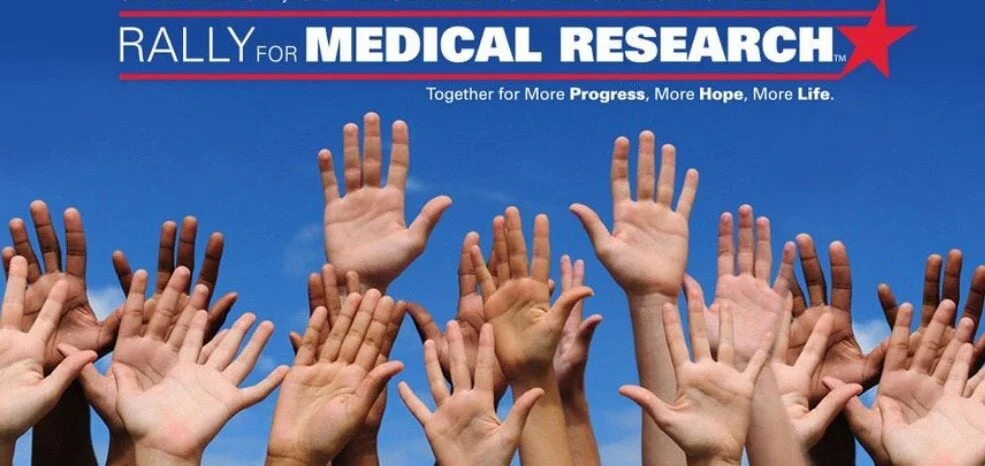
The Endocrine Society is mobilizing its membership to join a broad coalition of scientific organizations, healthcare professionals, and patient advocates in Washington, D.C., for the fourteenth annual Rally for Medical Research Hill Day on September 17. This unified effort seeks to influence federal budget priorities by urging Congress to provide $51.3 billion in funding for the National Institutes of Health (NIH) for the upcoming fiscal year. As the federal government faces a critical funding deadline on October 1, the Endocrine Society and its partners are emphasizing that robust, predictable, and sustained investment in medical research is essential for the health of the nation and the continued leadership of the United States in biomedical innovation.
The delegation from the Endocrine Society includes prominent researchers and clinical experts who will meet directly with lawmakers and their staff. These meetings are designed to illustrate the tangible benefits of NIH-funded research, specifically in the fields of hormone health, metabolic disorders, and chronic disease management. By participating in this large-scale advocacy event, the Society aims to ensure that the voices of endocrine researchers are heard amidst the complex negotiations surrounding the federal budget.
The Evolution and Impact of the Rally for Medical Research
The Rally for Medical Research was established over a decade ago as a response to years of stagnant funding for the NIH, which had significantly eroded the purchasing power of the nation’s premier medical research agency. Since its inception, the rally has grown into one of the most influential advocacy events on Capitol Hill, bringing together hundreds of organizations—ranging from large professional societies like the Endocrine Society to small, disease-specific patient advocacy groups.
The success of the rally lies in its ability to present a unified message to Congress. While each participating organization has its own specific research priorities, they all agree on the foundational importance of the NIH. This collective approach has been credited with helping to secure bipartisan support for the NIH, leading to several years of consecutive funding increases following a period of budgetary sequestration and stagnation in the early 2010s.
For the Endocrine Society, the rally represents a critical platform to highlight how hormone-related research intersects with nearly every aspect of human health. From the obesity and diabetes epidemics to the management of thyroid disorders and reproductive health, the work funded by the NIH is the primary driver of new therapies and diagnostic tools.
Navigating the Legislative Calendar: The Continuing Resolution
The timing of the September 17 Hill Day is strategic, occurring just weeks before the end of the federal fiscal year. Under the U.S. Constitution and the Congressional Budget Act, Congress is required to pass twelve appropriations bills to fund government operations before October 1. Failure to do so results in a government shutdown, which can halt non-essential services and disrupt scientific research.
In the current legislative environment, both the House of Representatives and the Senate have acknowledged that a final agreement on all twelve funding bills is unlikely before the deadline. To prevent a shutdown, legislative leaders have moved toward passing a Continuing Resolution (CR). A CR is a temporary measure that maintains government funding at current levels for a specified period, typically until a more permanent agreement can be reached.
This year, the proposed CR would extend funding through December, allowing the current Congress to finalize appropriations during a "lame duck" session—the period after the November midterm elections but before the new Congress is sworn in. While a CR avoids the immediate crisis of a shutdown, it presents significant challenges for the scientific community. Under a CR, the NIH cannot start new programs, and funding for existing grants is often held at conservative levels, creating uncertainty for researchers who rely on stable federal support to plan long-term experiments and maintain laboratory staff.
The Case for $51.3 Billion: Data and Economic Implications
The request for $51.3 billion for the NIH is not an arbitrary figure; it is a calculated amount intended to account for biomedical inflation and to provide the growth necessary to pursue emerging scientific opportunities. According to data from the Biomedical Research and Development Price Index (BRDPI), the cost of conducting research—including laboratory supplies, specialized equipment, and skilled personnel—often rises faster than the general rate of inflation.
The economic argument for NIH funding is equally compelling. Data from the United for Medical Research (UMR) coalition indicates that every dollar of NIH funding generates approximately $2.46 in local economic activity. In 2023 alone, NIH funding supported more than 410,000 jobs across the United States and contributed nearly $93 billion to the national economic output. By investing in the NIH, the federal government is not only improving public health but also stimulating the high-tech economy and maintaining a competitive edge in the global biotechnology sector.
Furthermore, the NIH is the world’s largest public funder of biomedical research. Its contributions are foundational to the pharmaceutical and medical device industries. A study published in the Proceedings of the National Academy of Sciences found that NIH funding contributed to the science underlying every single one of the 210 new drugs approved by the Food and Drug Administration (FDA) between 2010 and 2016. Without this public investment, the pipeline for new life-saving medications would significantly narrow.
Endocrine Research: A Public Health Imperative
The Endocrine Society’s advocacy focuses on the specific needs of the endocrine research community, which addresses some of the most prevalent and costly diseases in the United States. Chronic conditions such as diabetes, which affects more than 37 million Americans, and obesity, which impacts more than 40% of the adult population, are at the forefront of endocrine science.
NIH-funded research has led to the development of continuous glucose monitors, more effective insulin formulations, and a deeper understanding of the hormonal signals that regulate appetite and metabolism. Beyond these high-profile conditions, endocrine researchers study bone health (osteoporosis), thyroid cancer, adrenal disorders, and the impact of environmental chemicals on the human endocrine system (endocrine-disrupting chemicals).
"The Rally for Medical Research gives us a timely opportunity to remind Congress about the value of the NIH funding, the need to pass a CR by September 30, and the importance of providing an increase," the Endocrine Society stated in its call to action. The Society emphasizes that consistent funding allows for "high-risk, high-reward" research that the private sector is often unwilling to fund, but which frequently leads to the most significant breakthroughs in medical science.
Global Competition and the "Brain Drain" Risk
A central theme of the 2024 rally is the maintenance of U.S. leadership in global science. For decades, the United States has been the destination of choice for the world’s brightest scientific minds. However, as other nations—particularly China and members of the European Union—dramatically increase their investments in biotechnology and life sciences, the U.S. risks a "brain drain."
If NIH funding becomes unpredictable or fails to keep pace with inflation, early-career researchers may choose to leave academia for the private sector or pursue opportunities in countries with more stable research infrastructures. The Endocrine Society has long advocated for specific programs to support the "next generation" of researchers, noting that the average age at which a scientist receives their first independent NIH R01 grant has risen over the past several decades. Sustained funding increases are vital to ensuring that young scientists can build sustainable careers in the United States.
Broader Implications of the "Lame Duck" Session
The decision to delay final appropriations until the November "lame duck" session carries both risks and opportunities. On one hand, it removes the immediate pressure of the election cycle from the budget process, potentially allowing for more bipartisan cooperation. On the other hand, a "lame duck" session can be unpredictable, depending on which party gains or loses power in the midterm elections.
The Endocrine Society and its partners are urging Congress not to let partisan politics interfere with medical progress. The rally serves as a reminder that diseases do not discriminate based on political affiliation, and the search for cures should be a shared national priority. By engaging in advocacy now, the research community hopes to build a foundation of support that will carry through the end of the year, regardless of the election results.
Call to Action for the Scientific Community
While the physical rally takes place in Washington, D.C., the Endocrine Society is also spearheading a digital advocacy campaign to involve its members across the country. U.S.-based members who cannot attend the Hill Day in person are encouraged to use the Society’s online platform to contact their Representatives and Senators.
The digital campaign allows constituents to share their personal stories and the impact of NIH funding on their specific research projects or patient populations. This grassroots involvement is a crucial component of the broader strategy, as lawmakers are often most responsive to the concerns of their own constituents.
The Society’s "Take Action" portal provides templates and resources for researchers to explain the complexities of their work in accessible language, emphasizing the real-world applications of their findings. The goal is to create a "drumbeat" of support for the NIH that resonates in congressional districts across the nation, not just in the halls of the Capitol.
Conclusion: The Stakes for the Future of Medicine
As the September 17 Rally for Medical Research Hill Day approaches, the stakes for the biomedical research community have rarely been higher. The convergence of a looming fiscal deadline, a critical election cycle, and the rapid pace of scientific discovery creates a pivotal moment for federal science policy.
The Endocrine Society’s participation underscores the vital link between laboratory research and clinical care. By advocating for $51.3 billion for the NIH, the Society is fighting for the resources necessary to tackle the endocrine-related health crises of the 21st century. The message to Congress is clear: medical research is an investment in the nation’s future, providing the only path forward for millions of patients waiting for the next breakthrough. The success of this advocacy effort will be measured not just in the final budget numbers, but in the lives saved and the scientific mysteries solved in the years to come.
