








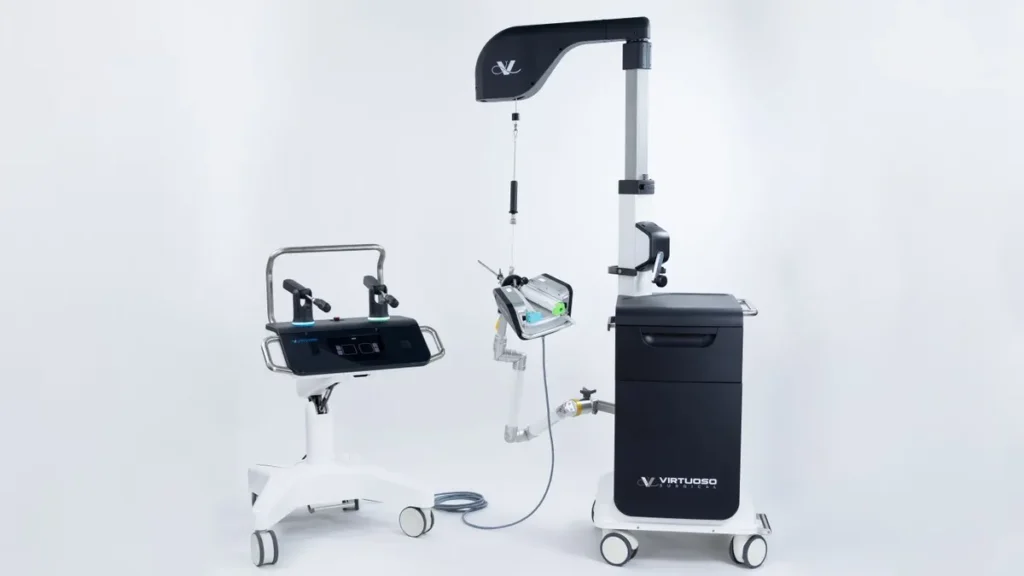
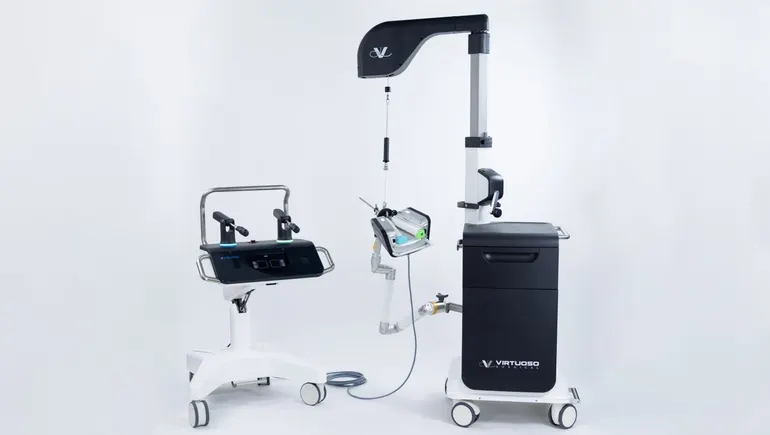
The United States Food and Drug Administration has granted 510(k) clearance to Virtuoso Surgical for its innovative robotic system designed to perform endoscopic surgery, specifically targeting the removal of bladder tumors through an en bloc resection technique. This regulatory milestone marks a significant shift in the field of urological oncology, as the Nashville-based company aims to replace the traditional method of removing tumors in fragments with a more precise, single-piece extraction process. By enabling surgeons to remove lesions intact, the Virtuoso system is designed to provide pathologists with high-quality tissue specimens, thereby improving the accuracy of cancer diagnosis and the precision of disease staging.
The Evolution of Bladder Tumor Resection Techniques
Bladder cancer remains one of the most prevalent and costly malignancies to treat in the United States. According to data from the American Cancer Society, approximately 83,000 new cases of bladder cancer are diagnosed annually, with the disease claiming roughly 16,000 lives each year. For decades, the standard of care for diagnosing and treating non-muscle-invasive bladder cancer has been the Transurethral Resection of Bladder Tumor (TURBT).
In a conventional TURBT procedure, surgeons use a wire loop and electrical current to "chip away" at the tumor, removing it in multiple small fragments. While effective at clearing the visible mass, this fragmentation—known as morcellation—disrupts the architecture of the tumor and its interface with the bladder wall. This disruption can make it difficult for pathologists to determine the depth of tumor invasion, which is the critical factor in "staging" the cancer. Accurate staging is the cornerstone of oncology; it dictates whether a patient requires localized therapy, such as intravesical chemotherapy, or more radical interventions, such as the surgical removal of the bladder (cystectomy).

The Virtuoso Surgical system addresses these limitations by facilitating en bloc resection. This technique involves removing the tumor and a margin of healthy tissue beneath it in one continuous piece. While the medical community has long recognized the theoretical benefits of en bloc resection, the physical limitations of current rigid endoscopic tools have made it technically difficult to perform consistently. The introduction of a purpose-built robotic platform seeks to democratize this advanced technique, making it accessible to a broader range of urologic surgeons.
Clinical Validation: The VIABLE Study Results
The FDA clearance was supported by data from the VIABLE clinical study conducted at The Chinese University of Hong Kong. This study focused on the safety and efficacy of the Virtuoso system in real-world surgical scenarios. One of the primary metrics used to evaluate the quality of a bladder tumor resection is the presence of the detrusor muscle in the biopsy specimen. The detrusor muscle is the deep muscular layer of the bladder; its presence in a sample confirms that the surgeon has sampled deeply enough to accurately assess whether the cancer has invaded the muscle wall.
In the first 20 patients of the VIABLE study, the Virtuoso system achieved a detrusor muscle presence rate of 94%. This figure significantly outperformed the study’s initial performance goal of 60%. Furthermore, it stands in stark contrast to the median rate of approximately 70% reported in meta-analyses of conventional fragmented TURBT procedures. The high success rate suggests that the robotic system provides surgeons with the stability and maneuverability necessary to reach the appropriate depth of tissue without the risk of bladder perforation.
Safety data from the study were also encouraging, with the company reporting no intraoperative adverse events. The ability to achieve high-quality margins without increasing the risk of surgical complications is a key differentiator for the Virtuoso platform as it prepares for commercial entry.
Technical Innovation and Design Philosophy
The Virtuoso system is distinct from existing large-scale robotic platforms, such as Intuitive Surgical’s Da Vinci system, in its form factor and application. While many surgical robots are designed for abdominal surgery through small incisions, the Virtuoso system is engineered for natural orifice transluminal endoscopic surgery (NOTES). It operates through a standard rigid endoscope, utilizing two micro-robotic arms that are approximately the size of a needle.
These arms provide the surgeon with "wristed" dexterity inside the bladder, a feat that is impossible with traditional rigid instruments. This dexterity allows for the precise manipulation of tissue and the application of energy (such as laser or electrosurgery) at angles that were previously unreachable. Dr. Duke Herrell, a urologic surgeon and the CEO of Virtuoso Surgical, emphasized that the preservation of tissue integrity is the primary goal. "Removing a tumor intact can provide a better tissue specimen, which supports clearer diagnosis and staging," Herrell stated. By maintaining the spatial relationship between the tumor and the underlying muscle, the system provides a "map" for pathologists to follow.
Official Responses and Expert Analysis
The medical community has reacted with cautious optimism to the FDA’s decision. Dr. Sam Chang, the Chief Surgical Officer at the Vanderbilt-Ingram Cancer Center and a former chair of the American Urological Association’s bladder cancer clinical guideline panel, noted the technical hurdles that have historically hindered the adoption of en bloc techniques.
"En bloc tumor resection has been studied in randomized trials and is recognized in international guidelines, but it can be extremely technically demanding with today’s instruments," Dr. Chang said. He further noted that adoption has been particularly limited in the United States. "A robotic system purpose-built for it, now authorized by the FDA, gives surgeons a meaningful new tool."
It is important to note that Dr. Chang serves as a paid consultant to Virtuoso Surgical, reflecting the close collaboration between the company and leading academic institutions. The technology itself originated from research conducted at Vanderbilt University, highlighting a successful transition from university-based intellectual property to a cleared medical device.
Strategic Launch Timeline and Market Context
Despite receiving FDA clearance, Virtuoso Surgical is opting for a measured rollout rather than an immediate mass-market launch. The company has announced plans for a focused U.S. launch at select leading urology centers beginning in 2027. This timeline allows the company to refine its training protocols, establish a robust supply chain for its proprietary components, and gather additional long-term outcomes data to support its value proposition to hospital administrators and insurers.

The robotic surgery market is currently undergoing a period of diversification. While large multi-port systems continue to dominate general surgery, there is an increasing demand for specialized, "single-port" or "natural orifice" robots that minimize patient trauma and reduce recovery times. Virtuoso enters a landscape where precision and diagnostic yield are becoming as important as the speed of the procedure.
Industry analysts suggest that Virtuoso’s focus on diagnostic accuracy could provide a significant economic argument for hospital adoption. Misstaging bladder cancer can lead to either undertreatment—allowing the cancer to spread—or overtreatment, such as unnecessary radical surgeries that carry high costs and significant morbidity. By improving the reliability of the initial biopsy, the Virtuoso system could potentially reduce the total cost of care for bladder cancer patients over their lifetime.
Future Implications Beyond Urology
While the current FDA clearance is specific to bladder tumor resection, the Virtuoso platform was designed as a versatile tool for any procedure involving rigid endoscopy. The company has already begun exploring the feasibility of its technology in several other high-stakes medical fields.
Preliminary non-human feasibility studies have been completed in:
- Gynecology: Potential applications include the removal of uterine fibroids or the treatment of endometriosis through minimally invasive routes.
- Pulmonology: The robotic arms could be used to navigate the complex branching of the lungs to biopsy peripheral nodules that are currently difficult to reach.
- Neurosurgery: The system may offer a way to perform endonasal or intraventricular brain surgery with greater precision, reducing the need for large craniotomies.
The transition to these specialties would require further regulatory submissions and clinical trials, but the core architecture of the Virtuoso system—small, dexterous arms working through a narrow channel—is inherently adaptable.
Conclusion: A Paradigm Shift in Surgical Oncology
The FDA clearance of Virtuoso Surgical’s robotic system represents more than just a new piece of hardware in the operating room; it signifies a shift toward "diagnostic-centric" surgery. In the era of personalized medicine, the quality of the tissue sample is paramount. By solving the technical challenges of en bloc resection, Virtuoso is providing a bridge between the surgical act of removal and the pathological act of analysis.
As the company moves toward its 2027 launch, the focus will remain on demonstrating that this technology not only improves the surgeon’s experience but also fundamentally alters the patient’s trajectory by ensuring they receive the right treatment at the right time. With the success of the VIABLE study as a foundation, Virtuoso Surgical is positioned to challenge the long-standing status quo of bladder cancer management and expand the boundaries of what is possible through robotic-assisted endoscopy.