The U.S. Food and Drug Administration (FDA) has officially signaled a strategic pivot toward the next generation of surgical and diagnostic technology by releasing a comprehensive discussion paper on robotic medical devices. This move marks a critical juncture in the evolution of medical technology, as the agency seeks to establish a formal regulatory framework for devices that feature autonomous functions or facilitate remote teleoperation. By inviting public comment, the FDA is acknowledging that the rapid convergence of artificial intelligence, high-speed connectivity, and advanced robotics has outpaced existing oversight structures, necessitating a new dialogue between regulators, manufacturers, and clinical practitioners.
As of July 2024, the FDA confirmed that while robotic-assisted surgery is common in American operating rooms, no fully autonomous or remotely teleoperated robotic devices have yet received marketing authorization for general use in the United States. This regulatory stance stands in contrast to the accelerating adoption of these technologies in international markets, particularly in China and India, where telesurgery—surgical procedures performed by a clinician at a console located a significant distance from the patient—is becoming an increasingly viable clinical reality. The FDA’s current initiative is designed to bridge this gap, ensuring that as these technologies move toward domestic commercialization, they do so under a framework that prioritizes patient safety without stifling the innovation that could revolutionize access to specialized care.
The Evolution of Surgical Robotics and Remote Intervention
The history of robotic surgery in the United States has been dominated for two decades by "master-slave" systems, such as the Intuitive Surgical Da Vinci platform, where the surgeon sits at a console only a few feet away from the patient. In these traditional setups, the robot acts as a sophisticated tool that translates the surgeon’s hand movements into precise micro-movements within the patient’s body. However, the paradigm is shifting toward "teleoperation" and "autonomy," two distinct but often overlapping categories that the FDA is now scrutinizing.

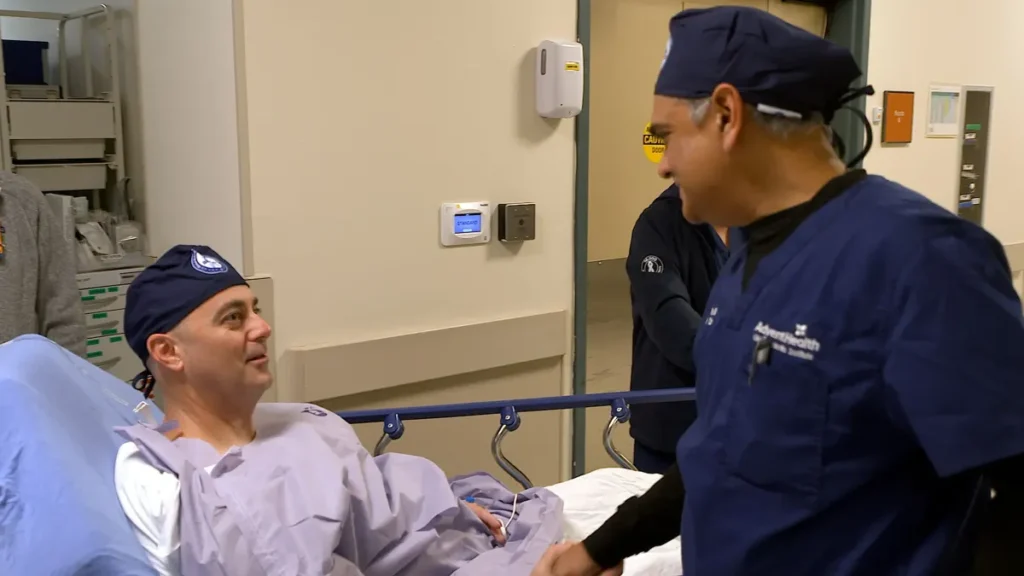
Teleoperation allows a specialist to provide life-saving care across vast distances, potentially solving the problem of "surgical deserts" in rural or underserved regions. A landmark example of this occurred in October 2023, when Dr. Vipul Patel, the founder and medical director of the Global Robotics Institute at AdventHealth Celebration in Florida, performed a robotic prostatectomy on a patient located approximately 35 miles away. This procedure was conducted under an investigational device exemption (IDE) from the FDA, a specific regulatory pathway that allows for the clinical study of unapproved devices.
Dr. Patel’s work has pushed the boundaries of remote care even further. In a previous milestone, he completed a transatlantic prostatectomy, operating from a console in Florida on a patient located in Angola. These procedures rely on ultra-low-latency fiber-optic or 5G connections to ensure that the surgeon’s movements are reflected in real-time, with no perceptible delay that could compromise the safety of the operation.
Defining the Scope: Autonomy Versus Teleoperation
The FDA’s discussion paper makes a clear distinction between remote teleoperation and autonomous functionality. While teleoperation focuses on the distance between the user and the device, autonomy refers to the device’s ability to perform specific tasks without direct, moment-to-moment human control.
Autonomous functions are currently being explored for a variety of high-stakes medical applications. According to the agency, manufacturers are developing systems capable of performing blood draws without the need for a human phlebotomist, as well as devices that can autonomously navigate the vascular system to identify and stop life-threatening internal bleeding. In these scenarios, the clinician might provide a high-level command—such as "locate the source of the hemorrhage"—while the robotic system executes the complex spatial navigation and mechanical movements required to reach the target.
Other applications mentioned by the FDA include:
- Stereotactic Navigation Systems: Robots that can automatically align surgical tools based on pre-operative imaging.
- Endoluminal Navigation: Devices that can navigate the complex branching structures of the lungs or gastrointestinal tract with minimal human guidance.
- Remote Ultrasound: Robotic arms that allow a sonographer in one city to perform a diagnostic scan on a patient in another, using haptic feedback to "feel" the patient’s anatomy remotely.
Technological Drivers of the Robotic Revolution
The sudden urgency in regulatory planning is driven by a "perfect storm" of technological advancements. The FDA points to the rapid maturation of artificial intelligence (AI) and machine learning (ML) as the primary engines of this progress. Modern robotic systems are no longer just mechanical arms; they are data-driven platforms capable of processing vast amounts of sensory information in milliseconds.
Increased computational efficiency and expanded data storage capabilities allow these robots to learn from thousands of previous procedures, identifying optimal paths for incision or suturing that minimize tissue trauma. Furthermore, the global rollout of 5G telecommunications has provided the high bandwidth and low latency necessary for remote teleoperation to be considered safe. In the past, a lag of even half a second (500 milliseconds) could be catastrophic during a delicate surgery; modern networks are pushing that latency down to less than 50 milliseconds, making the distance between surgeon and patient virtually irrelevant from a mechanical standpoint.
The Benefit-Risk Calculus in Policy Shaping
In its discussion paper, the FDA outlines a complex benefit-risk framework that will guide its future decision-making. The agency is asking stakeholders to consider how procedural complexity and the degree of clinical expertise required should influence regulatory requirements.
The potential benefits of incorporating autonomy into robotic systems are significant. They include:
- Procedural Accuracy: Robots do not suffer from hand tremors or fatigue, and their movements can be calibrated to sub-millimeter precision.
- Reproducibility: Autonomous functions can ensure that a procedure is performed to a high standard every time, regardless of the surgeon’s level of experience.
- Workflow Efficiency: By automating routine tasks like suturing or tool positioning, robots can reduce the overall time a patient spends under anesthesia.
However, these benefits are shadowed by unique risks. The FDA expressed concerns regarding "incorrect autonomous execution," where a software glitch or an unexpected anatomical variation could lead the robot to make a dangerous error. There is also the risk of "reduced user vigilance," a phenomenon where the human supervisor becomes overly reliant on the machine and fails to intervene when something goes wrong. Additionally, the agency noted that robotic systems might have "limited adaptability" to the high degree of procedural variability found in human biology, where no two patients are exactly alike.
Industry Reactions and Economic Implications
The medtech industry has reacted to the FDA’s paper with a mixture of caution and enthusiasm. Major players in the surgical robotics space, including Intuitive Surgical, Medtronic, and Johnson & Johnson, have long been investing in digital surgery ecosystems. For these companies, a clear regulatory roadmap from the FDA is essential for securing the investment needed to bring autonomous features to market.
Market analysts suggest that the global surgical robotics market, currently valued at approximately $8 billion, could more than double by the end of the decade if autonomous and remote capabilities are successfully integrated. The economic impact extends beyond device sales; it encompasses the potential for significant cost savings in the healthcare system by reducing complications, shortening hospital stays, and optimizing the use of highly specialized surgical talent.

From a public health perspective, the implications are profound. If a specialist in New York can operate on a trauma victim in a rural hospital in Montana, or if an autonomous robot can stabilize a soldier on a battlefield, the traditional barriers to high-quality surgical care begin to dissolve.
Cybersecurity: The Invisible Hurdle
One area of particular focus in the FDA’s inquiry is cybersecurity. Unlike traditional surgical robots that operate on a closed local network, teleoperated and autonomous devices are inherently connected to the broader internet or dedicated wide-area networks. This connectivity introduces vulnerabilities to hacking, signal interference, or data breaches.
The FDA is expected to demand rigorous "fail-safe" protocols for these devices. For example, if a remote connection is lost during a critical phase of surgery, the robot must be capable of either safely pausing the procedure or transitioning to a local autonomous mode that can maintain patient stability until a human takes over or the connection is restored. The agency’s discussion paper emphasizes that the "impact of autonomous functionality on patient outcomes" will be the ultimate metric for approval.
Chronology of Regulatory Milestones
The current discussion paper is the latest step in a multi-year effort by the FDA to modernize its approach to digital health:
- 2019: The FDA released a foundation paper on Artificial Intelligence and Machine Learning (AI/ML)-Based Software as a Medical Device (SaMD).
- 2021: The agency published the "Artificial Intelligence/Machine Learning (AI/ML)-Based Software as a Medical Device Action Plan."
- 2023: Dr. Vipul Patel’s remote prostatectomy highlights the clinical readiness of the technology, prompting a need for formalized rules.
- July 2024: The FDA releases the current discussion paper on autonomous and remote robotic devices, setting a deadline for public comment to influence upcoming draft guidance.
Conclusion: A Collaborative Path Forward
The FDA’s call for public comment is not merely a bureaucratic formality; it is an invitation for the medical and technological communities to help define the boundaries of the next era of medicine. By addressing the nuances of "human-in-the-loop" systems versus fully autonomous ones, the agency is attempting to build a flexible regulatory environment that can adapt as the technology matures.
As the comment period progresses, the FDA will synthesize feedback from surgeons, engineers, ethicists, and patient advocacy groups. The resulting policy will likely set a global standard for how robotic autonomy and teleoperation are governed, potentially clearing the way for a future where the physical location of a doctor no longer dictates the quality of care a patient receives. The transition from the "master-slave" model to a more collaborative, intelligent, and geographically untethered robotic surgery landscape is now officially underway in the United States, guided by a cautious but forward-looking regulatory hand.