


Abbott Laboratories, a global leader in healthcare and medical technology, officially announced a definitive plan to spin off its Nutrition business into a standalone, publicly traded company. The decision, unveiled during the company’s third-quarter earnings report, marks a significant structural shift for the Illinois-based conglomerate, which has operated as a diversified healthcare entity for decades. By separating its nutrition portfolio—which includes iconic brands such as Similac, Ensure, and PediaSure—Abbott aims to sharpen its focus on its high-growth medical device, diagnostic, and pharmaceutical divisions. The transaction is expected to be completed by the end of 2027, creating two distinct market leaders with specialized strategic priorities.
The move follows a broader trend within the medical technology and pharmaceutical industries, where major players are increasingly shedding slower-growth or consumer-facing divisions to unlock shareholder value and prioritize innovation-driven sectors. Under the proposed plan, the "new" Abbott will retain its core competencies in medical devices, diagnostics, and established pharmaceuticals, representing a business with approximately $42 billion in annual sales. Meanwhile, the independent Nutrition company will emerge as a pure-play leader in adult and pediatric nutrition, a market currently experiencing a shift toward specialized health and wellness products.
Strategic Rationale and Corporate Evolution
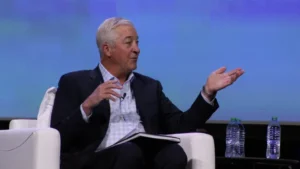
Abbott Chairman and CEO Robert Ford characterized the separation as a proactive step to maximize the potential of both organizations. In a statement addressing the move, Ford emphasized that the Nutrition business has reached a level of maturity and scale where it would benefit from independent governance and a dedicated capital structure.

"Our Nutrition business has a unique opportunity to capitalize on the growing demand for healthy nutrition, and it will be better positioned as an independent company to more effectively direct its strategic resources across its priorities," Ford said. "At the same time, Abbott’s core higher-growth, innovation-driven portfolio of medical devices, diagnostics, and established medicines has compelling growth opportunities to improve the health and lives of people around the world."
The strategic pivot is designed to address the diverging trajectories of Abbott’s business units. The medical device segment, bolstered by the success of the FreeStyle Libre continuous glucose monitoring system and advancements in structural heart and rhythm management, has consistently outpaced the growth of the nutrition segment. By decoupling these assets, Abbott’s leadership believes the market will more accurately value the high-margin, high-innovation medtech business, which has historically been "weighed down" by the more volatile and lower-margin nutrition sector.
Financial Performance and Guidance Adjustments
The announcement coincided with Abbott’s third-quarter financial results, which showcased robust top-line performance despite a tightening of future expectations. For the third quarter, Abbott reported total sales of $13.01 billion, representing a 14.5% increase compared to the same period in the previous year. This growth was largely driven by the medical device division, particularly in the diabetes care and electrophysiology sectors.
However, alongside the spin-off news, Abbott adjusted its long-term financial outlook. The company revised its 2026 organic sales growth guidance to 6%, down from the previously projected range of 6.5% to 7.5%. Management attributed this adjustment to shifting macroeconomic conditions and a conservative approach to the integration and separation costs associated with the upcoming spin-off. Despite the guidance cut, the company maintained that the separation would not impact its immediate 2026 or 2027 performance targets, which will be detailed in the January earnings call.
Wall Street analysts have generally viewed the move as a logical progression for the company. Robbie Marcus, an analyst at J.P. Morgan, noted that the separation offers a clear value proposition. "We think the value proposition of the separation is clear—it should improve top-line growth and margins, and remove what’s been a difficult business of late, both for Abbott specifically and the packaged goods/nutrition market overall," Marcus wrote in a research note.
The Shadow of Litigation and the 2022 Formula Crisis
While the strategic benefits of the spin-off are clear, industry observers point to the significant legal and operational hurdles that have plagued the Nutrition business in recent years. The division has been at the center of intense scrutiny following a major 2022 recall of powdered infant formula produced at its Sturgis, Michigan, facility. The recall, triggered by concerns over Cronobacter sakazakii contamination, led to a nationwide shortage of baby formula and prompted a federal investigation.
In September, Abbott reached a settlement with the U.S. Department of Justice (DOJ) regarding the Sturgis incident. While the DOJ closed its criminal investigation, the fallout remains a significant liability. Abbott has consistently maintained that no unopened products tested positive for the bacteria and that the settlement did not constitute an admission of fault.
Further complicating the division’s outlook is ongoing litigation regarding specialty formulas for preterm infants. In August, Abbott reached an agreement to resolve claims involving approximately 2,000 individuals who alleged that the company’s formula contributed to necrotizing enterocolitis (NEC), a severe gastrointestinal illness. Abbott agreed to pay an aggregate of $670 million to settle a portion of these claims, though thousands of other cases remain pending in various jurisdictions.
Marie Thibault, an analyst at BTIG, highlighted that these liabilities have been a persistent "overhang" on Abbott’s stock price. "The Nutrition business had sometimes weighed on total company sales growth, its margins are below the corporate average, and liabilities tied to infant formula litigation remain an overhang," Thibault noted.
During the earnings call, CEO Robert Ford addressed whether the pending litigation would delay the spin-off. He clarified that fully resolving these legal matters is not a "prerequisite for completing the separation," suggesting that the new Nutrition entity will likely inherit the remaining legal responsibilities and defense strategies associated with its product lines.
Chronology of the Spin-Off and Historical Context
The decision to separate the Nutrition business is the latest chapter in a multi-year trend of "medtech de-mergers." The industry has seen several giants streamline their operations to focus on core competencies:
- 2021-2022: Johnson & Johnson announced and completed the spin-off of its consumer health division, now known as Kenvue, to focus on pharmaceuticals and medical devices.
- 2023: Medtronic initiated the separation of its patient monitoring and respiratory interventions businesses.
- 2024: Earlier this year, Medtronic successfully took its diabetes business, Minimed, public as a separate entity.
- 2024: GE HealthCare completed its first full year as an independent company after spinning off from General Electric, seeing significant margin expansion.
Abbott’s timeline for its own transition is set for completion by the end of 2027. This window allows for the complex task of untangling global supply chains, regulatory filings in multiple international markets, and the establishment of an independent corporate infrastructure for the Nutrition business. Upon completion, Abbott stockholders will receive shares in the new Nutrition company, typically through a tax-free distribution, while maintaining their current holdings in Abbott.
The Future of "New Abbott": Devices and Diagnostics
Post-separation, Abbott will be a leaner, more specialized organization focused on three primary pillars:
- Medical Devices: This remains the company’s "crown jewel," led by the FreeStyle Libre system. Abbott is also investing heavily in pulsed field ablation (PFA) for atrial fibrillation and minimally invasive heart valve repair technologies like MitraClip.
- Diagnostics: Having played a pivotal role during the COVID-19 pandemic with its rapid testing kits, Abbott is now transitioning its diagnostic focus to the Alinity suite of laboratory instruments and point-of-care testing for chronic conditions and infectious diseases.
- Established Pharmaceuticals: This division focuses on branded generic medicines in emerging markets, providing a stable source of cash flow and a footprint in high-growth regions like India, China, and Latin America.
By removing the Nutrition segment, Abbott’s R&D budget can be more aggressively allocated toward high-margin medical breakthroughs. The company currently spends billions annually on innovation, and the spin-off is expected to improve the overall corporate margin profile, making it more attractive to growth-oriented investors.
Market Implications and the Nutrition Outlook
The new Nutrition company will face its own set of challenges and opportunities. As an independent entity, it will be one of the largest nutrition companies in the world, with a dominant share of the infant formula and adult clinical nutrition markets. Free from the capital allocation constraints of a larger medtech parent, the Nutrition company can pursue its own M&A strategy, potentially acquiring smaller, high-growth wellness or organic nutrition brands to diversify its portfolio.
However, it will also need to navigate a rigorous regulatory environment and rebuild consumer trust following the 2022 supply chain disruptions. The global nutrition market is increasingly competitive, with rivals like Nestlé and Danone aggressively expanding their specialized health offerings.
Conclusion
Abbott’s decision to spin off its Nutrition business represents a watershed moment in the company’s 135-year history. It signals an end to the "conglomerate" era of healthcare and an embrace of the "pure-play" model that has become the gold standard for valuation in the modern market. While the road to 2027 involves significant legal and regulatory navigation, the separation is poised to create two companies with clearer missions: one dedicated to the cutting edge of medical intervention and the other to the foundational science of human nutrition. As the medtech landscape continues to consolidate and specialize, Abbott’s move ensures it remains a central, albeit more focused, protagonist in the global healthcare narrative.