







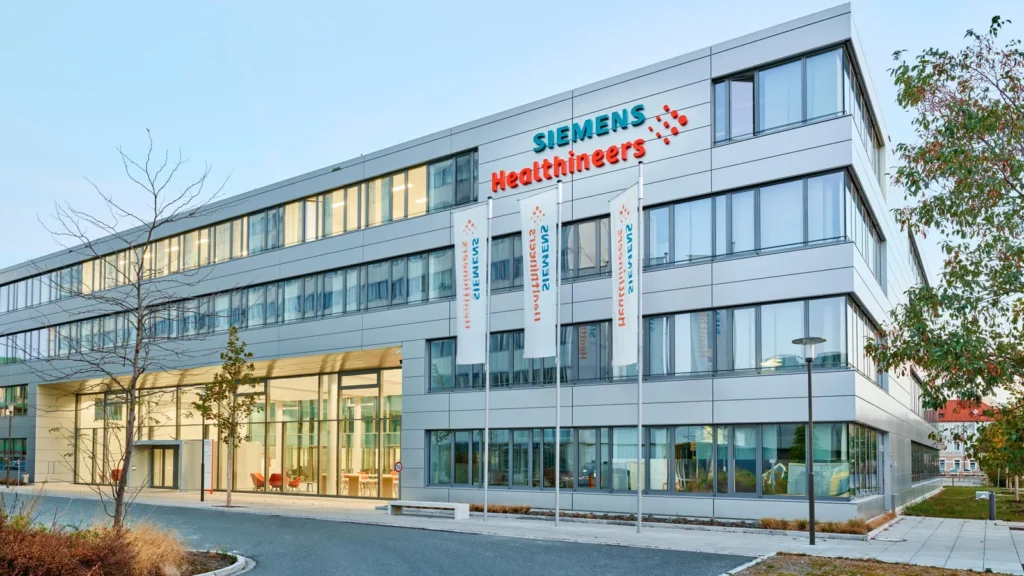
Siemens Healthineers has officially initiated a transformative restructuring of its corporate architecture, announcing that its multi-billion-dollar In-Vitro Diagnostics (IVD) division will be rebranded as Olyrian Diagnostics and established as a fully independent, standalone business by mid-2028. This strategic maneuver, confirmed by senior leadership during the company’s recent fourth-quarter earnings presentation, marks the culmination of a multi-year effort to decouple the diagnostics arm from the company’s broader imaging and advanced therapy operations. The move is designed to grant the diagnostics unit the operational agility and strategic focus required to compete in an increasingly specialized global laboratory market, while simultaneously allowing Siemens Healthineers to streamline its core focus on medical imaging and surgical robotics.
The decision to carve out the diagnostics business reflects a fundamental shift in the company’s internal philosophy regarding industrial synergies. For years, the integration of imaging and diagnostics was viewed as a holistic approach to patient care; however, the executive board, led by CEO Bernd Montag, has concluded that the diagnostics business lacks the necessary strategic overlap with the company’s other three primary units: Imaging, Varian (oncology), and Advanced Therapies. By positioning Olyrian Diagnostics as a "pure-play" entity, the company aims to unlock shareholder value and allow the new brand to leverage its specific strengths in laboratory automation, clinical chemistry, and point-of-care testing without the bureaucratic or financial constraints of the larger conglomerate.
Financial Performance and the Catalyst for Change
The formalization of the Olyrian brand comes at a challenging financial juncture for the diagnostics division. In the fourth-quarter results published in late 2024, Siemens Healthineers reported a 4.2% decline in comparable revenue for the diagnostics segment. While CEO Bernd Montag noted that sales have begun to stabilize on a sequential basis, the year-over-year figures highlight the structural headwinds facing the IVD sector.
A primary driver of this revenue contraction is the "structural market rebasing" currently underway in China. Like many of its peers in the medtech space, Siemens Healthineers has been impacted by the Chinese government’s intensified focus on volume-based procurement (VBP) and a nationwide anti-corruption drive within the healthcare sector. These factors have led to a temporary slowdown in equipment purchasing and a recalibration of pricing for diagnostic consumables. CFO Jochen Schmitz emphasized during the analyst call that while the Chinese market remains a critical long-term growth engine, the current volatility necessitates a leaner, more responsive organizational structure—a need that the Olyrian carve-out is intended to address.
Beyond the challenges in Asia, the diagnostics unit has been navigating a post-pandemic landscape where the surge in COVID-19 testing revenue has evaporated, leaving the business to rely once again on its core routine testing portfolio. The transition to the Atellica platform—the company’s flagship laboratory solution—continues to be a central pillar of the strategy, but the costs associated with hardware deployment and the phasing out of legacy systems have weighed on margins.
The Roadmap to Independence: 2025–2028
The path toward the mid-2028 launch of Olyrian Diagnostics is governed by a rigorous timeline. The groundwork was laid in late 2023 when the company first signaled to investors that the diagnostics business would pursue a distinct strategy. In May 2024, executives officially revealed the carve-out plan, setting the stage for the branding announcement and the legal separation process.
The timeline is further complicated by a concurrent separation occurring at the parent level. Siemens AG, the industrial giant that holds a majority stake in Siemens Healthineers, is currently in the process of spinning off the healthcare business entirely. Shareholders are scheduled to vote on this broader separation in February 2025. As part of this "deconsolidation" from the Siemens mothership, Siemens Healthineers will pay Siemens AG approximately 300 million euros (roughly $334 million) for a three-year brand transition phase. This means that while Siemens Healthineers is working to birth Olyrian, it is simultaneously untethering itself from its own historical namesake.
Between 2025 and 2027, Olyrian will undergo a phase of operational "ring-fencing." This involves the separation of IT systems, human resources departments, supply chain logistics, and research and development (R&D) pipelines. The company expects the final legal and operational independence to be achieved by the middle of the 2028 fiscal year, at which point Olyrian will operate with its own board of directors and financial reporting structure.
Operational Efficiency and the 400 Million Euro Savings Target
Central to the success of Olyrian Diagnostics is an aggressive cost-cutting and efficiency program. CFO Jochen Schmitz revealed that the healthcare business is targeting 400 million euros in total savings within the diagnostics unit by 2028. This productivity drive is comprehensive, spanning across:
- R&D Optimization: Streamlining the development of new assays and focusing investments on high-growth areas like molecular diagnostics and point-of-care testing.
- Sales and Distribution: Reconfiguring global sales teams to be more specialized in laboratory workflows rather than general hospital equipment.
- Manufacturing Footprint: Evaluating and potentially consolidating production facilities to improve capacity utilization.
- Operational Overheads: Eliminating redundant administrative roles that will no longer be necessary once the unit is decoupled from the broader corporate structure.
However, the process of separation is not without its own financial burdens. Management has identified over 300 million euros in "stranded costs." These are expenses associated with the loss of economies of scale and the duplication of services (such as separate IT infrastructures) that arise when a unified company splits into two. To mitigate these costs, Siemens Healthineers is implementing additional measures, including a narrowing of focus in its ultrasound business and a general tightening of capital allocation.
Strategic Rationale: The Pure-Play Advantage
The decision to create Olyrian Diagnostics aligns with a broader trend in the global medical technology industry. Investors have increasingly shown a preference for "pure-play" companies—entities that focus on a single, specific segment of the healthcare market. Examples include the successful spin-offs of GE HealthCare from GE and the separation of ZimVie from Zimmer Biomet.
By becoming a standalone entity, Olyrian Diagnostics can tailor its capital allocation specifically to the needs of the IVD market. In the current integrated model, the diagnostics unit often competes for investment capital with high-margin segments like MRI imaging or robotic surgery. As an independent company, Olyrian will have the freedom to reinvest its own cash flows into lab automation technology and digital health solutions that are specific to diagnostic pathology.
CEO Bernd Montag noted that Olyrian will be better positioned to leverage its strengths across "lab solutions and point-of-care testing." This is particularly relevant as the industry shifts toward decentralized testing—moving diagnostic capabilities out of the central laboratory and closer to the patient in clinics, pharmacies, and homes. A dedicated diagnostics management team will be able to react more swiftly to these shifts in the "patient journey" than a diversified conglomerate might.

Industry Context and Competitive Landscape
Olyrian Diagnostics will enter the standalone market as a formidable player, but it faces stiff competition from established giants. The global IVD market is dominated by a "Big Four": Roche, Abbott Laboratories, Danaher (through its Beckman Coulter and Cepheid brands), and Thermo Fisher Scientific.
Unlike Abbott or Roche, which have highly diversified portfolios across pharmaceuticals and nutrition, Danaher offers a closer comparison to what Olyrian aspires to be: a science and technology innovator with a heavy focus on diagnostic precision. To compete, Olyrian will need to prove that its Atellica ecosystem can match the scale and connectivity of Roche’s cobas systems or Abbott’s Alinity platform.
Furthermore, the diagnostic industry is currently grappling with the implementation of the IVDR (In-Vitro Diagnostic Regulation) in Europe and evolving FDA oversight in the United States. Navigating these regulatory waters requires immense technical expertise and dedicated legal resources. As a standalone entity, Olyrian will need to ensure it maintains the regulatory muscle that it previously shared with the larger Siemens Healthineers organization.
Broader Implications and Future Outlook
The birth of Olyrian Diagnostics represents more than just a name change; it is a signal that the era of the "one-stop-shop" medtech conglomerate may be drawing to a close. For employees, the transition to 2028 will likely involve significant organizational changes, though it also offers the opportunity for a more focused and mission-driven corporate culture.
For healthcare providers and laboratory managers, the impact of the carve-out will be closely watched. The primary concern during any corporate split is the continuity of service and support. Siemens Healthineers has pledged that the transition will be seamless, with no disruption to the supply of reagents or the maintenance of installed equipment. If successful, the independence of Olyrian could lead to faster innovation cycles and a more responsive customer service model tailored specifically to the high-throughput demands of modern clinical labs.
As the company moves toward the 2028 deadline, the financial markets will be looking for signs that the diagnostics unit can return to mid-single-digit growth and expand its profit margins. The "stranded costs" and the 400 million euro savings plan will be the primary metrics by which the success of the Olyrian transition is judged in the short term.
In conclusion, the rebranding of the diagnostics unit as Olyrian Diagnostics is a bold move by Siemens Healthineers to future-proof its business. By separating its laboratory-focused operations from its imaging-focused core, the company is betting that specialization will outperform integration in the complex, post-pandemic healthcare economy. The next four years will be a period of intense structural refinement, as Olyrian Diagnostics prepares to emerge as a significant independent force in the global fight against disease through precision testing and data-driven diagnostics.