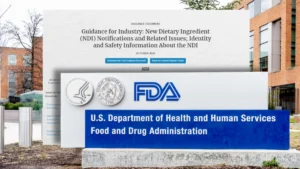







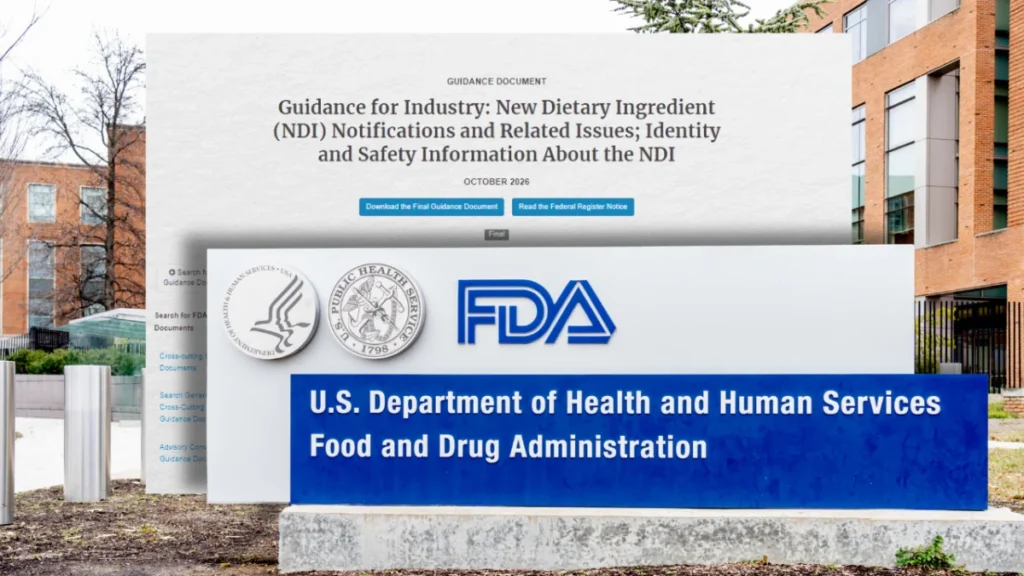
The regulatory landscape for dietary supplements is undergoing a significant transformation, marked by the U.S. Food and Drug Administration’s (FDA) recent release of final guidance concerning the identity and safety provisions of New Dietary Ingredient Notifications (NDINs). This long-awaited document, released after a decade of incremental updates and prolonged uncertainty, aims to bring greater clarity to a critical pathway for introducing new ingredients into the U.S. market. While hailed by some as a step towards greater flexibility and innovation, the guidance also leaves fundamental questions unanswered, prompting concerns about potential regulatory creep and its impact on both the NDIN and Generally Recognized As Safe (GRAS) pathways.
The journey to this final guidance has been a protracted one, characterized by a series of draft documents and periods of silence from the agency. The initial draft guidance on NDINs was released in 2011, followed by a wholesale revision in 2016. For years, the industry operated under a cloud of uncertainty regarding the specific requirements for demonstrating the identity and safety of new dietary ingredients. This prolonged ambiguity prompted many supplement manufacturers to explore alternative routes, such as the self-GRAS designation, a pathway that itself is now facing increased scrutiny and potential mandatory notification requirements from regulators. The FDA’s release in 2024 of final guidance on Section VI, addressing identity and safety provisions, marks a significant milestone, finally illuminating a crucial part of the NDIN puzzle. This follows the 2024 release of guidance on Section V, which focused on NDIN procedures and timelines.
The protracted period of regulatory flux has had a tangible impact on the industry. Manufacturers have been hesitant to invest in novel ingredients without a clear understanding of the regulatory hurdles. The shift towards self-GRAS, while offering a seemingly quicker route, carried its own set of risks, particularly as regulators began to question the rigor of such self-determinations. The introduction of this new guidance, therefore, comes at a pivotal moment, offering potential clarity but also raising new considerations for the marketability of future supplement innovations.

A Decade in the Making: The Evolution of NDIN Guidance
The history of the FDA’s NDIN guidance is a testament to the complexities of regulating the dynamic dietary supplement market. The Dietary Supplement Health and Education Act of 1994 (DSHEA) established the NDIN pathway as a notification system, requiring manufacturers to inform the FDA of any new dietary ingredient intended for use in a dietary supplement. The intent was to provide the FDA with advance notice of new ingredients and an opportunity to review their safety. However, the practical implementation of this requirement has been a subject of ongoing discussion and refinement.
- 2011: The FDA releases its first draft guidance on NDINs, outlining its interpretation of the requirements. This initial document sparks considerable debate within the industry regarding its scope and practical implications.
- 2016: Recognizing the need for revisions, the FDA issues a revised draft guidance. This updated document addresses some of the concerns raised by stakeholders but still leaves certain aspects open to interpretation.
- 2024: The FDA releases final guidance on two key sections of the 2016 draft: Section V (NDIN Procedures and Timelines) and Section VI (Identity and Safety Provisions). This dual release signals a renewed focus on providing comprehensive direction to the industry.
This staggered approach, while ultimately leading to more refined guidance, created a prolonged period of uncertainty. Manufacturers found it challenging to plan for new product development, often facing lengthy delays or being forced to rely on less defined regulatory pathways. The industry has consistently called for greater predictability and a clear understanding of the FDA’s expectations.
Glimmers of Flexibility: Industry Reactions to Identity and Safety Guidance
The newly released guidance on the identity and safety provisions of NDINs has been met with a mixed but generally cautiously optimistic response from industry stakeholders. Many appreciate the FDA’s efforts to provide more flexibility in demonstrating the safety of new ingredients, recognizing this as a crucial element for fostering innovation.
Jeff Ventura, spokesperson for the Council for Responsible Nutrition (CRN), characterized the guidance as a "constructive step forward," while acknowledging that "important issues remain unresolved." CRN’s support stems from the guidance’s apparent recognition of a broader spectrum of scientific evidence and newer testing methodologies. The council is particularly encouraged by the FDA’s willingness to move away from a rigid, "one-size-fits-all" approach, embracing a more nuanced evaluation of safety data. This flexibility, they argue, is vital for companies developing novel ingredients that may not fit neatly into traditional scientific paradigms.
Todd Harrison, co-chair of Venable’s FDA Group, commended the agency for its emphasis on establishing the identity of a new dietary ingredient and ensuring that the submitted safety information directly pertains to the ingredient being marketed. He described these as "legitimate concerns" that the guidance aims to address. Similarly, Ashish Talati of Talati Law Firm highlighted the increased flexibility in substantiating safety, including greater acknowledgment of existing research, historical use, and alternative testing methods. "That’s encouraging, particularly for companies developing innovative ingredients," Talati stated.
The guidance’s acknowledgment of diverse scientific evidence, such as in vitro studies, animal models, and human clinical trials, alongside recognized methodologies like toxicological assessments and genotoxicity testing, offers manufacturers a more comprehensive toolkit. This is particularly important as the scientific understanding of various compounds and their biological effects continues to evolve. The flexibility to present a robust safety profile using a combination of these approaches is seen as a significant improvement over potentially restrictive past interpretations.
Persistent Questions: Unresolved Issues and Industry Concerns
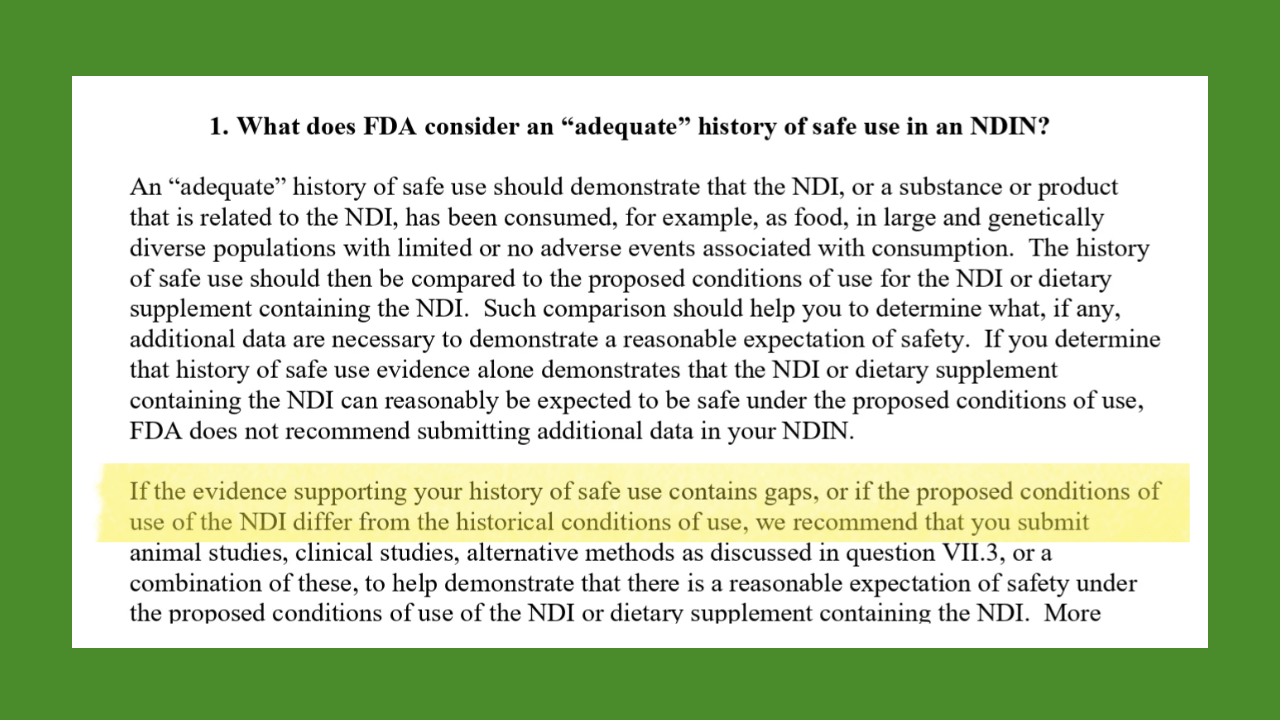
Despite the positive reception regarding increased flexibility, several fundamental questions remain on the table, prompting continued concern within the industry. A primary point of contention is the FDA’s continued emphasis on a lengthy history of safe use, with a general recommendation of 25 years. While the guidance acknowledges that shorter periods may be supported by additional evidence, the industry views this 25-year benchmark as a significant hurdle.
"We believe FDA missed opportunities to make the process more practical and predictable," Ventura of CRN stated, specifically referencing the 25-year recommendation. This sentiment is echoed by many industry experts and trade associations who advocate for a more scientifically driven assessment of safety rather than an arbitrary time-based requirement.
Furthermore, critical definitional ambiguities persist. Ashish Talati articulated these concerns, noting, "There are still some important questions FDA has yet to address, including what qualifies as a dietary ingredient, how to establish old dietary ingredient status and when an NDI notification is actually required." These are long-standing questions that have contributed to the complexity and unpredictability of the NDIN process. Greater clarity from the FDA on these foundational aspects would be highly beneficial for manufacturers seeking to ensure compliance.
Another area of concern for CRN is what they perceive as "regulatory creep." The agency’s requests for safety information that extend beyond the single new ingredient to encompass other constituents of a finished product are viewed with apprehension. Ventura elaborated, "But our larger concern is what the guidance does not resolve. FDA has provided additional direction on how to prepare an NDI notification without fully clarifying some of the most fundamental questions about when one is required in the first place." This suggests that while the guidance clarifies how to submit an NDIN, it doesn’t fully elucidate when such a submission is definitively necessary, potentially leading to over-compliance or confusion.
The Shadow of Premarket Approval: Shifting Interpretations of DSHEA
A significant undercurrent of concern among legal and regulatory experts revolves around the potential for the FDA’s interpretation of the NDIN process to inadvertently transform a notification system into a de facto premarket approval system. Todd Harrison argues that Congress deliberately created a distinct regulatory framework for dietary supplements, differentiating it from the approval processes for food additives and drugs.
"Congress did not give FDA authority to approve or reject NDI notifications," Harrison emphasized. He posits that the distinction between reviewing information and having the authority to refuse a notification based on perceived insufficiency of evidence is crucial. While the FDA can review submitted information, request additional evidence, and conclude that the available data does not establish a reasonable expectation of safety, this is fundamentally different from claiming the authority to reject a notification outright.
The 75-day review window for NDINs, mandated by DSHEA, is also a point of contention. Harrison worries that the agency might delay the commencement of this statutory clock by treating disagreements over the sufficiency of evidence as grounds for refusing to recognize a notification. "The statutory 75-day period begins when FDA receives the notification, not when the agency determines that the submission satisfies its expectations," he stated. The concern is that the FDA could inadvertently extend the review process beyond the statutory limit by employing subjective interpretations of the submitted data.
Interplay Between NDIN and GRAS Pathways: A Shifting Market Dynamic
The release of the final NDIN guidance arrives at a time when the GRAS pathway is also under intense regulatory scrutiny, with potential shifts towards mandatory GRAS notifications. This confluence of regulatory developments is prompting the industry to view the NDIN and GRAS pathways not in isolation, but as interconnected elements of the overall market entry landscape.
Ashish Talati anticipates a notable shift in industry behavior: "I expect we’ll see more NDINs being filed as companies look for alternatives to the increasingly lengthy GRAS notification process." He notes that GRAS reviews can often extend to 18 months or even two years. For ingredients specifically intended for dietary supplements, the NDI pathway, despite its own complexities, may become the more attractive option compared to waiting for a GRAS determination. This trend could be further amplified if proposed mandatory GRAS notifications come to fruition, potentially making the self-GRAS route less appealing due to increased regulatory oversight.
Jeff Ventura expressed hope that the increased flexibility demonstrated in the final NDI guidance on identity and safety will translate into a broader, more consistent approach across the FDA’s relevant offices. "The two regulatory pathways are distinct, but there are important connections, particularly when it comes to how FDA evaluates ingredient safety, the scientific evidence it considers, and the regulatory expectations placed on manufacturers," Ventura explained. CRN is advocating for a similar "science-based, practical approach" to be applied to any proposed changes within the GRAS framework.
Todd Harrison points to a potential "significant unintended consequence" as the FDA continues to re-evaluate the GRAS framework. He highlights the fundamental difference in the underlying regulatory philosophies. Under the current GRAS framework, a company can independently conclude that a substance is GRAS for a particular use without explicit FDA concurrence. This contrasts with the NDI process, where the FDA increasingly appears to view its own assessment of the submission’s adequacy as a prerequisite for market entry.
The potential for increased regulatory burden on the NDI pathway, if interpreted as a premarket approval mechanism, could disincentivize voluntary engagement with the FDA. Harrison warns, "If the objective is greater transparency and better safety oversight, discouraging voluntary engagement with FDA through an increasingly burdensome notification process seems counterproductive." The risk, he suggests, is creating an environment where companies have greater incentives to avoid submitting safety information to the agency rather than actively engaging with it.
The core of the ongoing regulatory debate lies in finding an appropriate balance between transparency, safety oversight, and fostering innovation within the dietary supplement industry. As the FDA continues to refine its approach to both NDINs and GRAS notifications, the industry will be closely watching to see if the agency can provide clear, practical, and scientifically sound pathways for bringing safe and effective ingredients to market. The long-term implications for supplement innovation, consumer safety, and the overall health of the industry hinge on the FDA’s ability to navigate these complex regulatory waters with clarity and predictability.