





The release of the documentary film Land of Canaan, produced by the Rhiza Collective, provides a comprehensive examination of the critical intersection between agricultural preservation, fair trade economics, and cultural survival within the occupied West Bank. Centered on the work of Dr. Nasser Abufarha, a Palestinian American entrepreneur and scholar, the film details the evolution of a grassroots movement designed to safeguard ancient ecological systems and traditional knowledge in the face of escalating environmental and political pressures. As the Palestinian agricultural sector grapples with what observers describe as "ecocide"—the systematic destruction of the natural environment—the film serves as both a historical record and a contemporary analysis of regenerative farming as a form of social and economic resistance.
The Genesis of a Movement: Dr. Nasser Abufarha’s Return
The narrative of Land of Canaan begins with the return of Dr. Nasser Abufarha to his ancestral home in the West Bank during a period of profound crisis for the local olive harvest. Dr. Abufarha, who holds a PhD in cultural anthropology and international development, observed that the traditional olive oil industry, which had sustained Palestinian families for millennia, was fracturing under the weight of market volatility, movement restrictions, and the fragmentation of land.
Recognizing that the survival of the Palestinian peasantry was inextricably linked to the health of the land, Abufarha sought to bridge the gap between ancient traditions and the modern global marketplace. This vision led to the establishment of Canaan Palestine and the Palestine Fair Trade Association (PFTA). By introducing fair trade principles to the region, Abufarha aimed to ensure that farmers received a living wage that reflected the true value of their labor and the historical significance of their product. This model was not merely a business venture; it was a strategic intervention designed to provide the economic stability necessary for farmers to remain on their land.
Historical Context: The Olive Tree as a Cultural and Economic Pillar
To understand the stakes documented in Land of Canaan, one must consider the historical and economic significance of the olive tree in the Levant. For Palestinians, the olive tree is more than a commodity; it is a symbol of "Sumud," or steadfastness. Many of the trees featured in the film are over 1,000 years old, with some specimens dating back to the Roman era. These "living monuments" are the backbone of the Palestinian rural economy.
Historically, the olive oil sector has contributed up to 25% of the total agricultural income in the Palestinian territories. Approximately 100,000 families depend on the olive harvest for their primary or secondary livelihoods. However, the industry has faced systemic challenges, including the construction of the separation barrier, which has cut off thousands of farmers from their groves, and the documented destruction of hundreds of thousands of trees over the past several decades. The film positions the olive harvest not just as a seasonal activity, but as a critical site of cultural preservation that is currently under threat of erasure.
The Scale of the Fair Trade Network
Since its inception, the network established by Dr. Abufarha has grown into one of the most influential fair-trade operations in the Middle East. According to data highlighted in the film and supporting institutional reports, Canaan Palestine now collaborates with over 2,400 artisan farming families spread across 52 different villages. This network operates on a cooperative model, where farmers are organized into village-based collectives that share resources, knowledge, and bargaining power.
The impact of this network is quantifiable. By achieving international fair trade and organic certifications, these farmers have gained access to premium markets in North America, Europe, and Asia. This has resulted in a stabilized price for Palestinian olive oil that often sits significantly above the local market rate, shielding small-scale producers from the predatory pricing of industrial competitors. Furthermore, the fair trade social premium—a fund generated by sales—is reinvested into community projects, such as scholarship programs for farmers’ children and the modernization of village infrastructure.
Regenerative Agriculture and Biodiversity Preservation
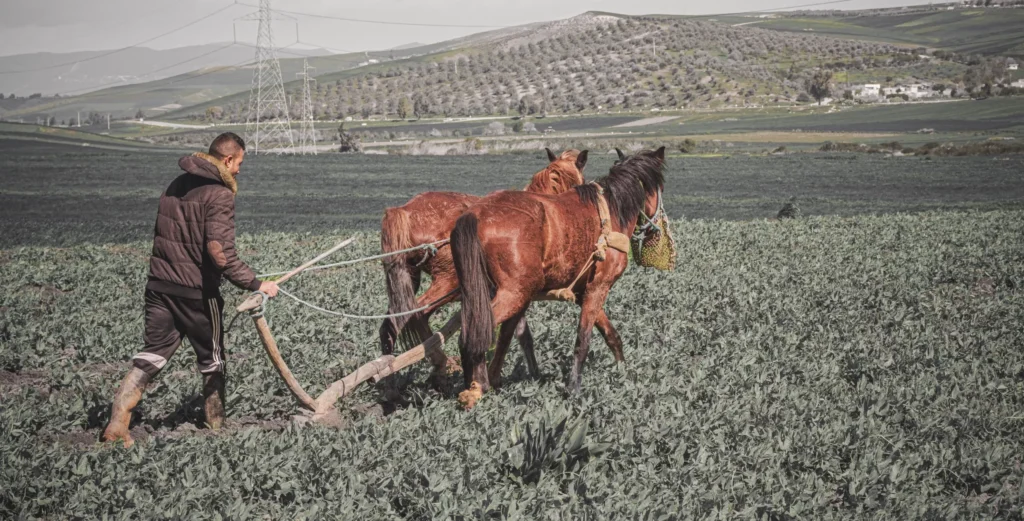
A central theme of Land of Canaan is the scientific and ecological merit of traditional Palestinian farming. The film argues that the "traditional" methods employed by West Bank farmers are, in contemporary terms, advanced regenerative agriculture. These practices involve complex permaculture systems where olive groves are integrated with intercropped almonds, grains, and wild herbs like za’atar.
This biodiversity-rich ecosystem serves several functions:
- Soil Health: The absence of chemical fertilizers and the use of natural mulching techniques preserve the microbial life of the soil, ensuring long-term fertility.
- Water Conservation: In a region characterized by water scarcity, these ancient groves are primarily rain-fed, utilizing traditional terracing to capture and direct every drop of seasonal rainfall.
- Climate Resilience: The genetic diversity of ancient olive varieties makes them more resilient to the rising temperatures and erratic weather patterns associated with global climate change.
The film emphasizes that these ecological systems are not just remnants of the past but are vital blueprints for a sustainable future. By documenting these practices, Land of Canaan highlights how food sovereignty and environmental stewardship are essential components of national identity and survival.
Chronology of Agricultural Challenges and Resilience
The timeline of the events depicted in the film and the broader context of the region reveal a persistent struggle between expansion and preservation:
- 2004: Dr. Nasser Abufarha founds Canaan Fair Trade and the Palestine Fair Trade Association, introducing the first certified fair-trade olive oil from Palestine to the world.
- 2005–2015: The network expands from a handful of farmers to over 1,500 families. During this period, the PFTA launches the "Trees for Life" program, which has since planted tens of thousands of new olive and almond saplings to replace those destroyed by conflict or age.
- 2016–2023: Canaan Palestine integrates more sophisticated regenerative organic standards, becoming a global leader in the "Regenerative Organic Certified" (ROC) movement.
- 2023–2026: The period of "ecocide" and intensified conflict. The film documents the increasing difficulty farmers face in accessing their land, the destruction of agricultural infrastructure, and the movement’s efforts to maintain the harvest despite these barriers.
Official Responses and Perspectives from the Ground
While the film focuses on the narrative of Dr. Abufarha and the farmers, it also reflects a broader consensus among international development experts and environmentalists. Representatives from the Rhiza Collective have stated that the film is intended to "bridge the gap between global consumers and the frontline protectors of the earth." They argue that the story of the Palestinian farmer is a universal story of the struggle against the industrialization and destruction of ancestral lands.
Local farmers interviewed in the context of the film’s production express a sentiment of defiant hope. "To plant a tree is to believe in a future," one farmer noted, echoing the film’s central message. "We are not just producing oil; we are producing the evidence of our existence on this land."
Conversely, international human rights organizations have frequently pointed to the agricultural sector as a primary target of "administrative and physical erasure." Data from the United Nations Office for the Coordination of Humanitarian Affairs (OCHA) confirms that thousands of productive trees are uprooted or burned annually, leading to millions of dollars in economic losses. Land of Canaan provides the visual and narrative evidence to support these statistical claims.
Broader Implications: Food Sovereignty as Resistance
The implications of the model presented in Land of Canaan extend far beyond the borders of the West Bank. The film posits that food sovereignty—the right of peoples to healthy and culturally appropriate food produced through ecologically sound and sustainable methods—is a fundamental human right. In the context of Palestine, this sovereignty is a prerequisite for political and social agency.
By building an independent economic infrastructure that bypasses traditional aid dependencies, the fair-trade network creates a form of "economic sumud." This allows the Palestinian rural community to maintain a level of self-sufficiency that is critical during times of political upheaval. The film suggests that the "Canaan model" could serve as a template for other indigenous and marginalized communities worldwide who are seeking to protect their ecological heritage from the dual threats of globalization and land dispossession.
Conclusion: A Call for Global Recognition
Land of Canaan concludes by reinforcing the idea that the preservation of the Palestinian olive harvest is a global responsibility. The film argues that the loss of these 1,000-year-old ecosystems would be a loss for all of humanity, representing the erasure of millennia of ecological wisdom.
As a journalistic document, the film successfully synthesizes the personal journey of Dr. Nasser Abufarha with the systemic challenges facing 2,400 farming families. It moves the conversation beyond simple humanitarian aid, pointing instead toward a future built on the principles of fair trade, regenerative agriculture, and the unyielding link between a people and their land. Through its detailed portrayal of the 52 villages and the resilient ecosystems they tend, Land of Canaan serves as a definitive account of why this way of life must be protected at all costs.