

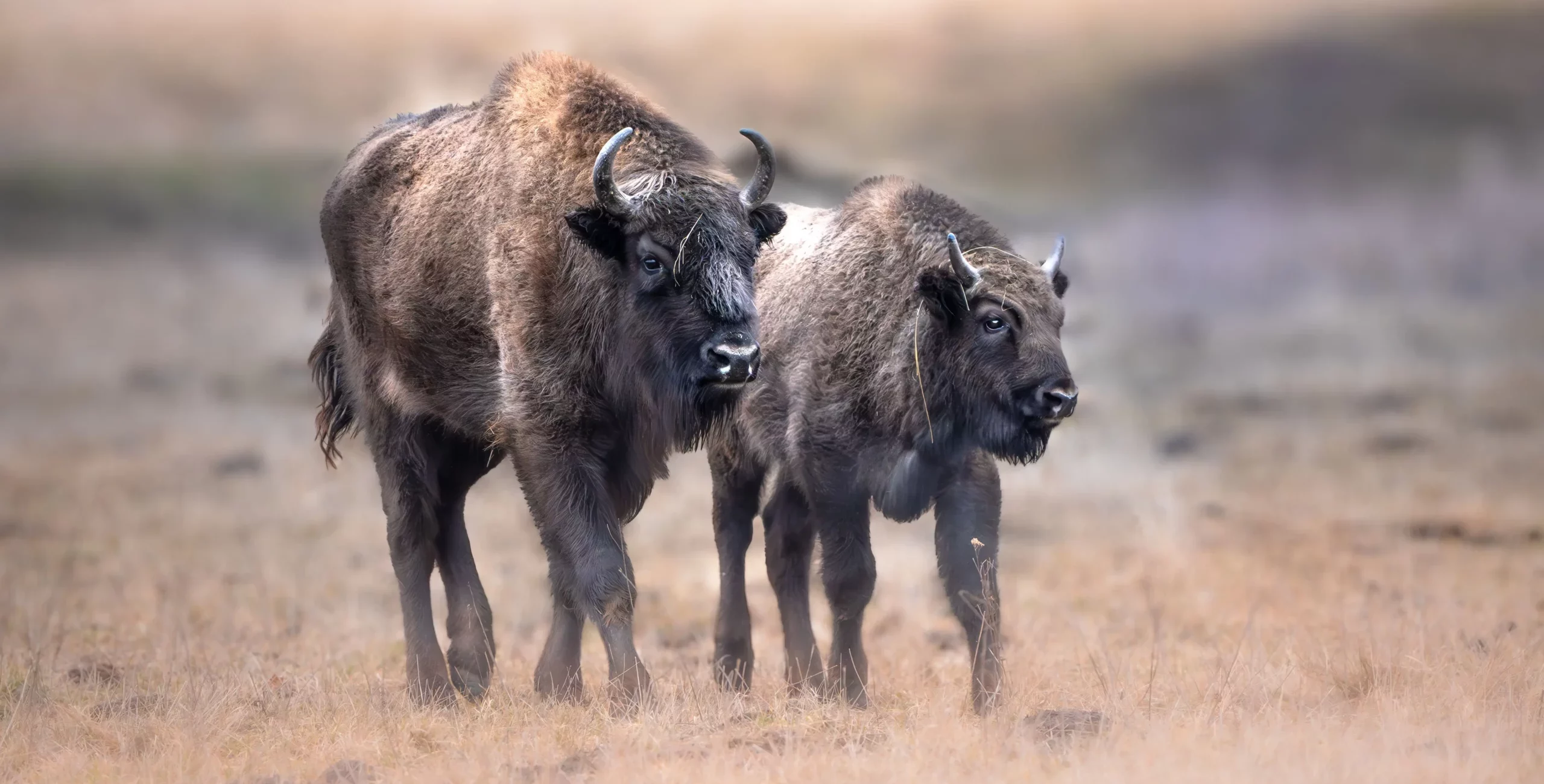
In a significant milestone for European rewilding efforts, thermal-imaging footage captured on the Lika Plains of Croatia has provided the first modern visual confirmation of ancient defensive behaviors in aurochs-like cattle. The recording, filmed by a professional crew in 2022 and recently analyzed by ecologists, depicts a herd of reintroduced "Tauros"—animals bred to replicate the ecological niche of the extinct aurochs—successfully repelling a pack of wolves. The footage demonstrates a sophisticated tactical formation where dominant bulls formed a protective semi-circle to shield vulnerable members of the herd, as well as a group of wild horses, from an active predatory threat.
This observation serves as a vital data point for the Tauros Programme and Rewilding Europe, organizations dedicated to restoring the functional roles of megafauna in the continent’s ecosystems. While historical accounts and oral traditions have long suggested that the aurochs (Bos primigenius) possessed advanced social structures and defensive maneuvers, the 2022 footage offers the first empirical evidence of these traits manifesting in back-bred populations released into the wild.
The Lika Plains Incident: A Case Study in Interspecies Cooperation
The Lika Plains, situated near the Adriatic coast under the shadow of the Velebit Mountains, serve as one of Europe’s premier rewilding sites. The area is home to a diverse array of flora and fauna, including apex predators such as the Eurasian lynx, brown bears, and grey wolves (Canis lupus). It was within this high-pressure environment that the film crew, utilizing advanced thermal-imaging technology, witnessed the confrontation.
As the wolf pack approached under the cover of darkness, the herd did not scatter—a reaction common in many domesticated cattle breeds. Instead, the bulls moved to the perimeter, locking their fearsome, forward-facing horns into a defensive "shield wall." This semi-circular formation created a physical barrier between the predators and the more vulnerable members of the group, specifically the cows and young calves.
Most notably, the defensive perimeter extended its protection to a group of wild horses, including a foal, that had been grazing in the vicinity. Rather than fleeing, the horses sought refuge behind the bulls. This interspecies cooperation suggests a complex social dynamic where different herbivore species recognize the mutual benefit of the aurochs’ defensive capabilities. Ronald Goderie, a prominent Dutch ecologist and a lead figure in the European rewilding movement for over 40 years, noted that while such behavior had been rumored in historical contexts, its documentation on film is unprecedented.
Chronology of the Aurochs: From Extinction to Reintroduction
To understand the significance of this behavior, it is necessary to examine the history of the species and the timeline of its return to the European landscape.
- 1627: The last known original aurochs died in the Jaktorów Forest in Poland. Once roaming across Europe, North Africa, and Asia, the species was driven to extinction by overhunting and habitat loss.
- 2008: The Tauros Programme was launched in the Netherlands by the Stichting Taurus foundation. The goal was not "de-extinction" in a literal sense, but "back-breeding" using primitive cattle breeds that still carry high percentages of aurochs DNA.
- 2013-2014: The first herds of Tauros were introduced to the Lika Plains in Croatia as part of a broader initiative by Rewilding Europe to restore natural grazing patterns to the abandoned agricultural lands of the Balkan Peninsula.
- 2014-2021: The herds were monitored as they transitioned from managed environments to self-sustaining wild populations. During this period, they began to reclaim natural instincts, including seasonal migration and social hierarchy.
- 2022: The pivotal thermal footage was recorded, confirming that the back-breeding process had successfully reactivated the latent defensive instincts required for survival in a predator-rich environment.
Supporting Data: The Genetics and Anatomy of Defense
The animals observed in the Lika Plains are the result of selective breeding involving "primitive" European breeds such as the Sayaguesa from Spain, Maremmana Primitiva from Italy, and Pajuna from Andalusia. These breeds were chosen because they retained the physical characteristics of the original aurochs: large stature, athletic build, and long, forward-curving horns.
The defensive semi-circle is a highly effective tactic against cursorial predators like wolves, which rely on isolating an individual from a fleeing herd. By standing their ground, the Tauros bulls negate the wolves’ primary advantage of speed and exhaustion-based hunting.
Data from the Tauros Programme indicates that:
- Horn Morphology: The forward-pointing orientation of the horns allows the animal to gore a predator without lowering its head excessively, maintaining a visual on the pack.
- Size and Weight: An adult Tauros bull can weigh up to 1,000 kilograms (2,200 lbs), significantly larger than modern dairy or beef cattle. This sheer mass serves as a psychological and physical deterrent.
- Social Cohesion: Unlike domesticated cattle, which have had their "fight" instinct largely bred out in favor of docility, the Tauros exhibit a high degree of herd synchronicity.
Expert Analysis and Official Responses
The reaction from the scientific community has been one of cautious optimism. Ronald Goderie emphasized the importance of the footage in validating the functional replacement theory. "That’s what we had heard, but it had never been filmed," Goderie stated. He explained that the "semi-circle with cows and wild horses behind it" represents a "return to the natural order," where the herbivore is not merely a passive victim but an active participant in the ecosystem’s balance.
Spokespersons for Rewilding Europe have pointed out that the presence of wolves is a critical component of this success. Predators act as a selective pressure, ensuring that only the most fit and instinctively capable animals thrive. This "landscape of fear" created by wolves forces the herbivores to behave in ways that have a cascading positive effect on the environment. For example, by huddling together for protection, the animals concentrate their grazing and trampling in specific areas, which creates a mosaic of different habitat types, benefiting insects and ground-nesting birds.
Broader Implications for European Biodiversity
The successful re-adoption of ancient defensive strategies has several implications for the future of European land management and conservation:
1. Ecosystem Engineering
The aurochs were historically "ecosystem engineers." Their grazing habits prevented forests from becoming too dense, allowing light to reach the forest floor and promoting a higher diversity of plant species. By proving they can survive and defend themselves against wolves, the Tauros demonstrate they are capable of fulfilling this role without constant human intervention or protection.
2. Natural Grazing as Fire Prevention
In Southern Europe, including Croatia and Spain, abandoned farmlands often become overgrown with highly flammable scrub, leading to catastrophic wildfires. Large herbivores like the Tauros act as natural "lawnmowers," reducing the fuel load and creating natural firebreaks. Their ability to defend themselves means they can be introduced to remote, mountainous regions where human-led grazing is no longer economically viable.
3. Economic and Ecotourism Potential
The return of "prehistoric" megafauna has sparked interest in ecotourism. The Lika Plains and the Velebit Mountains are increasingly becoming destinations for wildlife enthusiasts hoping to see a glimpse of a landscape that resembles Europe ten thousand years ago. The presence of a self-sustaining, "wild" herd adds a layer of authenticity to these conservation areas.
4. Carbon Sequestration
Grasslands maintained by large grazers are highly effective carbon sinks. By grazing on the Lika Plains, the Tauros help maintain healthy soil structures that trap carbon more effectively than unmanaged, monocultural forests or neglected scrublands.
Conclusion: A New Chapter for the Wild
The 2022 thermal-imaging footage from Croatia is more than just a remarkable nature documentary clip; it is a proof of concept for the rewilding movement. It confirms that the genetic blueprints for ancient survival strategies remain accessible, even after centuries of domestication and the extinction of the parent species.
As the Tauros herds continue to grow and expand across Europe—with similar projects underway in the Netherlands, Spain, and Portugal—the observation of their defensive semi-circle provides a blueprint for how modern conservation can look to the past to secure the future. By restoring the aurochs to their rightful place as the guardians of the plains, ecologists are not just bringing back a ghost of the past, but are reinforcing the resilience of the modern European wilderness against the challenges of a changing world.
The wolves of the Lika Plains will continue to hunt, and the Tauros will continue to stand their ground. In this ancient dance of predator and prey, the European landscape finds its balance once again, proving that the instincts of the aurochs were never truly lost—they were simply waiting for the right moment to return.
