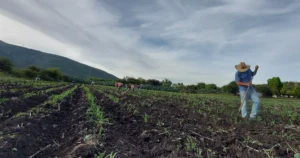




The introduction of the Fair Seeds for Farmers Act, designated as H.R. 9681 in the House of Representatives and S. 5104 in the Senate, marks a significant legislative attempt to address the intensifying concentration within the global agricultural sector. This legislation arrives at a critical juncture for the American farming industry, as a small group of multinational corporations continues to exert unprecedented control over the foundational elements of the food supply chain. By targeting the interlocking monopolies of seed production and agricultural chemicals, the bill seeks to restore competitive balance, lower input costs for producers, and safeguard the genetic diversity of the nation’s crops.
As of August 2026, the agricultural landscape is dominated by a phenomenon known as the "Big 4." These four entities—Bayer, Corteva, Syngenta (a subsidiary of ChemChina), and BASF—collectively control 51% of the global seed market. Their influence is even more pronounced in the sector of agricultural chemicals, where they maintain a 62.3% market share. This vertical integration, where the same companies that develop genetically engineered seeds also manufacture the specific pesticides and herbicides required to grow them, has created a closed-loop system that many economists and agricultural advocates argue stifles innovation and drives up consumer prices.
The Economic Burden on Modern Producers
For the American farmer, the financial implications of this market concentration are profound. Seeds, once a renewable resource that farmers could save and replant from year to year, have transitioned into a high-cost annual input. Current data indicates that seed costs now account for up to 25% of a farmer’s total operating budget. This represents a staggering increase from previous decades, a trend that critics attribute directly to the lack of competition and the proliferation of restrictive intellectual property rights.

The consolidation of the industry has led to a narrowing of choices. In many regions of the United States, farmers reporting on their procurement options note that they are often limited to a handful of proprietary varieties owned by the Big 4. These seeds are frequently bundled with specific chemical regimes, leaving producers with little flexibility to adopt alternative farming methods or to select varieties specifically adapted to their local microclimates or soil conditions. This lack of diversity not only increases financial risk for the farmer but also creates a systemic vulnerability in the national food supply, as a significant portion of the country’s caloric output becomes dependent on a limited genetic pool.
Legislative Objectives of H.R. 9681 and S. 5104
The Fair Seeds for Farmers Act is designed to dismantle these barriers through a multi-pronged regulatory approach. The primary objectives of the legislation include:
- Enhancing Antitrust Oversight: The bill provides the Department of Justice and the Federal Trade Commission with expanded authorities to review and potentially block further mergers within the agricultural input sector. It also mandates a retrospective review of previous mega-mergers to determine if they have resulted in anti-competitive pricing or the suppression of innovation.
- Reforming Intellectual Property Protections: A core component of the act involves revising the "utility patent" system as it applies to living organisms. By creating more robust exemptions for seed saving and public-sector research, the bill aims to break the proprietary hold that corporations maintain over genetic traits.
- Funding Public Seed Breeding: The legislation authorizes significant federal investment into land-grant universities and public research institutions. This funding is intended to revitalize the development of "public" seed varieties—those that are not owned by a corporation and are available for use by any farmer without the payment of technology fees.
- Transparency in Pricing: The act requires companies to provide clearer disclosures regarding the pricing of seeds and the associated chemical "tech fees," ensuring that farmers can make more informed comparisons between different products.
A Historical Chronology of Agricultural Consolidation
The current state of the seed industry is the result of nearly a century of legal and corporate evolution. Understanding this timeline is essential to grasping the necessity of the Fair Seeds for Farmers Act.
- 1930 – The Plant Patent Act: This landmark legislation allowed for the patenting of asexually reproduced plants (such as fruit trees), marking the first time the U.S. government granted intellectual property rights for living organisms.
- 1970 – The Plant Variety Protection Act (PVPA): This act extended protections to sexually reproduced plants (seeds). However, it included a "research exemption" and a "farmer’s exemption," allowing growers to save seeds for their own use.
- 1980 – Diamond v. Chakrabarty: The U.S. Supreme Court ruled that a live, human-made micro-organism is patentable subject matter. This opened the door for the patenting of genetically engineered seeds under the utility patent system, which is far more restrictive than the PVPA.
- 1990s – The Biotech Revolution: The introduction of Roundup Ready crops by Monsanto (now Bayer) revolutionized the industry. It began the era of bundling seeds with specific herbicides, leading to a wave of acquisitions as chemical companies bought up independent seed firms.
- 2015-2018 – The Era of Mega-Mergers: A rapid series of consolidations occurred, including the Dow-DuPont merger (creating Corteva), the Bayer acquisition of Monsanto, and ChemChina’s purchase of Syngenta. These moves effectively reduced the "Big 6" to the "Big 4."
- 2023 – USDA Findings: The U.S. Department of Agriculture released the report "More and Better Choices for Farmers: Promoting Fair Competition and Innovation in Seeds and Other Agricultural Inputs." This report documented the decline in innovation and the rise in costs, serving as the evidentiary basis for the 2026 legislation.
Impact on Organic and Specialty Crop Systems
One of the most overlooked consequences of seed consolidation is its impact on organic agriculture. Organic farmers, who are prohibited by law from using genetically engineered organisms (GMOs) and synthetic pesticides, find it increasingly difficult to source high-quality, non-proprietary seeds. Because the dominant companies focus their research and development budgets almost exclusively on GMO varieties designed for chemical-intensive systems, the development of seeds suited for organic or low-input farming has stagnated.
Advocates for the Fair Seeds for Farmers Act argue that by fostering competition and funding public breeding, the bill will stimulate the creation of seeds that are resilient to pests and diseases without the need for synthetic inputs. This is seen as a vital step in supporting the growth of the organic sector, which continues to see rising consumer demand despite the supply chain challenges.
Stakeholder Reactions and Industry Analysis
The introduction of the bill has elicited a range of responses from across the political and economic spectrum.
Advocacy Groups: Organizations such as Beyond Pesticides and Farm Action have been vocal in their support. In a joint statement, these groups noted, "The Fair Seeds for Farmers Act is a necessary intervention to prevent the complete corporate capture of our food system. For too long, four companies have dictated what farmers grow and what consumers eat. This bill returns power to the people who actually work the land."
Agricultural Associations: The National Farmers Union (NFU) has expressed cautious optimism, highlighting the need for "fairness and transparency" in the marketplace. Conversely, some industry-aligned groups, such as CropLife America, have raised concerns that the legislation could "disincentivize innovation" by weakening the patent protections that allow companies to recoup their research and development investments.
Economic Analysts: Independent analysts suggest that if the bill passes, it could lead to a gradual stabilization of food prices. By lowering the cost of inputs for farmers, the inflationary pressure on the "farm-to-fork" pipeline could be mitigated. However, analysts also warn that the transition away from a consolidated market will take years, as public breeding programs require time to produce viable, competitive seed varieties.
Broader Implications for Biodiversity and Climate Resilience
Beyond the immediate economic concerns, the Fair Seeds for Farmers Act carries significant implications for environmental sustainability. The current reliance on a handful of genetically uniform crops creates a "monoculture" that is highly susceptible to climate shocks, such as extreme heat, drought, or new pests.
By encouraging the development of a diverse array of seed varieties, the legislation promotes "genetic insurance." A more diverse agricultural landscape is inherently more resilient; if one variety fails due to a specific weather event, others may survive. Furthermore, the push for seeds that do not require heavy chemical applications aligns with broader national goals to reduce water pollution and protect pollinator populations, which have been decimated by the widespread use of systemic pesticides.
Conclusion
The Fair Seeds for Farmers Act represents one of the most comprehensive attempts in decades to restructure the power dynamics of American agriculture. As H.R. 9681 and S. 5104 move through the legislative process, the debate will likely center on the balance between corporate intellectual property rights and the public interest in a competitive, diverse, and affordable food system. For the nation’s family farms, the outcome of this legislative battle may determine their economic viability for generations to come. By addressing the "Big 4" monopoly, Congress has the opportunity to ensure that the seeds of the future are sown in a field of fair competition.