









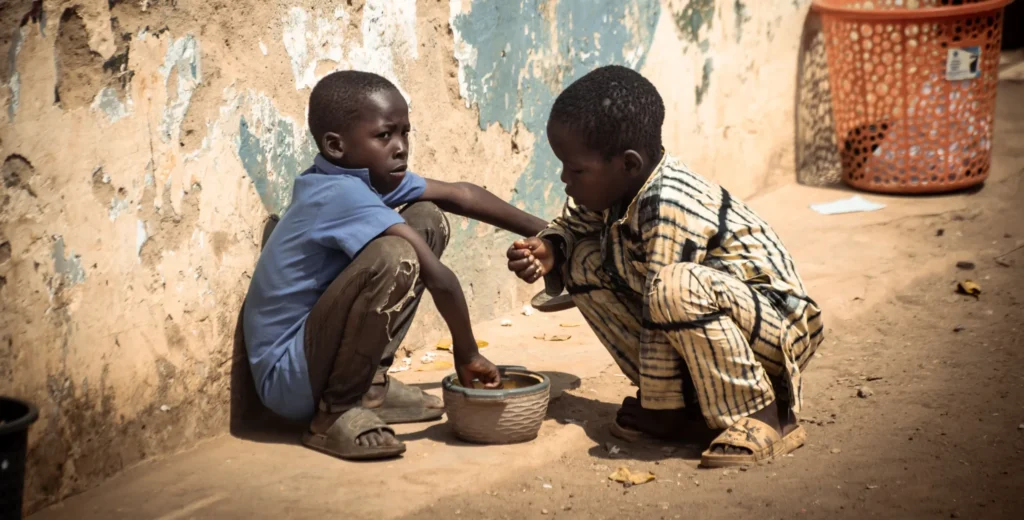
The global community faces a staggering hurdle in its mission to eradicate malnutrition, as a landmark report reveals that approximately 2.69 billion people—one in every three individuals on Earth—are currently unable to afford a healthy diet. The findings, published in the 2026 edition of the State of Food Security and Nutrition in the World (SOFI) report, underscore a widening gap between basic caloric survival and the nutritional diversity required for long-term health. While the report highlights a slight decline in overall global hunger rates, the persistent unaffordability of nutrient-dense food has prompted five United Nations agencies to issue a joint warning that achieving the "Zero Hunger" target by 2030 will require "immense" and unprecedented levels of international cooperation and systemic reform.
The annual assessment, co-authored by the Food and Agriculture Organization (FAO), the International Fund for Agricultural Development (IFAD), the United Nations Children’s Fund (UNICEF), the World Food Programme (WFP), and the World Health Organization (WHO), provides a comprehensive look at the intersection of economics, health, and agriculture. Despite the modest progress in reducing the number of people facing chronic undernourishment, the economic barriers to accessing fruits, vegetables, and protein-rich foods remain "extremely high," threatening to leave a generation with permanent developmental and health deficits.
A Statistical Overview of Global Hunger in 2025 and 2026
The report offers a nuanced picture of the world’s nutritional landscape. In a rare glimmer of optimism, global hunger declined for the third consecutive year in 2025. The data indicates that 7.8% of the global population was affected by hunger, a measurable improvement from the 8.1% recorded in 2024. This downward trend suggests that the extreme shocks to the global food system experienced during the early 2020s—including the COVID-19 pandemic and the initial volatility of the war in Ukraine—are beginning to stabilize.

Regionally, the most significant shift was observed in Africa. For nearly a decade, Africa had seen a prolonged and troubling upward trend in hunger statistics, driven by a combination of climate-induced droughts, regional conflicts, and economic instability. However, the 2026 report suggests this trend has finally come to a halt. While the number of undernourished people in Africa remains disproportionately high compared to other continents, the plateauing of these figures represents a critical turning point for humanitarian efforts on the continent.
However, these gains are overshadowed by the sheer volume of people trapped in "food poverty." While 7.8% of people may have enough calories to survive, nearly 33% do not have the financial means to purchase a diet that meets international nutritional standards. This distinction between "hunger" (caloric deficiency) and "unaffordability" (nutritional deficiency) is the central theme of the 2026 findings.
The Economic Barrier: Calculating the Cost of Health
The SOFI 2026 report introduces a critical metric for understanding the crisis: the cost of a healthy diet is now pegged at an average of 4.28 purchasing power parity (PPP) dollars per day. The use of PPP dollars is a standard economic tool that allows researchers to compare the buying power of different currencies. In practical terms, this means that in any country, a healthy diet costs the equivalent of what $4.28 can buy in the United States.
Maximo Torero, Chief Economist of the FAO and one of the lead authors of the report, highlighted the gravity of this figure by comparing it to global poverty benchmarks. "The extreme poverty line is set at $2.15 to $3.00 PPP per person, depending on the region and specific metrics used," Torero explained during the report’s launch. "When the cost of a healthy diet is $4.28, it is significantly higher than what billions of people earn. This creates a structural impossibility for the world’s poorest to ever achieve nutritional security without external intervention or massive economic shifts."
This "affordability gap" means that even individuals who have transitioned out of extreme poverty may still find themselves unable to afford anything beyond basic staples like rice, maize, or wheat. These calorie-dense but nutrient-poor diets lead to the "hidden hunger" of micronutrient deficiencies, which can cause stunted growth in children and increased susceptibility to non-communicable diseases in adults.
A Chronology of Food Security: 2020–2026
To understand the current crisis, it is necessary to examine the timeline of global food security over the last six years. The path to the current 7.8% hunger rate has been marked by extreme volatility:
- 2020-2022: The Pandemic and Supply Chain Collapse. Global hunger surged as lockdowns disrupted agricultural labor and international shipping. The "Zero Hunger" goal, established by the UN in 2015 as part of the Sustainable Development Goals (SDGs), began to look increasingly out of reach as poverty rates climbed for the first time in decades.
- 2022-2023: The Conflict Shock. The invasion of Ukraine, a major exporter of grain and fertilizer, caused global food prices to skyrocket. This period saw the cost of a healthy diet rise sharply, pushing millions of people in import-dependent nations into food insecurity.
- 2024: The Beginning of Stabilization. As supply chains recalibrated and alternative trade routes were established, food prices began to moderate. Hunger rates hit 8.1%, marking the first significant decline since the pre-pandemic era.
- 2025: Continued Recovery and African Progress. Continued investment in resilient agriculture and a relative easing of global inflation saw hunger rates drop to 7.8%. Crucially, the long-term rise of hunger in Africa began to level off.
- 2026: The Affordability Crisis Identified. While the "hunger" numbers improved, the 2026 report highlighted the "affordability" crisis as the primary barrier to the 2030 Zero Hunger goal. The $4.28 PPP daily cost became the new focal point for policy discussions.
Official Responses and Calls for Urgent Action
The release of the report has sparked a wave of reactions from international leaders and humanitarian organizations. The consensus among the five UN agencies is that the current trajectory is insufficient to meet the 2030 deadline.
Cindy McCain, Executive Director of the World Food Programme, emphasized the need for a shift in how aid is distributed. "We can no longer just focus on filling stomachs with grain," McCain stated in a response to the findings. "The data shows that a third of the world is being priced out of the nutrients they need to thrive. We need to address the economic structures that keep healthy food expensive and low-quality food cheap."
UNICEF Executive Director Catherine Russell focused on the implications for the next generation. "When one in three people cannot afford a healthy diet, it is the children who suffer the most. Malnutrition in the first 1,000 days of a child’s life causes irreversible physical and cognitive damage. We are essentially mortgaging the future of these nations because of food prices."
The report also prompted calls for "agrifood system transformation." This involves moving away from monoculture crops subsidized by governments and toward more diverse, localized food systems that prioritize the production of fruits, vegetables, and legumes.
Fact-Based Analysis: The Implications of the Affordability Gap
The implications of the $4.28 PPP daily cost are far-reaching and multifaceted. Analyzing the data suggests several critical challenges for the coming years:
1. The Double Burden of Malnutrition
The inability to afford healthy food often leads to the "double burden" of malnutrition within the same communities or even the same households. While some family members may be underweight due to lack of calories, others may be overweight or obese because the only affordable foods are highly processed, energy-dense items high in fats and sugars. This creates a complex public health crisis where healthcare systems must simultaneously treat wasting and obesity-related illnesses like diabetes.
2. Economic Productivity Loss
A workforce that cannot afford a healthy diet is inherently less productive. Nutritional deficiencies lead to increased absenteeism, lower cognitive performance, and higher long-term healthcare costs. For developing economies, the 2.69 billion people unable to afford healthy food represent a massive loss in potential GDP.
3. The Climate Change Variable
The report warns that the current "stabilization" of hunger rates is fragile. Climate change continues to be a "threat multiplier." Increasing frequencies of extreme weather events—such as the heatwaves in South Asia or the floods in Brazil—can instantly wipe out local food supplies and drive prices back up, undoing years of progress in a single season.
4. Policy and Subsidy Reform
The report’s authors argue that current government subsidies are often misdirected. Globally, billions of dollars are spent subsidizing the production of staple grains and sugar. If these funds were redirected toward supporting small-scale farmers who grow nutrient-dense crops, the cost of a healthy diet could be brought closer to the $3.00 PPP poverty line, making it accessible to hundreds of millions more people.
Conclusion: The Road to 2030
The 2026 State of Food Security and Nutrition in the World report serves as both a scorecard and a warning. While the decline in hunger to 7.8% is a testament to the resilience of global food systems and the effectiveness of targeted humanitarian aid, the figure of 2.69 billion people priced out of healthy eating is a sobering reminder of the work ahead.
The "immense" work cited by the UN agencies refers to a total overhaul of how food is grown, transported, and priced. As the 2030 deadline for the Sustainable Development Goals approaches, the focus is shifting from simply "ending hunger" to "ensuring nutrition." Without a concerted effort to lower the cost of healthy food and raise the incomes of the world’s poorest, the goal of a world without malnutrition will remain a distant aspiration rather than a reality. The 2026 report makes it clear: the world has enough food to feed everyone, but it does not yet have an economy that allows everyone to eat well.