







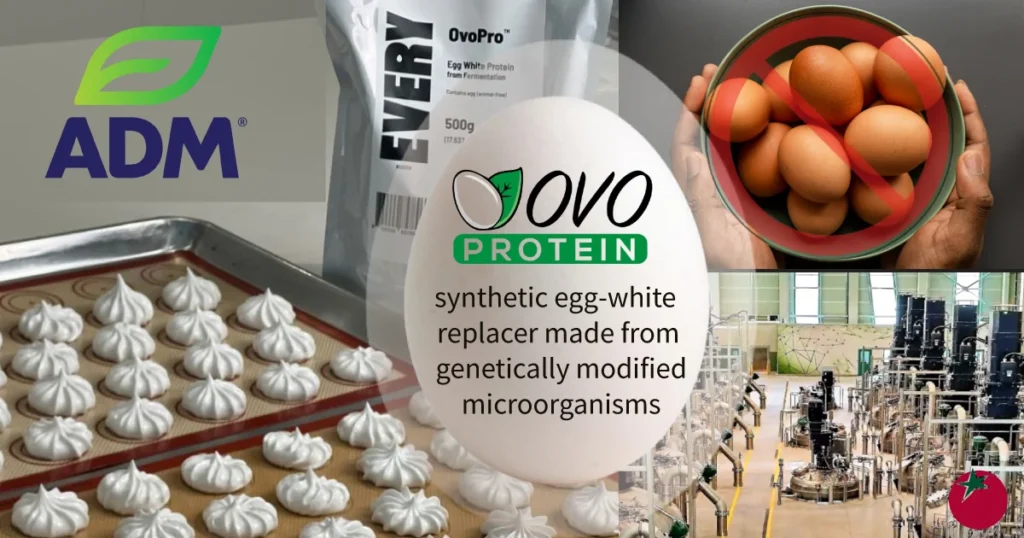
The state of Iowa has finalized a $2.23 million financial incentive package for global agribusiness giant Archer Daniels Midland (ADM) to facilitate the production of a synthetic egg-white substitute. The product, known as OvoPro and developed by The Every Company, represents a significant shift in the state’s agricultural investment strategy, moving funding away from traditional poultry and regenerative organic pasture systems toward high-tech "precision fermentation." While proponents argue that synthetic proteins offer a sustainable alternative to factory farming, the move has ignited a fierce debate among consumer advocacy groups, food safety experts, and environmentalists regarding the transparency of the regulatory process and the long-term health implications of genetically modified microorganisms in the human diet.

The OvoPro Manufacturing Deal and State Subsidies
The $2.23 million investment from Iowa is intended to support the infrastructure required for ADM to manufacture OvoPro at scale. OvoPro is a protein designed to replicate the functional properties of egg whites—such as foaming and binding—without the involvement of chickens. The production process utilizes "precision fermentation," a form of synthetic biology where microorganisms, such as yeast or fungi, are genetically engineered to produce specific animal proteins when fed a substrate of sugar and nutrients.
The Every Company, formerly known as Clara Foods, has positioned OvoPro as a solution to the volatility of the egg market, which is frequently disrupted by outbreaks of Highly Pathogenic Avian Influenza (HPAI). However, critics point out that Iowa, the leading egg-producing state in the U.S., could have utilized these funds to assist traditional farmers in transitioning to more resilient, pasture-based regenerative systems. Instead, the subsidy supports a centralized, laboratory-based production model that critics label as "Frankenfood."
Regulatory Oversight and the GRAS Loophole
A primary point of contention regarding OvoPro and similar synthetic biology products is the method by which they enter the U.S. food supply. Under current Food and Drug Administration (FDA) guidelines, many new food ingredients bypass rigorous, independent safety testing through the "Generally Recognized as Safe" (GRAS) loophole.
Originally intended for common ingredients like vinegar or table salt, the GRAS process now allows companies to self-certify the safety of their own products. The Every Company asserted that OvoPro is "substantially equivalent" to natural egg white protein and that the genetically modified yeast used in the fermentation process is removed from the final product. The FDA accepted these assertions without conducting independent verification.

This lack of transparency has raised alarms within the scientific community. An independent analysis of a similar product—synthetic whey protein produced by Perfect Day—revealed the presence of 93 uncharacterized fungal metabolites and 236 fungal proteins not found in natural bovine milk. Advocates argue that if the "precision" in precision fermentation is not absolute, consumers may be ingesting novel compounds with unknown allergenic or toxicological profiles.
Historical Context: The Showa Denko Scandal
The risks associated with genetically engineered microorganisms are not merely theoretical. Food safety advocates frequently cite the 1989 Showa Denko scandal as a cautionary tale. During that period, the Japanese company Showa Denko began using a genetically modified strain of bacteria to produce L-tryptophan, a common dietary supplement.

The manufacturing change resulted in a contaminated product that caused an outbreak of Eosinophilia-Myalgia Syndrome (EMS). The incident led to the deaths of at least 37 people and left more than 1,500 others with permanent disabilities. The tragedy demonstrated that even minor alterations in the genetic makeup of a production microbe can create unexpected and lethal byproducts that are difficult to detect through standard quality control measures.
The Evolving Landscape of Cellular Agriculture
The investment in synthetic egg protein comes at a time when the broader cellular agriculture industry is facing a reality check. Early promises that "cultivated meat" (meat grown from animal cells in bioreactors) would rapidly replace conventional livestock have met significant technical and economic hurdles.

Major industry players, such as Mission Barns and Vow, have begun shifting their strategies. Mission Barns recently announced a pivot from retail-ready products to wholesale ingredients, focusing on "hybrid" products that combine plant-based proteins with cultivated animal fat. Meanwhile, the Australian company Vow has moved toward "novelty" items, such as Japanese quail foie gras and a "mammoth meatball," marketed as luxury experiences rather than staples.
There is also a growing discrepancy between marketing claims and laboratory realities. While some executives in the cultivated meat sector have claimed their products are "organic" and "antibiotic-free," these assertions are factually inaccurate under current standards. The USDA’s National Organic Program does not permit cultured cells or synthetic biology ingredients to carry the organic seal. Furthermore, most cell-cultivation processes require the use of antibiotics to prevent bacterial contamination in the nutrient-rich growth media.

Public Health and Environmental Indicators
The push for synthetic biology coincides with increasing public concern over the chemical and biological safety of the food supply. A recent study published in the journal Neurotoxicology and Teratology has raised new questions about the link between early-life toxicant exposure and developmental disorders.
The study analyzed shed baby teeth from children with and without autism, finding significantly higher levels of pesticides and plasticizers in the teeth of children diagnosed with the condition. Out of 60 compounds detected, 95% were found at higher levels in the autism group. These findings highlight the cumulative impact of environmental toxicants and suggest that the introduction of more unproven synthetic compounds into the diet may exacerbate existing public health crises.

Simultaneously, the federal government’s ability to monitor foodborne pathogens is being strained. According to reports from POLITICO, the USDA is shuttering or relocating research projects dedicated to fighting Cyclospora, a parasite that has sickened thousands of Americans. Funding cuts and a controversial reorganization that forced scientists to choose between relocation and resignation have hollowed out the agency’s expertise in this area, leaving a vacuum in food safety oversight.
Grassroots Alternatives and Sustainable Models
In response to the industrialization of the food system, various grassroots movements are advocating for a return to localized, transparent, and regenerative models.

Sustainable Fisheries: The Port Orford Model
On the Oregon coast, the fishing community of Port Orford has implemented a sustainable model that stands in stark contrast to industrial aquaculture. By limiting vessel size and utilizing specific cranes that cannot handle massive industrial loads, the port ensures that its fleet remains composed of small, independent operators. This "lemonade stand" approach to seafood allows consumers to buy directly from fishers, fostering accountability and ensuring that the local ecosystem is not over-harvested.
Perennial Agriculture and Indigenous Wisdom
Environmentalists are also promoting perennial food crops—such as asparagus, rhubarb, and various fruit trees—as a way to build food security with minimal chemical input. Perennial systems mimic natural ecosystems, sequestering carbon and requiring far less energy than the annual monocultures that supply the raw materials for synthetic biology.

This philosophy aligns with ancient Indigenous food cultures, such as those of the Syilx Okanagan people in British Columbia. Their oral traditions emphasize a reciprocal relationship with the land, where "Four Food Chiefs" (Black Bear, Chinook Salmon, Bitterroot, and Saskatoon Berry) provide sustenance in exchange for the people’s stewardship of the environment.
The Legacy of Wendell Berry and the Future of Farming
The debate over Iowa’s subsidy to ADM occurs against the backdrop of the passing of Wendell Berry, the iconic poet and activist who died recently at the age of 92. Berry was a lifelong critic of the "industrial mind" in agriculture, arguing that the health of the land is more important than the statistics of its productivity.

In his seminal 1977 work, The Unsettling of America, Berry warned against the concentration of farmland into fewer hands and the replacement of farmers with technology. His philosophy suggests that the path to a sustainable future lies not in high-tech protein substitutes produced in corporate laboratories, but in the restoration of the relationship between culture and agriculture.
Policy Implications and Consumer Transparency
As synthetic proteins like OvoPro, Impossible Burger’s "heme," and Perfect Day’s whey become more prevalent, the demand for mandatory labeling is intensifying. Legislators in several states, including Florida and Alabama, have already moved to ban or strictly regulate lab-grown meat. However, many of the ingredients produced through precision fermentation remain "hidden" in processed foods, often labeled as "natural flavors" or simply not mentioned at all.

Consumer advocacy groups, such as the Organic Consumers Association and Regeneration International, are calling for a comprehensive ban on "Frankenfoods" made with synthetic biology until rigorous, long-term safety testing is established. They argue that the $2.23 million in Iowa taxpayer funds represents a dangerous precedent of government support for an industry that prioritizes corporate profit over public health and ecological integrity.
The outcome of this transition—from the pasture to the bioreactor—will likely define the next century of global food production. Whether the future belongs to precision fermentation or regenerative organic farming remains a central conflict for policymakers, farmers, and consumers alike.