

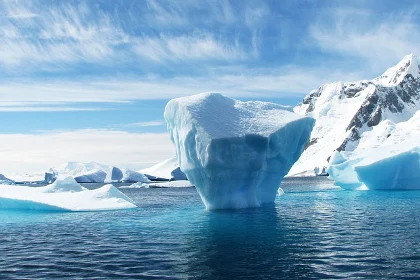
The Arctic region, once characterized by its isolation and perceived stability, has emerged as a primary theater of global strategic anxiety where the effects of rapid environmental degradation and traditional hard-power competition converge. As of mid-2026, the intersection of melting sea ice, thawing permafrost, and an escalating nuclear presence has created a volatile security environment that existing international frameworks are ill-equipped to manage. The transformation of the High North is no longer merely an environmental concern; it is a fundamental shift in the global security architecture, placing the world’s most powerful nuclear actors in closer, more frequent contact within a fragile and rapidly changing ecosystem.
The Convergence of Climate and Conflict
For decades, the Arctic was governed under the principle of "High North, Low Tension," a concept popularized after the Cold War to prioritize scientific cooperation and environmental protection over military posturing. However, the physical reality of the region has changed more rapidly than the diplomatic structures designed to protect it. Scientific data from 2024 and 2025 indicates that the Arctic is warming nearly four times faster than the global average. This "Arctic Amplification" has resulted in the record-breaking recession of summer sea ice, which in turn has opened the Northern Sea Route (NSR) and the Northwest Passage for longer durations each year.
The opening of these maritime corridors has not only invited commercial interest but has also catalyzed a military buildup. Russia, which possesses the longest Arctic coastline, has moved aggressively to refurbish Soviet-era bases and deploy advanced electronic warfare and missile systems across its northern frontier. Simultaneously, the accession of Finland and Sweden to NATO has effectively turned the Arctic into a "NATO Lake," with the exception of Russian territorial waters. This geographic consolidation has heightened Moscow’s perception of encirclement, leading to an increased reliance on its sea-based nuclear deterrent—much of which is stationed in the Kola Peninsula.
A Chronology of Escalating Tensions (1987–2026)
To understand the current state of Arctic risk, one must examine the erosion of regional stability over the last four decades:
- 1987: Mikhail Gorbachev delivers the Murmansk Speech, calling for the Arctic to become a "zone of peace" and a nuclear-free region.
- 1996: The Arctic Council is established via the Ottawa Declaration, specifically excluding military security from its mandate to ensure cooperation on environmental and social issues.
- 2007: A Russian submersible plants a titanium flag on the seabed at the North Pole, signaling a new era of territorial claims.
- 2014: Following the annexation of Crimea, military-to-military cooperation between Russia and Western Arctic states is largely suspended.
- 2018: China releases its first Arctic Policy white paper, declaring itself a "Near-Arctic State" and proposing a "Polar Silk Road."
- 2022: In the wake of the invasion of Ukraine, the seven Western members of the Arctic Council (the "Arctic 7") temporarily pause participation in council activities involving Russia.
- 2024–2025: Russia increases its testing of nuclear-powered delivery systems, such as the Burevestnik cruise missile and the Poseidon underwater drone, frequently utilizing Arctic test sites like Novaya Zemlya.
- 2026: Reports emerge indicating that thawing permafrost is compromising the structural integrity of nuclear waste storage facilities and early-warning radar stations across the Siberian coast.
Supporting Data: The Scale of the Arctic Nuclear Presence
The Arctic is the most nuclearized maritime region in the world. As of 2026, the density of nuclear reactors and warheads in the High North presents a dual risk of intentional escalation and accidental environmental catastrophe.
- Nuclear Naval Assets: The Russian Northern Fleet, headquartered in Severomorsk, remains the largest concentration of nuclear-powered vessels globally. This includes Borei-class ballistic missile submarines (SSBNs) and Yasen-class cruise missile submarines.
- The Nuclear Icebreaker Fleet: Russia remains the only nation to operate nuclear-powered icebreakers. With the commissioning of the Yakutia and the progress on the Rossiya (Project 10510), Moscow is doubling down on nuclear propulsion to maintain year-round dominance of the Northern Sea Route.
- NATO Presence: The United States and the United Kingdom have increased the frequency of nuclear-powered submarine patrols in the Barents Sea. In 2025, NATO’s "Nordic Response" exercises involved over 20,000 troops and focused specifically on defending the GIUK (Greenland-Iceland-United Kingdom) gap from adversarial incursions.
- Permafrost Risks: Approximately 40% of the infrastructure in Russia’s permafrost zones is currently experiencing structural deformation. This includes pipelines and facilities that support the logistics of the nuclear fleet, raising the specter of a "radiological Norilsk"—referring to the 2020 diesel spill, but with far more permanent consequences.
The Governance Gap: Institutional Fragmentation
The core of the problem lies in the "governance gap" identified by security analysts. Currently, Arctic affairs are managed through a fragmented system that treats climate change, nuclear proliferation, and regional security as isolated silos.
The Arctic Council, while successful in the past at managing environmental research, is legally barred from discussing military matters. Since 2022, its efficacy has been severely diminished by the breakdown in communication between the West and Russia. Conversely, the Treaty on the Non-Proliferation of Nuclear Weapons (NPT) operates on a global scale and lacks the specific regional nuances required to address the unique challenges of the Arctic’s geography.
Furthermore, the International Maritime Organization (IMO) and its "Polar Code" provide guidelines for shipping safety but do not account for the movement of military vessels or the specific risks associated with floating nuclear power plants, such as the Akademik Lomonosov, which is currently stationed at Pevek.
Official Responses and Perspectives
The lack of a unified framework has led to a variety of responses from regional stakeholders, often reflecting their specific strategic anxieties.
The Russian Federation: Moscow has consistently maintained that its military buildup in the Arctic is defensive, intended to protect its economic interests in the NSR. In early 2026, Russian officials stated that any "interference" with their northern sovereign rights would be met with a response from their "strategic forces," a clear reference to their nuclear arsenal.
NATO and the United States: The U.S. Department of Defense’s updated Arctic Strategy emphasizes "integrated deterrence." Officials have noted that the melting ice removes the "physical moat" that once protected the North American continent, necessitating a permanent presence of sensors and interceptors in the region.
China: Beijing continues to advocate for a "multilateral" governance of the Arctic, arguing that the region’s environmental and shipping changes affect the entire world. However, Western analysts point to China’s dual-use research stations in the Arctic as evidence of long-term military ambitions.
Environmental Organizations: Groups such as the Bellona Foundation have issued warnings regarding the "legacy" nuclear waste in the Arctic. They argue that the combination of rising sea levels and increased storm activity could breach aging containment structures for spent nuclear fuel in the Kara Sea and other coastal dumping grounds.
Implications for Global Security: The Risk of Accidental Escalation
The most pressing risk in the 2026 Arctic landscape is not necessarily a planned nuclear exchange, but rather an "accidental escalation" triggered by environmental factors or tactical miscalculation.
As the ice thins, the traditional "bastion" strategy—where Russia hides its submarines under the ice pack—becomes less effective. This makes Russian SSBNs more vulnerable to detection by Western anti-submarine warfare (ASW) assets. In a crisis, this increased transparency could lead to a "use it or lose it" mentality, where a commander might feel pressured to launch or maneuver aggressively if they feel their deterrent is compromised.
Moreover, the physical environment itself is becoming an unpredictable actor. Thawing permafrost can trigger landslides or coastal erosion that might damage early-warning radar stations. If a state loses its ability to monitor incoming threats due to a climate-induced infrastructure failure, the resulting "blindness" could lead to a hair-trigger nuclear posture.
The maritime domain adds another layer of complexity. With more vessels—military, commercial, and research—operating in the same crowded lanes, the probability of a collision or a "grey zone" incident increases. In the absence of established "rules of the road" for military encounters in the Arctic, a simple navigation error could escalate into a full-blown international crisis.
Analysis: Toward a New Arctic Security Architecture
The current trajectory suggests that the Arctic is moving toward a state of "permanent friction." To mitigate the risks of nuclear escalation exacerbated by climate change, a new approach to regional governance is required. Experts suggest several factual pathways for risk reduction:
First, there is a need for a "Military Code of Conduct" specifically for the Arctic. While the Arctic Council should remain a forum for environmental cooperation, a separate "Arctic Security Forum" could be established to facilitate communication between military commanders, similar to the Incidents at Sea (INCSEA) agreements of the Cold War.
Second, the integration of climate data into nuclear risk assessments is essential. Intelligence agencies and international monitors must begin viewing permafrost stability and sea-ice thickness as "strategic indicators" that impact the stability of nuclear command and control.
Finally, the international community must address the "dual-use" nature of Arctic infrastructure. Search and rescue (SAR) capabilities, icebreaking services, and weather monitoring are essential for all parties. Collaborative efforts in these low-stakes areas could serve as confidence-building measures to prevent the total breakdown of diplomatic relations.
The Arctic of 2026 is a stark reminder that the environment and national security are inextricably linked. As the ice continues to vanish, the "High North" is becoming a high-stakes arena where the margin for error is shrinking. Without a concerted effort to bridge the gap between climate policy and nuclear diplomacy, the region remains a ticking clock for a global catastrophe that the world is currently unprepared to manage.
