

Emily Fulton spends a significant portion of her professional life navigating the intricate waterways of Clayoquot Sound, located off the rugged west coast of Vancouver Island in British Columbia. As the marine program manager for the Redd Fish Restoration Society, a leading non-profit organization dedicated to ecosystem recovery, Fulton is tasked with the oversight of a pioneering marine infrastructure: a sprawling kelp nursery situated within the traditional and unceded territory of the Tla-o-qui-aht First Nation. This initiative, which reached a critical operational milestone in early 2026, represents a significant leap forward in temperate rainforest conservation, moving the focus from the terrestrial to the submerged.
The project has been identified by its organizers and regional environmental stakeholders as the largest kelp restoration endeavor currently active on the West Coast of North America. Since its official launch in the first quarter of 2026, the nursery has successfully established more than 4,200 square meters (approximately 45,200 square feet) of new kelp habitat. To provide a sense of scale, this footprint is equivalent to three and a half Olympic-size swimming pools of dense, photosynthetic marine life. For Fulton and her team, the success of the nursery is not merely a statistical achievement but a vital biological intervention in a region where historical kelp density has faced significant anthropogenic and climatic pressures.
The Biological Foundation: Cultivating Bull and Giant Kelp
The restoration strategy centers on two foundational species of the Pacific Northwest marine ecosystem: bull kelp (Nereocystis luetkeana) and giant kelp (Macrocystis pyrifera). These species are often referred to as "ecosystem engineers" because they create complex three-dimensional structures that provide food, shelter, and nursery grounds for a vast array of marine life, including rockfish, herring, and juvenile salmon.
The Redd Fish Restoration Society utilizes a sophisticated suspended-line system to bypass the immediate threats found on the ocean floor. The nursery currently operates four primary growth lines, each stretching 330 meters (1,083 feet) in length. These lines are submerged several meters below the surface, optimized for sunlight penetration while remaining out of reach for benthic predators.
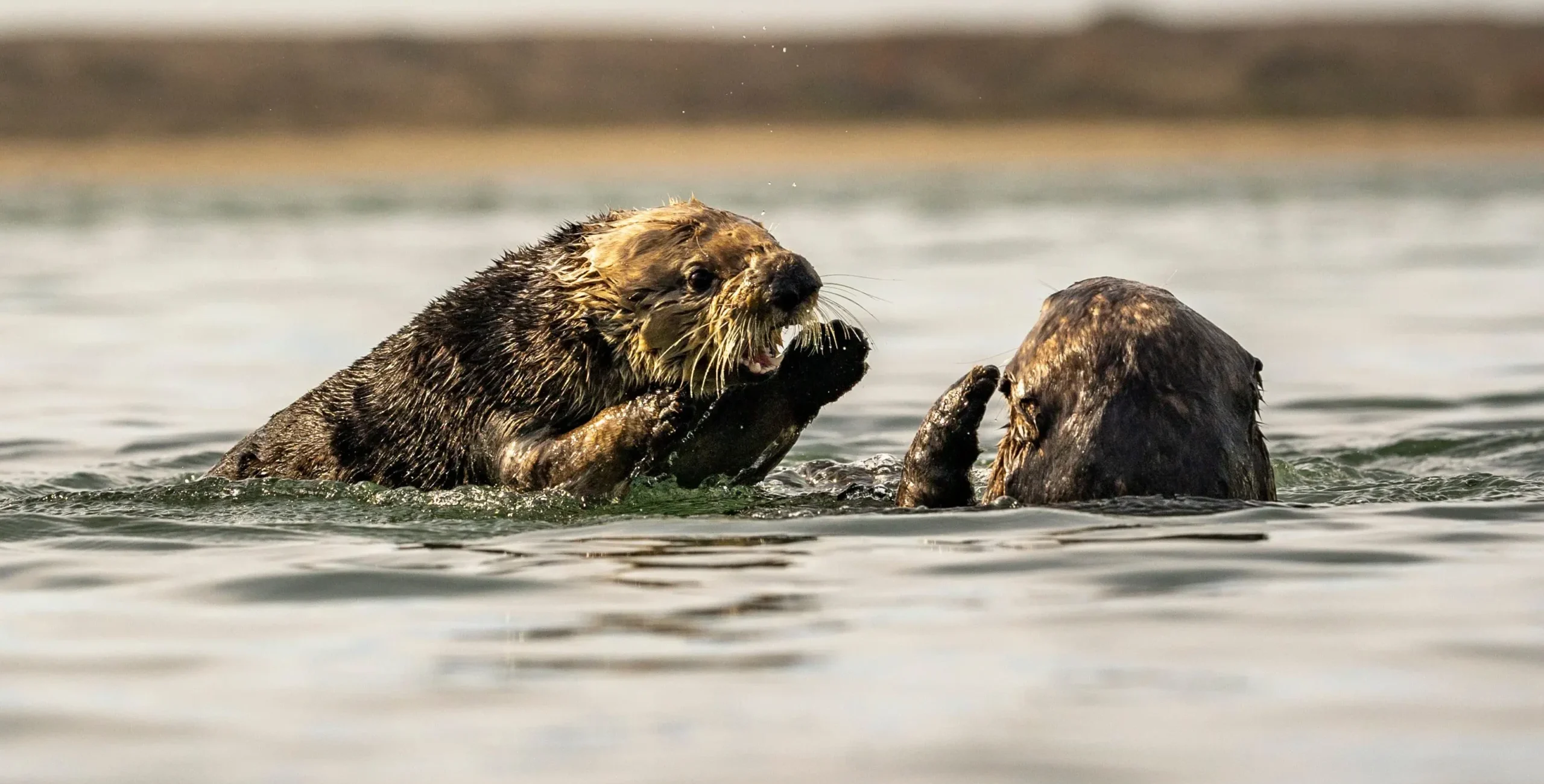
One of the primary biological hurdles in kelp restoration is the prevalence of sea urchins. In many parts of the British Columbia coast, "urchin barrens" have replaced lush kelp forests. This occurs when urchin populations, left unchecked by a lack of natural predators like sea otters, overgraze the kelp holdfasts, effectively clear-cutting the seafloor. By growing the kelp on suspended lines, the Redd Fish team allows the "baby" kelp to reach a level of maturity and size where they are more resilient before they are eventually transplanted to natural rocky reefs to seed new forests.
Chronology of Development: From Concept to 4,200 Square Meters
The trajectory of the Clayoquot Sound project reflects a broader shift in conservation priorities within British Columbia, moving toward active restoration rather than passive protection.
- 2023–2024: Preliminary Research and Site Selection: The Redd Fish Restoration Society, in collaboration with the Tla-o-qui-aht First Nation and marine biologists, conducted extensive mapping of Clayoquot Sound. They identified areas where kelp forests had historically thrived but had since vanished due to rising sea temperatures and urchin predation.
- 2025: Infrastructure Development and Seeding Trials: Engineers and divers designed the 330-meter submerged line systems. Initial trials focused on determining the optimal depth and nutrient flow required for high-density growth in the specific tidal conditions of the Sound.
- Early 2026: Official Launch: The nursery was fully seeded using spores harvested from local "donor" kelp beds to ensure genetic diversity and local adaptation. This phase marked the formal beginning of the large-scale restoration effort.
- Mid-2026: Milestone Achievement: By the summer of 2026, the project confirmed the successful cultivation of 4,200 square meters of kelp. The nursery began transitioning from a growth phase to a transplanting phase, where mature individuals are moved to permanent restoration sites.
Supporting Data: The Ecological and Economic Value of Kelp
The expansion of the Clayoquot Sound nursery is supported by a growing body of data highlighting the critical role of macroalgae in climate mitigation and biodiversity. Kelp is among the fastest-growing organisms on the planet, with giant kelp capable of growing up to 60 centimeters (2 feet) per day under ideal conditions.
From a carbon sequestration perspective, kelp forests are remarkably efficient. Research suggests that kelp can sequester more carbon per unit area than many terrestrial forests. By absorbing dissolved carbon dioxide from the water column, these forests also help to locally mitigate the effects of ocean acidification, providing a "halo" of lower-acidity water that benefits shellfish and other calcifying organisms.
Furthermore, the economic implications for the British Columbia coast are substantial. The province’s wild salmon populations, which are integral to both the regional economy and Indigenous food security, rely heavily on the "kelp highway" for protection during their migration from freshwater rivers to the open ocean. Data from the Department of Fisheries and Oceans (DFO) indicates that regions with healthy kelp cover show significantly higher recruitment rates for several commercially viable fish species.
Official Responses and Collaborative Governance
The success of the project is deeply rooted in its collaborative framework. The Tla-o-qui-aht First Nation plays a central role in the management and implementation of the nursery, ensuring that restoration efforts align with traditional ecological knowledge and territorial stewardship goals.
"The restoration of these kelp forests is about more than just biology; it is about restoring the health of our traditional waters," a representative for the Tla-o-qui-aht First Nation indicated during a recent community briefing. "Our ancestors managed these resources for millennia. Seeing the kelp return to Clayoquot Sound is a sign that the balance is being restored."
Provincial officials have also lauded the project as a model for future marine initiatives. The British Columbia Ministry of Water, Land and Resource Stewardship has highlighted the Redd Fish nursery as a key component of the province’s Coastal Marine Strategy. This strategy aims to harmonize conservation with the "blue economy," fostering industries that support environmental health rather than detract from it.
"The scale of the Redd Fish project in Clayoquot Sound demonstrates what is possible when non-profit expertise, Indigenous leadership, and government support converge," a spokesperson for the ministry stated. "This is a blueprint for the 21st-century management of our coastline."
Broader Impact and Global Implications
The Redd Fish Restoration Society’s work arrives at a critical juncture for global marine health. In 2024 and 2025, marine heatwaves—often referred to as "The Blob"—continued to threaten the viability of cold-water kelp species across the Pacific. The Clayoquot Sound nursery serves as a "living laboratory" where scientists can study which kelp strains show the highest thermal tolerance, potentially providing a genetic reservoir for future restoration efforts in warmer waters.
The project also aligns with the United Nations Decade on Ecosystem Restoration (2021–2030), which calls for the massive scale-up of restoration of degraded and destroyed ecosystems. By successfully managing a 4,200-square-meter nursery, the Redd Fish Restoration Society has proven that large-scale marine reforestation is technically feasible and scalable.
As the team continues to monitor the four 330-meter lines, the focus is shifting toward long-term sustainability. The ultimate goal is to create self-sustaining kelp forests that no longer require human intervention. This involves not only planting kelp but also addressing the root causes of its decline, such as managing urchin populations and advocating for climate policies that limit further ocean warming.
Future Outlook: Beyond the Nursery
Looking ahead, the Redd Fish Restoration Society plans to expand the nursery’s capacity. With the infrastructure already in place and the methodology proven, there is potential to double the square footage of the nursery by 2028. This expansion would allow for the restoration of even larger swaths of the Clayoquot Sound coastline, potentially linking fragmented kelp beds into a continuous "green belt" along the west coast of Vancouver Island.
For Emily Fulton and her colleagues, the daily work continues. Each trip into the Sound is an opportunity to gather data, refine techniques, and witness the gradual return of a vital ecosystem. The 4,200 square meters currently under cultivation represent a significant victory, but in the context of the vast Pacific coastline, it is only the beginning of a necessary and urgent environmental recovery.
As the "kelp nursery" continues to flourish, it stands as a testament to the power of proactive intervention. In an era of significant environmental uncertainty, the work in Clayoquot Sound provides a tangible example of how science, tradition, and community action can collaborate to rebuild the foundations of the marine world.
