

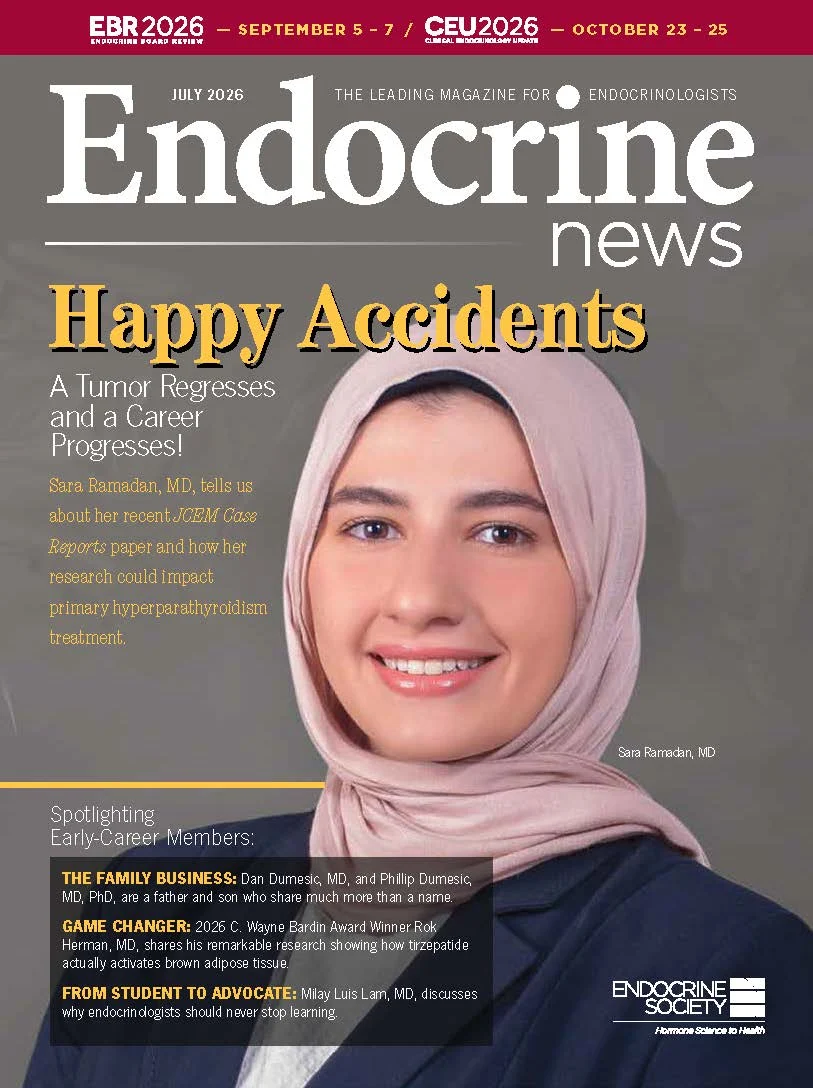
The Endocrine Society has officially released its July edition of Endocrine News, an annual tradition dedicated to spotlighting the achievements of early-career members who are redefining the landscape of hormonal research and clinical practice. This year’s issue arrives at a pivotal moment for the field, as the global healthcare community grapples with rising rates of metabolic disorders, obesity, and complex endocrine-disrupting conditions. By focusing on the "next generation" of physicians and scientists, the publication provides a roadmap for the future of endocrinology, showcasing how fresh perspectives are merging with established expertise to solve long-standing medical mysteries.
The July issue serves as a precursor to the comprehensive coverage of ENDO 2026, the Endocrine Society’s flagship annual meeting held in Chicago, Illinois. As the field faces a projected shortage of specialized endocrinologists—with some data suggesting a deficit of nearly 1,500 adult endocrinologists in the United States alone—the emphasis on early-career development is not merely celebratory but a strategic necessity for the sustainability of global health systems.
Intergenerational Innovation: The Dumesic Research Legacy
One of the cornerstone features of the July issue, titled “The Family Business: A Father and Son Who Share More than a Name,” explores the collaborative and parallel paths of Phillip Dumesic, MD, PhD, and his father, Dan Dumesic, MD. Their narrative underscores a rare synergy between clinical reproductive endocrinology and basic molecular science.
Dan Dumesic, a recognized expert at UCLA, has spent decades investigating Polycystic Ovary Syndrome (PCOS), a condition recently suggested to be renamed Polycystic Multisystemic Overload Syndrome (PMOS) to better reflect its systemic impact. PCOS affects an estimated 8% to 13% of reproductive-aged women worldwide, yet up to 70% of affected individuals remain undiagnosed. Phillip Dumesic, based at the University of California – San Francisco, has transitioned this legacy into the realm of gene expression and adipocyte (fat cell) biology.
The convergence of their work lies at the adipocyte level. According to Dan Dumesic, the molecular tools Phillip utilizes to study fat metabolism and stem cell differentiation are essential for understanding the root causes of metabolic dysfunction. Their research specifically addresses how fat cells communicate with muscle tissue, a process critical to understanding sarcopenia—the age-related loss of muscle mass—and the physiological underpinnings of insulin resistance. This "father-son" dynamic illustrates the evolution of the field from observational clinical practice to high-resolution genetic and molecular intervention.
Metabolic Breakthroughs: Tirzepatide and the Activation of Brown Fat
A significant highlight of the issue is the profile of Rok Herman, MD, the winner of the 2026 Bardin Award. His research, showcased at ENDO 2026, focuses on the mechanisms of tirzepatide, a dual glucose-dependent insulinotropic polypeptide (GIP) and glucagon-like peptide-1 (GLP-1) receptor agonist. While tirzepatide is already established as a potent tool for weight loss and glycemic control, Herman’s abstract suggests a revolutionary secondary function: the activation of brown adipose tissue (BAT).
Unlike white adipose tissue, which stores energy, brown adipose tissue is thermogenic, meaning it burns calories to produce heat. Herman’s findings suggest that tirzepatide does not only function as an appetite suppressant via the central nervous system but also modulates energy expenditure at the cellular level. This discovery could shift the paradigm of obesity treatment from "intake restriction" to "expenditure enhancement."
With global obesity rates having nearly tripled since 1975, and over 650 million adults currently classified as obese, Herman’s work provides a plausible path toward combined therapies. These future treatments could theoretically regulate appetite while simultaneously "switching on" the body’s natural heat-generating mechanisms, offering a more sustainable approach to metabolic health.
Clinical Anomalies: Unanticipated Remissions in Hyperparathyroidism
The July issue also brings attention to the work of Sara Ramadan, MD, whose research into Primary Hyperparathyroidism (PHPT) has challenged traditional treatment expectations. PHPT is the third most common endocrine disorder, characterized by the overproduction of parathyroid hormone (PTH), which leads to elevated blood calcium levels, bone density loss, and kidney stones.
In her study, “Unanticipated remission of primary hyperparathyroidism following cinacalcet,” published in JCEM Case Reports, Ramadan documented a rare instance of disease remission after the administration of cinacalcet, a calcimimetic typically used to manage calcium levels rather than cure the underlying cause. Usually, the only definitive treatment for PHPT caused by a parathyroid adenoma is surgical removal of the gland.
Ramadan’s findings suggest that in certain biological contexts, pharmacological intervention might lead to a regression of the tumor or a long-term stabilization of the gland’s function. Beyond the clinical data, Ramadan emphasizes the role of the Endocrine Society in fostering such discoveries. She notes that for early-career physicians, the transition from residency to specialized research requires a community that allows them to "find their voice" and define specific niches within the vast field of endocrinology.
The Human Element: Advocacy and the Patient-Physician Relationship
While much of the issue is dedicated to hard science, Milay Luis Lam, MD, provides a critical perspective on the "human side" of the profession. Following the Excellence in Clinical Endocrinology Leadership (EXCEL) meeting in Washington, D.C., Lam authored a piece advocating for a shift away from "dehumanized" medicine.
Lam argues that systemic pressures, such as high patient volumes and the digital demands of electronic health records, often force physicians to view patients through a purely clinical lens, reducing individuals to a set of symptoms or a diagnosis. Conversely, patients may view physicians as detached figures. Lam’s advocacy centers on the idea that endocrinology, which often involves chronic, life-long conditions like diabetes or thyroid disease, requires a high degree of empathy and partnership.
This focus on advocacy is particularly relevant as the medical community faces rising rates of physician burnout. Recent surveys indicate that over 40% of endocrinologists report symptoms of burnout, often cited as a result of administrative burdens. Lam’s call to maintain "humanity" serves as both a clinical recommendation for better patient outcomes and a professional necessity for physician well-being.
Chronology of Endocrine Progress: From Lab to Leadership
The content of the July issue reflects a specific timeline of professional development within the Endocrine Society. The trajectory often begins with residency and the "finding of a voice," as described by Dr. Ramadan, followed by the rigorous presentation of data at annual meetings like ENDO 2026.
- The Formative Years: Early-career members utilize society resources and mentorship to transition from general medicine to specialized hormonal research.
- The Research Phase: Individuals like Dr. Phillip Dumesic and Dr. Rok Herman conduct high-level laboratory and clinical trials to identify new molecular pathways.
- The Recognition Phase: Awards like the Bardin Award validate the impact of this research on the global stage.
- The Advocacy Phase: Established early-career leaders like Dr. Lam move into roles that influence policy, patient care standards, and the culture of the medical workplace.
Broader Implications for the Future of Medicine
The insights provided in this annual issue suggest several broader implications for the future of healthcare. First, the blurring of lines between different types of fat (white vs. brown) and the discovery of new roles for existing medications like tirzepatide suggest that "precision metabolism" will be the next frontier in treating non-communicable diseases.
Second, the intergenerational collaboration seen in the Dumesic family highlights the importance of institutional memory and the passing of scientific "tools" from one generation to the next. This ensures that long-term studies on conditions like PCOS/PMOS continue to evolve with new technology rather than being restarted from scratch.
Finally, the success of these early-career members serves as a recruitment tool. By highlighting the diverse opportunities within the field—from bone health and oncology to reproductive medicine and advocacy—the Endocrine Society aims to attract new talent to address the global shortage of specialists.
As the society prepares for its full recap of the ENDO 2026 conference in Chicago, the July issue stands as a testament to the vibrancy of the field. The work of Herman, Ramadan, the Dumesics, and Lam demonstrates that while the challenges of endocrine disorders are growing, the innovation and dedication of the next generation of endocrinologists are keeping pace. The future of the discipline appears to be moving toward a more integrated, molecularly precise, and human-centric model of care.
