

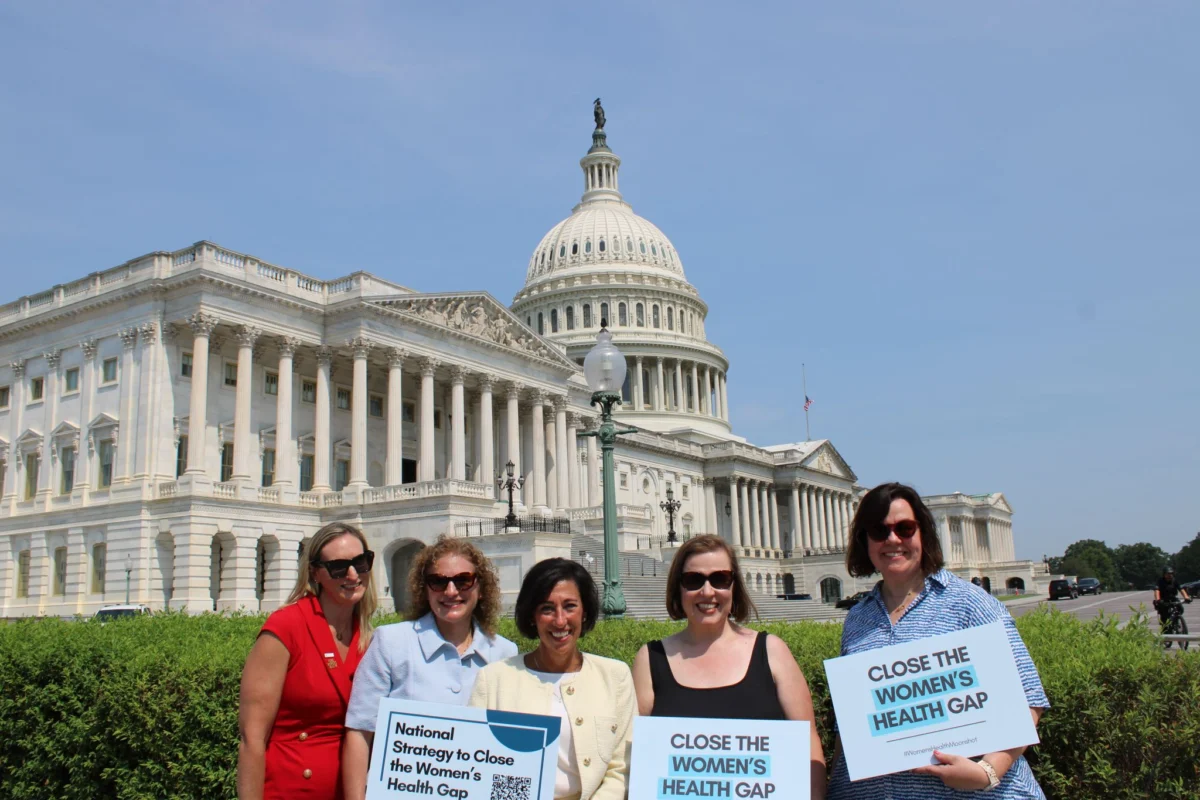
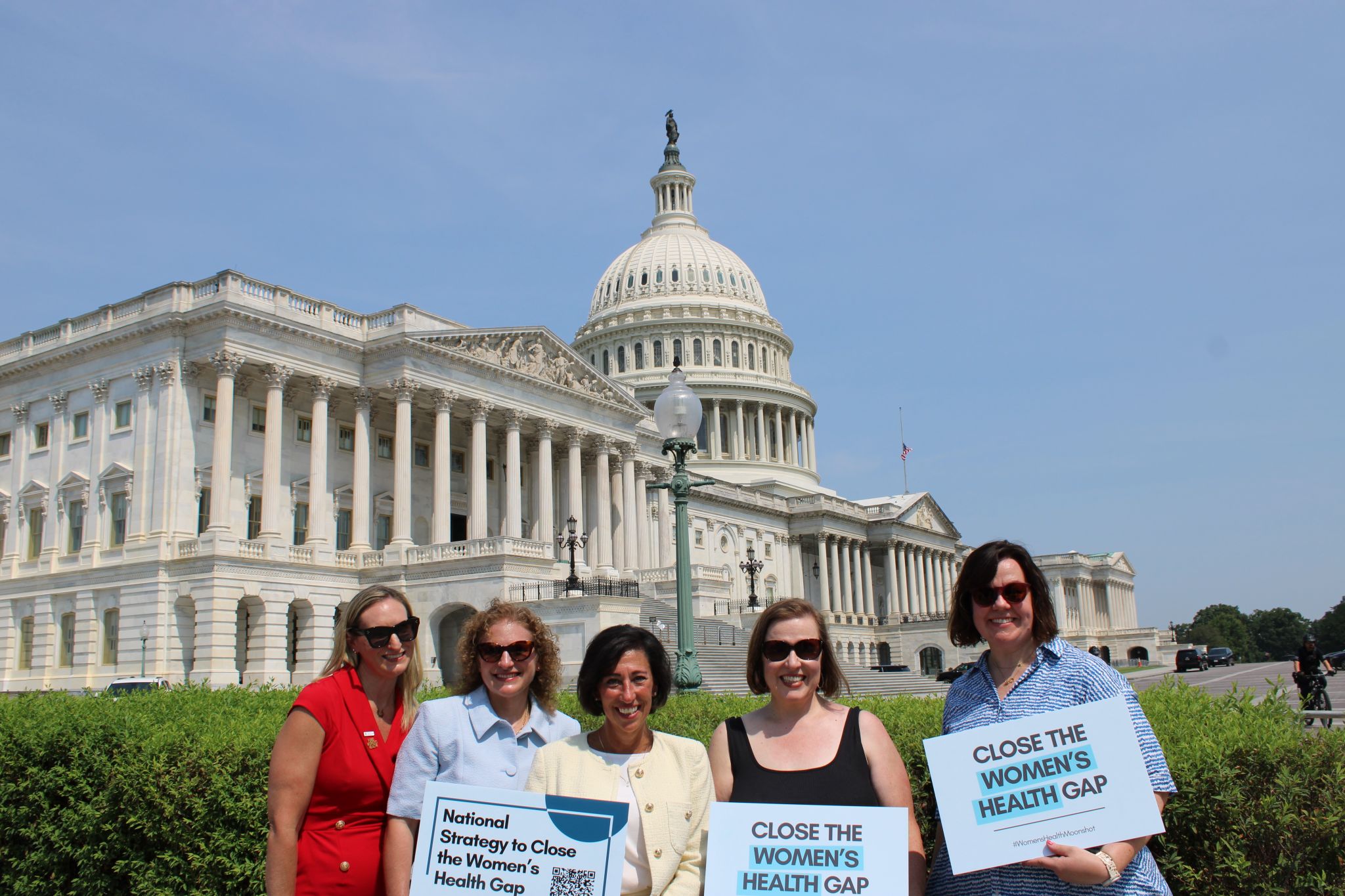
On July 15, a powerful coalition of 37 professional medical, patient advocacy, and research organizations, led by the Endocrine Society, the Society for Women’s Health Research (SWHR), the American College of Obstetricians and Gynecologists (ACOG), and the Women First Research Coalition (WFRC), converged in Washington, D.C., to unveil a landmark legislative and scientific framework. Titled the National Strategy to Close the Women’s Health Gap, this comprehensive proposal calls upon the United States Congress to authorize a transformative investment of $20 billion over the next decade. The initiative aims to fundamentally restructure the landscape of women’s health research, clinical care, and public health outcomes, addressing decades of systemic underfunding and scientific neglect.
The launch event, held against the backdrop of the U.S. Capitol, signaled a unified front among the nation’s leading medical experts. Representatives from diverse fields—ranging from endocrinology and obstetrics to neurology and immunology—emphasized that while women make up more than 50 percent of the American population, the medical establishment has historically treated the female body as a secondary consideration or a variation of the male "norm." This strategy seeks to dismantle those historical biases by establishing a dedicated, well-funded roadmap for the future.
A Vision for Reform: The Five Pillars of the National Strategy
The National Strategy to Close the Women’s Health Gap is built upon five critical pillars designed to address the multifaceted nature of the current disparities. These pillars represent a holistic approach to reform, moving beyond simple research grants to address the entire ecosystem of healthcare delivery and scientific inquiry.
First, the strategy prioritizes Research and Innovation. By calling for increased funding for the National Institutes of Health (NIH) and other federal research agencies, the coalition aims to incentivize studies that specifically focus on conditions that affect women uniquely, disproportionately, or differently than men. This includes everything from maternal health and reproductive disorders to autoimmune diseases and the specific manifestations of cardiovascular disease in women.
Second, the framework emphasizes Regulatory Coordination and Modernization. This involves streamlining the processes through which the Food and Drug Administration (FDA) and other regulatory bodies evaluate drugs and medical devices. A key component of this pillar is ensuring that clinical trial data is sex-disaggregated, meaning that researchers must report how treatments affect men and women differently before a product reaches the general market.
The third pillar focuses on Data and Evidence Infrastructure. In the era of big data and artificial intelligence, the coalition argues that the current health data systems are insufficient for capturing the nuances of women’s health. The strategy calls for the creation of robust, interoperable data sets that allow for longitudinal tracking of women’s health outcomes across their lifespans.
Fourth, the strategy addresses the critical need for Bolstering the Women’s Health Clinical and Research Workforce. There is a growing concern regarding the shortage of specialists, such as endocrinologists and OB-GYNs, as well as a lack of female researchers in leadership positions within academia. The $20 billion investment would fund scholarships, fellowships, and grants designed to recruit and retain the next generation of experts dedicated to women’s health.
Finally, the strategy highlights Public Awareness and Education. The coalition recognizes that medical advancement is only effective if patients and primary care providers are informed. This pillar seeks to launch national campaigns to educate the public on the "health gap" and empower women to advocate for evidence-based care that accounts for their biological sex and gendered experiences.
Historical Context and the Persistence of the Research Gap
The necessity of this $20 billion proposal is rooted in a long history of exclusion. For much of the 20th century, women of childbearing age were often excluded from clinical trials due to concerns over fluctuating hormones or potential pregnancy, leading to a "male-as-default" model in medicine. It was not until the NIH Revitalization Act of 1993 that the inclusion of women and minorities in clinical research became a federal requirement.
However, despite these legislative strides, the funding gap remains stark. A 2021 study published in the Journal of Women’s Health found that in nearly 75 percent of cases where a disease afflicts primarily one sex, the funding patterns favor men. In many instances, "men’s diseases" receive overfunding relative to their burden on public health, while "women’s diseases" are chronically underfunded.
The Endocrine Society’s involvement underscores a specific area of neglect: hormonal health. Endocrinology is central to nearly every aspect of a woman’s life, from puberty and reproductive years to the transition through menopause and into healthy aging. Conditions such as Polycystic Ovary Syndrome (PCOS), which affects an estimated 1 in 10 women of childbearing age, remain poorly understood and frequently misdiagnosed, often taking years for a patient to receive an accurate assessment.
Supporting Data: The Economic and Human Cost of the Gap
The push for a $20 billion investment is supported by increasingly alarming data regarding women’s health outcomes in the United States. Despite spending more on healthcare than any other high-income nation, the U.S. continues to face a maternal mortality crisis. According to the Centers for Disease Control and Prevention (CDC), the maternal mortality rate in the U.S. has seen significant increases in recent years, with Black women facing a risk two to three times higher than white women.
Beyond mortality, the "morbidity gap" reflects the burden of chronic illness. Women represent approximately 80 percent of all cases of autoimmune diseases, such as lupus and rheumatoid arthritis. Furthermore, two-thirds of all Alzheimer’s patients are women. Despite these figures, the underlying biological mechanisms that cause these sex-based differences remain under-researched.
Economically, the "health gap" carries a massive price tag. A report by the McKinsey Health Institute recently estimated that closing the women’s health gap could add $1 trillion to the global economy annually by 2040. This economic boost would result from increased workforce participation, higher productivity, and reduced long-term disability payments as women receive more effective, early-stage interventions for chronic conditions.
Timeline of Recent Advocacy and Government Action
The July 15 launch of the National Strategy is the culmination of a year of intense advocacy, coinciding with a renewed focus on women’s health at the highest levels of government.
In late 2023, the White House announced the first-ever White House Initiative on Women’s Health Research, led by First Lady Jill Biden. This was followed in March 2024 by an Executive Order signed by President Joe Biden, which directed federal agencies to prioritize women’s health research and authorized $200 million in immediate funding for interdisciplinary research.
The National Strategy introduced by the Endocrine Society and its partners is intended to build upon this momentum, providing a long-term, ten-year legislative framework that survives changes in administration. By requesting $20 billion, the coalition is signaling that while executive orders are a vital start, permanent and substantial congressional appropriations are required to achieve systemic change.
Official Responses and the Role of the Endocrine Society
During the launch event, leaders from the endorsing organizations expressed a shared sense of urgency. Mila Becker, representing the Endocrine Society, highlighted the specialized role of endocrinologists in this movement. "Endocrinologists play a key role in ensuring that women’s care is focused on the correct balance of hormones," Becker stated. She emphasized that the Society is committed to advocating for better funding to address specific gaps in endocrine health, such as thyroid disorders and osteoporosis, which disproportionately affect women.
Katie Schubert, President and CEO of the Society for Women’s Health Research, noted that the strategy is not just about fairness, but about scientific excellence. She argued that understanding sex as a biological variable is essential for the future of precision medicine. If treatments are not tested or optimized for women’s biology, the medical community is essentially practicing "one-size-fits-all" medicine that fails half the population.
The American College of Obstetricians and Gynecologists (ACOG) added that the strategy is essential for addressing the "care deserts" currently affecting millions of American women. By investing in the workforce, the strategy aims to ensure that women in rural and underserved urban areas have access to the specialists they need to manage complex health issues.
Broader Impact and the Path Forward
The implications of the National Strategy to Close the Women’s Health Gap extend far beyond the laboratory. If successful, this $20 billion investment could redefine the patient experience for millions of women. It would mean shorter times to diagnosis for rare diseases, medications with fewer side effects because they were actually tested on female physiology, and a healthcare system that views menopause and reproductive health not as "niche" issues, but as central pillars of public health.
However, the path forward in Congress remains complex. In a period of heightened fiscal scrutiny, a $20 billion request will require significant bipartisan support. Advocates are framing the strategy as a "smart investment" that will reduce overall healthcare spending by preventing the progression of chronic diseases and improving maternal outcomes, thereby saving the government money in the long run through reduced Medicare and Medicaid expenditures.
As the coalition begins its formal push on Capitol Hill, the Endocrine Society has pledged to continue its advocacy efforts. The Society plans to mobilize its members to engage with lawmakers, providing the scientific expertise necessary to illustrate why the "hormone gap" is a critical component of the broader "health gap."
The launch of this strategy marks a turning point in medical advocacy. It transitions the conversation from merely acknowledging that disparities exist to providing a concrete, costed, and evidence-based plan to eliminate them. For the 37 organizations involved, July 15 was not the end of a campaign, but the beginning of a decade-long effort to ensure that the U.S. healthcare system finally serves all its citizens with equal rigor and scientific dedication.
