







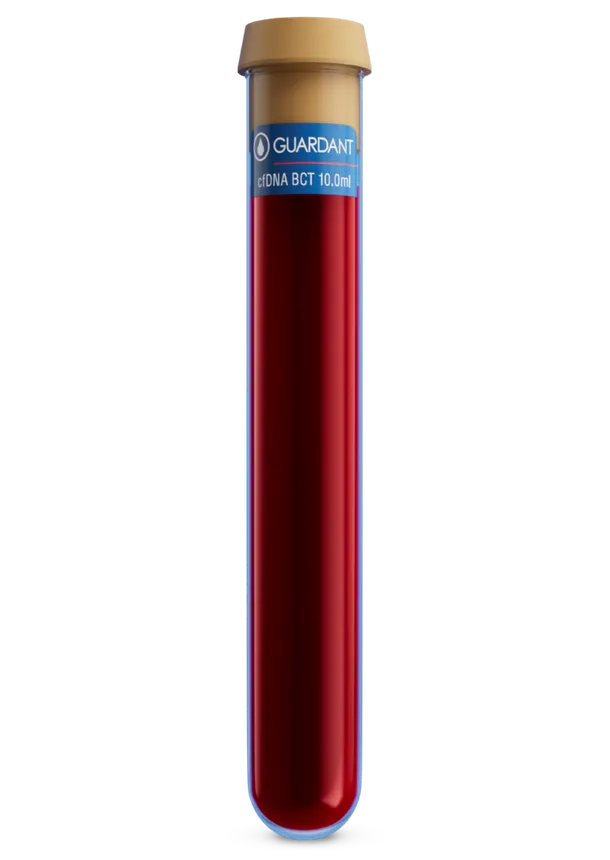
The landscape of oncology is currently undergoing a fundamental shift as blood-based screening tools, once the subject of speculative research, move decisively into the realm of standard clinical practice. At the center of this transition is Guardant Health, a precision oncology company that has secured a pivotal role in the early detection of colorectal cancer (CRC) with its Shield blood test. As the medical community grapples with significant gaps in screening compliance, the arrival of non-invasive, high-accuracy blood tests represents more than just a technological milestone; it signals a potential paradigm shift in how healthcare systems approach preventative medicine.
The Regulatory Milestone and Clinical Positioning
In 2024, the U.S. Food and Drug Administration (FDA) granted approval to Guardant Health’s Shield test for colorectal cancer screening in adults aged 45 and older who are at average risk for the disease. This approval marked a watershed moment for the "liquid biopsy" industry, providing a formal regulatory pathway for tests that identify cancer signals through cell-free DNA (cfDNA) shed by tumors into the bloodstream.
The Shield test is designed to identify CRC at its earliest, most treatable stages, often before a patient exhibits any physical symptoms. However, the FDA’s approval came with specific caveats that define the test’s current role in the diagnostic hierarchy. Most notably, the agency emphasized that Shield is not intended to replace the colonoscopy, which remains the "gold standard" due to its ability to both detect and remove precancerous lesions (polyps). Instead, Shield is positioned as a secondary option for those who are unwilling or unable to undergo traditional visual exams or stool-based tests.

The clinical necessity for such an alternative is stark. Despite the known efficacy of colonoscopies, millions of eligible Americans remain unscreened. Factors contributing to this gap include the invasive nature of the procedure, the requirement for intensive bowel preparation, and the logistical challenges of sedation and recovery. By offering a simple blood draw—integrated into a routine primary care visit—Guardant Health aims to capture the "unscreened" demographic, which currently includes approximately 54 million individuals in the United States.
Addressing the Sensitivity Gap: Insights from the ECLIPSE Study
While the Shield test has been hailed for its convenience, its clinical performance remains a subject of rigorous debate within the medical community. Data published in the New England Journal of Medicine (NEJM) from the ECLIPSE study—a large-scale trial involving over 20,000 patients—showed that the test had an 83% sensitivity for detecting colorectal cancer. However, the study also revealed limitations: the test missed approximately 16.9% of Stage I cancers and showed a low sensitivity of 13.2% for detecting advanced precancerous lesions.
Sam Asgarian, Guardant Health’s Vice President of Clinical Development, acknowledged these figures but contextualized them within the broader goal of population health. "The FDA didn’t approve Shield for precancerous lesion detection; it’s approved for colorectal cancer detection," Asgarian noted. He explained that while the current iteration of the test is highly effective at identifying established malignancy, the biological reality is that precancerous lesions do not always shed sufficient DNA into the blood to be detected by current cfDNA technology.
To address these limitations, Guardant is already developing a next-generation version of the Shield test. This future iteration aims to move beyond DNA analysis alone, incorporating "multi-omics"—the study of other biological markers such as RNA, proteins, lipids, and various metabolites. By combining these signals, the company hopes to boost sensitivity for Stage I cancers and precancerous polyps to levels that rival stool-based tests like Cologuard, which currently detect precancerous lesions at a rate in the mid-20% range.
Market Adoption and the Role of Major Insurers
A diagnostic test’s clinical utility is only as significant as its accessibility, and in the U.S. healthcare system, accessibility is dictated by insurance coverage. Guardant Health achieved a major victory in this arena recently when UnitedHealthcare, the nation’s largest private insurer, agreed to cover the Shield test for its enrollees. This follows an endorsement from the American Cancer Society (ACS), which updated its guidelines to include blood-based screening as an acceptable method for those who decline visual or stool-based examinations.
The financial implications of this coverage are substantial. With UnitedHealthcare on board, the path to reimbursement becomes clearer for thousands of providers, likely driving the "hundreds of thousands" of tests already performed into the millions. Guardant’s leadership has indicated that the company is currently scaling its laboratory infrastructure to handle this anticipated surge in volume.

Furthermore, the competitive landscape is intensifying. Just last month, the FDA approved a similar blood-based CRC test from Freenome, another major player in the space. The entry of multiple competitors suggests a healthy, expanding market, but it also puts pressure on Guardant to maintain its first-mover advantage through superior data and ease of integration into clinical workflows.
The Strategy for Multi-Cancer Detection (MCD)
Beyond colorectal cancer, Guardant Health is aggressively pursuing the "holy grail" of oncology: Multi-Cancer Detection (MCD). In October 2024, the FDA granted Breakthrough Device Designation to Guardant’s Shield MCD test. Unlike the CRC-specific test, the MCD version aims to screen for signals from 10 different types of cancer simultaneously using a single blood draw.
Guardant’s approach to MCD differs strategically from its primary competitor, Grail, whose Galleri test screens for more than 50 types of cancer. While Grail focuses on a broad net, Guardant has opted to target the 10 most common and deadly cancers, including breast, lung, pancreatic, and ovarian cancers.
"If we understand how it works in these 10 specific cancers, we can absolutely expand it," Asgarian said. "But from a starting point, it made the most sense for us to go after the vast majority of patients who have to face these diagnoses and potential mortality risk."
The MCD test is currently available as a Lab Developed Test (LDT), allowing Guardant to gather real-world evidence and refine its algorithms while working toward a formal FDA submission. The regulatory environment for MCD tests is currently in a state of flux; the FDA has scheduled an advisory committee meeting for next month to evaluate Grail’s Galleri test, a move that will likely set the precedent for how all future MCD tests, including Guardant’s, are evaluated and approved.
Chronology of Key Milestones in Blood-Based Screening
The path to the current state of liquid biopsy has been a decade-long journey of scientific and regulatory hurdles:
- 2014-2018: Early development of cfDNA sequencing technologies; Guardant Health focuses primarily on therapy selection for advanced-stage cancer patients.
- 2019: Guardant initiates the ECLIPSE study, one of the largest clinical trials for a blood-based cancer screening test.
- 2022: Initial results from the ECLIPSE study are released, showing 83% sensitivity for CRC.
- May 2024: The FDA Medical Devices Advisory Committee votes strongly in favor of the Shield test’s benefits outweighing its risks.
- July 2024: The FDA officially approves Shield for CRC screening in average-risk adults.
- Late 2024: UnitedHealthcare announces coverage for Shield; FDA grants Breakthrough Designation for Guardant’s MCD test.
- 2025-2026: Expected timeline for the next-generation "multi-omic" Shield test and potential FDA evaluation of the MCD platform.
Broader Implications for Public Health and Healthcare Economics
The rise of Shield and its competitors represents a fundamental shift in the "screening paradigm." For decades, the primary challenge in CRC prevention has been compliance. By removing the "ick factor" of stool samples and the "fear factor" of colonoscopies, blood-based tests could significantly lower the barrier to entry for preventative care.
However, health economists and clinicians warn that the success of these tests depends on the "follow-through" rate. A positive blood test is not a diagnosis; it is a signal that a colonoscopy is urgently required. Guardant’s internal data suggests that over half of patients who test positive with Shield follow through with a colonoscopy. While this is a promising start, particularly among a population that previously refused screening, public health officials emphasize that this number must increase to maximize the life-saving potential of the technology.
From a cost perspective, early detection is significantly less expensive than treating late-stage cancer. The average cost of treating Stage IV colorectal cancer can reach hundreds of thousands of dollars, whereas a screening test and a follow-up colonoscopy represent a fraction of that cost. If Guardant can prove that Shield successfully migrates unscreened populations into the diagnostic pipeline, the long-term savings for insurers and the government-funded Medicare system could be astronomical.
As Guardant Health looks toward the next 18 months, the focus remains on two fronts: laboratory innovation to capture more biological signals and the continued accumulation of real-world data to convince skeptical clinicians. If successful, the simple blood draw may soon become the most powerful weapon in the early detection of the world’s most common cancers.