


The landscape of neurological diagnostics underwent a transformative shift this week as Roche and Eli Lilly and Company announced that their co-developed Elecsys pTau217 plasma assay has received U.S. Food and Drug Administration (FDA) clearance. This regulatory milestone marks a significant leap forward in the quest for accessible, non-invasive tools to identify Alzheimer’s disease pathology. By measuring phosphorylated tau (pTau) 217—a protein fragment that serves as a highly specific biomarker for the disease—the new blood test aims to streamline the diagnostic journey for millions of patients experiencing cognitive decline.
The clearance comes at a pivotal moment for the healthcare industry. As a new generation of disease-modifying therapies for Alzheimer’s enters the market, the demand for precise, rapid, and scalable diagnostic tools has never been higher. Roche’s partnership with Eli Lilly, combined with distribution commitments from industry giants Labcorp and Quest Diagnostics, signals a coordinated effort to move Alzheimer’s testing from specialized imaging centers into the broader clinical environment, including primary care settings.
The Evolution of Alzheimer’s Diagnostics: From Invasive to Accessible
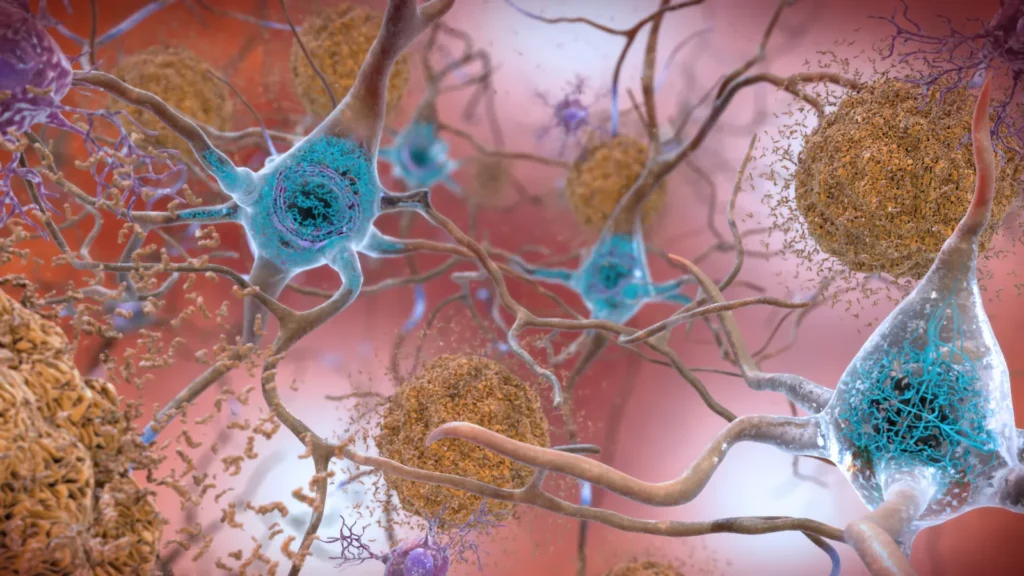
For decades, the "gold standard" for confirming the presence of amyloid plaques and tau tangles—the hallmarks of Alzheimer’s disease—involved either Positron Emission Tomography (PET) scans or the analysis of Cerebrospinal Fluid (CSF) via lumbar punctures. While highly accurate, these methods carry significant drawbacks. PET scans are expensive, often costing several thousand dollars, and require access to specialized facilities and radioactive tracers. Lumbar punctures, while less costly than PET, are invasive and frequently met with patient hesitation.

The emergence of blood-based biomarkers represents a paradigm shift. Among these, pTau217 has distinguished itself as the most reliable indicator of both amyloid and tau pathology in the brain. Unlike earlier blood tests that focused solely on amyloid-beta ratios, pTau217 levels in the blood correlate strongly with the progression of the disease, often appearing before the onset of visible symptoms.
The Elecsys pTau217 test is designed to be run on Roche’s cobas instruments, which are already widely installed in laboratories across the globe. This infrastructure ensures that the test can be implemented rapidly without requiring significant capital investment from diagnostic providers. By utilizing the same validated clinical cutoffs across different care settings, Roche aims to provide a level of standardization that has previously been lacking in the fragmented market of laboratory-developed tests (LDTs).
A Chronology of Regulatory Progress and Competition
The FDA clearance for the Roche-Lilly assay is part of a broader wave of regulatory activity in the Alzheimer’s space. The timeline of 2024 and 2025 illustrates a rapidly accelerating race among diagnostic manufacturers:
- Early 2024: Roche and Lilly received the CE mark for the Elecsys pTau217 test, allowing its use in the European Union and other regions recognizing the certification. This provided the initial clinical validation necessary for U.S. submission.
- May 2025: The FDA cleared Fujirebio’s Lumipulse blood test. This diagnostic compares the ratio of pTau217 to beta-amyloid, becoming the first in vitro diagnostic (IVD) blood test specifically cleared to aid in the diagnosis of Alzheimer’s.
- Late 2025: C2N Diagnostics secured FDA clearance for its PrecivityAD2 blood test. Developed in collaboration with the Washington University School of Medicine in St. Louis, the PrecivityAD2 uses mass spectrometry to measure amyloid and tau ratios. It is intended for individuals aged 40 and older who are experiencing cognitive symptoms.
- Present Day: The clearance of the Roche-Lilly Elecsys pTau217 assay adds a high-throughput, automated option to the market, positioning it as a primary contender for large-scale clinical adoption.
Analysts at Leerink Partners noted that this flurry of activity indicates a "momentum shift" in the sector. The transition from specialized, low-volume tests to FDA-cleared, high-volume assays suggests that the medical community is preparing for a future where Alzheimer’s screening is as routine as cholesterol or glucose monitoring.
Strategic Partnerships with Labcorp and Quest Diagnostics
The commercial success of any diagnostic test depends heavily on its availability to clinicians. Roche has secured powerful allies in Labcorp and Quest Diagnostics, the two largest clinical laboratory networks in the United States.
Labcorp has announced plans to make the Elecsys pTau217 test available nationwide in the coming months. The company emphasized that while several pTau217 assays have been available as laboratory-developed tests, the FDA-cleared version offers a level of standardization that is critical for clinical decision-making. Labcorp’s leadership highlighted that the performance of the Roche-Lilly test is comparable to the accuracy seen in CSF testing and PET imaging, providing a "high-confidence" alternative for physicians.
Quest Diagnostics is following a similar trajectory. Quest plans to introduce a laboratory service based on the Elecsys pTau217 assay under its "AD-Detect" brand. This service is expected to launch nationwide in the fourth quarter of the year. Looking further ahead, Quest intends to incorporate the Roche-Lilly assay into its more comprehensive AD-Detect panels by 2027. These panels typically combine multiple biomarkers to provide a more nuanced picture of a patient’s neurological health.
The involvement of these two giants ensures that the test will be accessible to primary care physicians, not just neurologists. This is vital because the majority of patients first report cognitive concerns to their family doctors, who have historically lacked the tools to perform an objective initial assessment.
Supporting Data and Clinical Validity
The clinical utility of pTau217 is supported by a growing body of peer-reviewed research. Studies have consistently shown that pTau217 is superior to other blood biomarkers, such as pTau181 or Neurofilament Light (NfL), in identifying Alzheimer’s-specific pathology.
According to data cited by Roche and Labcorp, the Elecsys pTau217 assay demonstrates a high correlation with amyloid PET scans. In clinical trials, the test showed the ability to accurately categorize patients as "amyloid positive" or "amyloid negative" with a high degree of sensitivity and specificity. Specifically, pTau217 levels begin to rise in the blood during the early stages of amyloid accumulation, often years before significant cognitive impairment occurs.
Furthermore, the test addresses the "intermediate zone" problem often found in diagnostics. By using validated cutoffs, the assay provides clear results that can help physicians decide whether to proceed with expensive confirmatory imaging or to initiate treatment. This clarity is essential for the implementation of new anti-amyloid therapies, such as Leqembi (lecanemab) and Kisunla (donanemab), which require proof of amyloid pathology before they can be prescribed.
Impact on Treatment and Patient Outcomes
The implications of an accurate, FDA-cleared blood test extend far beyond the laboratory. For patients, it means a faster path to a definitive diagnosis. Currently, the average time from the onset of symptoms to a diagnosis of Alzheimer’s can be several years, a delay that often robs patients of the opportunity to benefit from early intervention.

For the healthcare system, the shift to blood-based testing offers significant cost savings. By acting as a "gatekeeper" or a triage tool, the pTau217 test can reduce the number of unnecessary PET scans. Patients who test negative on the blood assay can be spared the cost and radiation of imaging, while those who test positive can be fast-tracked for treatment or further evaluation.
The availability of these tests also supports the broader adoption of disease-modifying therapies. These drugs are most effective when administered in the early stages of the disease—specifically during the Mild Cognitive Impairment (MCI) or mild dementia stages. A scalable blood test ensures that the right patients are identified at the right time.
Analysis of Market Implications and Future Outlook
The entry of Roche and Eli Lilly into the FDA-cleared diagnostic space creates a highly competitive environment. While C2N Diagnostics and Fujirebio were first to market with specific clearances, Roche’s global manufacturing footprint and existing laboratory partnerships provide a formidable advantage.
However, the market is large enough to accommodate multiple players. Estimates suggest that by 2030, millions of Americans will be eligible for Alzheimer’s screening as the "Baby Boomer" generation ages. The competition is likely to drive further innovation, potentially leading to "multiplex" tests that can screen for Alzheimer’s, Parkinson’s, and other forms of dementia simultaneously.
Industry experts also point to the importance of reimbursement. Now that the FDA has cleared multiple blood tests, the focus will shift to the Centers for Medicare & Medicaid Services (CMS) and private insurers. Robust reimbursement coverage is the final hurdle to making pTau217 testing a routine part of geriatric care.
The clearance of the Elecsys pTau217 test represents a "coming of age" for Alzheimer’s diagnostics. It moves the field away from the era of clinical guesswork and toward a future of precision medicine. As Labcorp and Quest begin the nationwide rollout, the medical community will be watching closely to see how these tests integrate into daily practice and, ultimately, how they improve the lives of those living with the threat of Alzheimer’s disease.