

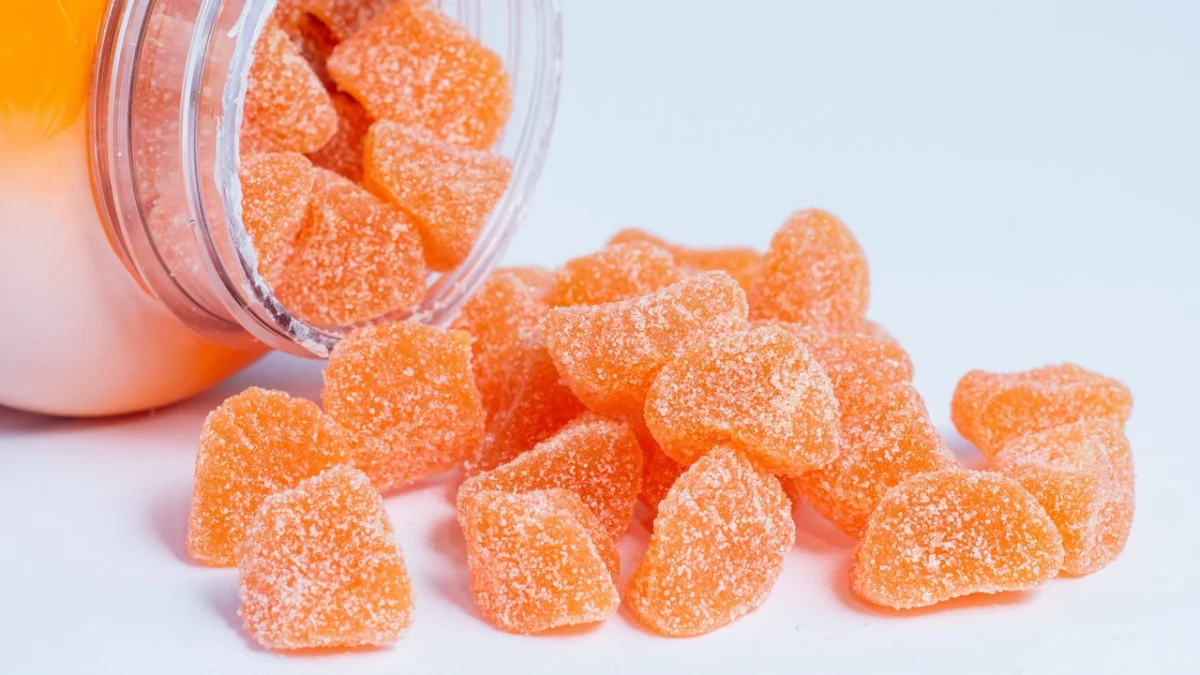
The vibrant and increasingly popular world of gummy dietary supplements is facing a significant reckoning, brought to light by recent findings from NOW Foods. Their independent testing of 30 vitamin C gummy brands sold on Amazon revealed a startling reality: 12 of these products failed to meet their stated label claims for vitamin C content. This revelation carries profound implications for consumer trust and transparency within the dietary supplement industry, a sector where gummies have rapidly ascended to prominence. In 2025 alone, gummies commanded nearly a quarter of the market share, according to projections from the Nutrition Business Journal, underscoring their immense consumer appeal.
The rise of "candyceuticals," as these palatable supplements are sometimes called, has presented a novel and effective delivery system for a variety of active compounds. However, the manufacturing process and inherent properties of these chewy confections are not universally compatible with all ingredients. Understanding the intricate science behind gummy formulation is crucial for developers aiming to produce safe, effective, and accurately labeled products. The recent scrutiny of vitamin C gummies by NOW Foods serves as a pertinent case study, highlighting the critical considerations that manufacturers must address to ensure product integrity.
The Crucial Role of Ingredient Physiochemical Properties
At the forefront of gummy supplement development lies a fundamental understanding of the physiochemical properties of raw ingredients. Generally, manufacturers should prioritize ingredients that exhibit stability under heat and acidic conditions, two significant factors inherent in the gummy production process. Gummy manufacturing is often an intensive thermal process, with temperatures frequently reaching or exceeding 100 degrees Celsius, the boiling point of water. Furthermore, pectin-based gummies, a common formulation, typically operate within a highly acidic pH range of 3.0 to 4.5, creating an environment where less stable compounds can degrade.
Crystal Webber, founder and chief innovation officer at Formulation Innovations Group, a specialized nutraceutical gummy manufacturer, emphasizes the nuanced interplay of these properties. "When it comes to exact physiochemical properties, suitability and feasibility can vary widely with even a tiny tweak to the formulation," Webber states. "Solubility is not necessarily a dealbreaker with some nutrient forms, and soluble is not always the best option with others. The same nutrient added as a high oil load that fails at higher, standard gummy temperatures might work perfectly in a custom-built low temperature base with high shear."
Beyond heat and acidity, factors such as solubility and the physical format of the ingredient—whether it’s a powder, liquid, oil, or emulsion—play pivotal roles. These variables can dramatically influence how an ingredient behaves during processing and throughout the product’s shelf life. Webber advocates for the use of heat-stable, acid-stable, and low-dose ingredients for formulators seeking straightforward scalability. However, she maintains an open mind, believing that "any ingredient can be gelled with the right scientific approach and a good measure of patience." This perspective underscores the importance of innovative formulation strategies over outright ingredient exclusion.
Vitamin C: A Case Study in Ingredient Stability
Vitamin C, or ascorbic acid, is a prime example of an ingredient that requires careful consideration due to its inherent sensitivities. It is known to be susceptible to degradation from heat, oxygen, and light. While these factors present challenges, they do not render vitamin C unsuitable for gummy formulations. The key lies in strategic overages – adding an extra amount of the active ingredient to compensate for anticipated losses during processing and over the product’s shelf life. Webber notes that these overages can range significantly, from 20% to 60%, depending on the specific processing conditions, the final pH of the gummy, and the presence of other ingredients that might interact with vitamin C.
Selecting the Optimal Gummy Base
The textural characteristics of gummies are largely determined by their gelling agents. The most prevalent choices are pectin and gelatin. Pectin, a fruit-derived polysaccharide, requires precise control over pH and brix (sugar concentration) to achieve proper gelation. Gelatin, on the other hand, derived from animal collagen, offers greater flexibility across a wider pH range but is more sensitive to heat.
"Gelatin systems are much more forgiving than pectin," explains Webber. "Gelatin is easy to maintain in gel form aside from extreme heat. Gelatin-based gummies melt at a very low temperature compared to pectin-based gummies." This characteristic can be a double-edged sword, offering ease of processing but also necessitating careful handling to prevent premature melting.
For vitamin C, formulators can incorporate it into either pectin or gelatin bases. However, caution is advised when working with pectin. Webber elaborates, "Vitamin C gummy formulations can be challenging because most manufacturers are using a pectin that gels at a set pH range. Since Vitamin C in the ascorbic form is an acid by nature, adding vitamin C can cause the gummy base to set too firmly, or at the wrong time." This interaction can disrupt the delicate balance required for optimal texture and uniform ingredient distribution.
The Analytical Challenge: Ensuring Accurate Measurement
The matrix of a gummy supplement presents unique challenges for laboratory analysis compared to simpler formats like liquids or powders. Celine Decasiano, analytical operations manager at Alkemist Labs, highlights that various components within the gummy can interfere with standard testing methodologies. "The other ingredients in gummies, like gelatin/pectin base, colorants, flavor compounds and the high sugar load don’t disperse cleanly into the organic solvent, or co-extract and cause interference," she states.
To overcome these obstacles, laboratories must employ specialized preparation techniques to accurately extract active ingredients for analysis. Alkemist Labs, for instance, utilizes a cryo-grinding process. "We cryo-grind the gummies with dry ice to produce a fine, homogenous powder which is then extracted into solvent for analysis," Decasiano explains. This meticulous approach ensures that the sample is representative and that interfering substances are minimized.
Vitamin C Analysis: A Standardized Approach
High-performance liquid chromatography (HPLC) is the most widely recognized and employed method for quantifying vitamin C content. The reliability of such testing hinges on the validation of the analytical method. In the case of the NOW Foods investigation, their vitamin C analysis was conducted using a validated HPLC method, further corroborated by external validation from Alkemist Labs. This dual-validation process adds a significant layer of confidence to the reported results.
The Imperative of Rigorous Testing
The findings from NOW Foods underscore a critical aspect of supplement manufacturing: the paramount importance of rigorous testing to verify that gummy contents meet label claims. Given the inherent variability in ingredient stability and the need for precise overages, both internal quality control and third-party laboratory verification are indispensable.
Decasiano points out that "actives that are sensitive to heat or oxidation during the manufacturing process and storage conditions can show degradation." This degradation can lead to discrepancies between the declared and actual amounts of the active ingredient. She further clarifies, "Low results against label claims may be due to processing, formulation and shelf-life issues rather than analytical challenges." This distinction is vital, indicating that the root cause of inaccurate labeling often lies in the manufacturing and formulation stages, rather than a flaw in the analytical process itself.
The Vitamin C Gummy Shortfall: A Stark Reality
The NOW Foods study on vitamin C gummies provided a stark illustration of these issues. Out of 25 brands purchased from Amazon.com, 12 brands exhibited negligible amounts of vitamin C, falling far short of their label claims. In contrast, five established brands, which were expected to meet label claims based on their reputation and prior testing, were found to contain the declared amount of vitamin C. This suggests a significant gap in quality control and manufacturing practices among a portion of the market.
Beyond Production: The Criticality of Shelf-Life Testing
Ensuring that active ingredients survive the manufacturing process is only the first step. Finished product testing must extend to evaluate the stability of these ingredients throughout the product’s intended shelf life. This process is essential for establishing accurate expiration dates and guaranteeing that consumers receive the product as advertised.
Dan Richard, vice president of global sales and marketing at NOW Foods, notes that most gummies are designed with a shelf life of two years. However, he emphasizes that "Stability studies are time-consuming and expensive, but they show when increases in overage, or the extra amount of active ingredient, are required in a formula." These studies are not merely a regulatory formality but a scientific necessity for ensuring product efficacy and safety over time.
Predicting Degradation: The Vitamin C Example
Based on their extensive experience, NOW Foods projected that four of the tested brands would likely fail to meet label claims by their expiration dates. Their internal data suggests that vitamin C degrades by approximately 20% per year. This predictive capability, derived from ongoing accelerated and real-time stability testing, is a cornerstone of NOW Foods’ commitment to product quality. "We are aware that most brands do not do (shelf-life testing)," Richard states, highlighting a concerning trend of potentially insufficient quality assurance practices within the industry.
Implications for the Dietary Supplement Industry
The NOW Foods vitamin C gummy study serves as a critical inflection point for the dietary supplement industry. The widespread popularity of gummies, coupled with the alarming rate of product non-compliance, raises serious questions about consumer safety and the integrity of the market.
Erosion of Consumer Trust: When consumers purchase supplements based on label claims, they expect to receive the stated dose of active ingredients. The discovery that a significant percentage of products fail to deliver on these promises can lead to a profound erosion of trust. This skepticism can extend beyond gummy supplements to the entire category, impacting reputable brands that invest heavily in quality control and scientific validation.
Regulatory Scrutiny: Such findings often attract increased attention from regulatory bodies. Agencies like the U.S. Food and Drug Administration (FDA) are responsible for overseeing dietary supplements, and reports of widespread product mislabeling can trigger investigations, warning letters, and potential enforcement actions. This could lead to stricter regulations and increased compliance burdens for manufacturers.
Market Consolidation and Differentiation: Brands that consistently demonstrate transparency, rigorous testing, and adherence to label claims will likely emerge as leaders in a more discerning market. The current situation may incentivize a consolidation of the market, favoring companies with robust quality assurance systems and a commitment to scientific integrity. Conversely, brands that fail to meet these standards may face significant challenges in maintaining consumer confidence and market share.
Innovation in Formulation and Testing: The challenges highlighted by the vitamin C gummy situation can also spur innovation. Developers will be pushed to find more stable ingredient forms, explore novel encapsulation technologies, and refine manufacturing processes to minimize degradation. Furthermore, the need for accurate and reliable analytical methods will drive advancements in laboratory testing capabilities, ensuring that the industry can keep pace with evolving product formats.
The Path Forward: Transparency and Accountability
The vitamin C gummy revelations are a call to action for the entire dietary supplement industry. Manufacturers must prioritize robust quality control measures, including comprehensive ingredient testing, meticulous formulation, and extensive shelf-life studies. Transparency in manufacturing processes and clear communication with consumers about product testing and quality assurance protocols are essential for rebuilding and maintaining trust.
Ultimately, the responsibility lies with manufacturers to ensure that the products they bring to market are not only appealing but also safe, effective, and accurately represented. As the gummy supplement market continues its impressive growth, the imperative for unwavering commitment to product integrity has never been more critical. The findings from NOW Foods serve as a potent reminder that behind every attractive gummy lies a complex scientific endeavor, one that demands precision, accountability, and a steadfast dedication to consumer well-being.
