

A significant legal battle within the dietary supplement industry has taken a dramatic turn as a federal court has invalidated two key claims of a patent held by Kaneka Corporation, a prominent manufacturer of ubiquinol (reduced coenzyme Q10). The ruling, issued on September 2nd by the U.S. District Court for the Eastern District of New York, addressed a patent concerning the stabilization of reduced coenzyme Q10, a vital antioxidant naturally produced by the body and widely used in dietary supplements for its energy-boosting and heart health benefits. This decision, however, directly contradicts a previous ruling in Kaneka’s favor and has prompted the Japanese chemical company to announce its intention to appeal, setting the stage for further legal contention.
The lawsuit, initiated in 2023 by Kaneka Corporation against its competitor Cocrystal Technology, alleged infringement of the patent. Kaneka, a leading supplier of ubiquinol under its Q+® Ubiquinol brand, accused Cocrystal of violating its intellectual property rights. However, the court dismissed Kaneka’s infringement claims, asserting that the patent was "invalid for lack of enablement." This legal standard requires that a patent sufficiently describe the invention to allow someone skilled in the relevant field to make and use it without undue experimentation.
This recent ruling stands in stark contrast to a judgment rendered earlier in 2024 by the U.S. District Court for the District of Delaware. In that instance, Kaneka had filed suit against Designs for Health and American River Nutrition, and the Delaware court ruled in Kaneka’s favor, finding infringement of the same patent. The conflicting outcomes highlight the complex and often unpredictable nature of patent litigation, particularly in rapidly evolving scientific and technological fields.
Kaneka Corporation, in a public statement following the New York ruling, emphasized its commitment to defending its intellectual property. "The New York ruling should not be interpreted as permission for third parties to disregard Kaneka’s intellectual property rights," the company stated. "Kaneka reserves all rights and will continue to monitor the market and take appropriate legal action against parties that infringe those rights." The company has confirmed its intention to file an immediate appeal with the U.S. Court of Appeals for the Federal Circuit, a specialized court that handles patent appeals.
In response to the New York court’s decision, Cocrystal Technology plans to proceed with marketing its reduced CoQ10 ingredient, which was previously branded as Crystal QH and will now be marketed under the new name CrysQnol. Xuefeng Mei, founder of Cocrystal, expressed his satisfaction with the court’s decision, viewing it as validation of his company’s innovative approach. "Our focus has never been on following an established path, but on solving difficult scientific problems through our own research and technology," Mei stated in a press release. "The ruling marks not an endpoint, but an opportunity to bring our technology to more customers and continue innovating in the U.S. market." This sentiment underscores the competitive drive and commitment to independent research and development within the supplement industry.

The patent in question, U.S. Patent No. 7,829,080 B2, specifically addresses methods for stabilizing reduced coenzyme Q10. Ubiquinol, the reduced and more bioavailable form of CoQ10, is notoriously unstable and prone to oxidation, which can render it ineffective. Kaneka’s patented technology was designed to overcome these stability challenges, enabling the widespread commercialization of ubiquinol as a dietary supplement ingredient. CoQ10, in its ubiquinone form, has been a staple in the supplement market for decades, recognized for its role in cellular energy production and as an antioxidant. However, the development of stable and bioavailable ubiquinol represented a significant advancement, allowing consumers to access the purportedly superior benefits of the reduced form.
The history of CoQ10 and ubiquinol in the supplement market is one of continuous scientific inquiry and product innovation. Coenzyme Q10 was first discovered in 1957 and its role in the electron transport chain, crucial for ATP (energy) production within mitochondria, was elucidated in the following decades. Its antioxidant properties also became a focal point of research. While ubiquinone was the initial commercially available form, scientific understanding of the body’s preference for and utilization of ubiquinol grew. However, the chemical instability of ubiquinol presented a significant hurdle for formulators. Kaneka’s patented stabilization technology, developed and refined over years, aimed to provide a solution, leading to the widespread availability of high-quality ubiquinol ingredients and finished products. The company’s significant investment in research and development, coupled with its patent protection, has positioned it as a dominant player in the ubiquinol market.
The legal dispute between Kaneka and Cocrystal is not an isolated incident within the supplement industry. Intellectual property rights, particularly patents, play a crucial role in protecting innovation and incentivizing further research. However, patent challenges are common, especially when new technologies offer significant market advantages. The differing court decisions in New York and Delaware raise questions about the scope and enforceability of Kaneka’s patent, and the appeal to the Federal Circuit will be closely watched by industry stakeholders. A ruling from the Federal Circuit could set a precedent for other cases involving similar technologies or patent claims.
The implications of this ongoing legal battle extend beyond the involved companies. For consumers, the availability and cost of ubiquinol supplements could be indirectly affected by the outcome of the patent dispute. A successful appeal by Kaneka could reinforce its market dominance and potentially lead to stricter enforcement of its patent rights. Conversely, a sustained invalidation of the patent claims could open the market to greater competition, potentially leading to more product choices and competitive pricing.
Clinical Currents and Scientific Advancements
Beyond the legal arena, the supplement industry continues to be driven by scientific discovery and innovation. Recent research has shed new light on the potential health benefits of several key ingredients, including niacin, chicken peptides, and saffron.
Niacin’s Evolving Role in Cardiovascular Health:
New scientific reports are continually refining our understanding of niacin’s (Vitamin B3) role in cardiovascular health. While historically known for its ability to favorably impact lipid profiles, particularly by raising HDL ("good") cholesterol and lowering LDL ("bad") cholesterol and triglycerides, recent research is exploring its broader mechanisms of action. Emerging studies suggest that niacin’s anti-inflammatory properties and its impact on endothelial function may contribute to its cardiovascular benefits, independent of its lipid-modifying effects. For instance, research published in journals like the Journal of the American College of Cardiology has delved into how niacin can improve arterial stiffness and reduce markers of inflammation, which are critical factors in the development of atherosclerosis. The challenge for formulators and consumers remains optimizing dosage and delivery to maximize benefits while minimizing potential side effects, such as the well-known "niacin flush."
Chicken Peptide’s Potential for Muscle Health and Beyond:
Chicken peptides, derived from the enzymatic hydrolysis of chicken protein, are gaining traction for their purported benefits in muscle health and recovery. These small protein fragments are thought to be more easily absorbed and utilized by the body compared to whole proteins. Preliminary research, often presented at scientific conferences and appearing in specialized journals, suggests that chicken peptides may support muscle protein synthesis, reduce muscle damage following exercise, and aid in the repair process. While extensive human clinical trials are still needed to fully substantiate these claims, the growing interest in plant-based and novel protein sources for sports nutrition and general wellness is driving innovation in this area. The appeal lies in their potential to provide essential amino acids in a highly bioavailable form.
Saffron’s Multifaceted Health Applications:
The ancient spice saffron, derived from the flower of Crocus sativus, is being increasingly investigated for its diverse therapeutic properties, extending beyond its culinary uses. Scientific reports are highlighting its potential as a mood enhancer, an antioxidant, and even as a supportive agent for cognitive function. Studies published in journals such as Nutrients have explored saffron’s active compounds, like crocin and safranal, and their interactions with neurotransmitter systems in the brain, suggesting a role in alleviating symptoms of mild to moderate depression. Furthermore, its potent antioxidant capacity is being examined for its potential to combat oxidative stress associated with aging and various chronic diseases. As research progresses, saffron is emerging as a promising ingredient for mood support and overall well-being supplements.
Innovative Delivery Methods for Sulforaphane:
Sulforaphane, a potent phytonutrient found in cruciferous vegetables like broccoli and Brussels sprouts, has garnered significant attention for its powerful antioxidant and anti-inflammatory properties, with research linking it to cancer prevention, detoxification, and brain health. However, the bioavailability of sulforaphane can be a challenge. A notable innovation in this space is the development of advanced delivery systems designed to enhance its absorption and efficacy.
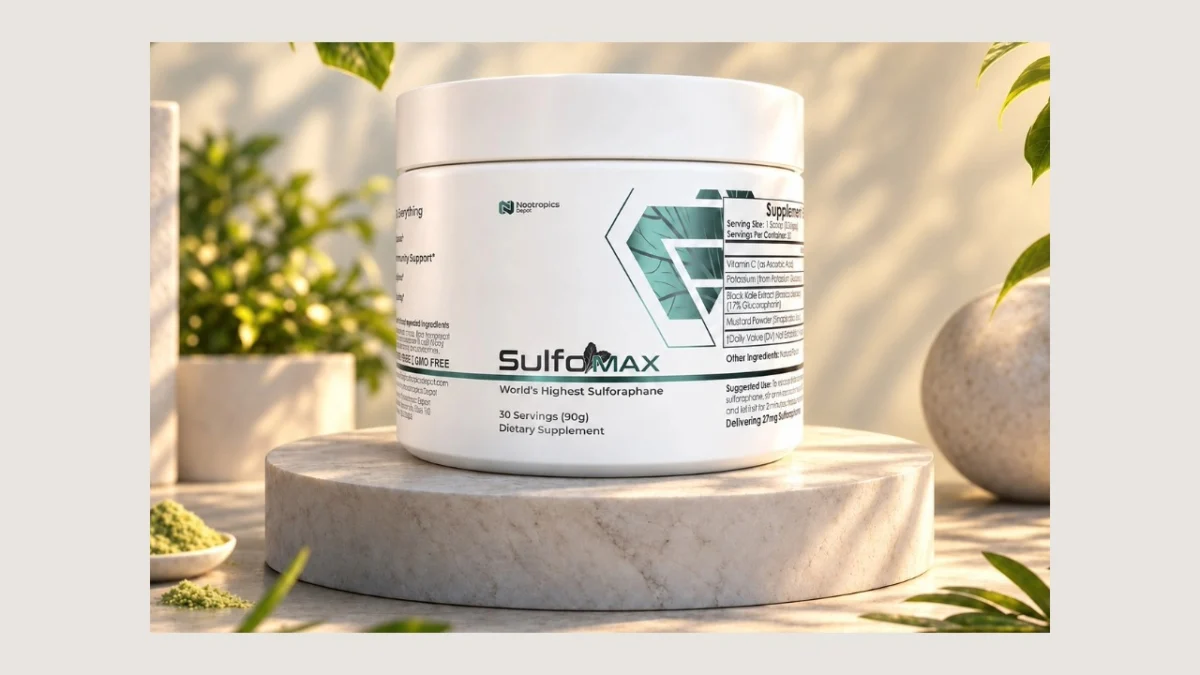
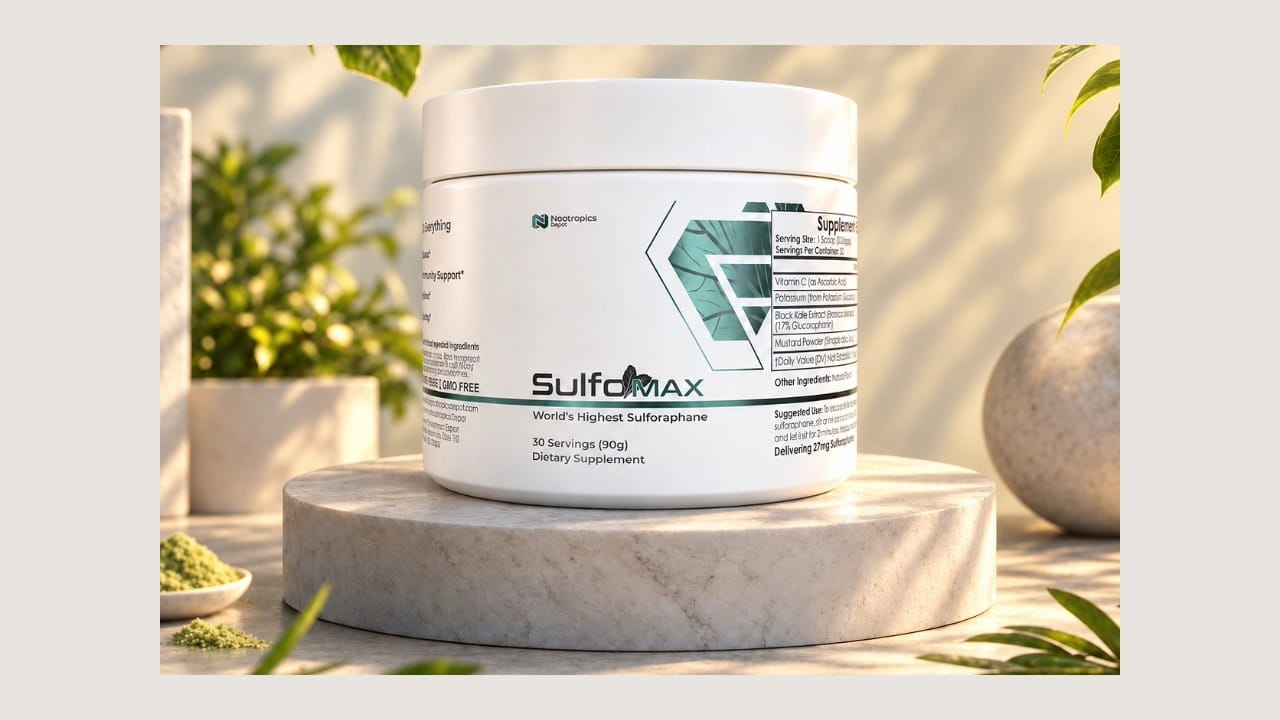
One such innovative approach is exemplified by products like Nootropics Depot’s SulfoMax, which utilizes a unique formulation to deliver sulforaphane. This dietary supplement combines ingredients derived from black kale and mustard, designed to release sulforaphane once the powder is mixed with water. This method likely involves the enzymatic conversion of glucosinolates (precursors to sulforaphane) present in the ingredients. By creating an optimal environment for this conversion and subsequent absorption, such formulations aim to overcome the limitations of consuming raw cruciferous vegetables or less advanced supplements, ensuring a more consistent and potent dose of this beneficial compound. This type of formulation innovation is crucial for maximizing the health benefits of otherwise poorly absorbed compounds. The image provided showcases this type of powdered supplement, illustrating the product format that facilitates this enhanced delivery mechanism.
The ongoing advancements in scientific understanding and product formulation underscore the dynamic nature of the dietary supplement industry. As research continues to uncover the intricate mechanisms and potential benefits of various natural compounds, the industry is poised to offer increasingly sophisticated and effective solutions for health and wellness. The convergence of rigorous scientific investigation, innovative product development, and strategic legal maneuvering will continue to shape the landscape of this vital sector.
