

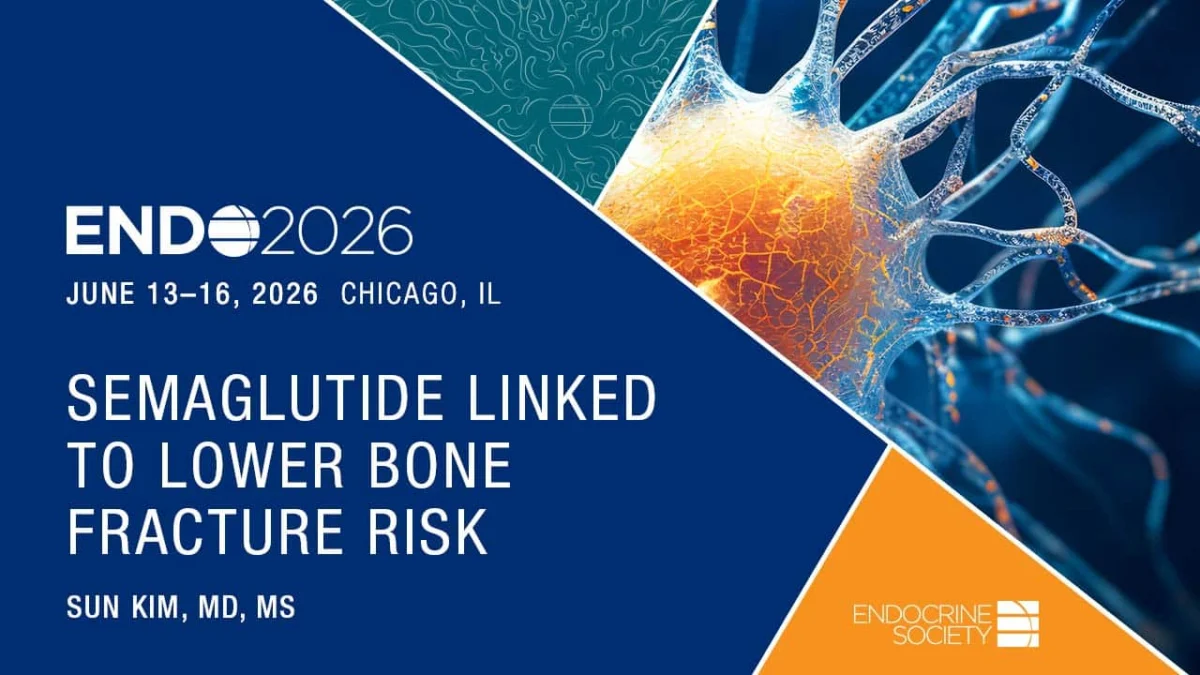
In a landmark presentation at the ENDO 2026 annual meeting, researchers unveiled findings that suggest semaglutide, a prominent glucagon-like peptide-1 (GLP-1) receptor agonist, may offer significant bone-protective benefits for patients with type 2 diabetes. The study, led by investigators at Stanford University, indicates that individuals taking semaglutide experienced a lower rate of bone fractures compared to those utilizing other common anti-obesity medications, despite achieving greater reductions in body mass index (BMI). This discovery addresses a long-standing concern within the endocrinology community regarding the potential for rapid weight loss to compromise skeletal integrity.
The research arrives at a pivotal moment in metabolic medicine, as the use of GLP-1 receptor agonists has surged globally. While these medications have revolutionized the treatment of type 2 diabetes and chronic weight management, clinicians have remained cautious about the secondary effects of rapid adiposity reduction. Historically, significant weight loss—regardless of the method—has been associated with a decrease in bone mineral density (BMD) and an increased risk of fragility fractures. However, the data presented at ENDO 2026 suggests that semaglutide may possess unique properties or mechanisms that mitigate these risks, potentially setting it apart from other pharmacological interventions in the weight-loss landscape.
The Evolution of GLP-1 Therapy and Bone Health Concerns
Semaglutide belongs to the class of drugs known as GLP-1 receptor agonists, which mimic a naturally occurring hormone in the body to stimulate insulin secretion, inhibit glucagon release, and slow gastric emptying. These actions not only lower blood glucose levels but also promote satiety, leading to substantial weight loss. Since its initial approval, semaglutide has demonstrated superior efficacy in weight reduction compared to earlier generations of weight-loss drugs.
The relationship between weight loss and bone health is complex. Adipose tissue is not merely a storage site for energy; it is an active endocrine organ that interacts with bone metabolism. When an individual loses weight rapidly, the body undergoes hormonal shifts—such as changes in estrogen levels and decreases in mechanical loading on the skeleton—that can trigger bone resorption. Previous clinical observations have noted that while moderate, gradual weight loss can be managed by the body’s homeostatic mechanisms, the profound weight loss induced by modern GLP-1s could theoretically lead to "thinner" bones and a higher incidence of fractures.
Prior to the Stanford study, there was a notable gap in comparative evidence. While the efficacy of semaglutide for weight loss was well-documented, its specific impact on fracture incidence relative to other anti-obesity medications (AOMs) remained unclear. This lack of data prompted Jairo Noreña, MD, a former endocrinology fellow at Stanford University Medical Center, and his colleagues to investigate whether the bone health of patients on semaglutide differed from those on alternative therapies.
Study Design and the Atropos Health Dataset
To conduct a comprehensive analysis, the research team utilized a massive retrospective cohort analysis. They leveraged the Atropos Health Eos electronic health record (EHR) dataset, a sophisticated platform that aggregates clinical data from a wide array of U.S. community hospitals and academic medical centers. The dataset represented a staggering 161 million patients, providing a robust foundation for identifying trends across diverse populations.
The study focused on a specific timeframe, spanning from January 2016 to December 2023. The researchers identified adult participants (aged 18 and older) who had been diagnosed with type 2 diabetes. To ensure the clarity of the results, the team implemented strict exclusion criteria: participants could not have a history of prior bone fractures or a history of using osteoporosis-specific medications, such as bisphosphonates or denosumab.
The study population was divided into two primary groups:
- The Semaglutide Group: This cohort consisted of 26,324 patients who were prescribed semaglutide for their condition.
- The Control Group: This cohort included 33,555 patients who were prescribed other medications for weight management or diabetes, specifically dulaglutide (another GLP-1) or oral weight-loss therapies such as phentermine/topiramate and bupropion/naltrexone. Importantly, members of the control group had no prior history of semaglutide use.
By comparing these two groups, the researchers aimed to isolate the effects of semaglutide on bone health while accounting for the weight-loss benefits shared by the various treatments.
Comparative Data: BMI Reduction vs. Fracture Incidence
The results of the analysis provided a compelling contrast between weight loss and skeletal outcomes. As expected, the data indicated that semaglutide treatment was associated with a significantly greater reduction in BMI compared to the control group. In most clinical scenarios, a higher degree of weight loss would correlate with a higher risk of fracture; however, the Stanford study revealed the opposite trend.
According to the findings, the semaglutide group recorded 794 fractures during the study period. In contrast, the control group, despite experiencing less significant weight loss, recorded 1,045 fractures. This disparity suggests that semaglutide may exert a protective effect on bone tissue that outweighs the traditional risks associated with weight reduction.
Dr. Noreña emphasized the gravity of these findings, noting that the implications for patient care are substantial. "Bone fractures are painful, expensive, and can seriously affect quality of life—especially as people get older," Noreña stated. "We hope this study encourages monitoring of bone health in weight-loss programs."
The significance of the data lies in the "fracture paradox" it presents. While the biological mechanisms are still being explored, some researchers hypothesize that GLP-1 receptors located on bone cells may play a role in promoting bone formation or inhibiting the cells responsible for bone breakdown (osteoclasts). If semaglutide directly stimulates these receptors more effectively than other medications, it could explain the lower fracture rates observed in the study.
Expert Reactions and the Economic Impact of Fractures
The presentation at ENDO 2026 sparked immediate discussion among endocrinologists and primary care physicians. Sun Kim, MD, MS, a key figure in the research and an associate professor of medicine at Stanford, noted that while the results are promising, they serve as an "important early step" in a much larger conversation about long-term GLP-1 use.
Medical professionals not involved in the study have pointed out that the economic burden of fractures in the United States is immense. Hip and spinal fractures in the elderly often lead to a loss of independence, prolonged hospitalizations, and a high rate of mortality within one year of the event. If a medication used to treat diabetes and obesity—two conditions that already increase fracture risk—can simultaneously lower that risk, it represents a major "double win" for public health.
The insurance and healthcare administration sectors are also likely to take interest. With the rising costs of GLP-1 medications, data demonstrating secondary benefits—such as reduced fracture-related hospitalizations—could influence coverage policies and cost-benefit analyses for long-term treatment plans.
Chronology of Research and Future Directions
The journey to these findings began in the mid-2010s as semaglutide first entered the market. The timeline of development and observation can be summarized as follows:
- 2016–2017: Semaglutide gains initial approvals, showing superior weight loss in clinical trials.
- 2018–2021: Real-world data begins to show that rapid weight loss in some patients leads to decreased bone density, prompting calls for closer monitoring.
- 2022–2023: Stanford researchers begin analyzing the Atropos Health Eos dataset to compare semaglutide specifically against other AOMs.
- 2024–2025: Data processing and cohort matching are finalized, revealing the lower fracture incidence in semaglutide users.
- 2026: The findings are officially presented at the ENDO conference, shifting the narrative toward bone-protective possibilities.
Despite the positive results, the researchers and independent experts maintain a level of scientific caution. Because this was a retrospective cohort analysis—meaning it looked back at existing data rather than following patients in real-time—there are inherent limitations. Retrospective studies can show associations, but they cannot definitively prove causation. Factors such as patient activity levels, vitamin D intake, and baseline bone density were not fully controlled for in the EHR data.
Consequently, the authors of the study and the wider medical community are calling for prospective, randomized controlled trials (RCTs). These future studies would ideally involve serial DXA (dual-energy X-ray absorptiometry) scans to measure bone density changes over several years and biochemical markers of bone turnover to pinpoint the exact mechanism by which semaglutide might be protecting the skeleton.
Broader Implications for Clinical Practice
The findings presented by Dr. Noreña and his team have the potential to refine clinical guidelines for the management of type 2 diabetes and obesity. Currently, many physicians focus primarily on glycemic control and weight targets. This research suggests that the choice of medication should also consider the patient’s baseline fracture risk. For example, a postmenopausal woman with type 2 diabetes—a demographic at high risk for both metabolic issues and osteoporosis—might be a particularly strong candidate for semaglutide over other weight-loss options.
Furthermore, the study highlights the necessity of a multidisciplinary approach to weight management. As GLP-1s become more common, weight-loss programs may need to integrate bone health assessments, including calcium and vitamin D supplementation and resistance training, to complement the pharmacological benefits of the drugs.
As the medical community awaits the publication of prospective data, the Stanford study stands as a significant milestone. It challenges the assumption that all rapid weight loss is detrimental to the skeleton and provides a new layer of evidence supporting the comprehensive benefits of semaglutide in the treatment of metabolic disease. For millions of patients navigating the complexities of diabetes and weight management, the prospect of protecting their bones while improving their metabolic health offers a new sense of clinical optimism.
