

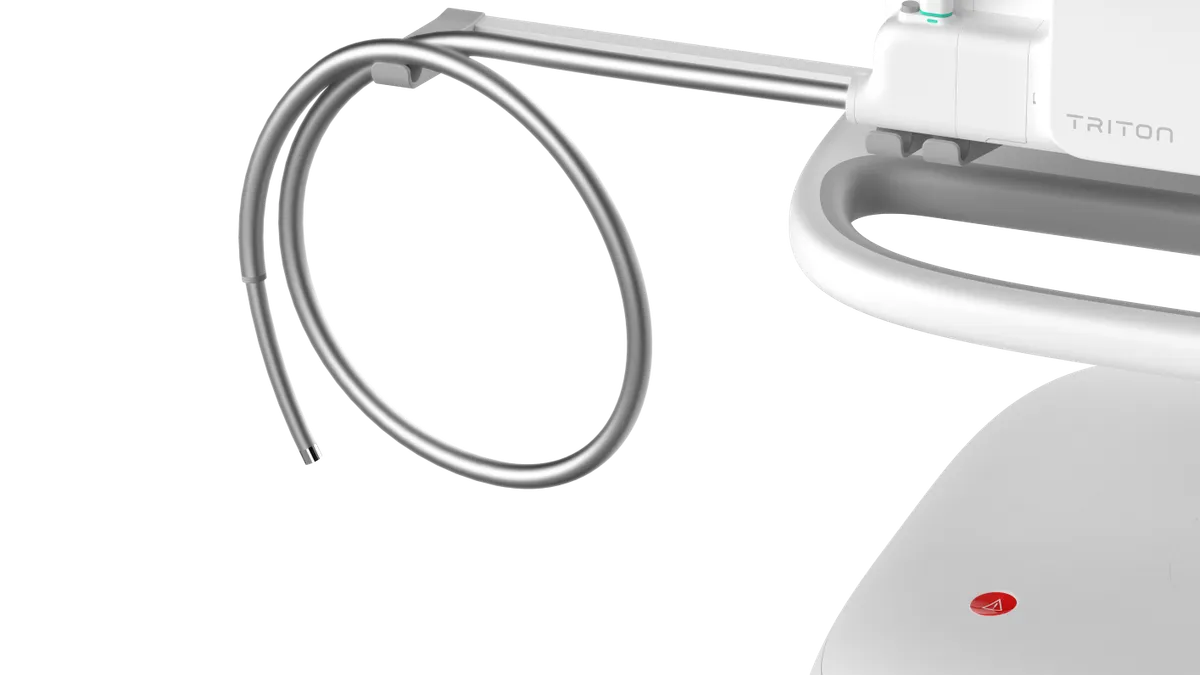
Neptune Medical, a Silicon Valley-based medical technology innovator, has officially announced that its Triton Robotic System has received 510(k) clearance from the U.S. Food and Drug Administration (FDA). This regulatory milestone marks a significant shift in the field of gastroenterology, providing physicians with a new level of robotic precision and control during colonoscopy procedures. The Triton system is specifically designed to address the mechanical challenges inherent in traditional flexible endoscopy, aiming to improve the detection and removal of precancerous lesions, which remains the cornerstone of colorectal cancer prevention.
The approval comes at a critical juncture for public health. As colorectal cancer rates rise among younger populations, the demand for more accurate and efficient screening tools has reached a fever pitch. By integrating robotics into the standard colonoscopy workflow, Neptune Medical intends to reduce the technical variability of the procedure, ensuring that clinicians can navigate the complex anatomy of the colon with greater stability and visualization.
Technical Innovation: Overcoming the Challenges of Endoscopy
Traditional colonoscopy relies on the manual manipulation of a flexible endoscope. While effective, the procedure is often hampered by a phenomenon known as "looping," where the endoscope bows or folds within the large intestine rather than advancing. Looping can cause significant patient discomfort, prolong procedure times, and, most critically, lead to incomplete visualization of the colonic wall. If a physician cannot clearly see every fold of the colon, there is a heightened risk that adenomas—precancerous polyps—will be missed.
The Triton Robotic System addresses these issues through a proprietary technology designed to give gastroenterologists enhanced control over the endoscope’s positioning and stability. By utilizing a robotic interface, the system allows for micro-adjustments that are difficult to achieve through manual manipulation alone. This "dynamic rigidity" enables the scope to remain stable once a target area is reached, providing a steady platform for the physician to perform meticulous inspections and complex therapeutic interventions, such as polypectomies (the removal of polyps).
According to Neptune Medical, the Triton system is not intended to replace the physician but to augment their capabilities. The robot acts as a sophisticated assistant, translating the physician’s inputs into precise movements that minimize the physical strain on the operator and the mechanical stress on the patient’s anatomy.
Clinical Validation: The CARE 1 Study Results
The FDA clearance was supported by data from Neptune Medical’s CARE 1 study, a 50-patient clinical trial designed to evaluate the safety and efficacy of the Triton system in a real-world clinical setting. The results of the study, released earlier this year, demonstrated that the system met all primary endpoints with a remarkable safety profile.
One of the most significant metrics emerging from the CARE 1 study was the Adenoma Detection Rate (ADR). The ADR is widely considered the "gold standard" for measuring the quality of a colonoscopy; it represents the percentage of screening procedures in which a physician finds at least one precancerous polyp. Higher ADRs are directly correlated with a lower risk of "interval" colorectal cancers—cancers that develop between scheduled screenings.
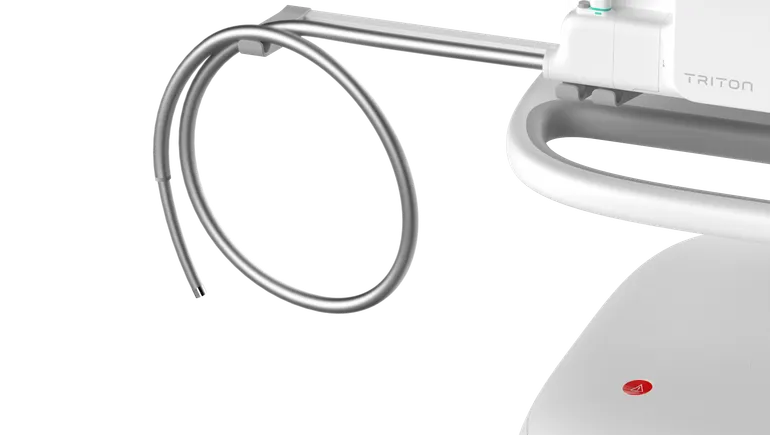
In the Neptune study, the Triton system demonstrated an ADR of 54.2%. To put this figure into perspective, the current industry benchmark for ADR, established by the American Society for Gastrointestinal Endoscopy (ASGE), is 35% for male patients and 25% for female patients. By significantly exceeding these thresholds, the Triton system suggests a potential for a higher level of diagnostic accuracy than conventional manual methods. Furthermore, the study reported zero adverse events, reinforcing the system’s safety for routine clinical use.
The Rising Threat of Colorectal Cancer in Younger Adults
The urgency behind Neptune Medical’s innovation is underscored by alarming trends in oncology. Recent data from the American Cancer Society (ACS) indicates that colorectal cancer has now become the leading cause of cancer-related death in men under the age of 50 and the second leading cause in women within the same age bracket. This shift has prompted the ACS and other regulatory bodies to lower the recommended age for initial screenings from 50 to 45.
While the market has seen a surge in alternative screening methods, such as Abbott’s Exact Sciences Cologuard (a stool-based DNA test) and Guardant Health’s Shield (a blood-based test), the medical community continues to emphasize that colonoscopy remains the "gold standard." Unlike stool or blood tests, which are purely diagnostic and require a follow-up colonoscopy if they return a positive result, a colonoscopy is both diagnostic and therapeutic. It allows a physician to identify a lesion and remove it in the same session, effectively preventing cancer before it starts.
However, the efficacy of a colonoscopy is entirely dependent on the quality of the visual inspection. Neptune Medical’s Triton system aims to ensure that this "gold standard" remains reliable by providing the tools necessary to achieve a thorough and stable examination of the entire colon.
Financial Growth and the Influence of Robotic Pioneers
Neptune Medical’s path to FDA clearance has been supported by substantial venture capital interest and the guidance of industry veterans. In early 2024, the company closed a $97 million Series D financing round. The funding was led by prominent investors, including Olympus Corporation and Sonder Capital.
The involvement of Sonder Capital is particularly noteworthy due to its co-founder, Dr. Fred Moll. Dr. Moll is widely regarded as the father of robotic surgery, having founded Intuitive Surgical (the maker of the Da Vinci robot) and Auris Health (acquired by Johnson & Johnson for $3.4 billion). Dr. Moll currently serves as the Chairman of Neptune Medical, and his influence is evident in the company’s focus on applying robotic precision to endoluminal procedures—surgeries performed through natural body orifices without external incisions.
As part of its strategic growth, Neptune Medical also executed a spin-out of Jupiter Endovascular, a separate entity focused on applying similar robotic principles to the cardiovascular space. This move allows Neptune to focus exclusively on the gastrointestinal (GI) market, where it seeks to disrupt the status quo of traditional endoscopy.
Competitive Landscape and Industry Partnerships
Neptune Medical enters a competitive but rapidly evolving market. The GI robotics space is attracting significant attention from major medtech players. Olympus, a global leader in endoscopic equipment, has been particularly active. In addition to its investment in Neptune, Olympus co-founded Swan EndoSurgical in 2025 to develop specialized robots for treating GI cancers and recently entered into a distribution agreement with EndoRobotics.

The entry of robotic systems like Triton represents a broader trend in medicine toward "digitized surgery." By capturing data during the procedure and providing robotic assistance, these platforms offer the potential for standardized care. In a manual environment, the quality of a colonoscopy can vary significantly based on the skill and fatigue level of the physician. Robotics offers a way to minimize that variability, potentially bringing the performance of every gastroenterologist closer to that of the industry’s top performers.
Analysis of Implications: The Future of the GI Suite
The FDA clearance of the Triton system is likely to have several long-term implications for the healthcare industry. First, it may lead to an improvement in patient outcomes by increasing the ADR across a broader range of clinical settings. If robotic assistance makes it easier to navigate "difficult" colons—those with sharp turns or excessive length—it could reduce the number of incomplete procedures and missed diagnoses.
Second, the adoption of robotics in the GI suite could address physician burnout. Manual colonoscopy is a physically demanding task that requires repetitive wrist and arm movements, often leading to orthopedic injuries among gastroenterologists. Robotic controls allow the physician to operate from a more ergonomic position, potentially extending the careers of skilled clinicians.
Finally, the data generated by robotic systems could pave the way for the integration of Artificial Intelligence (AI). Many modern GI systems are already incorporating AI for real-time polyp detection (Computer-Aided Detection or CADe). A robotic platform like Triton provides the ideal hardware interface for AI, where the software could not only point out a polyp but also assist the robot in stabilizing the scope for its removal.
Chronology of Neptune Medical’s Milestones
The journey of the Triton system from concept to clearance has been marked by several key phases:
- 2020-2022: Development of the "Dynamic Rigidity" technology and early prototypes of the Triton robotic interface.
- 2023: Initiation of the CARE 1 clinical trial, involving 50 patients to test the safety and feasibility of the system.
- May 2024: Release of the CARE 1 study results, highlighting a 54.2% Adenoma Detection Rate and no adverse events.
- August 2024: Successful completion of a $97 million Series D funding round and the spin-out of Jupiter Endovascular.
- Late 2024: Receipt of FDA 510(k) clearance, authorizing the commercial sale and clinical use of the Triton system in the United States.
Executive Outlook
Alex Tilson, Founder and CEO of Neptune Medical, has emphasized that this clearance is just the beginning of the company’s journey. In a statement following the FDA announcement, Tilson noted that the current generation of the Triton system would serve as a vital learning tool. The company plans to work closely with early adopters to understand how robotics can best be integrated into the high-volume workflow of a modern GI lab.
"Triton has the potential to fundamentally transform colonoscopy, creating a better experience for both physicians and their patients," Tilson said. "Achieving regulatory clearance in the U.S. brings us one step closer to that reality."
As Neptune Medical prepares for its commercial launch, the industry will be watching closely to see how quickly gastroenterologists embrace robotic assistance. With the backing of robotic surgery pioneers and the validation of high ADR scores, the Triton system is well-positioned to become a mainstay in the fight against colorectal cancer. The focus now shifts to hospital adoption, physician training, and the continued gathering of clinical data to prove that robotics is not just a luxury, but a necessity for the next generation of preventative care.
