

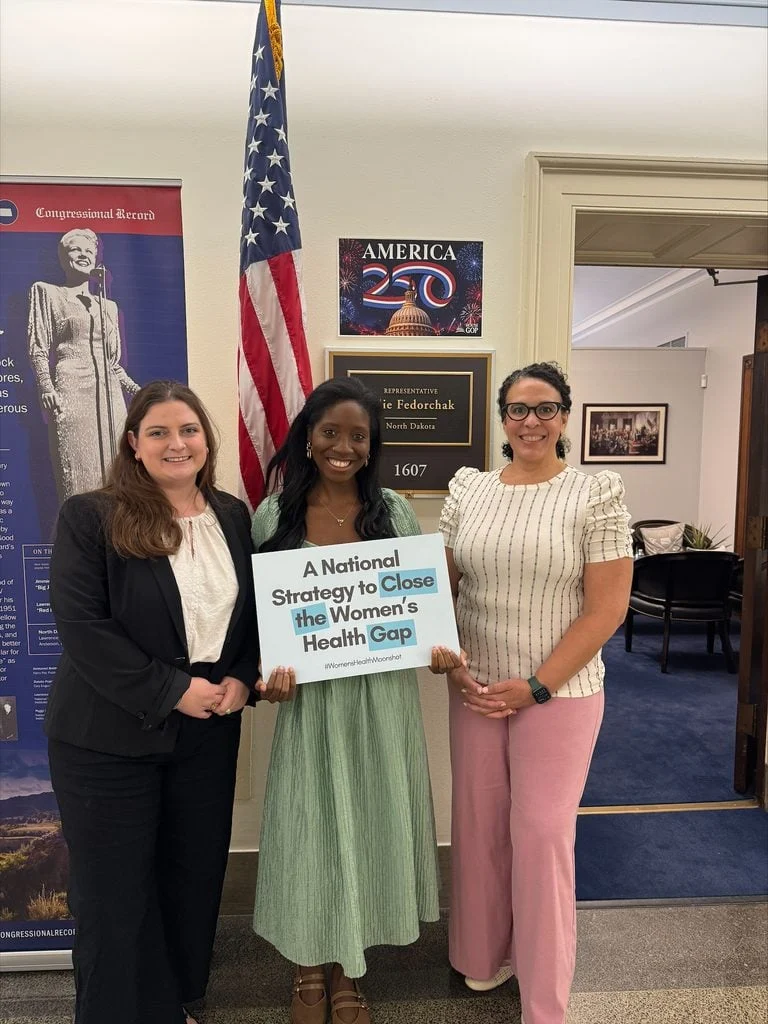
On September 29, a high-level delegation of medical professionals, policy experts, and patient advocates descended upon Capitol Hill to deliver a unified message to the United States Congress: the historical underfunding and systemic neglect of women’s health research must end. Led by the Endocrine Society in collaboration with the Society for Women’s Health Research (SWHR), the American College of Obstetricians and Gynecologists (ACOG), and the Women First Research Coalition (WFRC), the advocacy day served as a critical push for the National Strategy to Close the Women’s Health Gap. This ambitious legislative and scientific framework calls for a bold, strategic $20 billion investment over the next decade to rectify decades of scientific bias and clinical oversight that continue to impact the lives of more than half the American population.
The delegation included prominent figures such as Mya Walters, the Endocrine Society’s manager of health policy and advocacy, who was joined by representatives from the Autoimmune Association and the Society of Gynecologic Oncology (SGO). Together, they met with lawmakers, including the office of Representative Julie Fedorchak (R-ND), to articulate the urgent need for a dedicated federal commitment to women’s health. The strategy, which was officially unveiled in July and has since garnered endorsements from over 20 leading health organizations, provides a roadmap for transforming the American medical landscape into one that recognizes sex and gender as fundamental variables in health and disease.
The Historical Context of the Gender Research Gap
To understand the necessity of a $20 billion investment, one must examine the historical trajectory of medical research in the United States. For much of the 20th century, the "male-as-default" model governed clinical trials and laboratory studies. Researchers often excluded women from early-stage clinical trials due to concerns over fluctuating hormone levels and potential reproductive risks, leading to a profound lack of data on how drugs and treatments affect the female body.
A significant turning point occurred with the passage of the National Institutes of Health (NIH) Revitalization Act of 1993. This landmark legislation mandated the inclusion of women and minorities in NIH-funded clinical research. While the 1993 Act successfully increased the participation of women in late-stage trials, it did not fully address the "knowledge gap" in basic science. Even after the mandate, many researchers continued to use male animals and male cells in laboratory settings, assuming that findings would be universally applicable. It was not until 2016 that the NIH implemented the Sex as a Biological Variable (SABV) policy, requiring researchers to consider sex in the design and analysis of all NIH-funded studies.
Despite these legislative milestones, significant disparities remain. Women continue to be diagnosed later than men for various conditions, experience higher rates of adverse drug reactions, and face a lack of specialized care for female-predominant conditions such as endometriosis, polycystic ovary syndrome (PCOS), and menopause. The National Strategy to Close the Women’s Health Gap seeks to move beyond mere inclusion toward a paradigm of specialized, proactive research.
The Financial Pillar: A $20 Billion Commitment to Innovation
The centerpiece of the National Strategy is the call for a $20 billion investment over a 10-year period. Advocates argue that this figure, while substantial, is a necessary "moonshot" investment to catch up on decades of lost time. Currently, the NIH budget sits at approximately $47 billion annually. However, a disproportionately small percentage of that funding is dedicated to conditions that exclusively or predominantly affect women.
The proposed $2 billion annual increase would be directed toward several key areas:
- Fundamental Discovery Science: Funding research into the molecular and cellular differences between sexes.
- Translational Research: Accelerating the movement of laboratory findings into clinical applications, specifically for conditions like maternal mortality and autoimmune diseases.
- Infrastructure and Technology: Developing specialized databases and diagnostic tools tailored to female physiology.
The economic argument for this investment is equally compelling. Research by the RAND Corporation and WHAM (Women’s Health Access Matters) suggests that increasing investment in women’s health research yields a massive return on investment (ROI). For instance, doubling the budget for research into coronary artery disease in women could return $9.5 billion to the U.S. economy through increased productivity and lower healthcare costs.
Five Key Priorities of the National Strategy
The National Strategy to Close the Women’s Health Gap is structured around five core pillars designed to address the multifaceted nature of the health crisis. During the Capitol Hill meetings, advocates emphasized these priorities as the essential components of any future legislation.
1. Robust and Sustained Funding for Women’s Health Research
The strategy calls for the federal government to stabilize and increase funding streams specifically for women’s health. This includes expanding the budget for the NIH Office of Research on Women’s Health (ORWH) and ensuring that women’s health is a priority across all 27 NIH institutes and centers, rather than being siloed as a reproductive issue.
2. Strengthening the Research Workforce
There is a critical need to support the next generation of scientists specializing in women’s health. This priority focuses on providing grants, fellowships, and career development opportunities for researchers—particularly women and underrepresented minorities—who are dedicated to studying sex-based differences in health.
3. Improving Clinical Trial Diversity and Design
While the 1993 Act improved numbers, the National Strategy pushes for better quality in trial design. This includes mandates for sex-disaggregated data reporting, meaning that researchers must report results for men and women separately to identify differences in efficacy and safety. It also emphasizes the inclusion of pregnant and lactating women in clinical research, a group that has historically been excluded, leaving them with little data on the safety of medications during pregnancy.
4. Expanding Public Awareness and Education
A significant portion of the health gap is rooted in a lack of awareness among both the public and healthcare providers. The strategy advocates for public health campaigns to educate women on their unique health risks and for the integration of sex-based medicine into medical school curricula.
5. Optimizing Regulatory and Policy Frameworks
The final priority involves working with the Food and Drug Administration (FDA) and other regulatory bodies to ensure that sex-based data is a requirement for the approval of new medical devices and pharmaceuticals. It also seeks to streamline the pathway for innovative treatments for conditions like endometriosis and uterine fibroids, which have seen few new therapeutic options in decades.
The Role of the Endocrine Society and Partner Organizations
The involvement of the Endocrine Society is particularly significant given the role that hormones play in nearly every aspect of women’s health. Endocrine disorders, such as diabetes, thyroid disease, and osteoporosis, often manifest differently in women than in men. Furthermore, the transition through menopause represents a major biological shift that remains one of the most under-researched areas of medicine.
Mya Walters and her colleagues highlighted that endocrine health is a cornerstone of the "health gap." For example, women are five to eight times more likely than men to have thyroid problems. Additionally, polycystic ovary syndrome (PCOS) affects an estimated 1 in 10 women of childbearing age, yet it remains frequently misdiagnosed and underfunded relative to its prevalence and its links to metabolic and cardiovascular disease.
The collaboration with the Autoimmune Association also underscores a vital data point: roughly 80% of patients with autoimmune diseases are women. Conditions like lupus, rheumatoid arthritis, and multiple sclerosis primarily affect the female population, yet the underlying biological reasons for this disparity are not fully understood. By joining forces, these organizations are demonstrating that "women’s health" is not a niche specialty but a broad spectrum of medicine that encompasses cardiology, neurology, endocrinology, and beyond.
Implications for Public Health and Policy
The movement to close the women’s health gap has gained significant political momentum in recent months. The White House recently launched the Initiative on Women’s Health Research, led by First Lady Jill Biden, which aligns with many of the goals outlined in the National Strategy. This executive-level focus, combined with the grassroots and professional advocacy seen on September 29, suggests a shifting tide in how the U.S. government prioritizes medical science.
If the $20 billion investment is realized, the implications for public health would be transformative. It would lead to more accurate diagnostic tests, reducing the years-long "diagnostic odyssey" many women face for chronic conditions. It would result in safer medication dosing, as current standard doses are often based on male physiology, leading to higher rates of side effects in women. Perhaps most importantly, it would address the maternal health crisis in the United States, which currently has the highest maternal mortality rate among developed nations—a rate that is disproportionately high for Black and Indigenous women.
The advocacy day on Capitol Hill was more than a series of meetings; it was a demand for equity in the laboratory and the clinic. As the Endocrine Society and its partners continue to push for the adoption of the National Strategy, the focus remains on ensuring that the $20 billion investment is seen not as a cost, but as a necessary correction to the scientific record.
Conclusion and Future Outlook
The National Strategy to Close the Women’s Health Gap represents a comprehensive blueprint for a future where medical research is inclusive by design rather than by mandate. By addressing the five key priorities of funding, workforce, clinical trials, awareness, and policy, the coalition of organizations involved is seeking to dismantle the barriers that have historically compromised the quality of care for women.
As the legislative process moves forward, the success of this strategy will depend on continued bipartisan support and the recognition that women’s health is a vital component of national security and economic stability. The meeting on September 29 served as a reminder that while the 1993 Revitalization Act was a step in the right direction, the journey toward true medical equality is far from over. The call for $20 billion is a call for a healthier, more productive society where medical science finally serves the needs of all its citizens with equal rigor and dedication.
