








The landscape for dietary supplements and natural foods is facing an escalating wave of state-level legislative action, with industry observers warning that the current regulatory challenges could be just the beginning. Stakeholders are being urged to unite and strategize to prevent a future fragmented by a complex web of differing labeling requirements and marketing rules across dozens of states. This emerging regulatory patchwork poses significant operational and legal hurdles for businesses and could ultimately impact consumer access and choice.
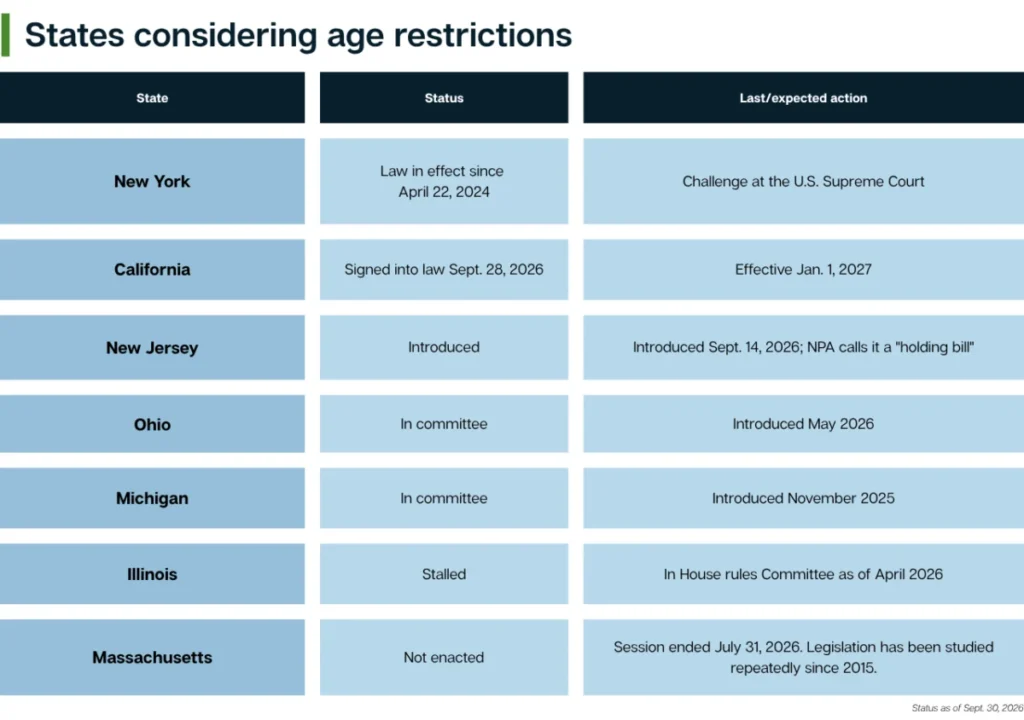
The most recent development in this unfolding scenario is California Governor Gavin Newsom’s signing of Assembly Bill 2030 (AB 2030) into law. This legislation effectively prohibits the sale of dietary supplements that are "labeled, marketed or otherwise represented for weight loss or muscle-building," as well as over-the-counter diet pills, to individuals under the age of 18. An exception is provided for consumers with a valid prescription. The bill mandates age-verification protocols for both retail and remote sales and empowers authorities to impose civil penalties of up to $500 per violation.
This is not the first iteration of such legislation to reach Governor Newsom’s desk. He had previously vetoed an earlier version of the bill. His stated reservations at that time reportedly centered on the administrative and enforcement complexities of the proposed law, rather than a disagreement with the underlying principle that dietary supplements could potentially pose risks to young people, particularly those susceptible to developing eating disorders. This nuance in the governor’s stance suggests a willingness to address perceived risks, albeit with concerns about the practical implementation of restrictive measures.

The intellectual foundation for this legislative push is largely attributed to the research and advocacy of an academic group known as STRIPED (Strategic Training Initiative for the Prevention of Eating Disorders), based at Harvard University. Led by academic Bryn Austin, STRIPED has been a vocal proponent of linking dietary supplements, particularly those marketed for weight loss or muscle gain, to adverse health outcomes and the exacerbation of eating disorders. In a 2022 communication with SupplySide Supplement Journal regarding an earlier version of the California bill, Austin articulated a strong scientific consensus: "The scientific research on the dangers of using weight-loss supplements is as incontrovertible as it is chilling: These products have been found again and again to contain a toxic brew of undisclosed ingredients linked to heart palpitations, cardiac arrest, stroke and even liver damage so extensive as to require organ transplant or resulting in death."
California’s AB 2030 follows a similar legislative path already taken in New York State. The New York law has faced significant legal challenges from the Council for Responsible Nutrition (CRN), a leading trade association for the dietary supplement industry. This challenge has advanced to the U.S. Supreme Court, where CRN is arguing that the law infringes upon First Amendment rights. The core of CRN’s argument is that the New York legislation unfairly targets products based on marketing language and the presence of certain ingredients, rather than on robust scientific evidence demonstrating the actual harm caused by specific products. The association contends that such broad-stroke regulations penalize lawful products and legitimate businesses without sufficient scientific justification.
The CRN, along with many other stakeholders in the industry, has consistently disputed the scientific claims that directly link products marketed for weight loss or muscle-building to an increased risk of developing eating disorders. Steve Mister, president and CEO of CRN, expressed his disappointment following the passage of California’s AB 2030, stating, "This is a deeply disappointing outcome for consumers and responsible businesses, and a missed opportunity for California to pursue a more thoughtful approach. Protecting young people from eating disorders is an important objective that we share. But that objective deserves policies grounded in evidence – not broad restrictions that cast suspicion on lawful products without establishing that those restrictions will address the problem." Mister’s statement underscores the industry’s position that while the goal of protecting vulnerable populations is shared, the legislative approach must be evidence-based and narrowly tailored to address specific harms.

The concern about a fragmented regulatory environment is echoed by other industry leaders. Daniel Fabricant, president and CEO of the Natural Products Association (NPA), views the enactment of California’s AB 2030 as a significant indicator of a growing trend. He noted that beyond New York and California, similar age-restriction bills are being actively considered in at least five other states. "California’s enactment of AB 2030 should be a warning sign for the dietary supplement industry nationwide," Fabricant stated. "When individual states begin creating their own restrictions for products that are already subject to a comprehensive federal regulatory framework, the result is an increasingly unworkable patchwork of conflicting requirements for manufacturers, retailers and consumers."
The Broader Political and Social Currents Driving State-Level Legislation
Loren Israelsen, president of the United Natural Products Alliance (UNPA), offers a broader perspective, suggesting that the age-restriction bills are merely one facet of a more extensive trend where diverse political ideologies are converging to drive legislative change at the state level. He points to a recent, seemingly unrelated piece of legislation signed by Governor Newsom on September 28: a bill establishing a non-UPF (Ultra Processed Foods) label for food products marketed in California.
Israelsen connects this development to a broader "Make America Healthy Again" (MAHA) agenda, which has long identified ultra-processed foods and their purported negative effects on obesity and overall health as key issues. The passage of such a labeling law in California, a state often characterized as politically progressive ("blue"), highlights a complex and evolving political landscape where concerns about public health and consumer well-being are transcending traditional partisan divides.
Historically, "blue" states have often been more receptive to the concept of "better living through better regulation." Israelsen draws parallels between the legislative successes of the cannabis movement, which initially gained traction in more liberal states, and the current wave of age-restriction bills for supplements. He suggests that these successes are creating a roadmap for other activist groups seeking to influence policy.
"It’s something of a perfect storm scenario," Israelsen told SupplySide Supplement Journal. He links this trend to the broader political discourse, referencing the advocacy of figures like Robert F. Kennedy Jr. during his presidential campaign. "RFK Jr.’s campaign promises had more to do with mothers wanting to protect their children from things like synthetic dyes and ultra-processed foods."
Israelsen further elaborates on the mechanism driving this momentum: "When repetitive voices like STRIPED consistently point on this message that our kids are being exposed to unregulated supplements, it creates a ferment that then creates a political motivation to take action at the state level." He posits that the perceived slowness of federal regulatory bodies to enact change may have prompted these activists to seek progress through state-level initiatives.
"The trigger point was the arrival of RFK Jr. to say, ‘I am the messenger to tell you that change is coming.’ He got to Washington and then discovered that the wheels of government act much more slowly than the MAHA people were expecting," Israelsen explained. "He then went to the place that I think you should never go. He went to the states and gave them the green light to say, ‘If you support the Trump administration, you should pass these laws yourself.’ Now you have states competing to see who can be the fastest to pass this legislation." This perspective suggests a strategic shift towards state-level action, potentially fueled by a desire for more immediate legislative victories.
Data from the lobbying firm Multistate supports this observation, indicating that 15 states are currently enacting or considering legislation related to ultra-processed foods, demonstrating the widespread nature of this regulatory push.
The Industry’s Call for Cohesion and Federal Oversight
Graham Rigby, president and CEO of the American Herbal Products Association (AHPA), concurs that the factors driving increased state-level legislation are not confined to partisan lines. "When consumers are pursuing their health and wellness goals they are not thinking about political parties," Rigby stated. "We have seen these kinds of bills in both red and blue states." This observation highlights the cross-ideological appeal of consumer protection narratives.
Rigby emphasizes the critical need for the industry to consolidate its messaging and approach to effectively counter these trends. "What we need to do as an industry is to consolidate around sensible reform where it makes sense," he urged. "Congress gave the authority to regulate dietary supplements to FDA. It was not envisioned that there would be 50 different sets of rules." This highlights a fundamental industry concern: the erosion of a unified federal regulatory framework in favor of a fragmented state-by-state approach, which creates significant compliance burdens and market uncertainty.
Looking ahead, Rigby foresees a continued legislative push at the state level, directly influenced by California’s recent actions. "California passing this bill will certainly inspire other states to think about similar things next year. This will require focused attention from industry next year and for years to come," he concluded. This outlook suggests that the current legislative momentum is unlikely to abate and will demand sustained engagement from the industry to advocate for science-based and harmonized regulations.
The implications of this evolving regulatory landscape are far-reaching. For businesses, navigating a multitude of state-specific laws will necessitate significant investments in compliance, potentially leading to increased operational costs that could be passed on to consumers. For consumers, the proliferation of different rules could lead to confusion and reduced access to products they rely on for their health and wellness. The debate over the scientific basis for these regulations, the appropriate level of government oversight, and the balance between consumer protection and industry innovation remains a critical and ongoing challenge for all parties involved. The industry’s ability to present a united front and advocate for a cohesive federal regulatory approach will be paramount in shaping the future of the dietary supplement and natural foods markets.