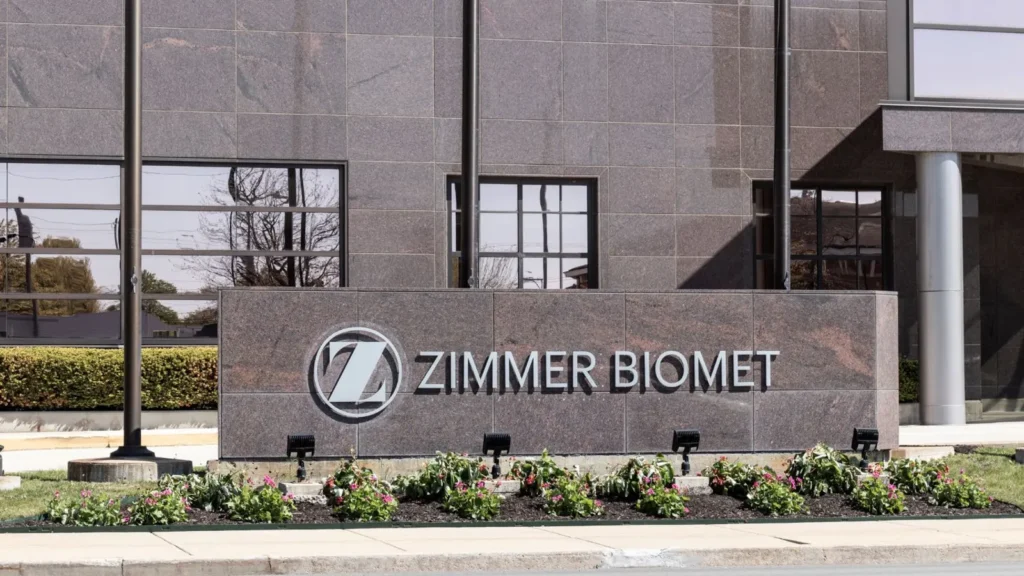
Zimmer Biomet, a global leader in musculoskeletal healthcare, reported its third-quarter 2026 financial results on Wednesday, revealing a complex performance profile characterized by robust growth in hip replacements and a surprising contraction in its core knee implant business. Despite the decline in knee sales—a segment that historically serves as the company’s primary revenue driver—the Warsaw, Indiana-based firm raised its full-year revenue growth guidance, signaling confidence in its broader portfolio and ongoing structural transitions. The results have sparked a debate among industry analysts regarding whether the orthopedic market is entering a period of systemic cooling or if Zimmer Biomet is navigating idiosyncratic challenges related to its internal salesforce reorganization.
For the third quarter ending September 30, 2026, Zimmer Biomet posted total sales of $2.06 billion, representing a 3.1% increase compared to the same period in the previous year. However, the company’s bottom line told a different story, with net income falling to $191.6 million, a 17% decrease year-over-year. This disparity between top-line growth and bottom-line contraction reflects the significant investments the company is making in its commercial infrastructure and the integration of new technologies.
The most scrutinized aspect of the report was the performance of the knee replacement division. Knee sales for the quarter totaled $767.5 million, marking a 3.1% decrease from the third quarter of 2025. This downturn was particularly notable because it occurred during a period when Zimmer Biomet’s hip replacement business saw a healthy 6% increase, reaching $536.5 million. The divergence between these two closely related orthopedic categories has led to conflicting interpretations of the current healthcare landscape.

The Discussion Surrounding Market Dynamics
The quarterly results arrived just one week after Stryker, a primary competitor in the orthopedic space, issued a more cautious outlook on the market. Stryker executives recently attributed a slowdown in hip and knee procedures to a combination of patient affordability concerns and tightening insurance authorizations. Stryker’s assessment suggested a macro-level cooling of the post-pandemic "catch-up" surge in elective surgeries.
However, Zimmer Biomet CEO Ivan Tornos explicitly rejected the notion of a broad market slowdown during Wednesday’s earnings call. Tornos pointed to the company’s strong hip sales as evidence that patient demand remains resilient. He argued that if the market were truly experiencing a systemic downturn due to insurance or affordability issues, the hip segment would likely have shown similar weakness. Instead, Tornos attributed the knee segment’s underperformance to "commercial execution" issues, specifically citing the company’s ongoing multi-year transition of its salesforce.
Zimmer Biomet has been engaged in a strategic overhaul of its commercial operations, moving away from a generalist model toward a fully dedicated salesforce. This transition aims to provide surgeons with specialized expertise for specific product lines, but such large-scale reorganizations often come with temporary disruptions in account management and customer outreach. Tornos acknowledged that the competitive nature of the knee implant market, combined with the internal friction of the salesforce shift, created a "perfect storm" that hampered knee volumes during the quarter.
Analyst Perspectives and Market Skepticism
Despite the CEO’s optimistic stance, some Wall Street analysts remain unconvinced that the issues are purely internal. Robbie Marcus, an analyst at J.P. Morgan, noted in a research memorandum that the knee business represents approximately 40% of Zimmer Biomet’s total sales, making any volatility in this segment highly impactful for the company’s valuation. Marcus expressed skepticism regarding the "execution-only" narrative, suggesting that because multiple major players in the orthopedic space are reporting similar headwinds in knee volumes, a market-wide slowdown is the more probable explanation.
Market observers have pointed out that knee replacements are often viewed as more "elective" than hip replacements, which are frequently necessitated by acute pain or fractures. Consequently, knee procedures may be more sensitive to economic fluctuations or changes in insurance reimbursement policies. If patients are deferring surgery due to high out-of-pocket costs or if insurers are increasing the "prior authorization" hurdles, the knee segment would likely be the first to show the strain.
Operational Shift Toward Ambulatory Surgery Centers
A bright spot in the company’s report was the continued migration of procedures to Ambulatory Surgery Centers (ASCs). Tornos emphasized that Zimmer Biomet is seeing accelerated growth in the ASC channel, which offers a more cost-effective environment for both patients and payers compared to traditional hospital settings.
The shift toward ASCs is a critical component of Zimmer Biomet’s long-term strategy. These centers prioritize efficiency and rapid patient turnover, which aligns with Zimmer’s focus on robotic assistance and digital health tools. Tornos noted that pricing within the ASC environment has remained steady and that cancellation rates for scheduled surgeries have not shown any meaningful increase, further bolstering his argument against a generalized market decline.

The Monogram Acquisition and the Future of Robotics
Looking forward, Zimmer Biomet is pinning its growth hopes on a major technological leap in robotic-assisted surgery. The company provided an update on its integration of Monogram Technologies, an acquisition completed in 2025. Monogram has developed an advanced surgical robot designed to enhance the precision of joint replacements.
Zimmer Biomet confirmed that it is preparing to file a formal application with the U.S. Food and Drug Administration (FDA) for a new iteration of this robotic system. While Monogram’s existing technology is already cleared for total knee replacements, Zimmer is aiming for a "fully autonomous" version of the robot. The company anticipates a commercial launch for this system in the first half of 2027.
Tornos described the upcoming robotic platform as a "major catalyst" for the company’s reconstructive portfolio. The goal is to lower the barrier to entry for robotic surgery, attracting surgeons who have previously avoided such systems due to complexity or cost. In recent clinical trials, the Monogram robot reportedly demonstrated significant improvements in surgical accuracy with no adverse patient safety events. Zimmer Biomet believes that by offering a more efficient, easy-to-use autonomous system, it can reclaim market share in the knee segment and solidify its position against competitors like Stryker’s Mako system.
Financial Outlook and Guidance Revision
Despite the quarterly dip in knee sales and the decrease in net income, Zimmer Biomet’s management remains bullish on the remainder of the 2026 fiscal year. The company narrowed and raised its full-year revenue growth guidance to a range of 4.4% to 4.9%, up from its previous forecast of 3.9% to 4.9%.
This guidance hike suggests that management expects the "commercial execution" issues to resolve in the fourth quarter and that the strength in the hip and S.E.T. (Sports Medicine, Extremities, and Trauma) segments will compensate for any lingering softness in knees. The company is also betting on a favorable demographic tailwind, as the aging global population continues to drive demand for mobility-restoring procedures.

Industry Implications
The divergent narratives provided by Stryker and Zimmer Biomet highlight a period of uncertainty for the medical device industry. As the healthcare sector moves further away from the anomalies of the COVID-19 era, companies are grappling with new realities involving labor shortages in hospitals, evolving payer models, and the rapid integration of artificial intelligence and robotics.
For Zimmer Biomet, the coming quarters will be a test of its internal strategy. If knee sales rebound, it will validate Tornos’s claim that the Q3 slump was a temporary byproduct of a necessary salesforce evolution. However, if volumes continue to lag, the company may be forced to reckon with a changing economic environment where patient demand is no longer as inelastic as it once was.
In the immediate term, the focus remains on the 2027 launch of the Monogram autonomous robot. If Zimmer Biomet can successfully navigate the regulatory pathway and deliver a platform that significantly improves surgeon workflow and patient outcomes, it may well offset the current volatility and define the next era of orthopedic care. For now, the company stands at a crossroads, balancing the growing pains of a commercial transformation with the high-stakes promise of technological innovation.